


Remember 80 years ago
Our car meandered along the concrete roads in Co village, flanked by lush green fields of corn and vegetables. In the distance, clusters of houses stood warmly and elegantly built. Mrs. Ma Thi Giap, a Tay woman, is 90 years old this year, but her eyesight and hearing are still very sharp.
Pointing towards the vast field, she said, "Look, sir, near the Central Police Headquarters historical site is the Lung Co airfield historical site. I was only 10 years old back then, but I understood what was happening. I witnessed three planes landing on the runway, and the people came out to watch out of curiosity. The officials at that time instructed everyone to keep it completely secret, to avoid intruders and strangers."
 |
| The imposing houses of the people in Co village. |
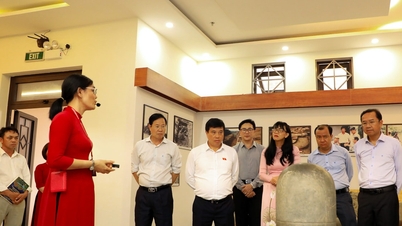
Major Nguyen Nhu Trang, Head of the Management Board of the Central Police Headquarters Historical Site in Minh Thanh commune, said: Lung Co Airport is located in a valley surrounded by mountain ranges, with wide fields where farmers cultivate rice. From June 1945 to August 1945, many Allied flights were carried out to transport Allied troops and carry medicine, weapons, and ammunition from Kunming (China) to Tan Trao (Son Duong) to aid Vietnam.
Here, during the attack on the Japanese outpost at Tam Dao ( Vinh Phuc ), we liberated the French prisoners held there by the Japanese and brought them back to live together in a village in Tan Trao. On July 30, 1945, the French, including women and children, boarded L5 aircraft from Lung Co to return to their country.
The final flight at Lung Co Airport carried Lieutenant Keent, an OSS intelligence officer, back to his country. Comrade Le Gian was assigned the task of seeing off this last flight. After receiving good wishes from Comrade Le Gian, Lieutenant Keent replied: “This war is over for us, but for you, a new, extremely arduous war is beginning. I wish you glorious victory.” Although not a modern airport, Lung Co is considered by many experts to be the fastest-built airport in the world, leaving a mark on the initial diplomatic and military relations with the United States.
Changes in the former war zone
To date, Co village has 143 households with 629 inhabitants, with the Tay ethnic group accounting for over 80%. From a village facing significant economic difficulties, it now has only 11 poor households and no near-poor households. The remaining poor households are all due to poor health, and the village is actively working to help these households overcome poverty by 2025.
With an average per capita income exceeding 46 million VND/person/year, Co village boasts many well-built houses. The village was the only one with dilapidated houses, but with assistance from the Central Police Department, all temporary shelters have now been eliminated. The programs for concrete roads, irrigation canals, and a cultural center, as well as the percentage of households using electricity, clean water, and telecommunications, have all met the set targets.
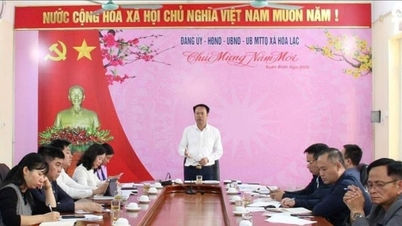
To lead the people in the new rural development movement, the Party cell of Co village, with 27 members, is constantly striving to find the best direction for the village. Mr. Ma Van Dung, a Tay ethnic minority member and Head of the Village Front Committee, affirmed that the village's tradition is unity, preserving ethnic identity, and revolutionary traditions. We clearly identify the village's potential and strengths for development, as this is a purely agricultural area, primarily growing rice and corn, ensuring food security.
In addition, the village has developed a forest-based economy with over 100 hectares of acacia production forest, averaging nearly 1 hectare per household. Among the villagers who have become wealthy from the forest are the families of Mr. Ma Van Tien with 15 hectares; Phan Ngoc Tung with 15 hectares; and Vu Duc Duong with 10 hectares, earning hundreds of millions and even billions of dong from their forest investments.
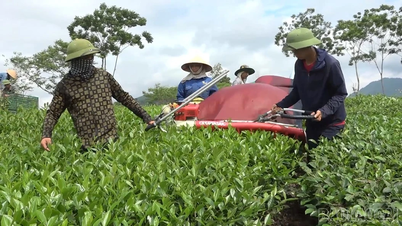
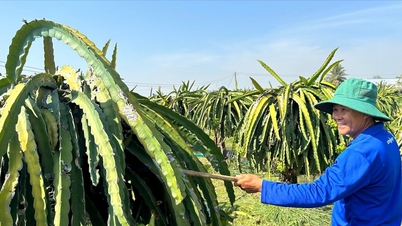
In Co village, the land is suitable for tea cultivation, with 60 hectares planted throughout the village. Currently, the villagers are harvesting and selling fresh tea at 12,000 VND/kg to processing factories. Passing through the lush green hillsides, we came across Mr. Ma Van Thanh and his family harvesting tea.
Mr. Thanh wiped his sweat and smiled, saying, "Before, tea plants helped us escape poverty. Now, tea plants help us get rich. With over one acre of tea plants, one harvest yields 800 kg of fresh tea leaves for my family. Everything we harvest is bought up immediately, so my family feels secure and our finances are quite stable."
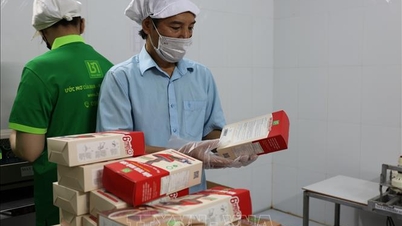
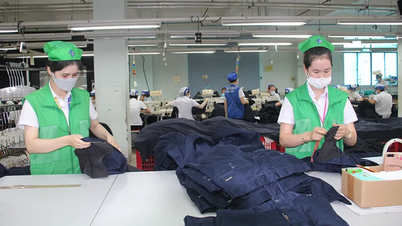
Taking advantage of their free time during the agricultural off-season, more than 100 young people from the village go to work as factory workers in industrial zones throughout the country. Every year, the money earned is reinvested back into the village, thanks to which the appearance of Co village has changed rapidly.
Text and photos: Quang Hoa
Source: https://baotuyenquang.com.vn/xa-hoi/202512/doi-thay-o-thon-co-7ed227f/
![[Photo] General Secretary To Lam presides over a meeting with the Editorial Teams to summarize 100 years of the Party's leadership of the Vietnamese revolution and 40 years of implementing the National Construction Program.](https://vphoto.vietnam.vn/thumb/1200x675/vietnam/resource/IMAGE/2026/03/04/1772601288977_a1-bnd-8134-7576-jpg.webp)













































Comment (0)