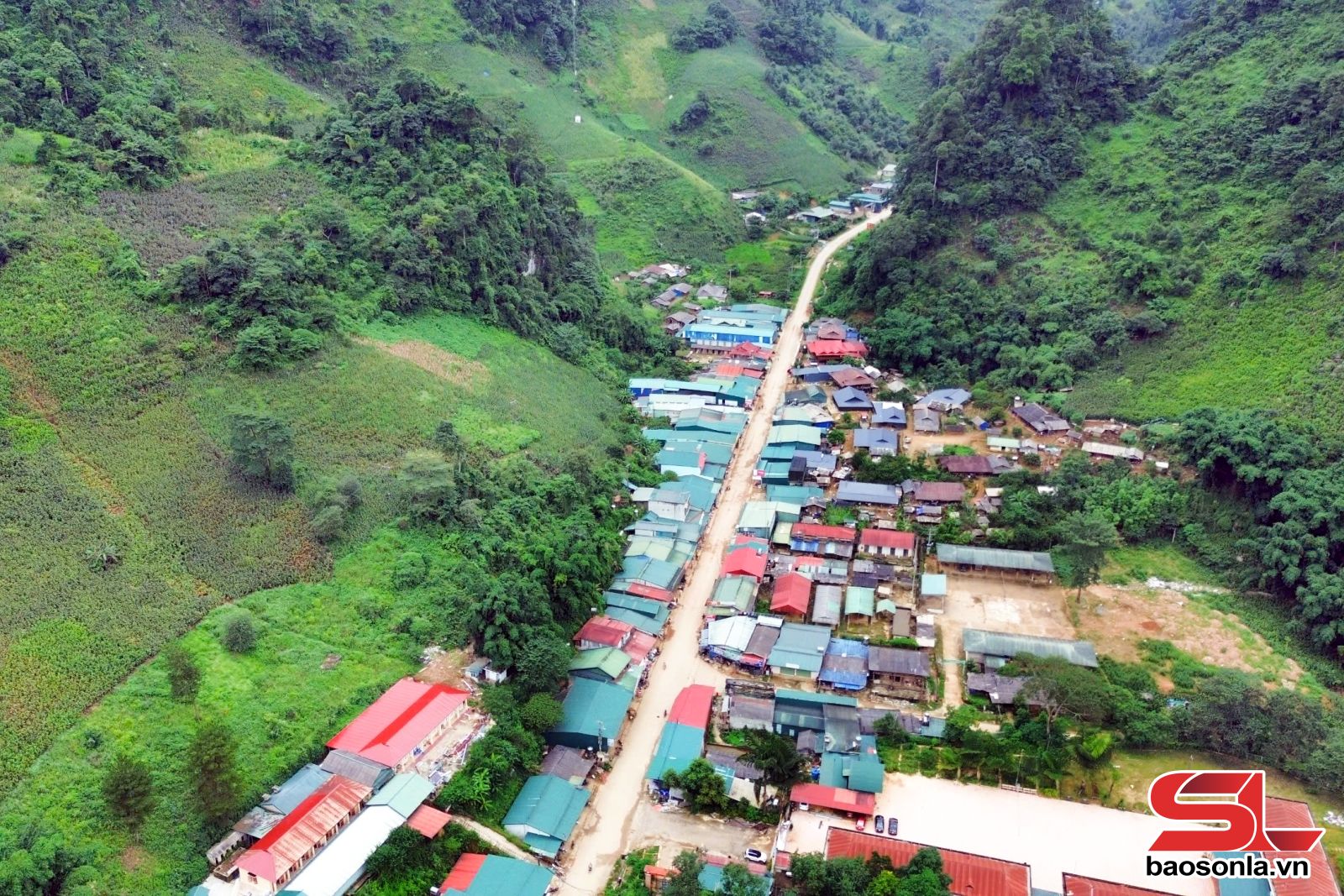
Before the 1990s, mentioning Co Ma immediately brought to mind the "capital" of opium cultivation. At that time, the number of opium addicts was very high. Not only the elderly but also many young people were addicted. Along with that, backward customs in marriage and funerals, hunger, and poverty clung to the lives of the people here. Now, Co Ma is different. Opium cultivation has been eradicated, and many economic development projects funded and supported by the government have helped the people here build increasingly prosperous lives.
Following the implementation of a two-tiered local government model, Co Ma commune now comprises 33 villages, with 2,896 households and over 14,700 inhabitants, of which the Mong ethnic group accounts for over 91%. The merger has helped Co Ma commune expand its development space, optimize resources, and attract investment. This is also an opportunity for the commune to restructure its agricultural sector and improve the quality of life for its people.
Visiting the highlands allows one to fully appreciate the changes in each village. Mr. Va Sai Di, 80 years old, from Co Ma village, was born and raised here. Witnessing the changes in the lives of the people, he happily shared: "Thanks to the province's investment in building roads, extending the electricity grid, and opening schools for the children in the village; providing support with plant and animal breeds, helping the people develop their economy. Everyone is happy to work hard, so life is becoming more prosperous."
Located about 30km from the center of Co Ma commune, we visited Tinh La village, home to 105 households of the Mong ethnic minority. Mr. Va A Vu, Party Secretary and Head of Tinh La village, shared: Following the policy of restructuring crop and livestock production, since the beginning of the year, the villagers have converted 17 hectares of unproductive hillside land to coffee cultivation. In addition, they maintain 15 hectares of paddy fields, 138 hectares of corn, and have developed a livestock and poultry herd of over 3,000 animals. Thanks to this, the lives of the villagers have changed significantly, and they no longer face food shortages.

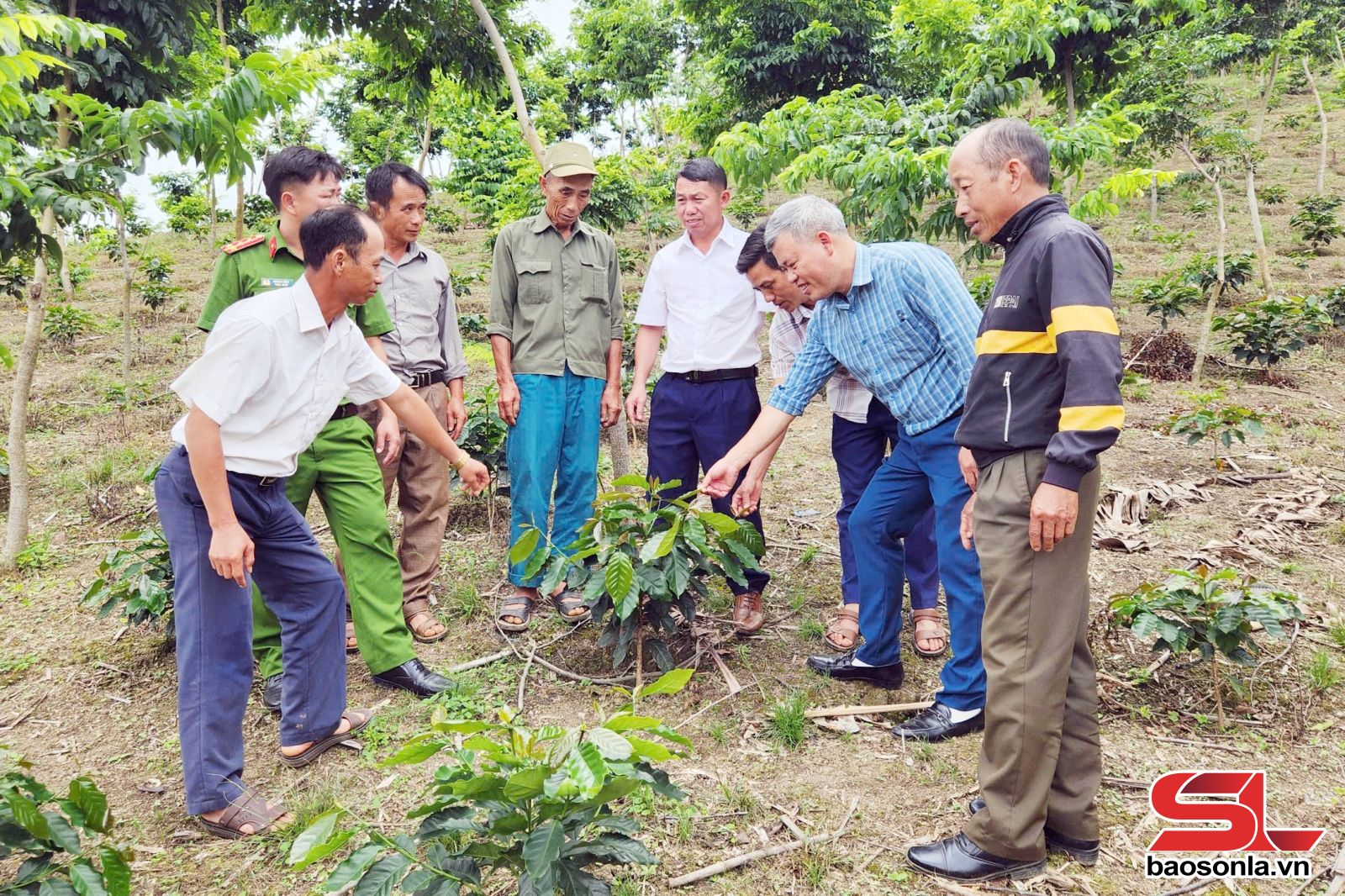
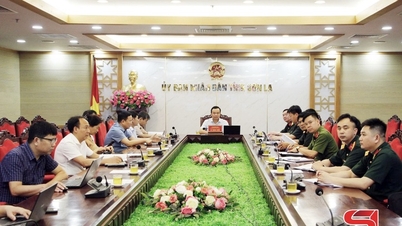
The changes in Co Ma are a result of the leadership and guidance of the Party Committee and the government in concretizing the Party's resolutions to suit local realities. Leveraging the local potential and advantages, the first Party Congress of Co Ma commune, for the 2025-2030 term, set forth the task of transforming the structure of crops and livestock; increasing the value of agricultural products through the application of new technologies in production; and developing high-economic-value crops and livestock in a commodity-oriented manner, with OCOP products being one of the breakthroughs to focus on implementation.
During a field visit to assess the situation of crop conversion in the area, Comrade Nguyen Ngoc Tan, Permanent Deputy Secretary of the Party Committee of Co Ma commune, reported: To effectively implement the breakthrough in agricultural development, the commune's Party Committee has strengthened the leadership and guidance role of the Party committee and government, concretizing the breakthrough through specialized resolutions and annual plans; clearly assigning responsibilities, linking implementation results with the evaluation of cadres and Party organizations; and strengthening inspection and supervision during implementation. The people have been encouraged to promote the application of science and technology in production; clearly identifying key products for each village and sub-region, aiming to improve the productivity and quality of crops and livestock, while simultaneously achieving sustainable poverty reduction for the people.
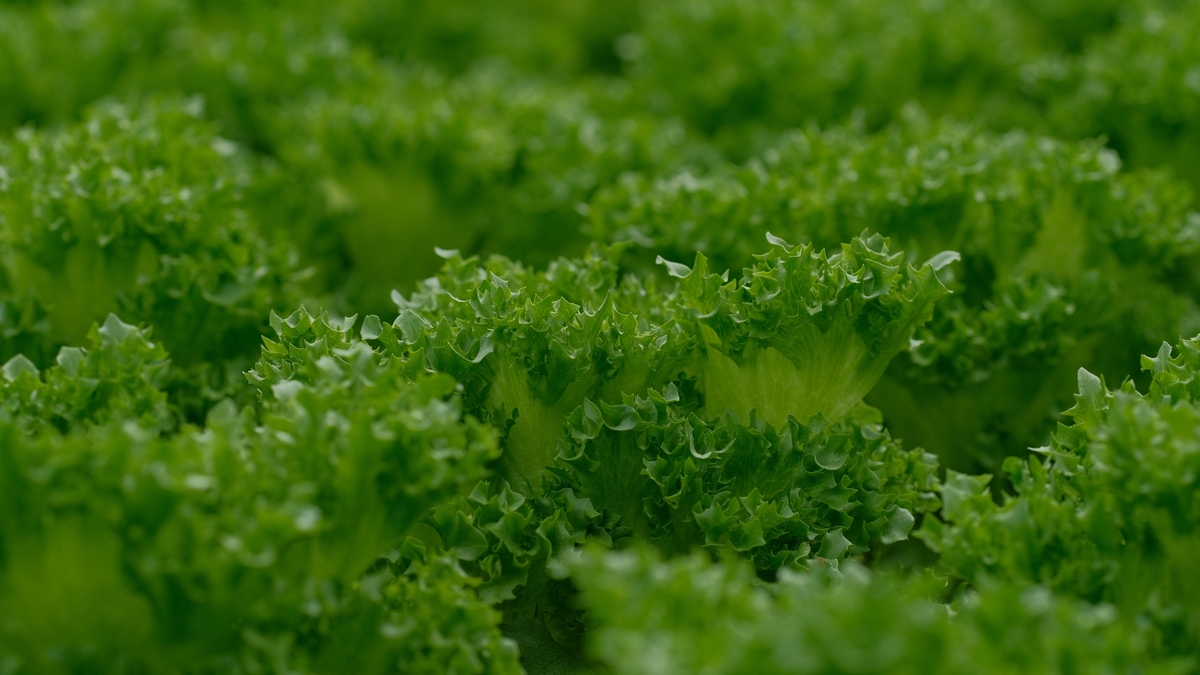
In this highland region, many new crops have proven effective, such as hawthorn, coffee, rice, and fruit trees that thrive on sloping land like passion fruit, mango, and longan, which are taking root and flourishing in the highlands, promising a better life for the local people. Along with this, the people are actively innovating production practices, applying science and technology, intensifying cultivation, and building prosperous villages. Currently, the people in the commune cultivate 3,378 hectares of grain crops annually, yielding 8,690 tons. They are also taking better care of over 280 hectares of hawthorn and other fruit trees, developing nearly 450 hectares of coffee, of which 30 hectares are already producing crops, and nearly 160 hectares of ginger...

Notably, in 2025, Co Ma commune mobilized its people to cultivate several agricultural products, including 5 hectares of taro yielding 54 tons and 6 hectares of ginseng root yielding 84 tons. Initial assessments indicate good quality taro and ginseng, contributing to the diversification of local agricultural products and increasing people's income in the coming years. In addition, livestock farming is developing in a concentrated, enclosed manner, combined with grass cultivation for feed. The livestock are well cared for, with proactive measures to prevent cold weather and disease outbreaks, resulting in stable development. The commune currently has over 53,000 head of livestock and poultry, providing a significant income for the local people.

Co Ma is changing day by day, but many difficulties and challenges remain, with poor households still accounting for 39.2%. We believe that with the attention of the Party and the State, the efforts of the local Party committee and government, and the determination of the people to improve their lives, the Co Ma highland region will become increasingly modernized, prosperous, and beautiful.
Source: https://baosonla.vn/nong-thon-moi/doi-thay-o-vung-cao-co-ma-lnufuzBDR.html

![[Image] Schools organize meetings and introduce teaching models to students admitted to grade 10.](https://vphoto.vietnam.vn/thumb/1200x675/vietnam/resource/IMAGE/2026/06/25/1782368077271_ndo_br_z7970052192242-1ec8daeb77a6eed1a4e9f58c564ddd3e-jpg.webp)

![[Image] Ho Chi Minh City: Ma Lang area, Chicken-Rice Market about to change its appearance](https://vphoto.vietnam.vn/thumb/1200x675/vietnam/resource/IMAGE/2026/06/25/1782377698627_ndo_br_m1-jpg.webp)

![[Photo] General Secretary and President To Lam receives Palestinian Ambassador Saadi Salama](https://vphoto.vietnam.vn/thumb/1200x675/vietnam/resource/IMAGE/2026/06/25/1782365384740_a1-bnd-9423-8322-jpg.webp)







![[Video] Weather forecast for tonight and tomorrow, June 26, 2026: Northern Vietnam to end heatwave from tomorrow, Central Vietnam to continue experiencing a heatwave.](https://vphoto.vietnam.vn/thumb/402x226/vietnam/resource/IMAGE/2026/06/25/1782392692278_thumb-dem-png.webp)