


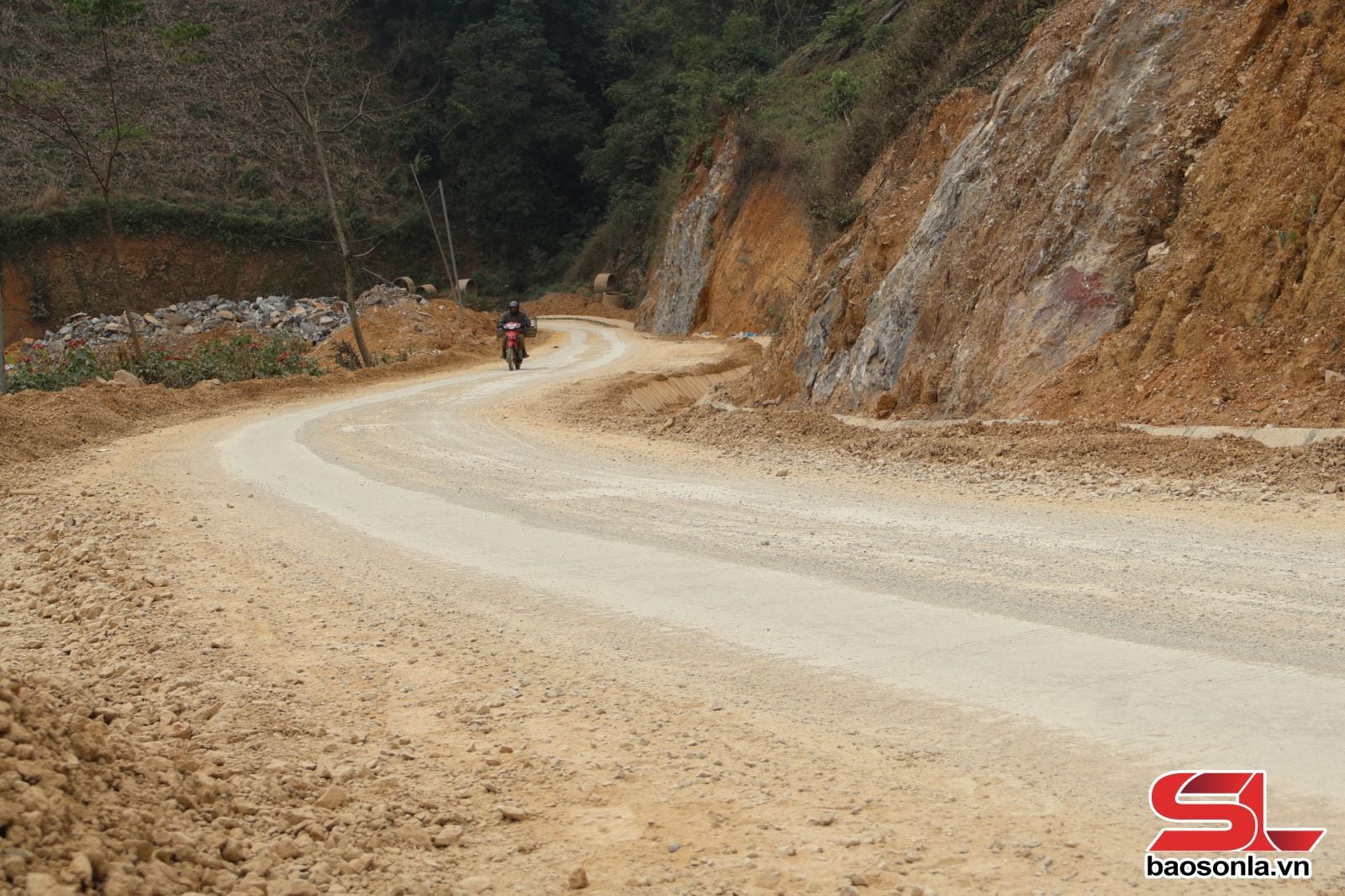
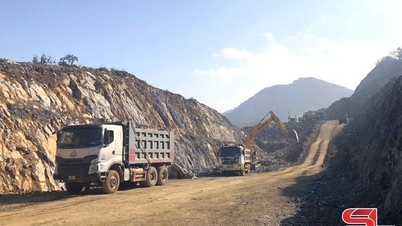
Traveling along the newly widened road from Ket Hay village to Hua Bo, Phieng Khang, Na Hien, and Den, one immediately notices the rapid development in the area. Previously, the nearly 7-kilometer-long dirt road from the commune center, passing through five villages, was only 2 meters wide. Now, the government has invested in widening it to 4 meters, paving it with smooth concrete, meeting the transportation needs of the people in these border villages.
Greeting us at the entrance to the village, Mr. Vi Van Duc, Party Secretary and Head of Hua Bo village, Phieng Pan commune, said: "The road opens up opportunities for selling agricultural products and makes it easier for children to go to school. The village management board coordinated with the commune to verify the land ownership and clear the land for road construction. Now, nearly 50 households with 242 people in the village have convenient access roads, and trade is developing more and more."
After the merger, Phiêng Pằn border commune has an area of 320 km², fertile land, and National Highways 37 and 4G running through it, creating favorable conditions for the development of agricultural economy , trade, and services. Infrastructure has been invested in comprehensively; 33 out of 45 villages in the commune have concrete roads, with a total length of 78.2 km; accounting for 73.3% of villages with hard roads; and 99.7% of households use the national power grid. Immediately after operating the two-tiered local government model, the commune reviewed and assessed the potential and advantages of each region and village, categorizing them by area to issue resolutions and conclusions on economic development and sustainable poverty reduction. Policies encouraging the development of cooperatives and linking production with the consumption of agricultural products were integrated. Support was provided for building and developing trademarks and brands for agricultural products; and the advantages of each region and locality were exploited to effectively implement the OCOP program. Strengthen linkages, promote, introduce, and market agricultural products, especially key agricultural products with high economic value.
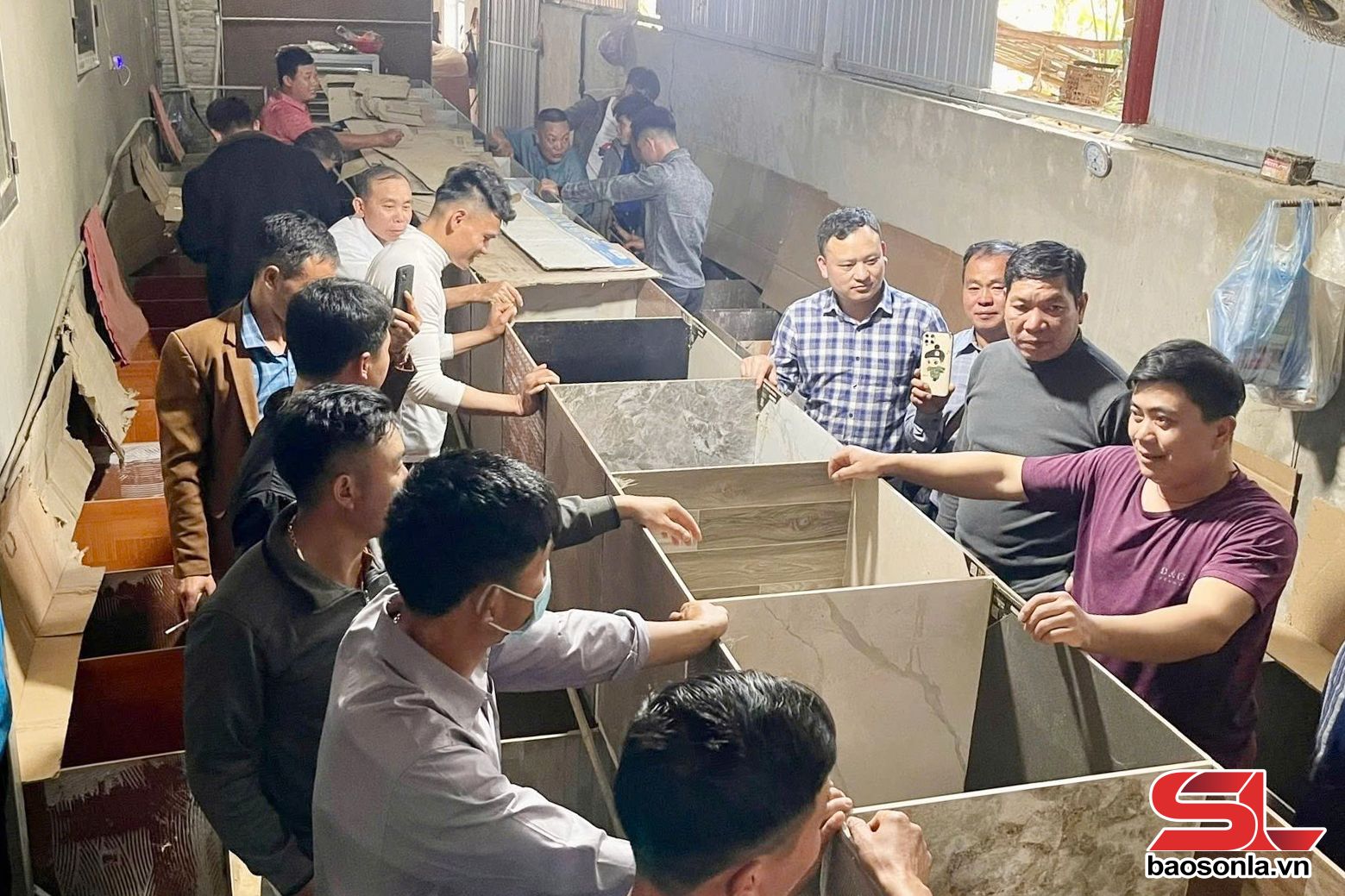
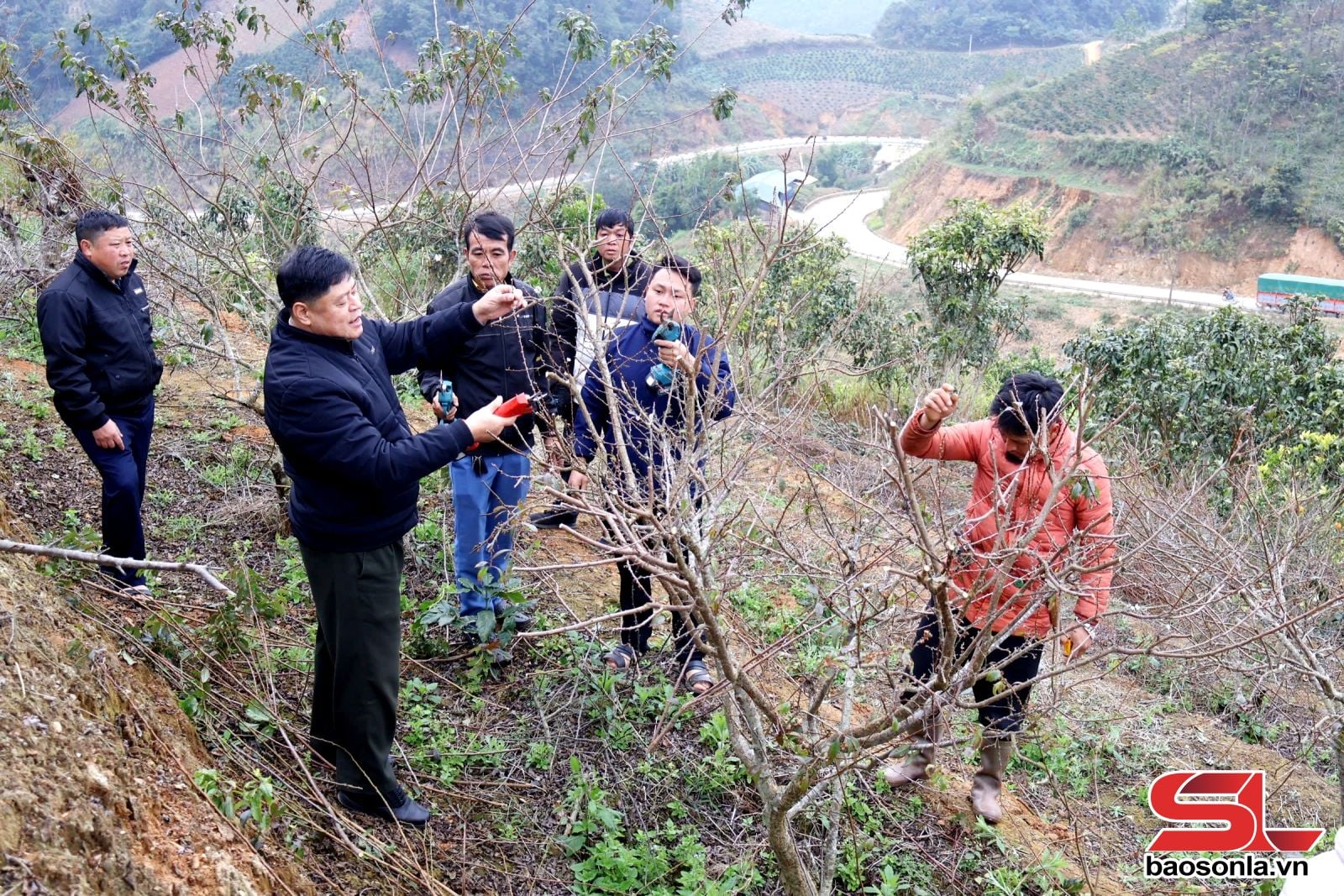
From July 2025 to the present, Phiêng Pằn commune has organized meetings and working sessions with villages, cooperatives, businesses, companies, and banks in the former Mai Sơn area to address difficulties and guide villages in developing economic models. The commune's specialized agencies organized 12 training courses on models for planting and caring for plum trees, coffee, oranges, and sugarcane. Five delegations from various villages went to learn from the experience of raising bamboo rats and wild boars. Social organizations vouched for loans to over 3,800 members through the Social Policy Bank, with a total outstanding loan balance of over 192 billion VND; and collaborated with the Agricultural and Rural Development Bank to provide loans totaling over 29 billion VND, helping poor households invest in economic development.
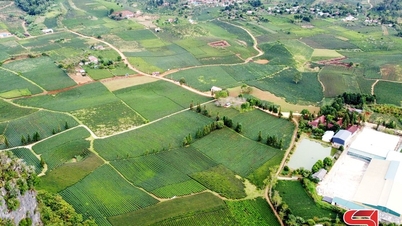
The economic landscape in Phiêng Pằn is increasingly flourishing. The people in the commune cultivate 467 hectares of rice (two crops per year); 2,800 hectares of hybrid and sweet corn; 188 hectares of high-yield cassava; 1,053 hectares of fruit trees; and 2,364 hectares of sugarcane for the Sơn La Sugar Company. They also plant 173 hectares of elephant grass for livestock, raising over 10,000 buffalo and cattle. The commune currently has 3 gasoline stations, 26 agricultural cooperatives, and 116 households engaged in production, trade, and services.
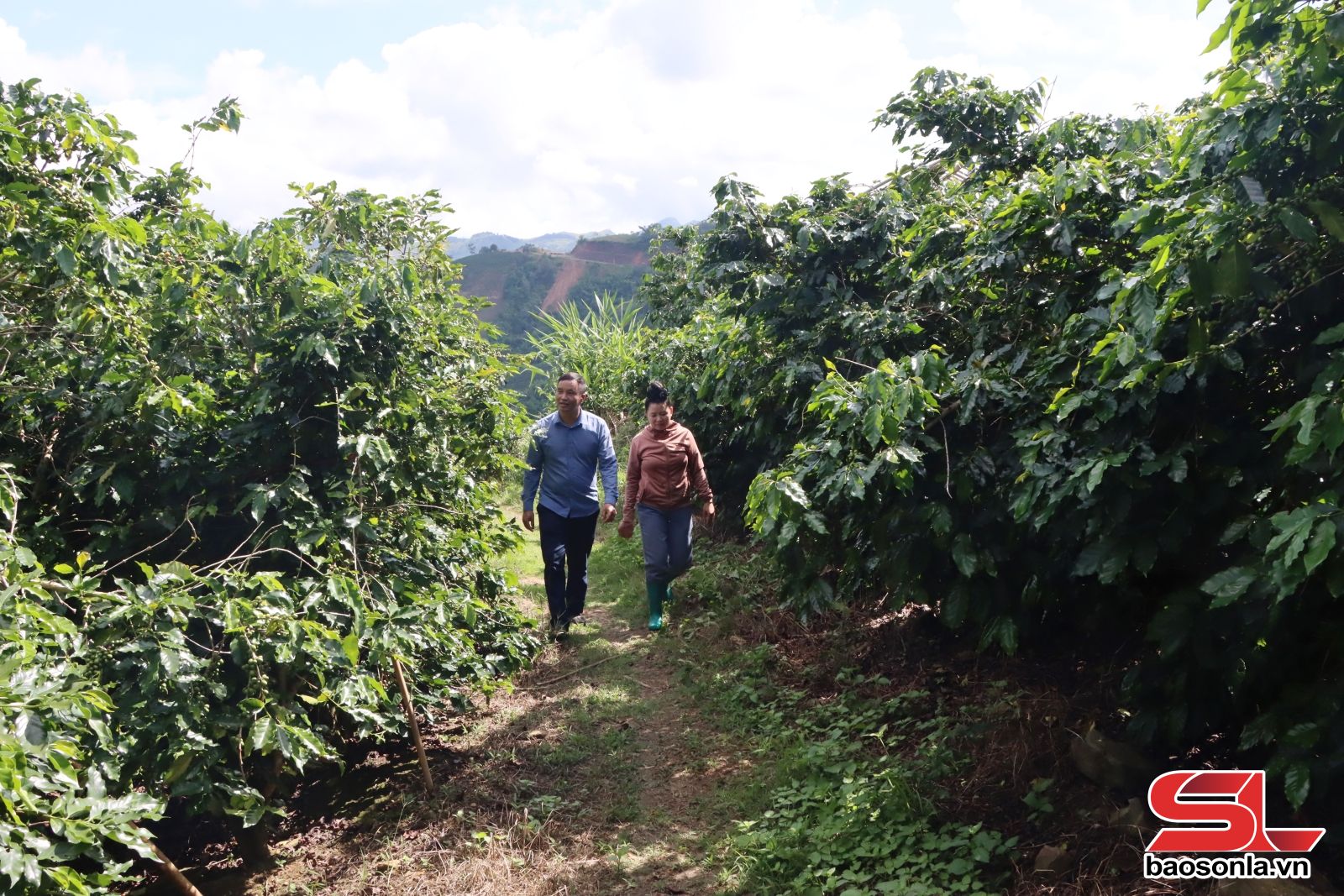
We visited the family of Ms. Lo Thi Phuong in Ot Cha village, Phieng Pan commune, just as the couple was busy tending their coffee plantation. Previously, due to cultivating cassava and corn on sloping land, the family frequently faced erosion and unstable yields. The turning point came in 2015, after learning from a model in Muong Chanh commune. Ms. Phuong boldly experimented with planting 0.5 hectares of coffee, gradually expanding to 5 hectares as it is today. Not only did she expand the scale of her operation, but she also actively participated in technical training courses to master disease prevention, pruning, and canopy shaping. Thanks to systematic cultivation, the family harvests over 70 tons of fresh coffee beans annually. Ms. Phuong happily shared: “This year, coffee prices are good. After deducting expenses, the family earned nearly 1.3 billion VND in profit, while also providing stable employment for 4 local workers with incomes of 5-7 million VND per month.”
With the expansion of economic development space following the merger, by 2025, Phiêng Pằn commune will have basically completed and exceeded many important targets. The economy is developing well; the poverty rate in the commune has decreased to 17% (a decrease of 4.67% compared to 2024), the lives of the people are increasingly improving, and the commune is gradually moving towards sustainable development.
Source: https://baosonla.vn/nong-thon-moi/doi-thay-xa-bien-gioi-phieng-pan-DBrtcDODg.html
![[Image] A dreamy "livable city" under pink clouds](https://vphoto.vietnam.vn/thumb/1200x675/vietnam/resource/IMAGE/2026/02/24/1771930060937_tp4-jpg.webp)
![[Photo] White pear blossoms bloom across the border of Pho Bang](https://vphoto.vietnam.vn/thumb/1200x675/vietnam/resource/IMAGE/2026/02/24/1771927665653_a8-8280-jpg.webp)










![[Photo] National Assembly Chairman Tran Thanh Man working with the National Assembly Committees](https://vphoto.vietnam.vn/thumb/1200x675/vietnam/resource/IMAGE/2026/02/24/1771915679930_bnd-7209-2157-jpg.webp)















































Comment (0)