

The gap between rich and poor is a social problem and a reality in every country. Narrowing the gap between rich and poor has always been a priority of our Party and State. However, in the context of the Fourth Industrial Revolution and the rapid pace of digitalization, narrowing the digital divide is a difficult task, and if a solution is not found soon, the gap between rich and poor in society will only widen. A reporter from the People's Army Newspaper had an interview with Associate Professor, Dr. Thai Thanh Ha (Senior Lecturer, Foreign Trade University) on this issue.
PV: Professor, Dr. Thai Thanh Ha, we understand that you are leading a research group on measuring the digital divide in Vietnam. This research topic has very high practical value, because the digital divide will widen the gap between rich and poor in society even further if we do not have timely solutions to address the problem. Could you tell us why you and your colleagues chose this topic for research?
Associate Professor, Dr. Thai Thanh Ha: The gap between rich and poor is a very complex, multifaceted, and challenging issue for all countries in the world . Especially after the "storm" of Covid-19 and its terrifying impact, the gap between rich and poor seems to be widening even further. However, there is a battle that will be even more arduous, fierce, and protracted: the battle to narrow the digital divide. In the context of the Fourth Industrial Revolution and the current rapid pace of digitalization, the digital divide between groups with access to digital transformation and those who are disadvantaged, have little or no access to it, will have a very strong impact, further widening the gap between rich and poor in society.
 |
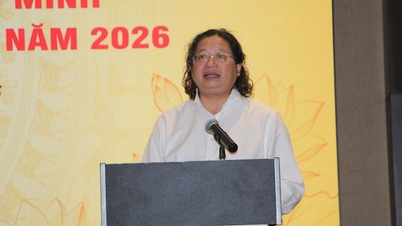
| Associate Professor, Doctor Thai Thanh Ha. |
In our country, poverty eradication and efforts to narrow the gap between rich and poor have always been prioritized. This is clearly reflected in the policies and guidelines of the Party and State, especially the major decisions approved by the National Assembly and being vigorously implemented by the Government, such as the National Target Program for socio -economic development in ethnic minority and mountainous areas, the National Target Program for building new rural areas, and the National Target Program for sustainable poverty reduction... The achievements we have made in our efforts to narrow the gap between rich and poor are truly impressive. The multidimensional poverty rate according to the United Nations standard decreased to 4.3% in 2022. This achievement has been recognized and highly appreciated by the international community.
However, like most other countries in the world, Vietnam is facing a new and challenging global problem: how to bridge the digital divide. Vietnam is one of the countries with a very high rate of digital transformation in the world, with double-digit growth rates in all digital economic sectors, most notably e-commerce. In this context, if the poor and vulnerable groups have little or no access to digital products, services, and platforms, the gap between rich and poor will widen further. For example, if poor farmers cannot sell their agricultural products on e-commerce platforms, their income will decrease, as online shopping is a new and increasingly popular consumer trend in society.
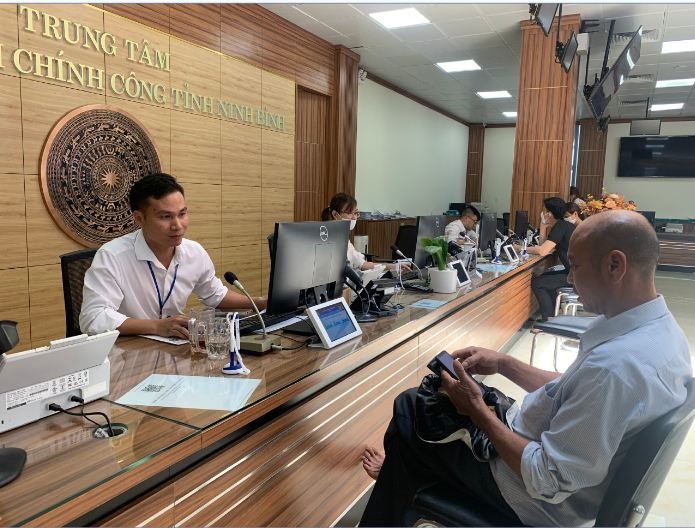 |
| The Ninh Binh Provincial Public Administration Center serves the people. Photo: NAM TRUC |
Stemming from that reality, my colleagues and I at the Foreign Trade University, the Vietnam Fatherland Front Committee of Quang Binh province, and vocational training institutions in the pilot research areas were deeply committed to this topic. Fortunately, we received funding from the Australian Embassy to research the topic "Measuring Digital Differences in the Post-Covid-19 Era in Vietnam through the Development of an Inclusion Index Based on the Australian Research Framework." Australia has already conducted in-depth research and is continuing its studies on this topic. Furthermore, 2023 marks the 50th anniversary of diplomatic relations between the two countries, making our proposed topic particularly relevant, as we were selected as one of 11 out of 68 applicants submitted to the Australian Embassy in Hanoi for selection.
PV: In your opinion, which groups are likely to become vulnerable in today's digital age?
Associate Professor, Dr. Thai Thanh Ha: According to general research results worldwide, gender is also an issue. Men in developed countries have more opportunities to own smartphones and access the internet than women. Approximately 1.2 billion women worldwide do not have mobile phones. Therefore, women around the world have fewer opportunities to access digital technology compared to men.
In society, groups of people who frequently access the internet will create relationships and social networks among people with shared interests, and therefore they have more opportunities to earn money and find jobs compared to those who access the internet less or not at all. The poor and those in underdeveloped areas will have fewer opportunities to access the internet.
People with disabilities also have a low rate of internet access because even when they are provided with the necessary means, their physical limitations make it very difficult for them to use those means to access the internet.
PV: So, what are the possible causes of the digital divide in society, sir?
Associate Professor, Dr. Thai Thanh Ha: I believe there are several main reasons that can cause the digital divide in society, such as: People with low incomes have less access to the internet; underdeveloped areas have fewer opportunities to access the internet; people with good knowledge, skills, and foreign language abilities can effectively utilize the rich resources on the internet for learning and daily life; and in some exceptional cases, people with the means never or rarely use the internet. Furthermore, military conflicts between countries also create a digital divide between countries involved in conflict and those unaffected...
PV: In your opinion, how can we bridge the digital divide in society?
Associate Professor, Dr. Thai Thanh Ha: According to the Strategy for Narrowing the Digital Divide proposed by the International Telecommunication Union (ITU) and the United Nations Educational, Scientific and Cultural Organization (UNESCO), there are 10 solutions to address this issue. These include promoting digital inclusion in broadband plans and efforts to increase the role of the digital economy; enhancing digital literacy and skills; supporting policies for vulnerable groups; integrating internet access policies with the world; focusing on the internet and infrastructure needs; protecting children online; limiting environmental impact; encouraging information technology and innovation; and making broadband internet affordable.
PV: Thank you very much!
VICTORY (executed)
*Please visit the Economics section to view related news and articles.
Source

![[Photo] Prime Minister Pham Minh Chinh presides over the conference announcing the establishment of the International Finance Centre in Vietnam.](/_next/image?url=https%3A%2F%2Fvphoto.vietnam.vn%2Fthumb%2F1200x675%2Fvietnam%2Fresource%2FIMAGE%2F2025%2F12%2F21%2F1766309817714_ndo_br_dsc-3400-jpg.webp&w=3840&q=75)
![[Photo] Prime Minister Pham Minh Chinh presides over a meeting on private sector economic development.](/_next/image?url=https%3A%2F%2Fvphoto.vietnam.vn%2Fthumb%2F1200x675%2Fvietnam%2Fresource%2FIMAGE%2F2025%2F12%2F20%2F1766237501876_thiet-ke-chua-co-ten-40-png.webp&w=3840&q=75)




























































































Comment (0)