

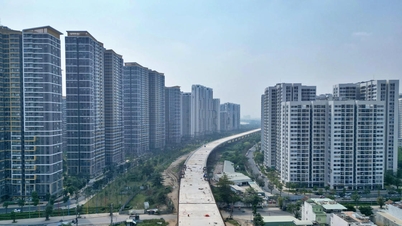
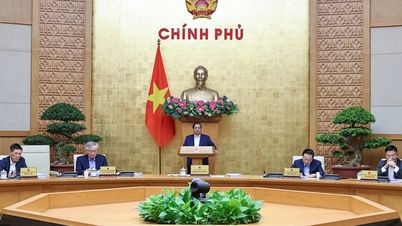
Average GDP growth in the 2021 - 2025 period is estimated at about 6.3%/year; economic scale of 510 billion USD, ranked 32nd in the world; GDP per capita of 5,000 USD; 3,245km of highways have changed the face of the country's traffic; social security work has been well implemented with the elimination of temporary and dilapidated houses; 79.3% of communes have met new rural standards, helping the rural appearance become more spacious and modern.
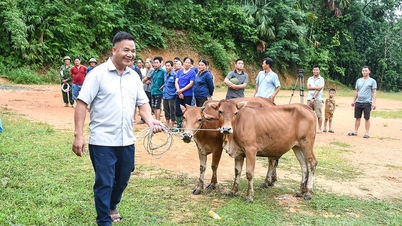
However, the National Assembly member commented that we still need to identify a problem that still exists. That is, there are specific strategies, plans, and measures to narrow the gap between rich and poor between regions, provinces, and cities; and develop production in rural areas. Physical infrastructure, electricity, roads, schools, and stations in rural areas are now much better; but on-site jobs and income for people in rural and mountainous areas are still not enough.
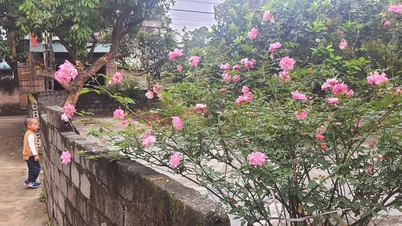
As a result, many workers leave their hometowns and flock to industrial zones in large cities to find work; leaving many villages with few young people, with only the elderly and children making up the majority; while in large cities like Hanoi and Ho Chi Minh City, the population is crowded and infrastructure is overloaded.
In fact, how to make people “leave agriculture, not leave home”, how to narrow the income gap between urban and rural areas; is a problem we have been concerned about for a long time, and there have been many drastic solutions implemented. The new rural program, infrastructure development, establishment of industrial parks and industrial clusters to attract businesses to invest... implemented in all provinces and cities are specific solutions to contribute to realizing the above goals.
In the last 5 years, we have also seen a trend of some young people starting their own businesses in their hometowns, or some people leaving urban areas to return to their hometowns to work. Or the arrangement of administrative units, merging some provinces and cities so that new localities have more resources and strengths; also aiming at one of the goals of equal development between regions.
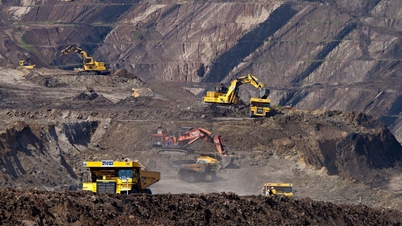
However, due to the fact that the geographical, soil, climate and cultural characteristics of the provinces and cities in the region are different, there are times when we cannot use a common solution. For example, the Northern mountainous region or some provinces in the Central region have fragmented terrain, harsh climate, arid land, and frequent natural disasters such as storms and floods; it is very difficult to develop large-scale agriculture in a modern direction or industrial zones, and it is very difficult to attract businesses to invest in large projects...
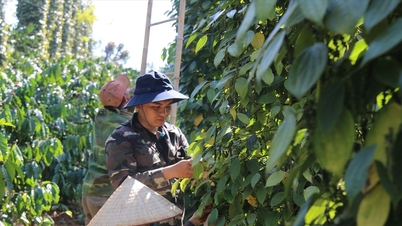
Identifying these shortcomings, we can have a new direction for in-depth development of new rural areas in some localities with more specific and priority policies; such as planning the most favorable areas, having special mechanisms on tax and credit, developing factories - production facilities associated with deep processing industry and local OCOP products to create jobs and incomes commensurate with local people...
In addition, we should strengthen the development of cultural institutions, entertainment events, and care for spiritual life. When the material and spiritual life between provinces, cities, regions, and between rural and urban areas is no longer too different, there will certainly not be many people who intend to leave their homeland.
Source: https://baophapluat.vn/phat-trien-cac-vung-mien-ben-vung-dong-deu.html
![[Photo] 60th Anniversary of the Founding of the Vietnam Association of Photographic Artists](/_next/image?url=https%3A%2F%2Fvphoto.vietnam.vn%2Fthumb%2F1200x675%2Fvietnam%2Fresource%2FIMAGE%2F2025%2F12%2F05%2F1764935864512_a1-bnd-0841-9740-jpg.webp&w=3840&q=75)



![[Photo] National Assembly Chairman Tran Thanh Man attends the VinFuture 2025 Award Ceremony](/_next/image?url=https%3A%2F%2Fvphoto.vietnam.vn%2Fthumb%2F1200x675%2Fvietnam%2Fresource%2FIMAGE%2F2025%2F12%2F05%2F1764951162416_2628509768338816493-6995-jpg.webp&w=3840&q=75)





















































































Comment (0)