

Lesson 3: Urban flooding: 'Exhausted' infrastructure
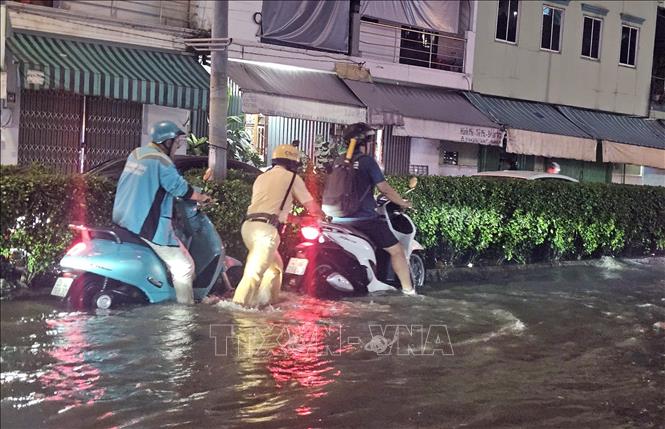
The combination of aging infrastructure, unsynchronized planning, increasingly extreme and unusual weather patterns, and rapid concreting have made many urban areas more vulnerable than ever. This is not just a problem for Da Nang and coastal cities, but many large cities are also facing pressure from increasingly extreme weather patterns.
Although not in the direct path of the storm, after the circulation of two storms No. 10 and No. 11 (late September, early October), Hanoi still suffered from prolonged heavy rains, accompanied by strong winds. The heavy rainfall from two consecutive storms caused hundreds of locations in the city to be submerged in water. Similarly, Ho Chi Minh City also experienced continuous flooding due to rain and high tides. Areas near the river were flooded, causing severe flooding. Main roads, tunnels and even central streets were also flooded, causing vehicles to drift, and people had to cope with the rising water.
The Ministry of Construction's proposal of a series of comprehensive solutions opens up expectations for a new approach, based on science, data and modern governance, towards the goal that by 2035, Vietnam's major cities can "live with" heavy rains and high tides in a safer and more sustainable way.
According to the Ministry of Construction, the drainage system of most urban areas in Vietnam today is a combined drainage network that collects both rainwater and wastewater in the same system. Most of the sewers were built before the 1990s, have small diameters, are degraded, have sedimentation and are no longer suitable for the current extreme weather conditions.
Investment resources for drainage are limited. From 1995 to 2021, the total investment capital for drainage and wastewater treatment is just over 3 billion USD – a small number compared to the demand of 250,000-300,000 billion VND from now to 2030. The State budget only meets about 20-25% of the demand; public-private partnership (PPP) projects are almost absent in this field.
Mr. Ta Quang Vinh, Director of the Department of Construction Infrastructure (Ministry of Construction), commented that urban flooding is no longer a local incident but a comprehensive challenge of planning, infrastructure and operational management. Rapid urbanization, extreme climate change and degraded infrastructure have caused many drainage systems to become overloaded.
According to updated climate scenarios, extreme rainfall in many urban areas tends to increase by 20-30% compared to the average of many years, the number of rainy days over 100 mm has doubled compared to the period 1990-2000. Along with that, sea level rises about 3-4 mm/year, high tides and saltwater intrusion are increasingly complicated.
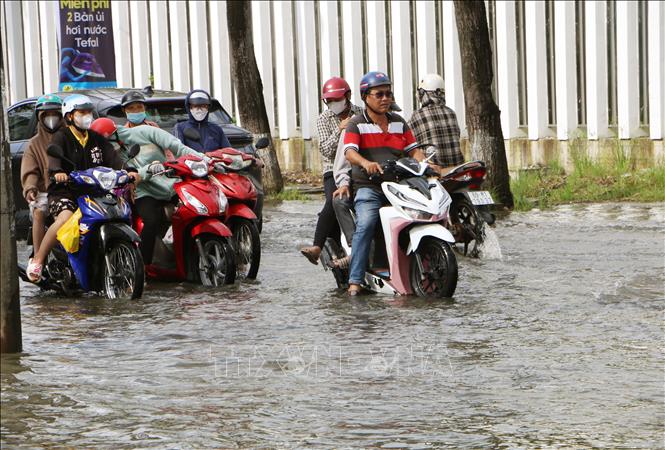
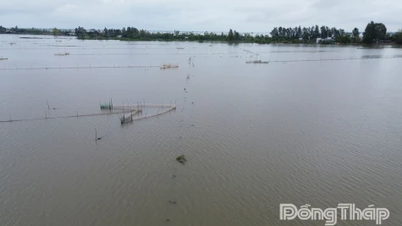
In many delta areas such as Ho Chi Minh City, Can Tho, and Ca Mau, the ground subsidence of 1.5–2.5 cm/year increases the risk of flooding. The combination of heavy rain, high tides, and rising river water causes many sewers to be unable to drain in time, and even back up from the river into the system.
Not only is infrastructure degraded, drainage planning in many urban areas also lacks inter-regional vision, lacks updated data, and lacks connection with land use, traffic, and irrigation planning.
Mr. Nguyen Hong Tien - former Director of the Department of Technical Infrastructure (Ministry of Construction) analyzed that urban drainage must be viewed from the perspective of overall and interdisciplinary planning. Many current projects are of low quality, forecasts are not close to reality, and design calculation methods are not standardized.
While hard infrastructure is focused on, green spaces and reservoirs are neglected. Not to mention that rain and flood data are still fragmented, many cities still do not have flood maps or unified databases to serve operations..., this expert cited.
In Hanoi, the drainage plan was adjusted after the historic rains of 2008, setting the target pumping station capacity at 504 m3/s. However, after 15 years, only about 1/3 of the requirement has been achieved. Many key projects such as the Yen Nghia pumping station are still behind schedule.
Chairman of the Vietnam Irrigation Association Dao Xuan Hoc affirmed that urban drainage and drainage outside the basin must be calculated comprehensively. Each project is done separately, not according to the basin, resulting in low efficiency. If the pumping stations are completed and the Lu, Set, Kim Nguu, and To Lich river systems are synchronously renovated, Hanoi will no longer have the current prolonged flooding.
Experts point out that the race to expand urban areas has caused many areas that used to be lakes, low-lying areas or canals to be filled in to make way for construction. In Ho Chi Minh City, the initial drainage plan was for 20,000 hectares, but due to changes in land use purposes, the remaining area is only about 5,000 hectares.
According to Mr. Hoc, new urban areas must reserve at least 10% of their area for ecological lakes, both to regulate the climate and to store and regulate rainwater.
Faced with this reality, the Ministry of Construction has sent a report to the Prime Minister, proposing to develop a "Project on drainage and urban flooding prevention to adapt to climate change for the period 2026-2035, with a vision to 2050".
The project will focus on many key groups of tasks such as: reviewing and adjusting drainage planning; linking drainage planning with provincial, urban, traffic, irrigation and land use planning; building a real-time database of rain and flooding...
At the same time, key investments are made in the construction of regulating lakes, dykes, tide control sluices, upgrading pumping stations in large basins and building separate drainage systems in urban areas of type I and above. In addition, digital technology is applied, flood maps are established, and smart drainage control centers are established in Hanoi, Ho Chi Minh City, Da Nang, etc. At the same time, diverse capital sources are mobilized, from the State budget as "seed capital" to combining ODA capital, green credit and especially promoting the PPP model.
Along with increasing community propaganda to limit littering, encroachment on canals, and maintaining natural flood drainage space, the goal by 2035 is to basically control flooding in large cities, and increase the rate of collection and treatment of domestic wastewater to 30-40%.
To do so, experts suggest a change in management thinking. Mr. Nguyen Ngoc Diep, Chairman of the Vietnam Water Supply and Drainage Association, said that Vietnam needs a national reform of drainage and should review all related investment and planning mechanisms. The model of flood monitoring and warning using sensors and artificial intelligence, which has been piloted in Ho Chi Minh City and Da Nang, should be considered an inevitable trend in modern urban management.
Although many localities are making efforts to invest in upgrading infrastructure, solving flooding cannot rely solely on local technical measures. Director Ta Quang Vinh emphasized that to solve the problem sustainably, it is necessary to start with good planning, update technical standards and synchronous investment according to the basin. It is necessary to have a data-based approach and smart management, not just handle each flooding point as is currently the case.
Lesson 4: River basin governance needs a new model
Source: https://baotintuc.vn/xa-hoi/thich-ung-thien-tai-vuot-quy-luatbai-3-ngap-ung-do-thi-ha-tang-duoi-suc-20251203105438262.htm
![[Photo] Worshiping the Tuyet Son statue - a nearly 400-year-old treasure at Keo Pagoda](/_next/image?url=https%3A%2F%2Fvphoto.vietnam.vn%2Fthumb%2F1200x675%2Fvietnam%2Fresource%2FIMAGE%2F2025%2F12%2F02%2F1764679323086_ndo_br_tempimageomw0hi-4884-jpg.webp&w=3840&q=75)




![[Photo] Parade to celebrate the 50th anniversary of Laos' National Day](/_next/image?url=https%3A%2F%2Fvphoto.vietnam.vn%2Fthumb%2F1200x675%2Fvietnam%2Fresource%2FIMAGE%2F2025%2F12%2F02%2F1764691918289_ndo_br_0-jpg.webp&w=3840&q=75)













































































Comment (0)