

Priority is given to recruiting practical workers.
Regarding the labor market at the end of 2025, Mr. Vu Quang Thanh, Deputy Director of the Hanoi Employment Service Center, shared that businesses have been recruiting large numbers of workers. For example, October 2025 marked an explosion in the demand for human resources of businesses with an estimated 50,000 vacancies. This is a clear demonstration of the determination of businesses to maintain operations and prepare human resources for year-end production and business plans.

Based on survey data from the Hanoi Employment Service Center, the commercial service sector accounts for more than 45%, followed by the demand for human resources in the industrial, processing and manufacturing sectors, which has accelerated to 24.2%; followed by the information technology and digital technology sectors...
Meanwhile, according to Anphabe Company, in the period of 2025-2035, the demand for trained human resources accounts for over 95%, of which university level is about 25%. In the period of 2025-2035, the labor market will be highlighted with 4 main trends: Increasing labor on technology platforms; career transition associated with soft skills; shrinking simple labor; increasing trend of self-employment and entrepreneurship.
Currently, about 68% of jobs require basic digital skills, while 20% require specialized digital skills. It is forecasted that in the period 2025 - 2035, Vietnam will need a large number of high-quality human resources in the fields of technology, engineering, economics and modern services.
Mr. Le Quang Trung, former Deputy Director in charge of the Department of Employment, commented that in the context of rapid technological development and increasingly widespread digital transformation trends, the labor market also faces many major changes in working forms, recruitment needs, and skill requirements.
“The rapid development of artificial intelligence (AI) is developing the labor market in a new direction, requiring human resources to be trained in depth and updated regularly to meet new requirements. Workers need to be proactive, improve their skills and knowledge, and prepare for change to suit labor market trends,” said Mr. Trung.
Ms. Nguyen Thi Lan Huong, former Director of the Institute of Labor and Social Sciences, said that the rapid development of technology and automation has changed many professions, and modern jobs that require new technology skills are attracting many workers. In addition, young, trained workers are often given priority in recruitment because they are newly trained, have the ability to use technology and can be willing to work for lower wages.
Director of the Department of Startups and Technology Enterprises (Ministry of Science and Technology) Pham Hong Quat also stated that AI will create a global economic impact of up to 5,000 billion USD by 2030 and Vietnam alone can benefit up to 130 billion USD by 2040 thanks to AI increasing productivity, automation and decision support. Faced with such a huge opportunity, Vietnam is ready to enter the development stage as an AI country in the future by forming an AI ecosystem with the participation of research institutes, universities, the state sector, large enterprises, startups, investment funds and international partners. AI is present in every industry and field, from manufacturing, healthcare, education to finance, agriculture or logistics.
Training to meet human resource needs
In the context of AI, data and automation reshaping the global labor market, FPT University (FPTU) announced the expansion of its training portfolio and restructuring of its program according to three pillars of future employment: Technology – AI – data; Business – modern services; Media – creativity – digital content. The new portfolio will be applied from the 2026 enrollment period.
In 2026, FPTU will introduce a series of new majors, including Applied Data Science, Integrated Marketing Communications, Brand Communications, E-commerce, Entertainment and Event Management, Customer Experience Management, Purchasing Management, Business Analytics and Business Language majors (English - Korean - Chinese).
In particular, FPTU launched the talented bachelor program in Computer Science - an elite training program with selective entrance standards and in-depth orientation for students with outstanding technological abilities. The program includes two key majors: Artificial Intelligence and Data Science and Cyber Security and Digital Safety - fields that are being prioritized by the world's leading technology, finance, trade and manufacturing corporations.
The addition of new majors is built by FPTU based on market data analysis, global career forecasts and business consultation in the FPT ecosystem, to ensure that students learn the right skills for the future market.
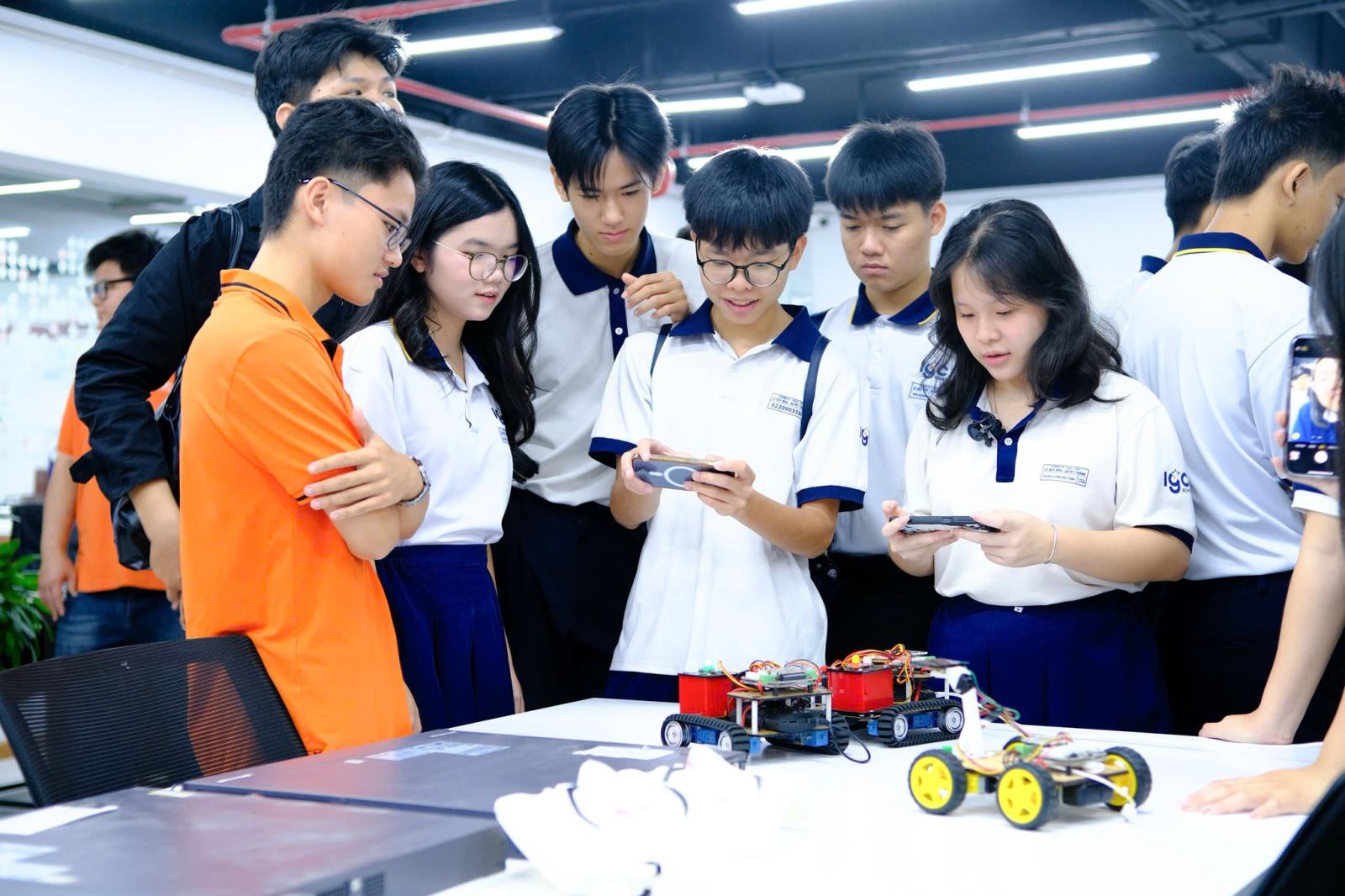
FPTU’s training model closely combines academics and practical experience through OJT (On the Job Training) semesters, projects assigned directly by businesses, a lab-studio-innovation hub system, international exchange programs and a multidisciplinary project community. All are implemented in an environment that still preserves Vietnamese cultural identity, helping students to both “live in their future careers” and practice cross-cultural working skills – an important factor for integration and development on a global scale.
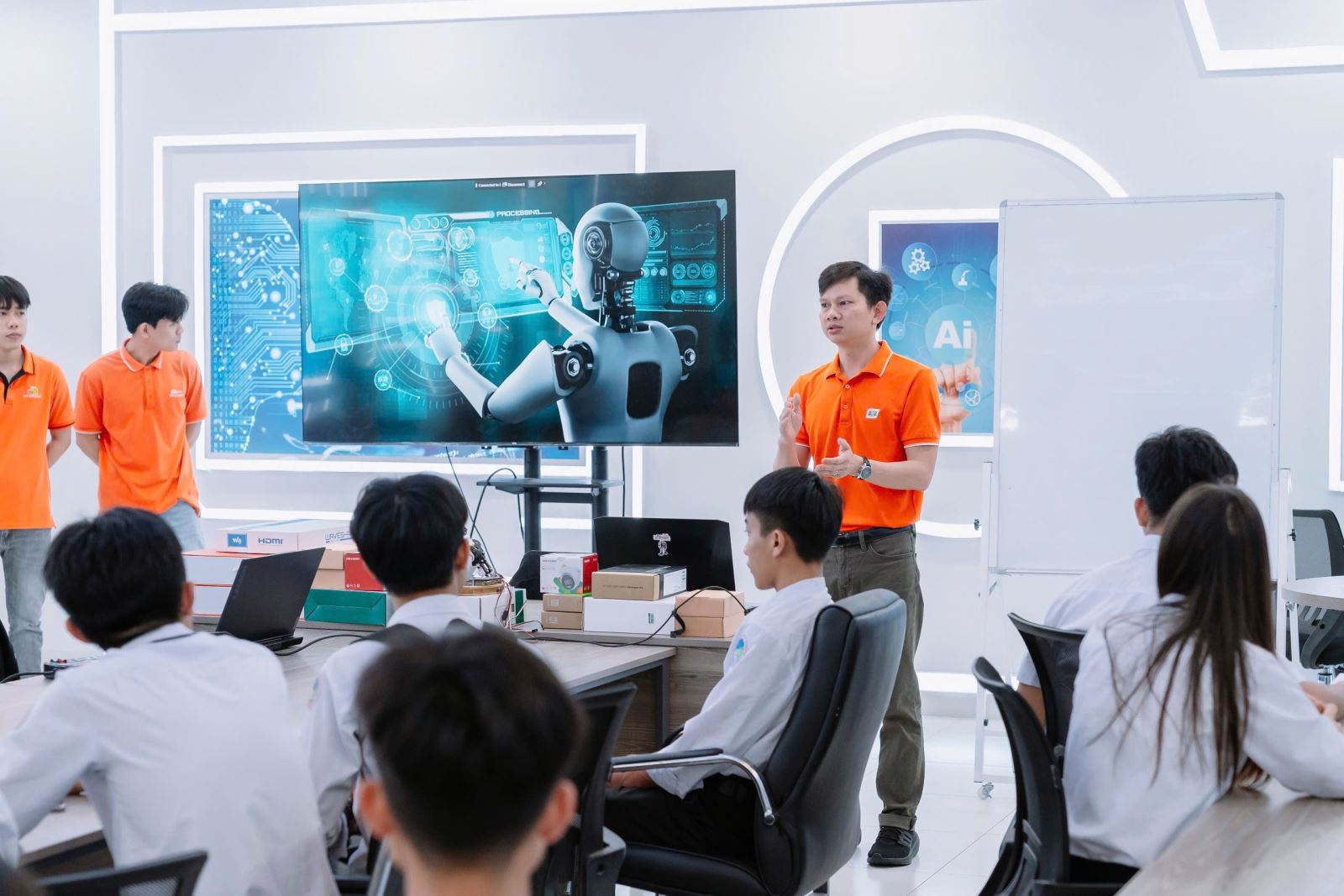
Besides, major universities such as Hanoi University of Science and Technology, Hanoi National University, Ho Chi Minh City National University, and Danang University have also established institutes, centers, or majors on AI.
Along with that, the National Innovation Center and many business incubators are actively connecting research with the market, contributing to expanding the AI human resource and product ecosystem. State policies are also creating a strong driving force. Resolution 57-NQ/TW dated December 22, 2024 of the Politburo on breakthroughs in science, technology, innovation and national digital transformation identifies AI as one of the key areas for economic development.
Source: https://baotintuc.vn/xa-hoi/su-phat-trien-nhanh-chong-cong-nghe-moi-lamthay-doi-nhieu-nganh-nghe-20251203114821693.htm






















![[Photo] Parade to celebrate the 50th anniversary of Laos' National Day](/_next/image?url=https%3A%2F%2Fvphoto.vietnam.vn%2Fthumb%2F1200x675%2Fvietnam%2Fresource%2FIMAGE%2F2025%2F12%2F02%2F1764691918289_ndo_br_0-jpg.webp&w=3840&q=75)



















































Comment (0)