

In recent days, the news that Ho Chi Minh City plans to test flying cars has been of interest and discussion to the public. Besides the supportive views, there are also opinions that the development of flying vehicles in urban areas will face many barriers and challenges.
Dan Tri Newspaper had an interview on this issue with Dr. Nguyen Thi Hai Hang, Director of the Vietnam Aviation Academy. She is contributing to the Vietnam Aviation, Space, Unmanned Aerial Vehicle Network (AUVS VN) and the Low Altitude Economic Alliance in developing this new economic sector in Vietnam.
Opening up the vacant sky
In its plan to test flying cars, Ho Chi Minh City mentioned this vehicle as part of the low-end economy. Could you explain this concept more clearly?
- For Vietnam, low-level economy (or low-level space economy) is a new concept. In the world , this concept has been developed since 2010.
It includes the operation of flights at altitudes below 1,000m (in some cases up to 3,000-5,000m), separate from civil aviation operations which operate at approximately 10,000m altitude.

Dr. Nguyen Thi Hai Hang, Director of Vietnam Aviation Academy (Photo: HVHK).
The low-altitude economy is emerging as a promising economic sector thanks to advances in the manufacture of unmanned aerial vehicles (UAVs/drones) and electric vertical take-off and landing (eVTOL) aircraft. They help provide diverse commercial services to meet the needs of modern life.
In Vietnam, low-altitude economics is a story of space exploitation that has been "closed" until now. It is not just a matter of producing a few types of drones for export but requires creating an entire ecosystem for development.
According to you, what conditions does a country like Vietnam need to create a low-altitude space ecosystem?
- The ecosystem of the low-level economy consists of four basic pillars. The first is the legal framework, including aircraft design standards, manufacturing standards, airworthiness standards and related safety and security standards.
The second is technology and manufacturing, including core technology and supporting technology. The research, development and domestic production of new types of drones, eVTOLs, flight control systems, batteries, charging stations and related technologies require a special supply chain.
Third is service exploitation and supply. This is the core part of the low-level economy, including activities such as freight transport (delivery, emergency medical transport, etc.); passenger transport (flying cars, flying taxis); specialized services such as infrastructure monitoring, terrain surveying, firefighting, rescue, data collection, etc.
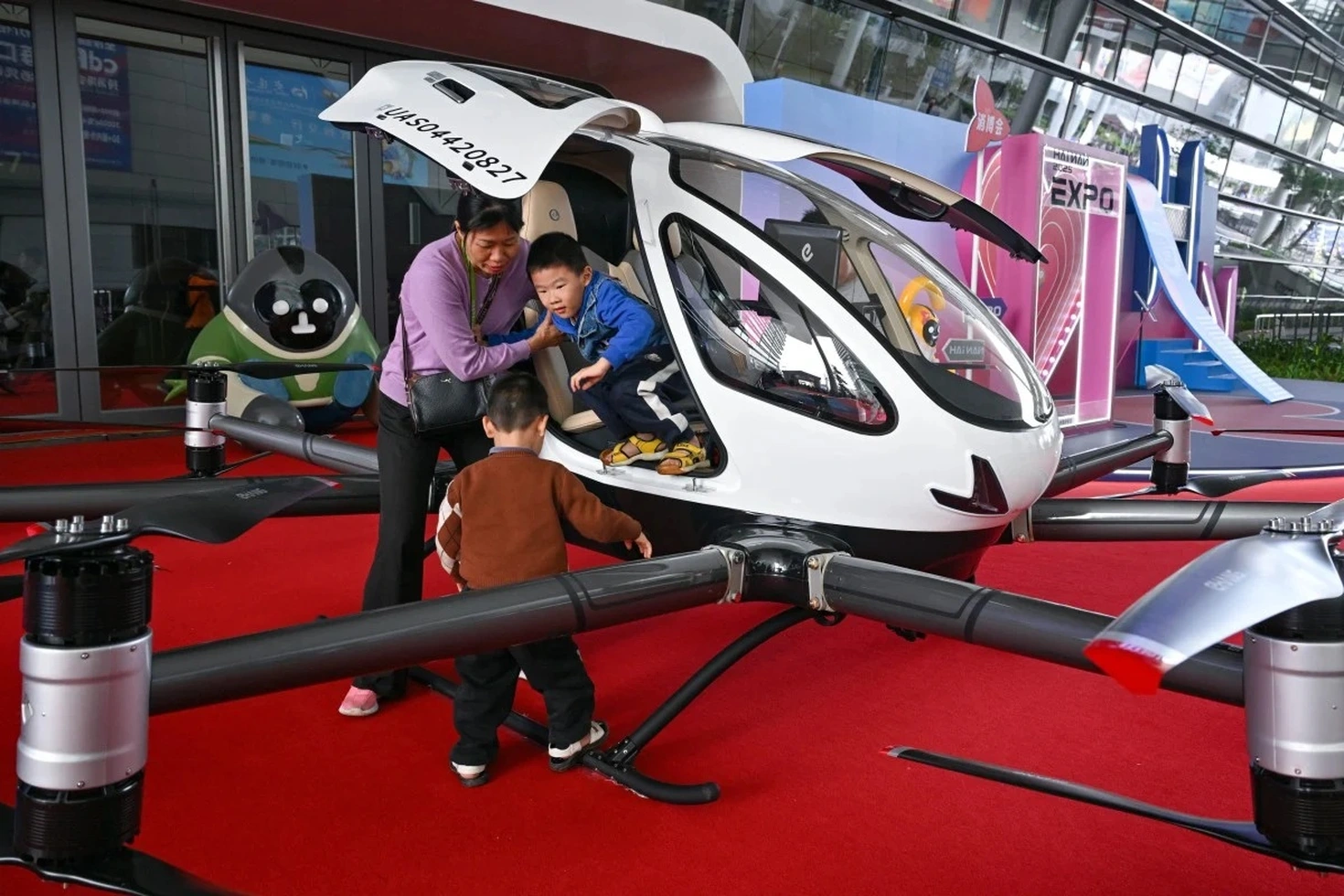
The core of the low-level economy includes freight transport, passenger transport such as flying cars, flying taxis, specialized services such as infrastructure monitoring, rescue...
Dr. Nguyen Thi Hai Hang, Director of Vietnam Aviation Academy
The fourth is infrastructure development, including the construction of "vertiports" (airports for eVTOL) and air traffic management systems for unmanned aircraft (UTM - UAV Traffic Management).
So the low-altitude economy is not just about aircraft. It includes the technology supply chain, manufacturing, and regulatory systems that enable the efficient exploitation of new aircraft and the safe coordination of their operations.
You mentioned domestic drone production as a pillar. Why not simply import the aircraft from abroad and set up an airspace to operate in?
- In my opinion, this depends on our management perspective. Recently, the world has witnessed the Ehang (China) company's human-carrying UAV being licensed to conduct flights in Thailand and Dubai.
These countries see UAVs as a means of transport for management. Currently, Vietnam has about 10,000 drones flying for agricultural purposes, most of which are of Chinese origin.
However, low-altitude flying vehicles have their own unique characteristics. Airspace does not have clear physical boundaries like roads, making it more difficult to control and the risks related to security, safety, etc. are also greater.
In the Vietnamese UAV community, there are concerns about the country’s dependence on aircraft imported from another country. Each drone risks becoming a spy network, sending information to servers located abroad.
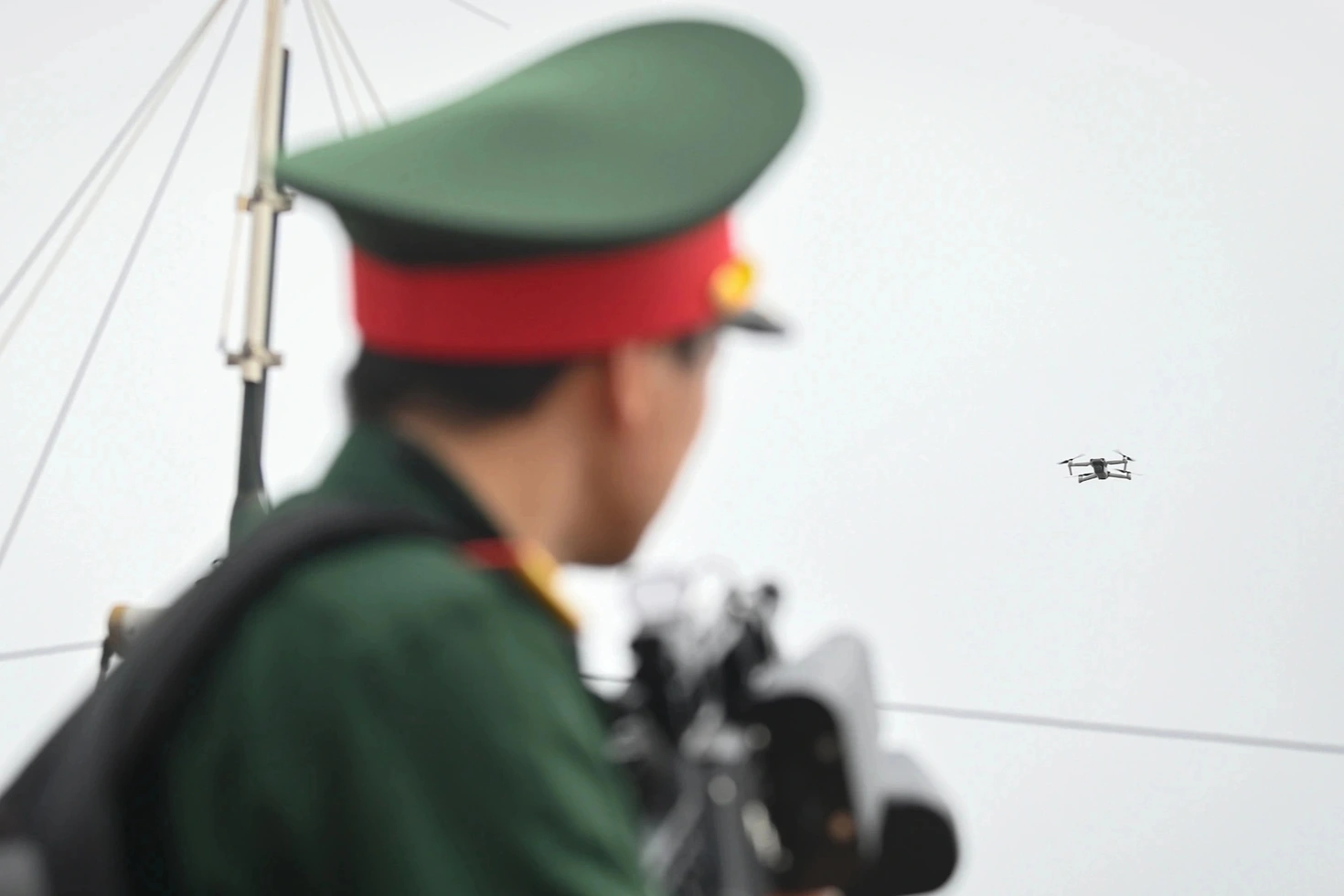
The development of unmanned aerial vehicles comes with security risks (Illustration: Manh Quan).
However, I would like to emphasize that all countries put security and safety first, not just Vietnam. The issue is how confident we are in managing and controlling our airspace to serve economic development without sacrificing national safety and security.
As these new aircraft are widely used for civilian transport, we must implement an effective low-altitude airspace management system.
Low-altitude aviation prospects in Ho Chi Minh City
Recently, the People's Committee of Ho Chi Minh City announced that it will establish a controlled free space for testing low-altitude flight services, including passenger transport such as flying cars. Is this a promising step?
- Ho Chi Minh City has reached the step of suggesting the formation of a sandbox (test space) for exploiting low-altitude airspace. This is a strategic shift to open up new business space, promoting economic growth through technological innovation.
Flying cars and taxis will be a high-level development of the low-level economy, because they are related to transportation and ensuring human life. In the immediate future, exploiting low-level airspace for logistics, delivery, relief, urban management, etc. are closer goals.
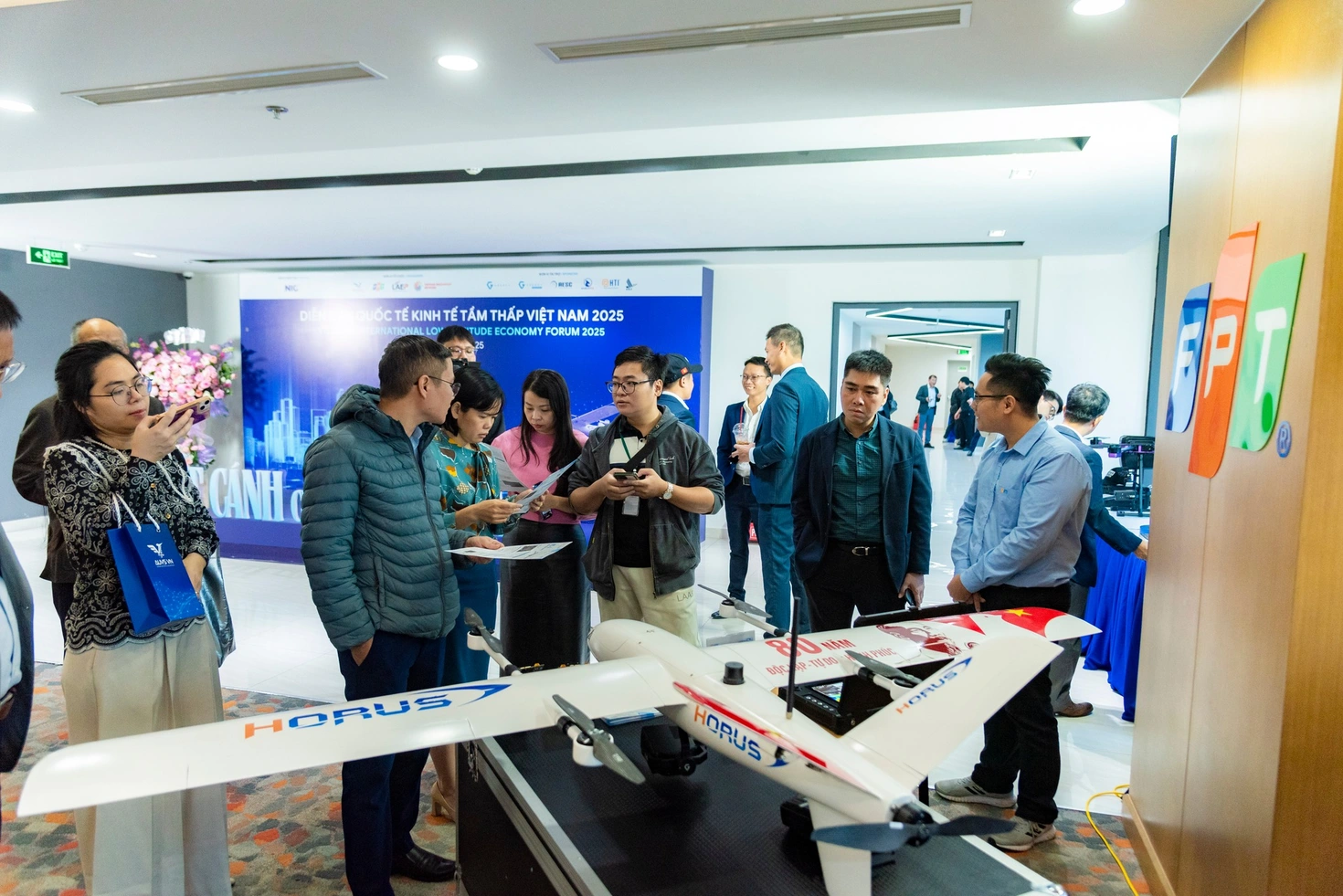
Experts say that Vietnam needs to be self-sufficient in UAV/drone production technology (Photo: HVHK).
Ho Chi Minh City and other megacities around the world are all “stuck” with relatively similar problems: traffic congestion, environmental pollution, unbalanced development between the urban core and the suburbs… Low-level economy is an effective solution to these problems. It opens up more space that has not been explored before.
However, low-altitude flight operations pose many operational risks that need to be carefully addressed with a systematic approach to ensure safety and security.
Could you please share some of the initial activities that have been carried out to research and apply low-level economics in Vietnam?
On August 25, the Vietnam Aviation, Space, and Unmanned Aerial Vehicle Network (AUVS VN) was launched in Hanoi under the auspices of the National Innovation Center (NIC), aiming to realize the goals of Resolution 57-NQ/TW of the Politburo on breakthroughs in science and technology development, innovation and digital transformation.
By October, the Low-level Economic Alliance was established by 10 heads of businesses, organizations, and investment funds, committing to work together in developing the low-level economy in Vietnam in the coming time.
On November 14, the International Forum on Low-Wage Economy was held for the first time in Vietnam with the theme "Shaping the future of the low-wage economy in Vietnam - From policy to practice".
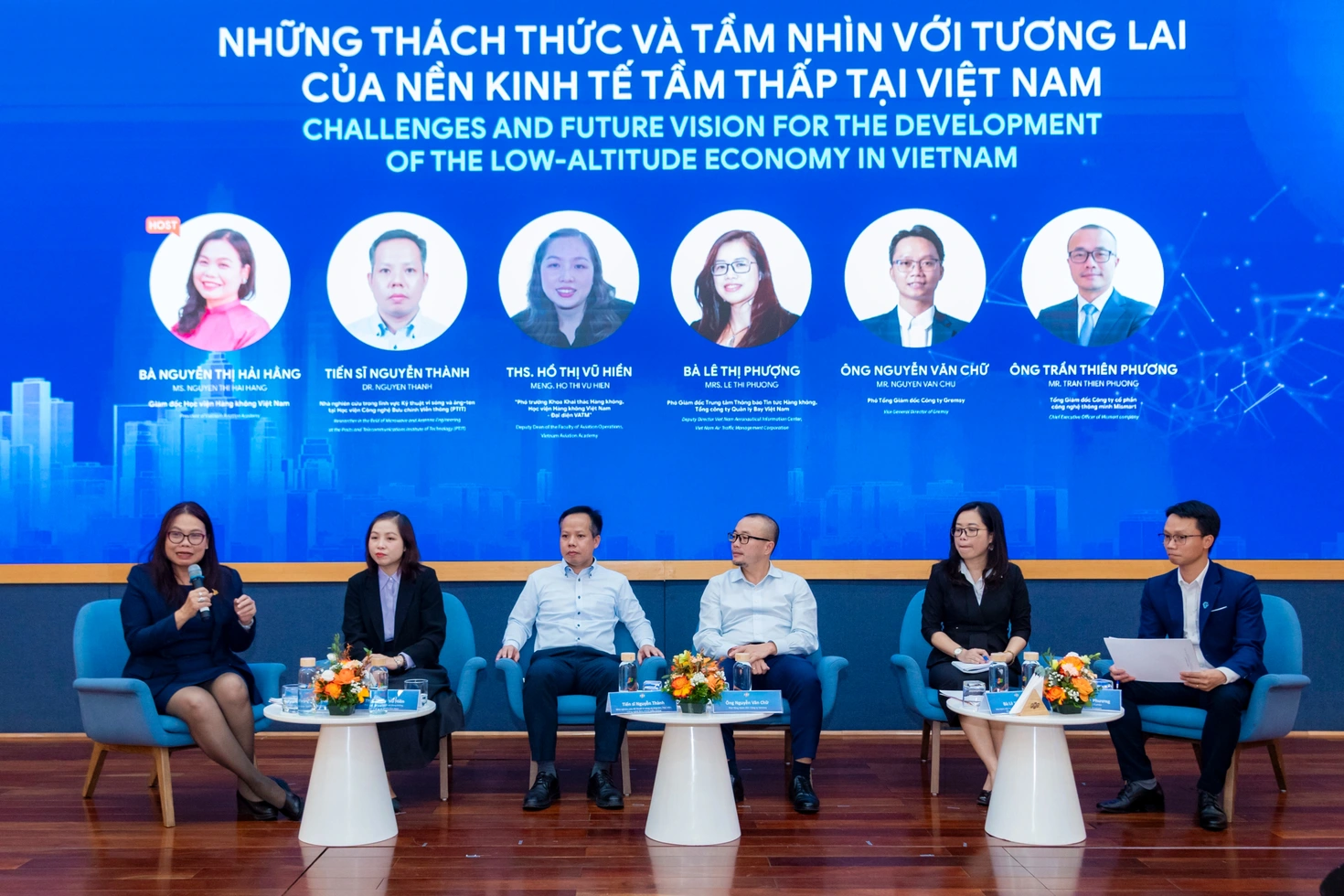
Dr. Nguyen Thi Hai Hang shared at the international forum on Vietnam's low-income economy in 2025 (Photo: HVHK).
In the near future, to quickly catch up with the world's development trends, the Low-level Economic Alliance, whose core is the businesses and member organizations in AUVS VN, will have a master plan to turn the policy of low-level economic development in Vietnam into reality.
However, to achieve these big goals, there needs to be strong determination and specific action plans from the political system, business community, and research and training organizations in this field in Vietnam.
At the strategic level, can Vietnam consider the low-end economy as a driving force for national economic growth?
- I think it is still quite difficult to make the low-end economy a growth driver in the next 5 years with the current implementation, although the low-end economy is receiving attention from leaders at all levels.
This concern needs to become a will, reflected in the country's development strategy and concretized into consistent, open but strict policies. I would like to emphasize the keywords "consistent", "open" and "strict".

Low-altitude aviation is not only a subject of strict management but also an economic sector with the potential to promote growth.
Dr. Nguyen Thi Hai Hang, Director of Vietnam Aviation Academy
If we have strong and specific policies and the cooperation of localities, we can rely on available technological achievements, gather forces and intelligence to go faster, and soon turn the low-level economy into a long-term growth driver of the country.
With such a new field, where should we start?
- We must start with the vision of the country's leaders, the leaders of departments and localities. If we want to but are still hesitant, we can choose some experimental areas and have breakthrough policies for these areas.
From these sandboxes, we continuously review policies and make adjustments to ensure regulatory rigor, while remaining flexible to support businesses entering this economy in its early stages.
In terms of management thinking, it is necessary to change the way we view low-altitude aviation activities, not only as a "subject" of strict management but also as an economic sector with the potential to promote growth.
Thank you very much!
Dantri.com.vn
Source: https://dantri.com.vn/thoi-su/o-to-bay-va-bai-toan-mo-nen-kinh-te-khong-gian-tam-thap-o-tphcm-20251203000748590.htm
![[Photo] Cat Ba - Green island paradise](/_next/image?url=https%3A%2F%2Fvphoto.vietnam.vn%2Fthumb%2F1200x675%2Fvietnam%2Fresource%2FIMAGE%2F2025%2F12%2F04%2F1764821844074_ndo_br_1-dcbthienduongxanh638-jpg.webp&w=3840&q=75)









































![[VIMC 40 days of lightning speed] Da Nang Port: Unity - Lightning speed - Breakthrough to the finish line](https://vphoto.vietnam.vn/thumb/402x226/vietnam/resource/IMAGE/2025/12/04/1764833540882_cdn_4-12-25.jpeg)
































Comment (0)