

Statistics show that the total outstanding consumer credit balance in Ho Chi Minh City and Dong Nai province, according to actual data, by September reached 1.5 million billion VND, accounting for 27.1% of the total outstanding credit balance and an increase of 8.65% compared to the end of 2024.
Of which, outstanding consumer credit in Ho Chi Minh City accounts for the majority, accounting for 92.8% of total outstanding consumer credit; Dong Nai accounts for 7.2% of total outstanding consumer credit.
Analyzing by purpose of capital use, credit loans for purchasing, leasing houses for residence; construction, repair of houses and transfer of land use rights for housing construction still account for the highest proportion of total outstanding credit. Specifically, by the end of September, the total outstanding credit loan balance for this sector was VND 906,100 billion, accounting for more than 61% of total outstanding consumer credit and an increase of 7% compared to the end of 2024.
The data also shows good growth in consumer credit such as purchasing household appliances and equipment and consumption and daily living expenses of individuals and households. Specifically, outstanding loans for this segment are VND 251,800 billion, accounting for 17% of total outstanding consumer credit and increasing by 27% compared to the end of 2024.
Consumer credit results in Ho Chi Minh City and Dong Nai province over the past 9 months have reflected a growth trend, and at the same time had a positive impact on production, business, trade and services activities and economic growth.
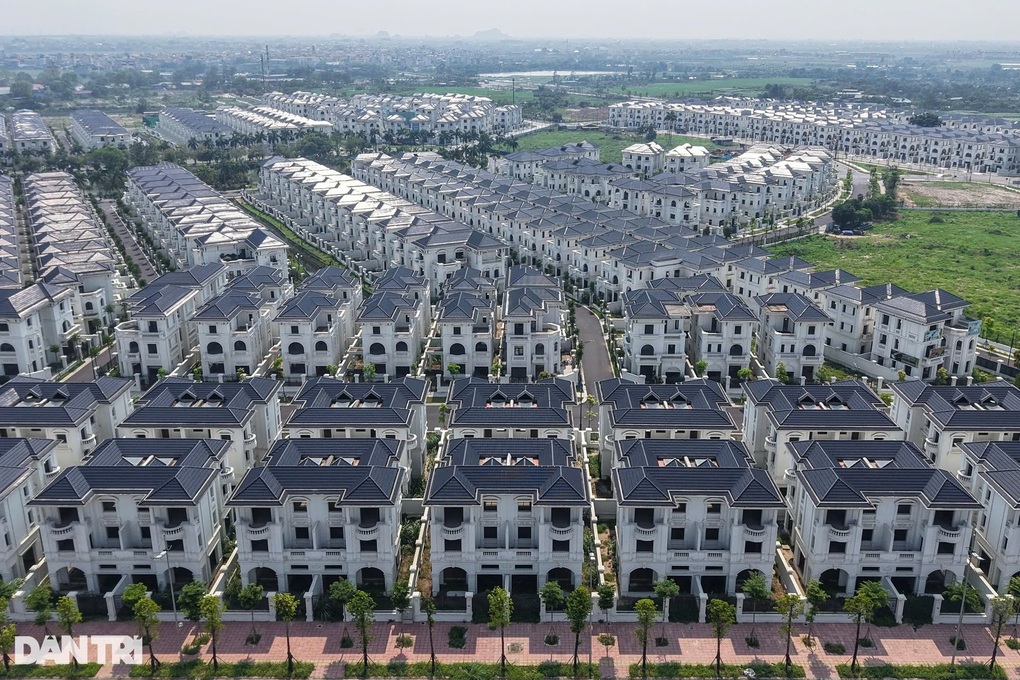
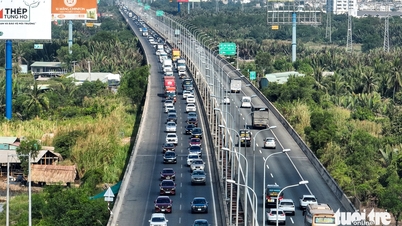
More than 906,100 billion VND in credit in Ho Chi Minh City and Dong Nai "poured" into real estate (Photo: DT).
From a management perspective, Mr. Nguyen Duc Lenh - leader of State Bank Region 2 - said that analyzing credit balances according to capital usage purposes is important in helping to evaluate the effectiveness of credit activities and orient tasks and solutions, as well as effectively implementing the Central Bank's credit policy mechanism for socio-economic development.
In particular, classifying and understanding the situation of consumer credit activities not only serves management and administration to ensure effective credit growth and risk control, but also contributes significantly to supporting and promoting economic growth, promoting the consumption factor, as a driving force for economic growth.
He also emphasized that the expansion, innovation and application of technology in consumer credit activities, as well as the use of payment service utilities, will continue to be the driving force for consumer credit growth.
Source: https://dantri.com.vn/kinh-doanh/hon-906100-ty-dong-tin-dung-tai-tphcm-va-dong-nai-do-vao-nha-dat-20251204180302371.htm


![[Photo] Cat Ba - Green island paradise](/_next/image?url=https%3A%2F%2Fvphoto.vietnam.vn%2Fthumb%2F1200x675%2Fvietnam%2Fresource%2FIMAGE%2F2025%2F12%2F04%2F1764821844074_ndo_br_1-dcbthienduongxanh638-jpg.webp&w=3840&q=75)


















































![[VIMC 40 days of lightning speed] Da Nang Port: Unity - Lightning speed - Breakthrough to the finish line](https://vphoto.vietnam.vn/thumb/402x226/vietnam/resource/IMAGE/2025/12/04/1764833540882_cdn_4-12-25.jpeg)












































Comment (0)