

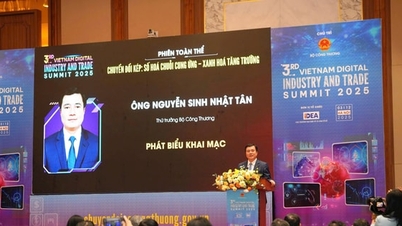
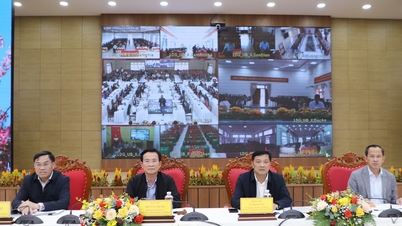
At the forum "Digital transformation of the industry and trade sector by 2025 with the theme: "Dual transformation: Digitalizing the supply chain - Greening growth" held on December 3 in Hanoi, Deputy Minister of Industry and Trade Nguyen Sinh Nhat Tan commented that Vietnam's digital economy is changing strongly, becoming a new pillar to help improve productivity and resilience of the economy. Notably, retail e-commerce is forecast to surpass the 25 billion USD mark, continuing to play a pivotal role in the Internet economy.
The Deputy Minister emphasized that 2025 was identified by the Government as the year to accelerate the implementation of Resolution 57 on scientific and technological breakthroughs and digital transformation. The industry and trade sector aims for comprehensive innovation to take advantage of opportunities from "dual transformation" - the intersection between digital transformation and green transformation.
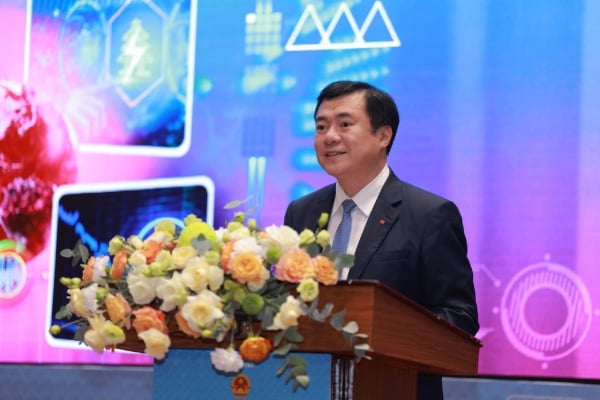
Clarifying this orientation, Mr. Hoang Ninh - Deputy Director of the Department of E-commerce and Digital Economy said that the industry will continue to promote three pillars: Digital Government, digital economy and digital society.
In fact, the industry and trade sector is leading in terms of satisfaction with online public services (achieving a perfect score of 18/18). Regarding the digital economy, the industrial production index (IIP) increased by 8.4% - the highest level in the past 5 years. About 90% of processing and manufacturing enterprises have deployed digital solutions; 35% have applied robots and sensors and 10-12% have reached the level of smart factory 3.0. The energy sector has also transformed strongly with smart metering systems and real-time operational management.
Mr. Ninh also said that Vietnam's digital economy is expected to reach 39 billion USD by 2025, continuing to be among the fastest growing in the region; more than 40 AI startups have attracted 123 million USD in private capital; 81% of users interact with AI daily and 96% express trust in AI agents.
According to Mr. Ninh, digital transformation is only truly sustainable when it brings measurable value to people and businesses. Better services for people, more transparent markets for businesses, lower production costs, cleaner energy and higher market confidence.
"Entering 2026, based on the results achieved, the Industry and Trade sector has identified this as the year to create a strategic breakthrough digital source by standardizing national e-commerce data; synchronously deploying the new generation smart factory model; expanding smart energy measurement and management nationwide. These are three important pillars in the digital transformation of the industry, helping to improve the efficiency of higher development and movement", affirmed the Deputy Director of the Department of E-commerce and Digital Economy.
From a local perspective, Mr. Le Van Binh - Party Secretary, Chairman of the People's Council of Phuong Duc commune (Hanoi) shared the story of "awakening the land of hundreds of professions". Here, digital transformation is no longer a macro concept but has entered the life of craft villages, helping to shift from manual business to modern distribution on a digital platform.
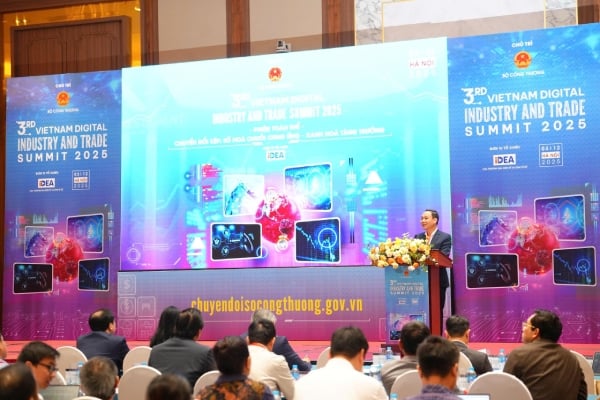
According to Mr. Binh, technology helps craft villages gradually approach the market, increase product value and improve management quality. The transformation from a manual business model to a modern distribution model through a digital platform has contributed to proving that digital transformation is only truly sustainable when it spreads to every grassroots level, where small-scale production and business activities are facing new requirements for innovation and market access.
In the energy sector – a key pillar in the green growth strategy of the Industry and Trade sector, Director of the Digital Transformation Strategy Institute (DTSI) Le Nguyen Truong Giang emphasized the role of data, comparing data to the key "input", creating a new value cycle for businesses.
The application of advanced technologies, from big data analytics, IoT to automated control systems, is opening up great opportunities to optimize the entire energy production and distribution chain.
Mr. Giang also shared that green transformation is the next stage of development in the digital transformation process, because green transformation cannot be carried out without achieving a certain level of digitalization sufficient to create a "qualitative transformation".
Meanwhile, Ms. Dang Thuy Trang - External Relations Director of Grab Vietnam emphasized the role of digital platforms in supporting local economic development. Through cooperation agreements with Hue and Da Nang cities in 2025, Grab has supported the optimization of urban operations, digitalization of local eateries and promotion of tourism and cuisine.
In addition to providing tools such as GrabMaps or order management systems for partners, this business also focuses on training digital skills and AI for drivers and merchants. Initiatives such as digitizing cyclo services in Hue or combining smart mobility with the Metro system show that digital transformation is creeping into every service and transportation activity, contributing to changing the face of the local economy.
Source: https://doanhnghiepvn.vn/chuyen-doi-so/tang-toc-xanh-hoa-va-so-hoa-chuoi-cung-ung/20251203014731631
























![[Photo] Parade to celebrate the 50th anniversary of Laos' National Day](/_next/image?url=https%3A%2F%2Fvphoto.vietnam.vn%2Fthumb%2F1200x675%2Fvietnam%2Fresource%2FIMAGE%2F2025%2F12%2F02%2F1764691918289_ndo_br_0-jpg.webp&w=3840&q=75)


































































Comment (0)