

Coffee prices fell sharply on both international exchanges.
At the end of the trading session on December 2, the price of robusta coffee futures for January 2026 on the London exchange decreased by another 2.7% (121 USD/ton) compared to the previous session, down to 4,351 USD/ton. The futures contract for March 2026 also decreased by 2.73% (119 USD/ton), down to 4,219 USD/ton.
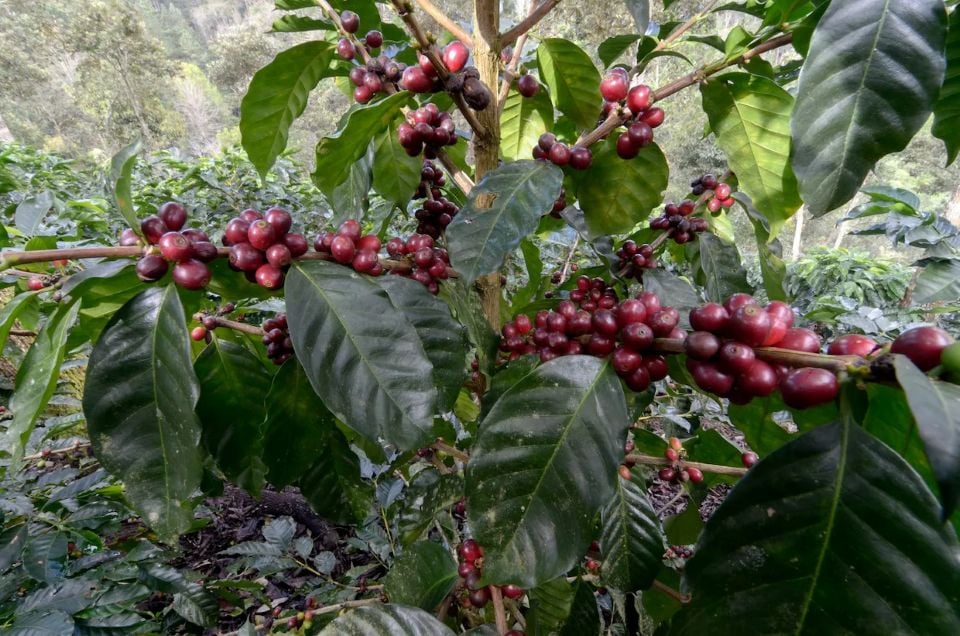
Illustration photo. Photo: Internet
On the New York Stock Exchange, the price of Arabica coffee for delivery in December 2025 recorded a smaller decrease, losing 1.44% (5.95 US cents/pound) to 405.55 US cents/pound. Meanwhile, the contract for delivery in March 2026 decreased 1.64% (6.25 US cents/pound) to 373.45 US cents/pound.
In the domestic market, on the morning of December 3, 2025, coffee prices in the Central Highlands region dropped sharply by 4,000 - 4,200 VND, currently fluctuating between 106,500 - 107,000 VND/kg.
In Lam Dong province, Di Linh, Bao Loc and Lam Ha areas all decreased by 4,000 VND/kg compared to yesterday, trading at 106,500 VND/kg.
In Dak Lak , Cu M'gar area is purchasing coffee at 107,000 VND/kg, down 4,000 VND/kg compared to yesterday; while Ea H'leo and Buon Ho are currently trading at 106,900 VND/kg.
In Dak Nong (Lam Dong province), traders in Gia Nghia and Dak R'lap sharply reduced prices by VND4,200/kg compared to yesterday, trading at VND107,000 and VND106,900/kg, respectively.
In Gia Lai, the purchase price in Chu Prong reached 106,600 VND/kg, and in Pleiku and La Grai it was 106,500 VND/kg, down 4,100 VND/kg compared to yesterday.
Harvesting activities restart in the Central Highlands
The Central Highlands, the country’s main coffee growing region, has resumed harvesting. A trader said the region has just experienced 1-2 days of dry weather, which has helped farmers, although some areas are still experiencing disruptions. This is a positive sign for the current crop.
The global coffee market continues to closely monitor the weather situation in Vietnam. Tropical storm Koto - the 15th storm to enter the East Sea in 2025 - unexpectedly weakened earlier than forecast, downgraded to a tropical depression. According to LSEG Weather Research, the impact of this storm on the Central Highlands coffee growing region is assessed to be minor.
Local sources said the tropical depression is expected to move southwest at a speed of about 5 km/h. At 1 a.m. on December 2, the center of the depression was about 200 km east of the coast of Gia Lai and Dak Lak provinces, and is forecast to weaken to level 6, with gusts of level 8.
According to the Vietnam Natural Disaster Monitoring System (VNDMS), in the next 12 hours, the tropical depression will continue to move southwest at a speed of about 10 km/h, then weaken into a low pressure area off the coast of Gia Lai - Dak Lak. This milder-than-expected weather development could help stabilize domestic coffee supply and prices.
Pepper prices continue to decline
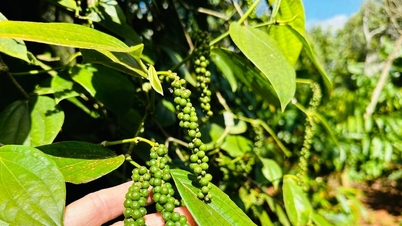
Domestic pepper prices on the morning of December 3, 2025 decreased by 500 to 1,000 VND/kg. In Dak Lak, the purchase price remained at 150,000 VND/kg, unchanged from yesterday. In Chu Se (Gia Lai), pepper prices are currently 148,000 VND/kg, down 500 VND/kg. In Dak Nong, prices remained at 150,000 VND/kg.
In the Southeast region, pepper price in Ba Ria - Vung Tau was recorded at 148,000 VND/kg, down 1,000 VND/kg; and in Binh Phuoc, it was also at 148,000 VND/kg, down similarly.
According to the International Pepper Community (IPC), the latest trading session showed that the price of Lampung black pepper (Indonesia) reached 7,004 USD/ton (up 0.21%), while Muntok white pepper reached 9,657 USD/ton (up 0.22%).
The price of Brazilian ASTA 570 black pepper remained at USD 6,175/ton. Malaysia alone recorded a sharp drop in the price of ASTA black pepper to USD 9,000/ton (down 2.17%), while ASTA white pepper fell to USD 12,000/ton (down 2.44%).
The price of Vietnamese black pepper is currently traded at 6,500 USD/ton for 500 g/l; 550 g/l is 6,700 USD/ton; and white pepper is 9,250 USD/ton.
New supply puts pressure on pepper prices
This recent drop in pepper prices is partly due to the forecast of increased output for the new crop. It is estimated that output could reach 190,000 - 193,000 tons, about 10% higher than the previous crop, provided the weather does not fluctuate abnormally. This expected abundant supply is putting downward pressure on current pepper prices.
According to the Vietnam Pepper and Spice Association (VPSA), pepper supply and demand remain balanced. However, external factors such as taxes and technical barriers are expected to strongly influence global market strategies. Stricter regulations on product quality and origin will clearly change the market share structure.
From now until the end of 2025, pepper import prices and demand are forecast to continue to increase. However, when production recovers significantly in 2026, pepper prices will be under downward pressure. Businesses need to proactively control inventories and sources of goods to take advantage of the high demand period at the end of the year.
VPSA recommends that businesses should make use of reasonable reserves to promote transactions. Strategic factors such as export taxes, transportation costs and regulations on goods origin will continue to reshape the global market share structure. Despite market fluctuations, Vietnam still maintains a competitive advantage thanks to stable quality and long-term export experience.
Source: https://doanhnghiepvn.vn/kinh-te/gia-nong-san-3-12-2025-ca-phe-va-ho-tieu-dong-loat-giam-manh/20251203100922139
























![[Photo] Worshiping the Tuyet Son statue - a nearly 400-year-old treasure at Keo Pagoda](/_next/image?url=https%3A%2F%2Fvphoto.vietnam.vn%2Fthumb%2F1200x675%2Fvietnam%2Fresource%2FIMAGE%2F2025%2F12%2F02%2F1764679323086_ndo_br_tempimageomw0hi-4884-jpg.webp&w=3840&q=75)
![[Photo] Parade to celebrate the 50th anniversary of Laos' National Day](/_next/image?url=https%3A%2F%2Fvphoto.vietnam.vn%2Fthumb%2F1200x675%2Fvietnam%2Fresource%2FIMAGE%2F2025%2F12%2F02%2F1764691918289_ndo_br_0-jpg.webp&w=3840&q=75)




































































Comment (0)