

The new law has supplemented and improved many important provisions to promote research, increase the effectiveness of commercialization of scientific results, and establish a clearer and more transparent legal framework for the operation of the National Fund for Science and Technology Development. Notably, the risk management mechanism has been transformed from a strict input-based control method to a risk management model based on data, transparency and accountability. This approach expands the space for innovation, encouraging scientists to boldly pursue new, groundbreaking ideas with great potential for impact.
Risk management in financing
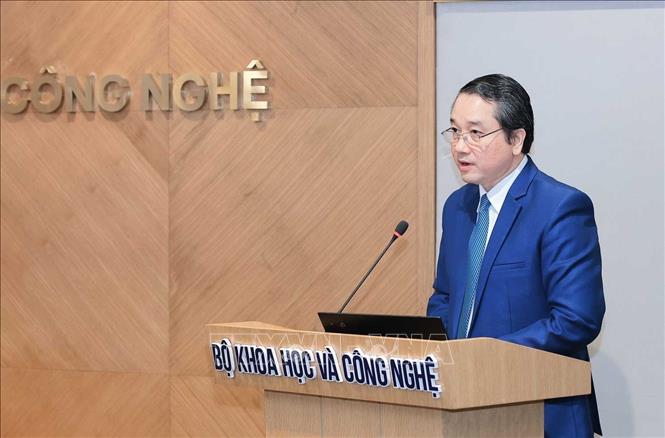
Director of NAFOSTED Foundation Dao Ngoc Chien. Photo: Hoang Hieu/VNA
According to Mr. Dao Ngoc Chien, Director of the National Foundation for Science and Technology Development (NAFOSTED), scientific research always has potential uncertainties - from technological changes, equipment limitations to objective fluctuations in implementation. If risk management is weak, the system can easily fall into two extremes: over-tightening, causing innovation to "die young", or loosening, leading to loss and inefficiency.
In science, technology and innovation, risk is an inevitable part, the State must create a reasonable risk acceptance mechanism to pave the way for innovation. Moreover, risk management is not only a requirement of the Law, but also a core capacity of a modern science and technology system. “If we manage risks well, we can protect the budget, protect scientists and above all, pave the way for breakthroughs that society expects,” said Mr. Dao Ngoc Chien. He also commented that including risk management content in the Law on Science, Technology and Innovation is a turning point to bring Vietnam closer to international practices of the Organization for Economic Cooperation and Development (OECD), Korea, Singapore, Europe and the United States; at the same time, lay the foundation for a modern risk management ecosystem, integrated with digital and consistent with the principles of the Law. Following that orientation, NAFOSTED has identified risk management as a key component in the Fund's operating model.
Over the past time, the Fund has built a comprehensive risk management framework; deployed the 3-line-of-defense model according to OECD practices; built a set of criteria for identifying, classifying and scoring risks for each task; applied a monitoring mechanism according to the "task life cycle" and, in particular, integrated the entire risk management process into the digital platform.
Each mission must clearly identify risks at the beginning of the application; the selection process is supported by scientific board assessment and blind peer review; implementation is continuously monitored via a real-time online system; early warnings are triggered when there are signs of abnormalities and output data is tracked for a minimum of 5 years for application and commercialization evaluation. This transformation makes the Fund more transparent, data-driven risk indicators, early warning and prevention more effective, and expands the space for scientists to pursue bold ideas.
New management philosophy of Vietnamese science
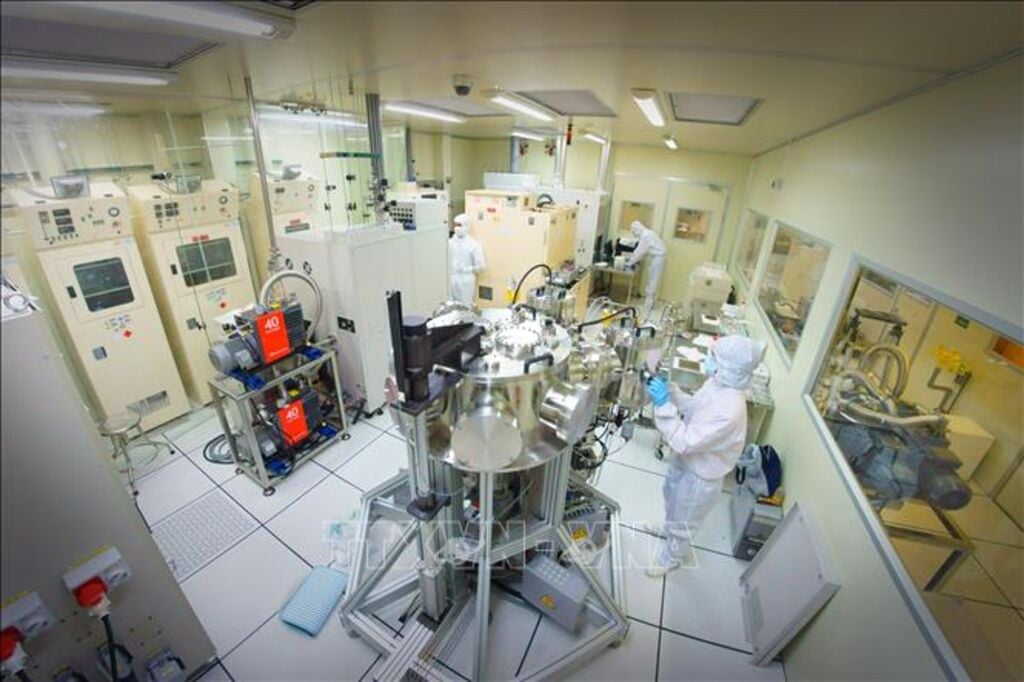
Modern nanotechnology research lab of Ho Chi Minh City National University. Photo: VNA
Regarding risk management, Ms. Nguyen Thi Ngoc Diep, Deputy Director of the Department of Social Sciences, Humanities and Natural Sciences (Ministry of Science and Technology) said that this is not only a technical requirement but also a new management philosophy of Vietnamese science - where innovation is encouraged by accepting risks. The Law on Science, Technology and Innovation and related decrees for the first time institutionalize the viewpoint of "dare to experiment - accept risks - create innovations", establishing three types of acceptable risks: Risks in research, risks in controlled experiments and risks in venture capital.
Sharing more specifically about the risk management mechanism according to regulations, a representative of the Department of Science, Technology and Technology (Ministry of Science and Technology) said that Decree 267/2025/ND-CP detailing and guiding a number of articles of the Law on Science, Technology and Innovation on programs, tasks and a number of regulations on promoting scientific research activities, technology development and innovation has raised important points in financial management of scientific research.
Article 35 of Decree 267/2025/ND-CP guiding Article 16 of the Law on Science, Technology and Innovation stipulates the acceptance of risks in the process of research, technology development and innovation. This provision reflects the policy of shifting from compliance management to risk management, aiming to encourage responsible innovation, accepting failure within a safe and controlled scope; organizations and individuals conducting scientific research, technology development and innovation are exempted from administrative responsibility and civil liability for damage caused to the State. However, the spirit of "accepting risks" does not mean exemption from responsibility for compensation for damage, but is limited to the scope of exemption from administrative and disciplinary responsibility when organizations and individuals have fully complied with regulations on safety, ethics, scientific integrity and have an approved risk management plan.
Regarding the responsibility of risk management of organizations and individuals in scientific research, technology development and innovation, Article 37 of Decree 267/2025/ND-CP also clearly stipulates that when developing the content of scientific research, technology development and innovation, the implementing organization is responsible for identifying and analyzing the types of risks that may arise from the nature of the scientific research, technology development and innovation problem, during the implementation process. Along with that, assess the level of impact of risks on people, assets, environment, society and the organization's operations; propose measures to manage, control, respond to and overcome the consequences of risks; allocate necessary resources for risk management in the budget and implementation plan.
During the implementation process, the implementing organization and individual are responsible for fully implementing the proposed risk management measures; establishing a monitoring mechanism, early warning and timely handling when there are signs of risk; ensuring safety for people, property, the environment and compliance with the law and research ethics standards. When serious risks arise or are signs of arising, emergency response measures must be immediately activated, reported to the competent state management agency and coordinated in handling, overcoming consequences, and implementing preventive measures to limit recurrence.
Recently, the Ministry of Science and Technology has put into operation the Online Management System for Science and Technology tasks in real time, marking an important step forward in digital transformation and innovation in scientific research management in Vietnam. Minister of Science and Technology Nguyen Manh Hung emphasized that the online management system is not only a new technology product but also a foundation for innovation in the Science and Technology management model. This is a step forward for Vietnam to deploy management based on data, digital processes and international standards.
The new software system will help increase appraisal quality, shorten review time, limit errors and risks, accurately assess the contribution of each task, and especially create a professional science and technology task market.
With a new legal foundation and a modern risk management approach, the Science and Technology sector is gradually building a transparent, data-driven and innovation-encouraging ecosystem; thereby realizing the spirit of Resolution 57 and expanding space for scientists to confidently pursue bold ideas.
According to VNA
Source: https://doanhnghiepvn.vn/tin-tuc/dot-pha-theo-nghi-quyet-57-mo-rong-khong-gian-de-cac-nha-khoa-hoc-theo-duoi-nhung-y-tuong-tao-bao/20251203101527168





























![[Photo] Parade to celebrate the 50th anniversary of Laos' National Day](/_next/image?url=https%3A%2F%2Fvphoto.vietnam.vn%2Fthumb%2F1200x675%2Fvietnam%2Fresource%2FIMAGE%2F2025%2F12%2F02%2F1764691918289_ndo_br_0-jpg.webp&w=3840&q=75)
![[Photo] Worshiping the Tuyet Son statue - a nearly 400-year-old treasure at Keo Pagoda](/_next/image?url=https%3A%2F%2Fvphoto.vietnam.vn%2Fthumb%2F1200x675%2Fvietnam%2Fresource%2FIMAGE%2F2025%2F12%2F02%2F1764679323086_ndo_br_tempimageomw0hi-4884-jpg.webp&w=3840&q=75)




































































Comment (0)