


Widespread influence
Japanese electronics stores have begun limiting the number of hard drives buyers can buy, Reuters reported, citing sources familiar with the matter. Chinese smartphone makers are warning of price hikes. Tech giants like Microsoft, Google and ByteDance are scrambling to secure supplies from memory chipmakers like Micron, Samsung Electronics and SK Hynix.
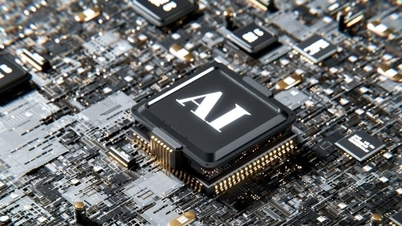
The shortage affects almost every type of memory, from flash chips used in USB drives and smartphones to advanced high-bandwidth memory (HBM) that powers AI chips in data centers. Prices in some segments have more than doubled since February, attracting traders betting that the rally will continue, according to market research firm TrendForce.
The consequences could extend beyond the tech sector. Many economists and executives warn that a prolonged shortage risks slowing AI-driven productivity gains and delaying hundreds of billions of dollars in investment in digital infrastructure. It could also add to inflationary pressures just as many economies are trying to contain price increases and avoid U.S. tariffs.
“The memory shortage has now moved from a component-level concern to a macroeconomic risk,” said Sanchit Vir Gogia, CEO of Greyhound Research, a technology consultancy. AI development “is colliding with a supply chain that can’t meet its physical requirements.”
This illustrates how the industry’s efforts to meet the huge demand for advanced chips—driven by Nvidia and tech giants like Google, Microsoft, and Alibaba—have created a dilemma: Chipmakers still can’t produce enough high-end semiconductors for the AI race, but their shift away from traditional memory products is choking off supplies for smartphones, PCs, and consumer electronics. Some companies are now rushing to adjust course.
Average inventory levels at suppliers of dynamic random access memory (DRAM) — the main type used in computers and phones — fell to two to four weeks in October, from three to eight weeks in July and from 13 to 17 weeks by the end of 2024, according to TrendForce.
The crisis is unfolding as investors question whether the billions of dollars being poured into AI infrastructure are fueling a bubble. Some analysts predict a major shakeout, with only the largest and most financially strong companies able to withstand the price increases.
The shortage will delay future data center projects, a memory chip executive said. Building new capacity takes at least two years, but memory chipmakers are wary of overbuilding because they fear it could stall if the surge in demand passes.
The memory shortage will last until the end of 2027, according to the group, SK Hynix, Citi said in November.
"We are now receiving requests for memory from so many companies that we are worried about how we will be able to handle all the orders. If we cannot supply them, they may face a situation where they cannot do business anymore," Chey Tae-won, chairman of SK Hynix Group, the parent company of SK Hynix, said at an industry forum in Seoul last month.
After ChatGPT launched in November 2022, sparking an AI boom, the global wave of AI data center construction has led memory makers to allocate more production to HBM, which is used in Nvidia's powerful AI processors.
Competition from Chinese rivals making lower-end DRAM, such as ChangXin Memory Technologies, has also prompted Samsung and SK Hynix to accelerate their transition to higher-margin products. The South Korean companies account for two-thirds of the DRAM market.
Advantages for the second-hand market
In Tokyo's Akihabara electronics hub, stores are limiting purchases of memory products to curb hoarding. A sign outside PC Ark says that starting November 1, customers will be limited to eight products, including hard drives, solid-state drives and system memory. Employees at five stores said the shortages have pushed prices up sharply in recent weeks. In some stores, a third of the products are sold out.
Products like 32-gigabyte DDR5 memory — popular with gamers — cost more than 47,000 yen, up from around 17,000 yen in mid-October. Higher-end 128-gigabyte memory kits have more than doubled to around 180,000 yen.
The price hikes are pushing customers to the secondhand market - benefiting people like Roman Yamashita, owner of iCON in Akihabara. Yamashita says his business selling used computer (PC) components is booming.
Prices are changing so rapidly that distributors are offering broker-style quotes that expire days — and in some cases hours — instead of months before prices spike, said Eva Wu, sales director at parts dealer Polaris Mobility in Shenzhen, China.
In Beijing, a DDR4 seller said she had stocked up on 20,000 products in anticipation of further price increases.
About 6,000 miles away in California, Paul Coronado said monthly sales at his company, Caramon, which sells recycled low-end memory chips from decommissioned data center servers, have soared since September. He said most of his company’s products are now bought by middlemen in Hong Kong and resold to Chinese customers.
“Before, we were making about $500,000 a month, now that number has increased to $800,000 to $900,000,” said Mr. Coronado.
Source: https://daidoanket.vn/con-sot-ai-dang-tao-ra-khung-hoang-nguon-cung-chip-nho.html





















![[Photo] Parade to celebrate the 50th anniversary of Laos' National Day](/_next/image?url=https%3A%2F%2Fvphoto.vietnam.vn%2Fthumb%2F1200x675%2Fvietnam%2Fresource%2FIMAGE%2F2025%2F12%2F02%2F1764691918289_ndo_br_0-jpg.webp&w=3840&q=75)
![[Photo] Worshiping the Tuyet Son statue - a nearly 400-year-old treasure at Keo Pagoda](/_next/image?url=https%3A%2F%2Fvphoto.vietnam.vn%2Fthumb%2F1200x675%2Fvietnam%2Fresource%2FIMAGE%2F2025%2F12%2F02%2F1764679323086_ndo_br_tempimageomw0hi-4884-jpg.webp&w=3840&q=75)





























































Comment (0)