

The “soft beating artificial heart” is designed specifically for each patient and can accurately reproduce the movement, pressure and blood flow of a real heart, significantly improving the safety and success rate of cardiovascular disease treatment.
Practice guides research
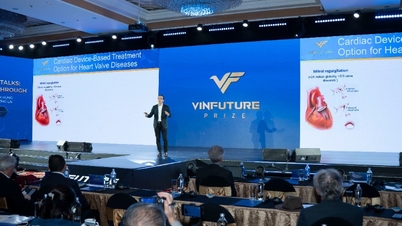
At the beginning of the speech, Associate Professor Dr. Do Thanh Nho shared about the role of the circulatory system as a miraculous organ that helps maintain life. Each person's heart can beat 2.5 to 3 billion times in a person's life, with an average life expectancy of 70-80 years. The heart helps people circulate nearly 200 million liters of blood, equivalent to filling more than 80 Olympic-sized swimming pools.
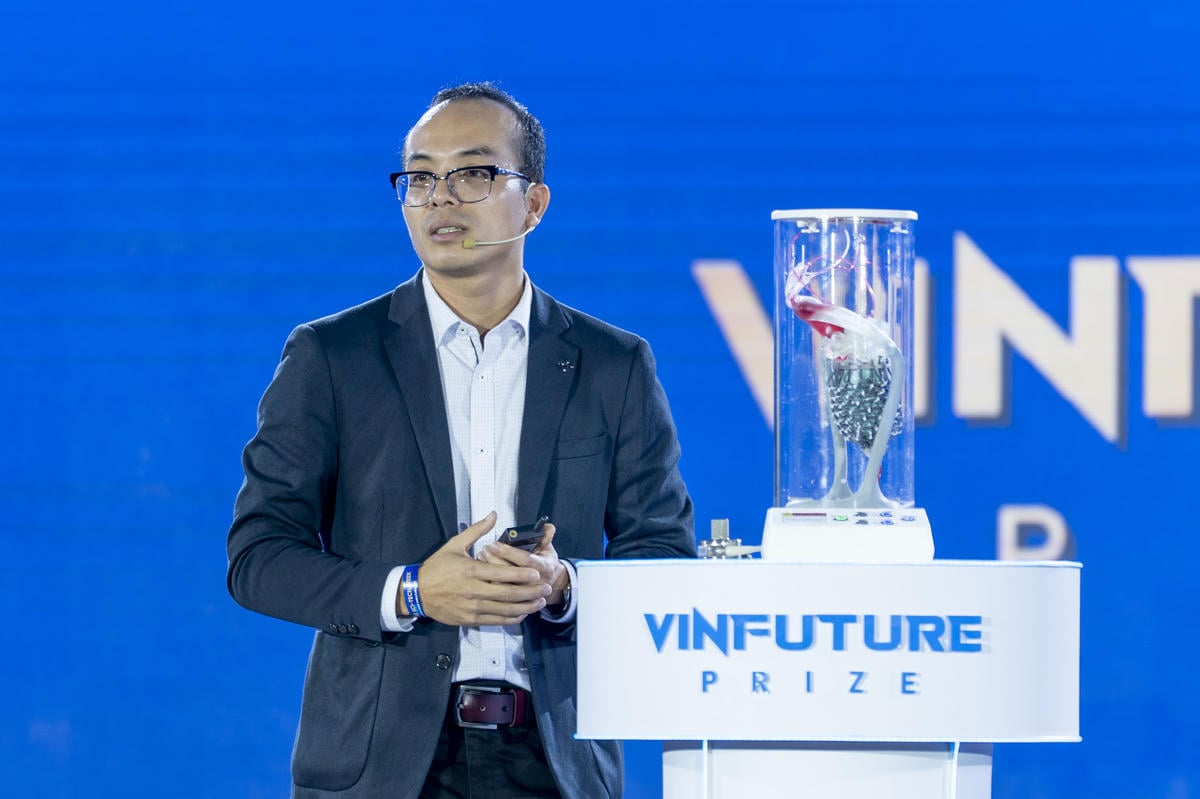
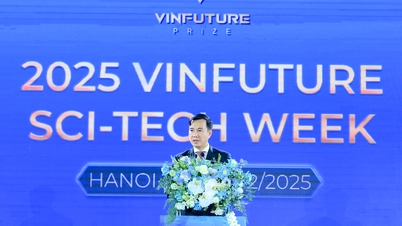
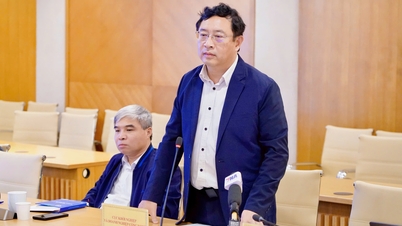
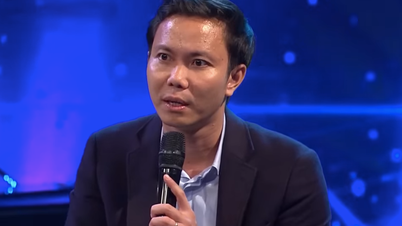
Associate Professor Dr. Do Thanh Nho shared at VinFuture 2025 Science and Technology Week.
What happens if the heart gets sick? Blood clots cause ruptured arteries, strokes, and death of blood tissue. Or heart valve disease, myocardial infarction due to blockage. These diseases occur very quickly, and heart failure, atherosclerosis, etc. are the final stages of cardiovascular disease.
Cardiovascular disease is currently the leading cause of death globally, with more than 20.5 million deaths and is expected to increase to 729.5 million people (equivalent to an increase of 109%) suffering from cardiovascular disease by 2050 compared to 2025. In Vietnam today, about 33% of deaths, 1.6 million people are living with heart failure and the trend is increasing, how to treat it?
Currently, complex surgical interventions using cardiovascular devices play a central role in the treatment of these diseases. However, patient selection is often based on static imaging, medical history or simulation - methods that lack dynamic feedback and tactile sensation, leading to inaccurate assessment, suboptimal treatment planning and increased risk of postoperative complications. This leads to inaccurate assessment, suboptimal treatment planning and increased risk of postoperative complications.
Associate Professor Dr. Do Thanh Nho and his colleagues have researched and questioned whether it is possible to create a heart outside a living body. Smarter and safer “soft robot hearts” will contribute to reducing the global burden of cardiovascular disease.
Hope for the sick
Seeing patients who are not eligible for heart surgery or waiting for hearts to be transplanted is also a difficult story when the suitable rate is very small, scientists are wondering what method to support these patients. What is the best solution to handle these practical problems?
Currently, 24 million cases of mitral valve regurgitation worldwide, up to 2/3 are heart valve disease. Currently, medical advances can intervene in the mitral valve through the TMVI catheter to support the left ventricle to pump blood to the heart. But the device inserted into the human body will be difficult to predict whether they are compatible with the body or not? Whether the patient's condition is suitable for using the method of using the catheter mitral valve intervention or not and there may also be complications such as blood leakage around the valve. Nearly 68.5% of patients who are screened cannot use the TMVI method.
With heart failure, nearly 64 million people suffer from this disease worldwide, nearly 50% are HFrEF (Heart Failure with reduced Ejection Fraction). The best solution is to use the method of implanting left ventricular assist LVADs, maintaining blood pumping and keeping the patient alive. But 43% of patients have right ventricular failure, the function is not matched and failure makes the patient unable to last. It is very difficult to determine 100% whether the patient is suitable for the method of implanting left ventricular assist or not?
How to detect early the risk of complications in patients when implanting this left ventricular assist device? What are the current clinical challenges that medical science has to face? Besides, there are still patients who cannot be suitable for implantation or use of such devices.
From the lack of support tools and reliable equipment for doctors, the research team of Associate Professor, Dr. Do Thanh Nho sought the answer by finding a solution: instead of being implanted into the human body, which may have complications or not be suitable for the patient's condition, can we create devices outside the body to help with life?
The natural heart is considered the most complex system of muscle fibers in nature. The research team is studying a soft artificial heart that mimics the movement of a normal heart, using ultrasound in the long and short axes.
In the future, Dr. Viet and his colleagues hope to be able to build a soft robotic heart model with smarter clinical testing and the ability to accurately determine the risk of complications and implanted cardiovascular devices before they are placed in the patient's body.
Some of the challenges the research team is currently facing are that the technology is available but the imaging of medical devices is not yet perfect enough to capture accurate data and it is difficult to capture the activity pattern in the patient's heart. The lack of quality data is a major challenge.
“In the long term, we will develop a completely artificial robotic heart made of soft materials that can replace the human heart to increase the survival rate of patients with cardiovascular diseases,” said Associate Professor, Dr. Do Thanh Nho.
To be able to fulfill this dream, this scientist pointed out that strong coordination in research as well as the outstanding development of the medical industry, artificial intelligence, material science... is needed to research and develop together. In particular, the 3D model uses common materials, technology uses MRI, SCAN to describe the human heart and then create a 3D heart model, so it is expected that with interdisciplinary coordination, we will join hands to test the artificial soft heart at a reasonable cost so that the majority of people can access this technology.
Thu Huong
Source: https://daidoanket.vn/giac-mo-ve-trai-tim-nhan-tao-mem-cua-tien-si-nguoi-viet.html

![[Photo] Parade to celebrate the 50th anniversary of Laos' National Day](/_next/image?url=https%3A%2F%2Fvphoto.vietnam.vn%2Fthumb%2F1200x675%2Fvietnam%2Fresource%2FIMAGE%2F2025%2F12%2F02%2F1764691918289_ndo_br_0-jpg.webp&w=3840&q=75)
![[Photo] Worshiping the Tuyet Son statue - a nearly 400-year-old treasure at Keo Pagoda](/_next/image?url=https%3A%2F%2Fvphoto.vietnam.vn%2Fthumb%2F1200x675%2Fvietnam%2Fresource%2FIMAGE%2F2025%2F12%2F02%2F1764679323086_ndo_br_tempimageomw0hi-4884-jpg.webp&w=3840&q=75)


























































Comment (0)