

At a time when artificial intelligence (AI) is accelerating rapidly and reshaping every system of human society, from education, healthcare, economics to national security, the biggest question no longer revolves around how smart AI is, but focuses on how this technology is governed, used and controlled to protect people.
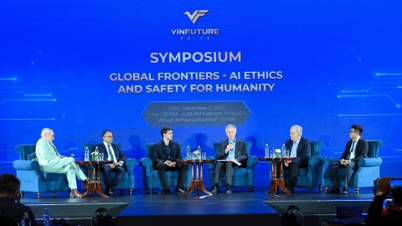
The panel discussion “AI for Humanity: AI Ethics and Safety in the New Era”, held on December 2, 2025 within the framework of VinFuture 2025 Science and Technology Week, has become a forum gathering many of the most influential faces of the AI era – from Yoshua Bengio, Geoffrey Hinton, Vinton Cerf to Toby Walsh. Their incisive analysis shows that the potential risks from AI may exceed the predictions of its creators, while the requirements for transparency, data fairness, human supervision and social trust are becoming global bottlenecks.
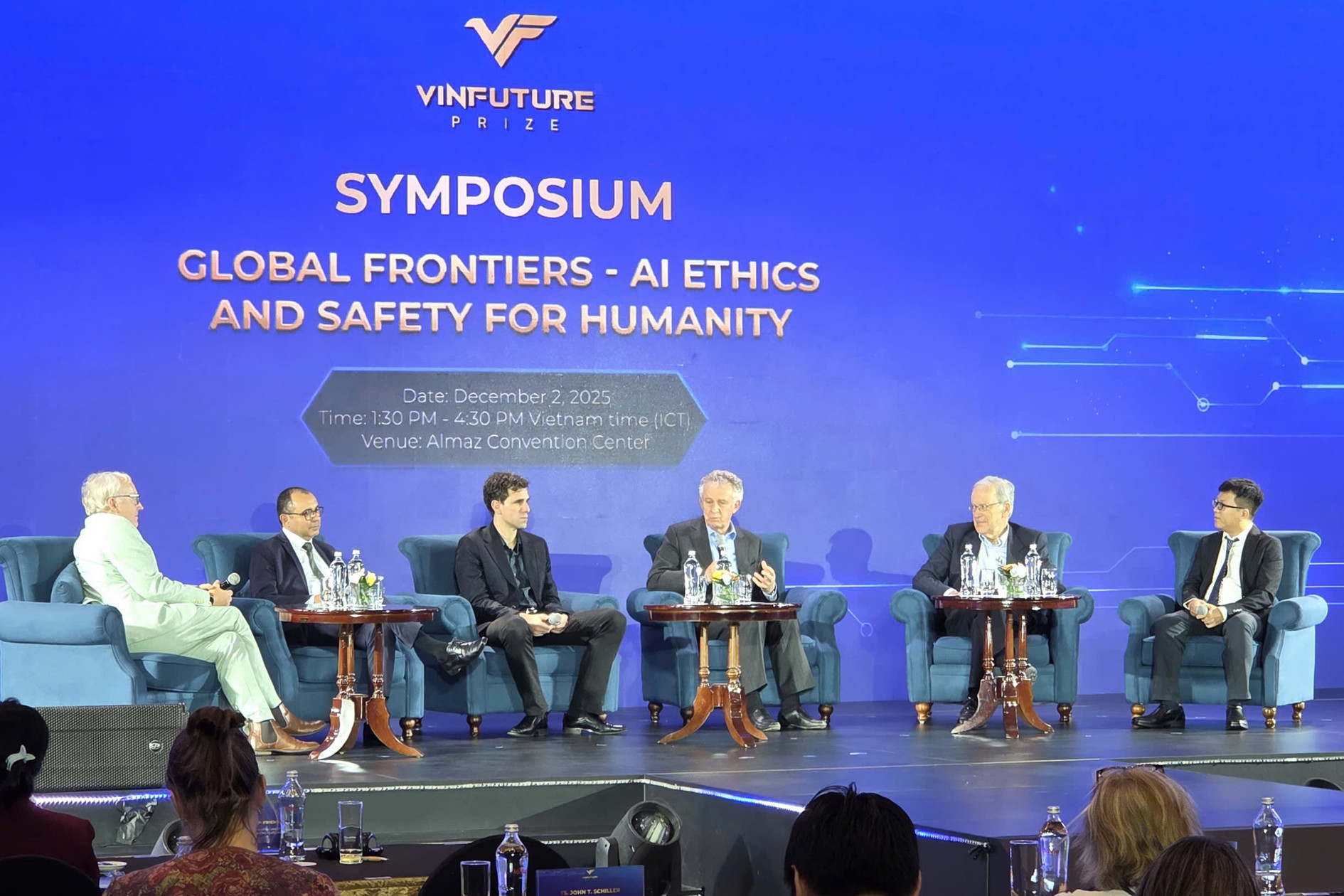
AI is accelerating at an unprecedented pace and posing ethical challenges
AI is advancing at a pace that far exceeded the scientific community’s expectations. In just a few years, deep learning models have gone from basic image recognition to self-generating content, simulating emotions, making complex decisions, designing proteins, and engaging in creative processes. This leap has brought unprecedented opportunities, but also created a host of unpredictable risks, from data bias, privacy threats, misinformation, and automated systems that are no longer transparent to humans.
Professor Yoshua Bengio – co-winner of the 2018 Turing Award – believes that the biggest challenge today is not what AI can do, but that society is not yet capable of predicting the behaviors that arise from complex models. He warns that large-scale models, if not properly controlled, can self-optimize in a way that makes humans “lose control of the technology they create”.
Similarly, Professor Geoffrey Hinton – known as the “father of AI” and winner of the 2024 Nobel Prize in Physics – points out that deep learning is entering a phase where models achieve complex responses beyond the ability to explain. This makes ethical and safety risks no longer hypothetical but real. Hinton emphasizes that, unlike traditional technologies, AI is not just a tool, but can behave as an “agent”, so the requirement for human supervision must be raised to an absolute principle.
Dr. Vinton Cerf – “the father of the Internet” shares a historical perspective: The Internet was built with the belief that it would bring progress, but then arose countless consequences from misinformation to cybercrime due to a lack of ethical standards from the beginning. With AI, if it continues to develop in a “run first – manage later” way, the risk to society will be many times greater.
These analyses show a high consensus among pioneers: AI is developing faster than the world 's ability to build legal frameworks.
Vietnam is determined to develop AI technology according to open philosophy.
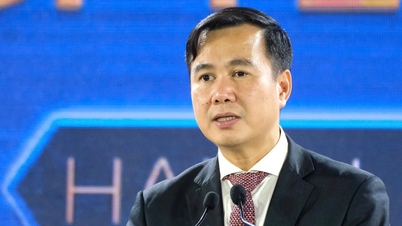
Speaking at the event, Deputy Minister of Science and Technology Bui The Duy said that Vietnam issued its first AI Strategy in 2021. But AI is developing at an extraordinary pace, so at the end of this year, we will announce the updated AI Strategy and AI Law. This is not only a legal framework but also a declaration of national vision, identifying that AI must become Vietnam's intellectual infrastructure, contributing to social welfare, sustainable development and enhancing national competitiveness.
“AI today is not just an applied technology, but is becoming an essential infrastructure like electricity, telecommunications or the Internet; any country that masters AI will have a superior advantage in socio-economics and national security and defense. Therefore, Vietnam is building a national AI supercomputing center, an open data ecosystem and a Vietnamese AI infrastructure towards autonomy, while at the same time implementing comprehensive AI at a fast pace, making AI a universal “intelligent assistant” for all people to improve social productivity and expand access to knowledge, a step forward that previously only high-ranking leaders had access to,” said Mr. Bui The Duy.
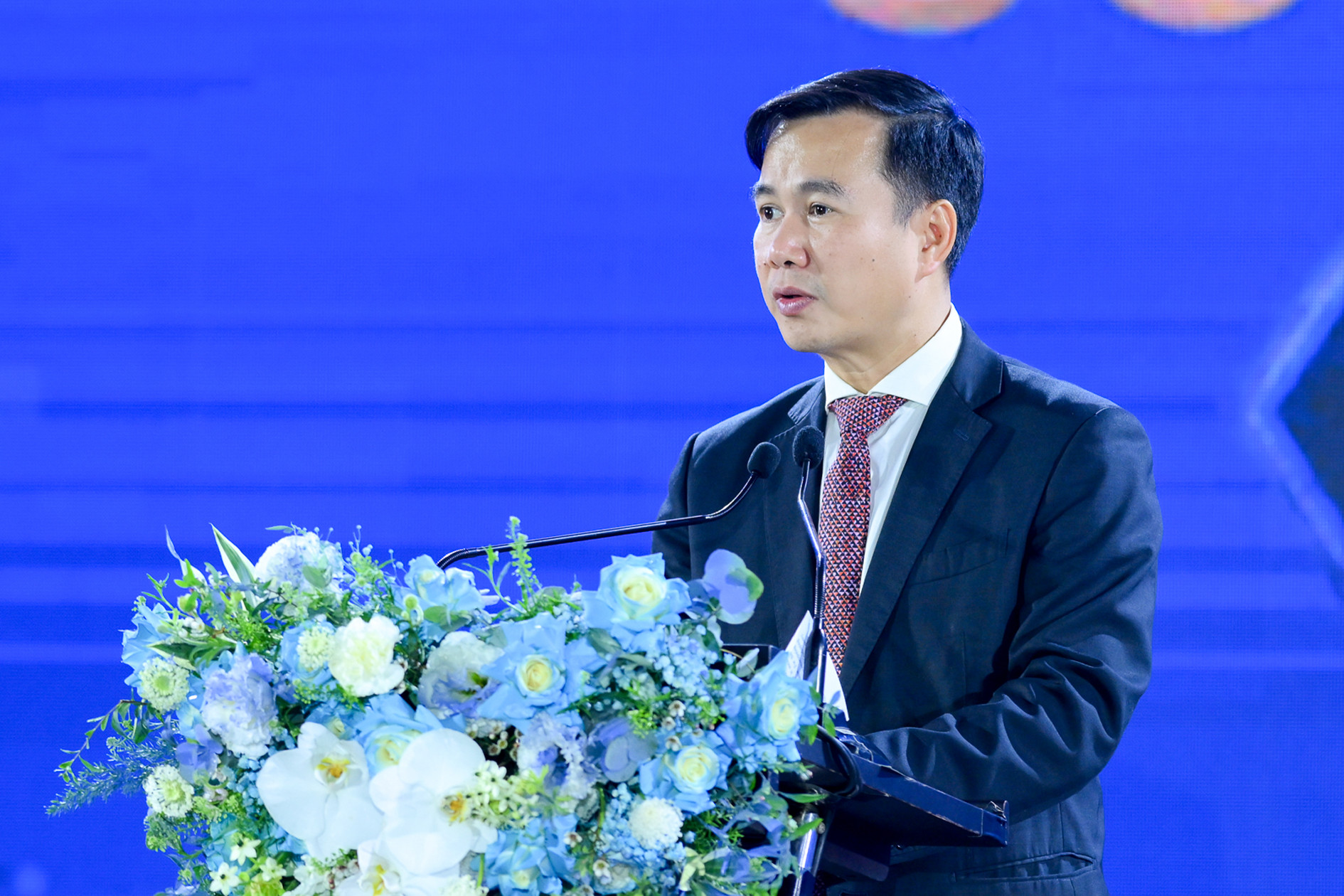
The Deputy Minister affirmed that Vietnam is determined to develop AI technology according to the open philosophy: open standards, open data, open source code. “Open” is the way to receive global knowledge, master technology, develop Make in Vietnam and contribute back to humanity. “Open” is also a condition to ensure safety and transparency in AI applications.
For AI to develop, the domestic market must be large enough; without applications, there will be no market and Vietnamese AI enterprises cannot mature. Therefore, the State will promote the application of AI in industries and state agencies, and at the same time, the National Technology Innovation Fund will allocate 30-40% of support resources, including AI vouchers for small and medium enterprises, so that the Vietnamese market can truly become the cradle of strong AI enterprises.
Vietnam has “latecomer advantage”
Sharing about this issue, Associate Professor Luu Anh Tuan, Executive Director of the Center for Artificial Intelligence Research at VinUni University, said that the Vietnamese language is very complex, so foreign language models cannot understand it. Besides, we are also heavily dependent on foreign language models and lack a large Vietnamese language model standard.
“We are starting from zero, while other countries have had data sets developed decades ago, so this is an advantage, because there is not too much burden, so there is an opportunity to build from the foundation and can build clean data from the beginning. With the advantage of being a latecomer, Vietnam also has the opportunity to take advantage of the latest technology in the world. First, we must build a clean data warehouse, covering all fields and having the context of Vietnam, with the dialects of Vietnamese ethnic groups. Besides, there is an ethical mechanism to avoid misinformation and fake news,” said Associate Professor Luu Anh Tuan.
Associate Professor Luu Anh Tuan emphasized that Vietnam needs to ensure AI sovereignty, follow the open source direction and the Government must have clear guidelines on this issue. In addition, there needs to be a national AI ethics framework, detailed guidelines on the deployment of large language models, and an independent agency to verify and monitor, not to let this model be completely autonomous. Thus, there needs to be management by the State, businesses and people to build AI infrastructure for Vietnam.

Source: https://vietnamnet.vn/thu-truong-bui-the-duy-viet-nam-se-cong-bo-chien-luoc-ai-cap-nhat-va-luat-ai-2468645.html
![[Photo] Worshiping the Tuyet Son statue - a nearly 400-year-old treasure at Keo Pagoda](/_next/image?url=https%3A%2F%2Fvphoto.vietnam.vn%2Fthumb%2F1200x675%2Fvietnam%2Fresource%2FIMAGE%2F2025%2F12%2F02%2F1764679323086_ndo_br_tempimageomw0hi-4884-jpg.webp&w=3840&q=75)
![[Photo] Parade to celebrate the 50th anniversary of Laos' National Day](/_next/image?url=https%3A%2F%2Fvphoto.vietnam.vn%2Fthumb%2F1200x675%2Fvietnam%2Fresource%2FIMAGE%2F2025%2F12%2F02%2F1764691918289_ndo_br_0-jpg.webp&w=3840&q=75)





































![[Video] Protecting World Heritage from Extreme Climate Change](https://vphoto.vietnam.vn/thumb/402x226/vietnam/resource/IMAGE/2025/12/03/1764721929017_dung00-57-35-42982still012-jpg.webp)















































Comment (0)