

At the workshop “AI Brainlessness: Phenomenon – Consequences – 3T Solution” organized by the Indian education group Aptech recently, international and domestic experts presented a two-sided picture of artificial intelligence (AI).
Alongside the impressive growth figures, the term "AI Brainlessness" is being touted as the biggest challenge facing human resources in the digital age.
The risk of "AI brain hollowing"
Ms. Rakhee Das, PhD, Amity University and international AI expert, cites figures showing the strong penetration of this technology.
In the past year alone, the number of AI applications has increased by more than 400%. By 2025, global companies are expected to invest more than $200 billion in this field.
In fact, AI has been shown to help the healthcare industry detect diseases 30% faster, reduce financial fraud by 40%, and increase office productivity by up to 45%.
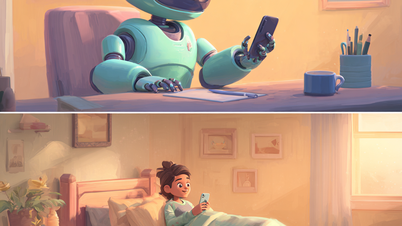
However, Ms. Rakhee Das warned about the emergence of a "copy-paste" generation. According to her, the biggest problem today is that students and young employees use AI without learning the fundamentals.
When over-dependence is present, critical thinking declines, basic knowledge weakens and problem-solving skills disappear. If this trend continues, the future workforce will lose the ability to think independently, Ms. Das said.
Sharing the same view, Mr. Chu Tuan Anh, Training Director of Aptech International Programmer System, called this phenomenon "cognitive decline due to AI". He gave the example of dependence on digital maps (Google Maps).
During the recent floods in Hanoi , many drivers only followed the map's instructions, losing the ability to locate the real situation and judge the risk, leading to driving into deep flooded roads.
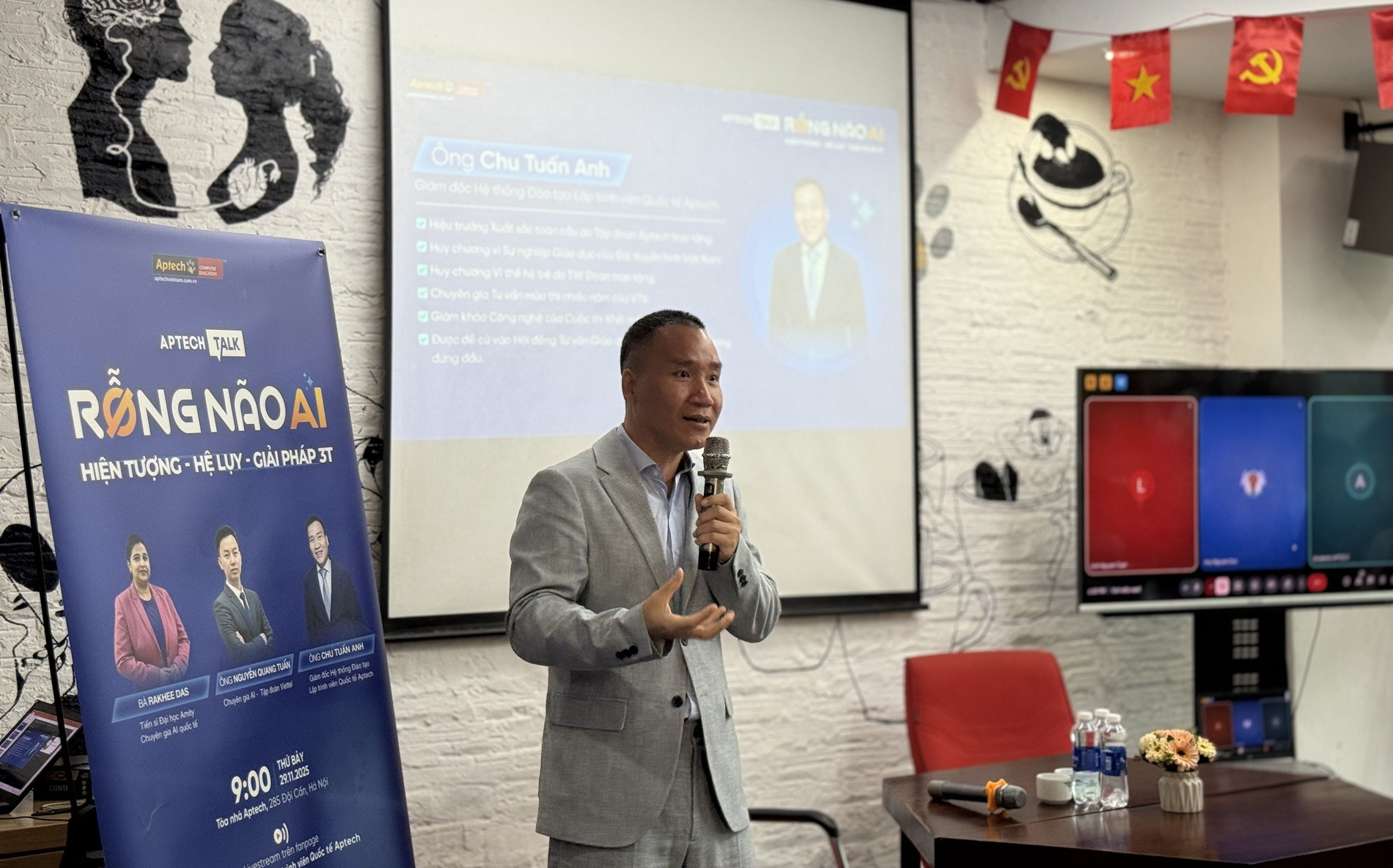
According to analysis from Aptech experts, this cognitive decline process does not happen immediately but goes through three levels, from lazy habits to complete dependence.
The first level is "lazy thinking", which usually appears after 1 to 3 months of continuous AI use. Users tend to immediately accept the results given by the machine, copy them to report or run code without asking why, nor verifying the accuracy.
The second level is “skill loss”, which usually occurs after 3 to 6 months. At that time, the staff cannot complete the job without support tools.
A programmer might forget how to write basic algorithms, or a content writer might be completely stumped without ChatGPT's suggestions.
The most dangerous level is “cognitive blindness”. At this point, the AI produces an incorrect or poor-quality result, but the user no longer has enough background knowledge to recognize the error.
This is the stage where people are completely led by tools, causing harm not only to personal careers but also affecting businesses and even the whole country, Mr. Tuan Anh emphasized.
From the perspective of a technology business, Mr. Nguyen Quang Tuan, AI expert at Viettel, shared the reality of the abuse of the automatic code generation feature (Gen Code). Many programmers today create products very quickly thanks to AI, but lack depth in logical thinking.
"The strongest person is not the one with the best inner strength, but the one with the highest adaptability," said Mr. Tuan. He believes that the biggest risk is that programmers become outdated because they only know how to use AI to write code that runs without understanding its inner nature.
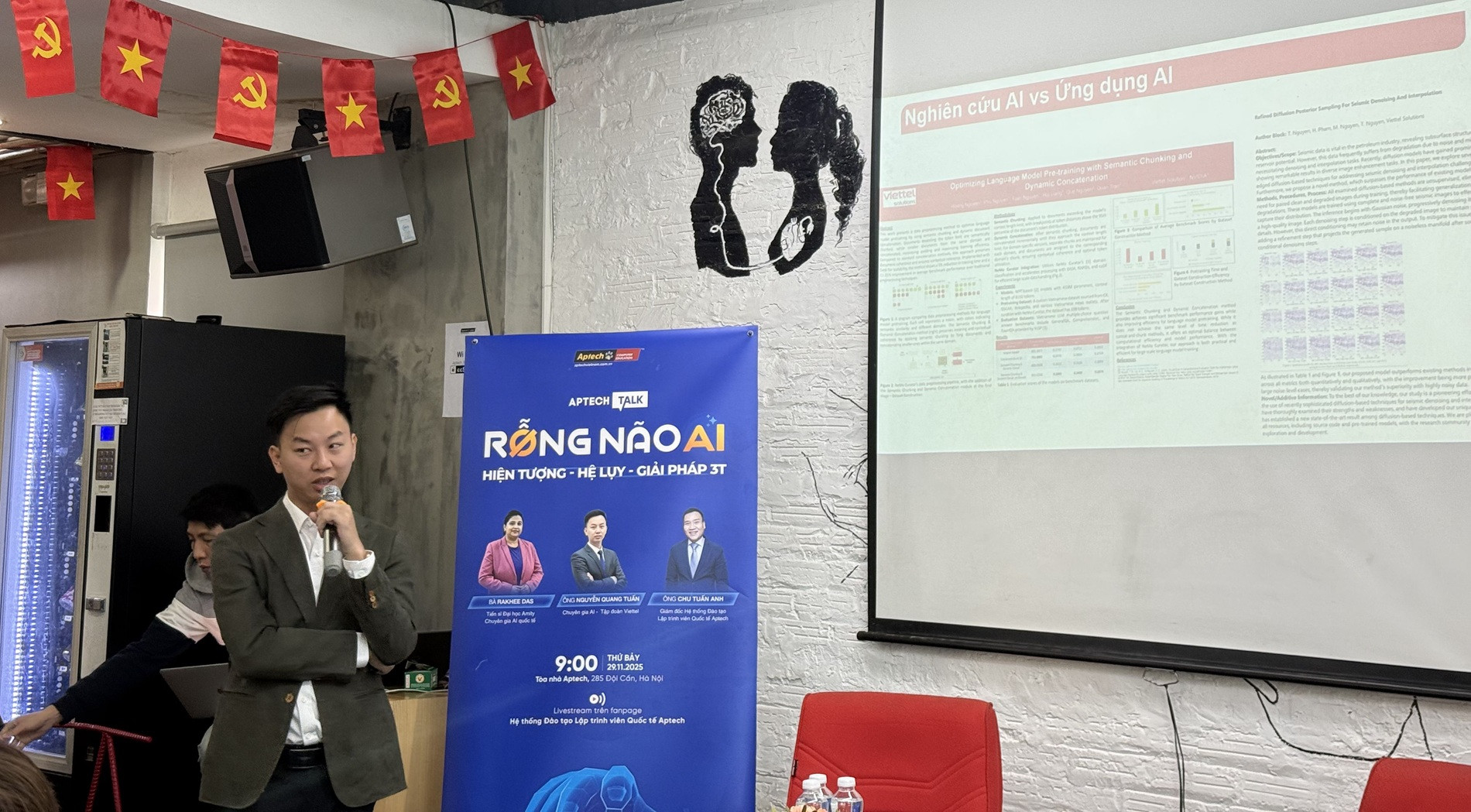
Mr. Tuan also pointed out that AI models are a collection of human knowledge, but also contain "garbage" or false information. If human resources only give superficial prompts such as "write me the login screen" without a specific context, the resulting product will have many potential loopholes. He said that using AI is very good, but using it responsibly and effectively is another story.
3T formula solves the risk of "empty brain"
To solve this problem, experts agree that AI cannot be banned, but needs to change the approach. Mr. Chu Tuan Anh proposed the "3T" formula as a solution for users to master technology instead of being controlled by technology.
The first is Think First. Before asking for AI support, users need to take time (about 3 minutes) to think about the problem, visualize an outline or solution in their head. This helps the brain to be activated and maintain the ability to think independently.
The second T is to see AI as a Tool, not a Tutor. Users need to recognize that AI is just a support tool, not a replacement or an all-powerful teacher. The effective way to use it is to do the work yourself, then use AI to correct errors, optimize, or criticize ideas.
Finally, Techback. This is considered the most important step in converting information from the machine into human knowledge. After receiving results from AI, users need to practice explaining that knowledge to others or interpreting it themselves.
Ms. Rakhee Das also recommended that for a macro strategy, Vietnam does not necessarily need to race to build large language models (LLM) costing billions of dollars like technology powerhouses.
Instead, a more effective path is to focus on building a workforce that is skilled in using AI, understands explainable AI, and applies it to solving real-world problems.
"We should not be afraid of AI," said Mr. Chu Tuan Anh. Human history has witnessed the transition from stone and bronze to steam engines and computers. Whoever grasps and masters new tools will be the winner. "Let's manipulate and master AI to have a good future," concluded the Aptech representative.

Source: https://vietnamnet.vn/nguy-co-rong-nao-vi-lam-dung-tri-tue-nhan-tao-2468057.html


![[Photo] Prime Minister Pham Minh Chinh receives President of Cuba's Latin American News Agency](/_next/image?url=https%3A%2F%2Fvphoto.vietnam.vn%2Fthumb%2F1200x675%2Fvietnam%2Fresource%2FIMAGE%2F2025%2F12%2F01%2F1764569497815_dsc-2890-jpg.webp&w=3840&q=75)
































































































Comment (0)