

Implementing the 2018 General Education Program, many schools and teachers have moved and innovated in the above spirit with many creative and effective methods and directions.
Personalized learning
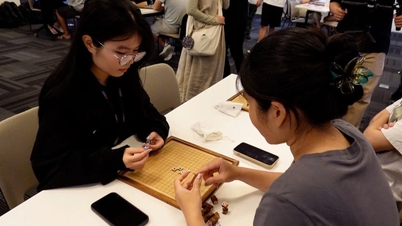
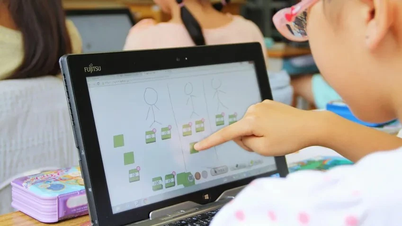
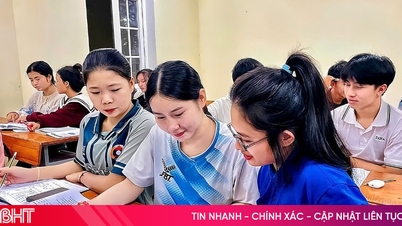
Primary school students are naturally active and prefer to learn while playing rather than the traditional form of “teacher lectures - students copy”. Understanding this characteristic, Ms. Doan Thi Anh Suong - a teacher at Le Loi Primary School ( Nghe An ) created the game “Decoding the picture” with the desire to turn each exercise from a mandatory task into an interesting experience, helping students memorize knowledge naturally. In the game, each question corresponds to a colored box on the mysterious picture; when students answer correctly, they get to color that box until the picture appears completely.
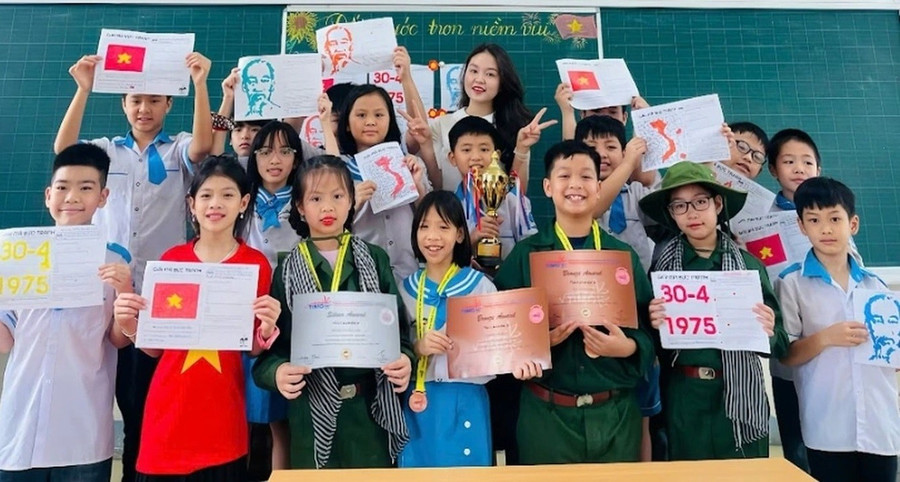
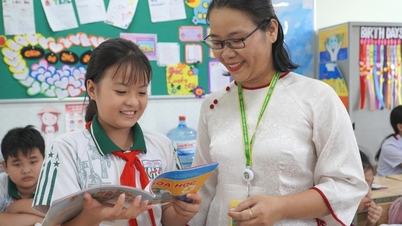
Not only stopping at “Decoding the picture”, young teacher Anh Suong also brings into the class many other attractive activities such as decoding secret messages, filling in the blanks, playing historical characters to recreate events, learning through small projects… “Teachers not only impart knowledge, but are also the ones who inspire, promote the talents and strengths of each student. When students are involved, respected and have the opportunity to express their opinions, learning becomes a fun and memorable journey”, Ms. Anh Suong shared.
Ms. Phan Thi Thu Hien - Vice Principal of Tran Thi Buoi Primary School (Phuoc Long Ward, Ho Chi Minh City) said that the school is implementing many new teaching methods to stimulate thinking, develop personal capacity and create learning motivation for each student.
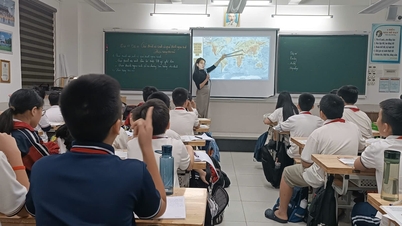
Nowadays, teachers do not use a single method, but flexibly combine many active teaching methods such as: Group teaching, tablecloth technique, puzzles, learning games, mind maps, project-based learning and problem solving. Each method is selected based on psychological characteristics, receptive capacity, lesson context, because each student has a very different speed and way of approaching knowledge.
In addition, the school applies the “flipped classroom” model. Students have access to lessons, instructional videos or digital documents in advance at home; class time is spent on discussion, practice, solving tasks, and direct interaction with teachers. This organization creates opportunities for students to present their opinions, develop critical thinking; optimize class time for creative activities, apply knowledge; teachers have conditions to support more deeply students with limitations.
From the ground reality, Ms. Pham Thi Lien - Head of the professional group, English teacher, Vi Xuyen High School (Tuyen Quang) focuses on 4 core orientations in teaching. First is personalization instead of framed knowledge; replacing the way of learning by memorizing knowledge with critical thinking and creativity; creating real products instead of passive reception - students create videos, e-books, posters using applications, post them on Padlet in class and they become common learning materials.
In the expansion phase, she connects students with volunteers and teachers in many countries through online classes or local activities, helping students speak English with real people and have real experiences.
For Ms. Pham Thi Lien, the educational revolution does not lie in modern technology, but in the moment when a mountain student stands in front of the class, confidently presenting for 7-10 minutes in English, daring to defend his point of view, daring to say "I can do it"! Educational innovation only truly begins when teachers and students change their thinking, knowing how to take advantage of new tools to open the door to wider knowledge.
Applied teaching
With the consent and support of Dam Doi High School (Dam Doi Commune, Ca Mau), teacher Ho Minh Tinh - Head of the Biology Group has built a biological practice garden in the school. Here, students are instructed to grow plants and raise animals according to the seasons, suitable to weather conditions. Through practical lessons in the biological garden, students can better understand the structure, growth characteristics, reproduction, propagation, care... of each species of animals and plants.
“To stimulate students’ thinking and creativity, I focus on giving them practice. I also apply information technology and artificial intelligence in teaching, organize STEM lessons, and let students participate in projects and real-life models to help improve their knowledge and necessary skills,” said Mr. Ho Minh Tinh.
According to teacher Nguyen Ngoc The - Head of the Literature Group, Phan Ngoc Hien High School for the Gifted (An Xuyen Ward, Ca Mau), if only applying traditional teaching methods will not be highly effective, teachers themselves will also fall behind in the technology age.
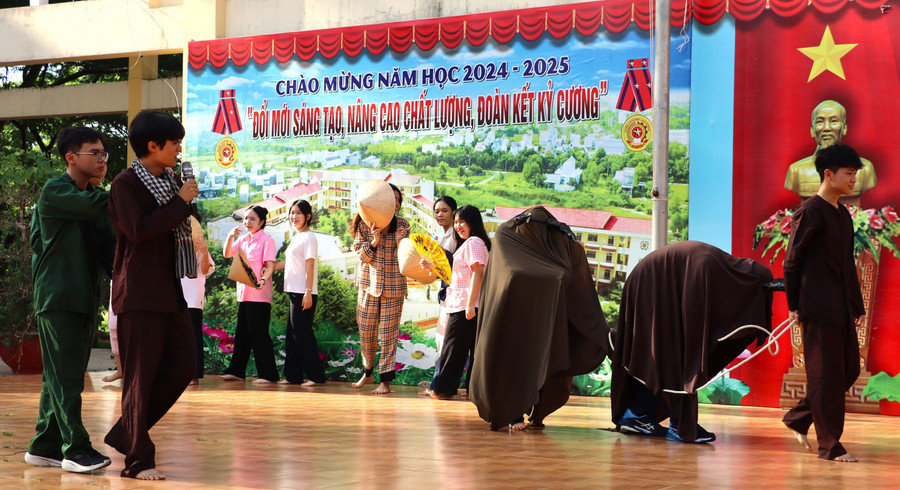
“For Literature, one of the teaching methods that I and my teachers in the group have effectively implemented is dramatizing literary works. With the support of information technology, students can easily grasp the content, discover and solve problems, and gain a deeper understanding of the value of the work.
During class, I also connect the ideological themes in literary works with hot current issues that are of public interest. Students work in groups, express opinions, defend their views and criticize the opinions of other groups, thereby improving their knowledge and skills, stimulating their thinking ability,” Mr. The shared.
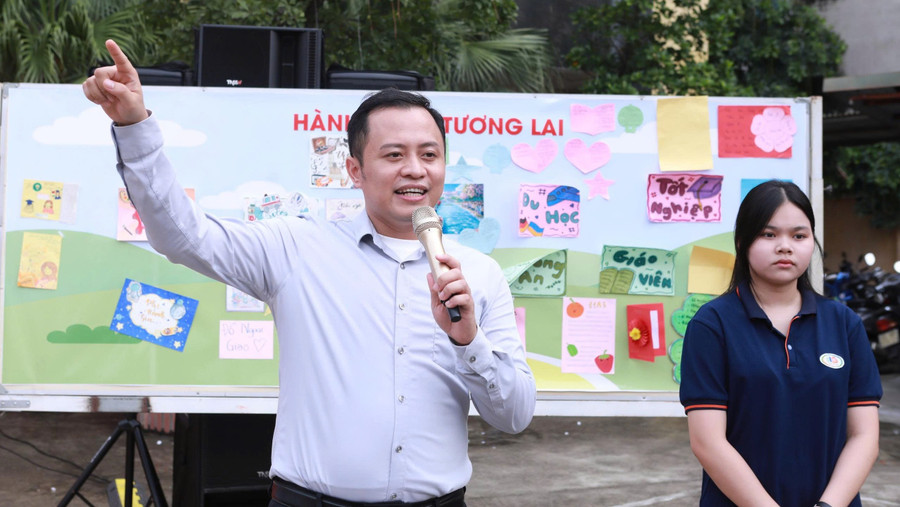
Ms. Nguyen Thi Thanh Thao - teacher at Thuan Kieu Primary School (Dong Hung Thuan Ward, Ho Chi Minh City) also applies many new teaching models and methods to stimulate independent and creative thinking of students. To have creative lessons, teachers must be the first to innovate.
Thuan Kieu Primary School regularly focuses on training its teaching staff in the direction of "innovative thinking first - tools later". The school increases the application of modern technology in teaching. Teachers use digital lectures, online teaching systems, AI applications, interactive software and STEM education to make lessons more intuitive and vivid, while promoting students' logical thinking and creativity.
Instead of imparting knowledge in one way, teachers now play a leading role in helping students ask questions, search for information, experiment and present their products. This learning method trains critical thinking, self-study and self-control skills, presentation skills and teamwork.
From a management perspective, Mr. Nguyen Cao Cuong - Principal of Thai Thinh Secondary School (Dong Da, Hanoi) expressed the view that education needs to strongly shift from memorization and trying to fill up knowledge to training thinking ability, creativity, life skills and understanding of technology. The 2018 General Education Program is an important step to realize this orientation.
Moral education is the key foundation
Ms. Nguyen Thi Thanh Thao - teacher at Thuan Kieu Primary School (Ho Chi Minh City) shared that she and other teachers in the school pay special attention to educating students in ethics, emotions, and life skills. Along with that, the school builds a culture of exemplary behavior among the staff and teachers to set an example for students to follow. "We regularly participate in training courses on culture, professional ethics, and modern educational thinking, such as: Happy School, Teachers in the 4.0 era, or communication skills in the educational environment," Ms. Thanh Thao said.
Ms. Pham Thi Lien - Vi Xuyen High School (Tuyen Quang) added that in the 4.0 industrial revolution, teachers cannot separate teaching knowledge from educating personality, especially digital personality. I always remind students: "AI is very powerful, but ethics is even stronger". In every project, students must cite sources, respect copyright and not copy. That is the digital ethical value that teachers aim to educate through specific behavior, not empty advice.
Similarly, Mr. Le Trung Kien - teacher at Le Loi High School for High Quality (Ha Dong, Hanoi) believes that in a society with an explosion of information technology, ethics is the "compass" that helps students use knowledge responsibly. Teachers not only teach words, but also set an example of character so that students learn to live honestly, humanely and responsibly towards the community.
Nguyen Trai Secondary School (Tan Ky, Nghe An) has been among the top students in the province for many years in a row in the Civic Education exam results. Teacher Nguyen Thi Oanh, a Civic Education teacher, shared that in the opinion of many students and parents, Civic Education is not a major subject.
However, this does not mean that this is an unimportant subject and that teachers can neglect it. On the contrary, the role of Civic Education is to train life skills and foster in students an awareness of cultural, ethical, emotional values, etc. that are practical for school-age children.
To create interest for students, she applies innovative teaching methods, focusing on exploiting learning materials on platforms, applying videos, life lessons with many meaningful messages to enrich the lessons. On the parents' side, seeing the changes in their children, from daily behavior, to understanding, love, gratitude, sharing and helping... they are very supportive and pay more attention to the subject.
Nguyen Trai Secondary School (Tan Ky) is the only secondary school to be recognized at the 2025 Nghe An Province Patriotic Emulation Congress. Mr. Nguyen Canh Hung - Principal of the school said that located in a mountainous commune of Nghe An province, the school faces many difficulties such as lack of teachers, uneven quality of students in mountainous areas, and teaching conditions that do not meet the teaching requirements of the 2018 General Education Program.
To promote sustainable and innovative educational quality, the school is building a Happy School model with 3 criteria: Unity, love and respect. In which, educating students with all love is the most important thing.
Similarly, Ho Thi Ky High School (An Xuyen ward, Ca Mau) has been building a happy school, promoting the application of information technology and digital transformation in education from management to the teaching, learning and examination processes of students.
Principal Chau Van Tuy said that the school requires teachers to innovate teaching methods towards high practical application, build students' awareness of self-study, self-research, and develop appropriate study plans... From there, contribute to building a future generation of students with good moral qualities, capacity, adaptability, and the ability to integrate, becoming global citizens.
According to Mr. Nguyen Canh Hung - Principal of Nguyen Trai Secondary School (Tan Ky, Nghe An), "In the teaching process, teachers not only share knowledge, but also greatly influence the process of forming students' awareness, life philosophy, and life values.
Teachers must have a loving heart, be tolerant enough to forgive mistakes, respect students' differences, look at the positive side to promote, and recognize limitations to overcome. If teachers have love, they will be able to influence students.
Source: https://giaoducthoidai.vn/cuoc-cach-mang-doi-moi-giao-duc-ve-tu-duy-va-cong-cu-post759034.html

![[Photo] Parade to celebrate the 50th anniversary of Laos' National Day](/_next/image?url=https%3A%2F%2Fvphoto.vietnam.vn%2Fthumb%2F1200x675%2Fvietnam%2Fresource%2FIMAGE%2F2025%2F12%2F02%2F1764691918289_ndo_br_0-jpg.webp&w=3840&q=75)
![[Photo] Worshiping the Tuyet Son statue - a nearly 400-year-old treasure at Keo Pagoda](/_next/image?url=https%3A%2F%2Fvphoto.vietnam.vn%2Fthumb%2F1200x675%2Fvietnam%2Fresource%2FIMAGE%2F2025%2F12%2F02%2F1764679323086_ndo_br_tempimageomw0hi-4884-jpg.webp&w=3840&q=75)
















































Comment (0)