According to the Ministry of Finance , transportation and urban infrastructure alone will require approximately $245 billion over the next five years, a very large sum compared to the budget's capacity.
At this point, the question is no longer whether the state or private sector should invest, but rather what coordination mechanism is needed to mobilize resources effectively, transparently, and sustainably.
In this context, the PPP model (a public-private partnership model for infrastructure projects or public service provision) returns with a different role. In the Philippines, the NAIA International Airport renovation project has mobilized approximately 123 billion pesos (equivalent to 55 trillion VND) from the private sector, increasing capacity to 62 million passengers per year and improving the overall operational capacity of the airport system.
Vietnam also has its own example: the e-GP project – a BOT contract between the Ministry of Planning and Investment and FPT IS – completely replaced the old bidding platform from 2022. The State retains the planning and supervision role. The private sector operates the service and is responsible for quality and progress.
This demonstrates that the PPP model can operate in both high-tech sectors and essential public services.
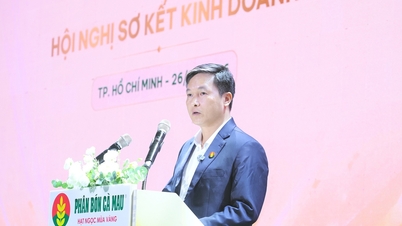
At the Public-Private Partnership (PPP) Dialogue Program in Vietnam on November 25th, Deputy Minister of Finance Tran Quoc Phuong stated that Vietnam has identified three priority areas for public-private cooperation in the coming period. The first area remains transportation – a sector that has always played a pivotal role in national development.
We cannot continue to allow key projects to be delayed due to limitations in public spending. The PPP model here is not just about sharing risks and mobilizing private capital, but about ensuring that transportation infrastructure is one step ahead, rather than reacting to emerging needs.
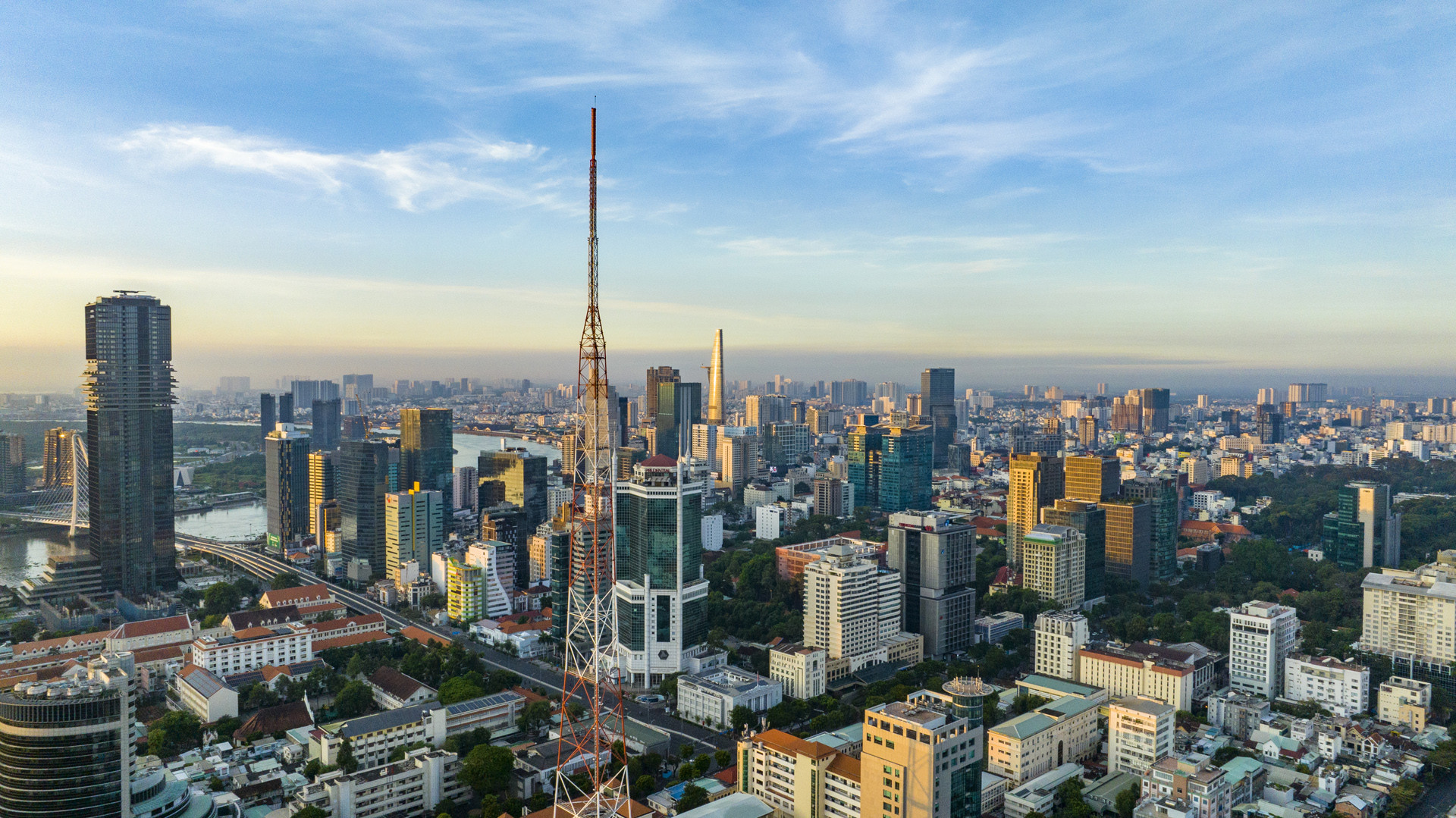
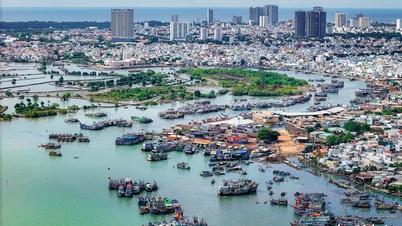
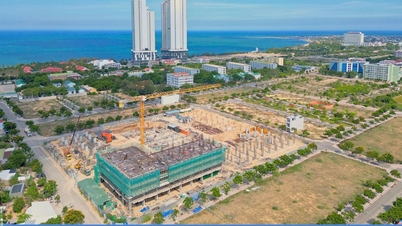
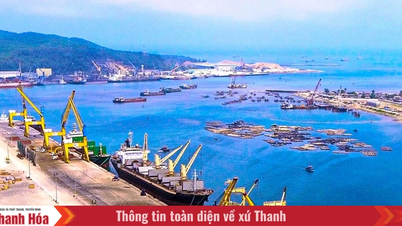
Vietnam alone will need approximately $245 billion USD for transportation and urban infrastructure over the next five years, a very large sum compared to the budget's capacity. Photo: Hoang Ha
In major cities, the story shifts to a new level of meaning: the Transport-Oriented Development (TOD) model.
International experts, particularly from South Korea, reiterated a very clear lesson: the value of land around metro lines can be used to reinvest in the public transportation system, creating a positive financial cycle.
As Vietnam discusses the North-South high-speed railway, the Hanoi and Ho Chi Minh City metros, TOD (Transit-Oriented Development) is no longer just a planning idea, but a mandatory component in the project's financial design.
To build sustainable urban rail or high-speed rail lines, we must address the funding issue before discussing technology.
The third area is innovation and digital infrastructure. Vietnam has begun designing policies that strongly encourage this: PPP investors in the science and technology sector are not required to share in revenue increases during the first three years and receive support when revenue falls below the financial plan.
These policy signals indicate that PPP thinking has moved beyond the traditional scope of roads, ports, or airports. It has expanded to areas where the private sector possesses the technology, resources, and innovative capacity.
But what is most noteworthy in recent discussions is the very frank acknowledgment that for PPPs to operate effectively, legal frameworks alone are not enough. The issues lie in project design, in the ability to mobilize credit, in risk guarantee mechanisms, and in the need to separate credit for PPPs from commercial credit.
Speaking at the Public-Private Partnership (PPP) Dialogue Program, ADB Country Director for Vietnam, Shantanu Chakraborty, stated: “The commitment to institutional reform needs to be translated into projects that are truly marketable.”
A PPP project can only succeed if it is both financially viable and meets international credit standards. If the capital cannot flow, all ideas will remain just on paper.
Vietnam is not new to PPPs. The journey of building a legal framework has spanned more than 15 years, from Decree 108/2009, Decision 71/2010, Decree 15/2015, 63/2018, to the Law on Investment in Public-Private Partnerships in 2020 and the adjustments currently being prepared.
This shows that the government has moved from experimentation to building a stable system, capable of instilling confidence in investors.

Vietnam encourages US businesses to expand investment in high technology.On the morning of June 26th, at the Government Headquarters, Deputy Prime Minister Ho Quoc Dung received Mr. Jeff Place, Supply Chain Director of Coherent Group (USA). During the meeting, the Deputy Prime Minister affirmed that Vietnam encourages US businesses to expand investment, especially in high-tech, innovation, and semiconductor industries. At a time when Vietnam is facing the largest infrastructure projects in its history – from high-speed rail to metro lines, seaports, airports, data and digital infrastructure – PPP is more than just an investment method.
It is a mechanism where the State plays a facilitating role, while businesses bring in the capacity for implementation. This coordination is precisely the approach many countries have used to bridge the infrastructure gap and enhance competitiveness.
If development is viewed as a journey towards modern national standards, then the proper use of the PPP model will mean the State leads, businesses participate, and society and the people benefit from a more developed, synchronized, and sustainable infrastructure.
Vietnamnet.vn
Source: https://vietnamnet.vn/von-cong-von-tu-hay-la-ppp-2468727.html