

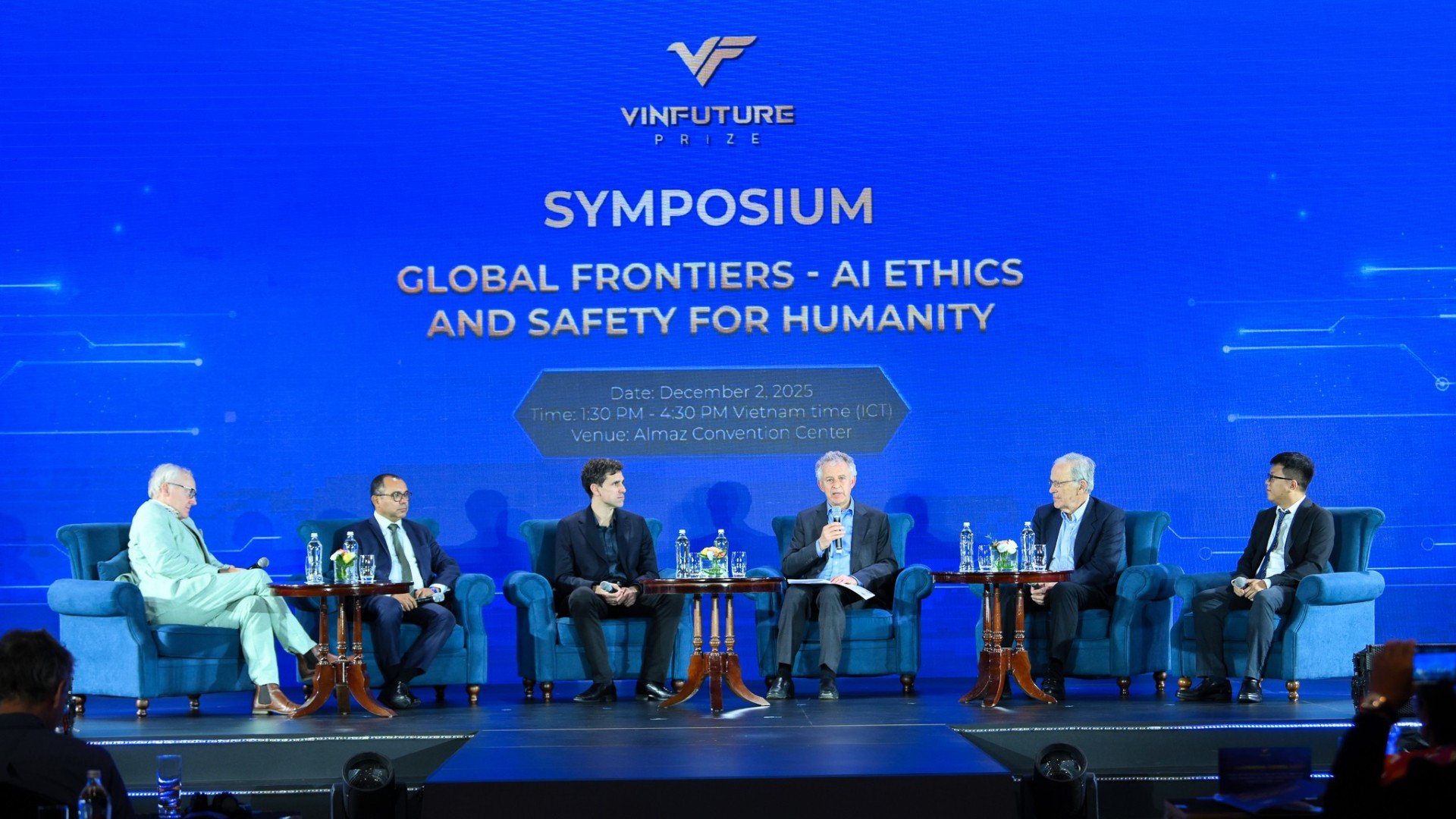
The panel discussion “AI for humanity: AI ethics and safety in the new era”, within the framework of VinFuture 2025 Science and Technology Week, brings together scientists , politicians and inventors to discuss responsible AI development, towards humanistic values.
Urgently think about how to live with AI - an entity smarter than yourself
Sharing at the seminar, Professor Toby Walsh, University of New South Wales, Australia, Academician of the American Computer Association affirmed: "I firmly believe that the responsible use of AI should be mandatory. There are many perverse incentives today, with huge amounts of money being made thanks to AI, and the only way to ensure proper behavior is to apply strict regulations, so that public interests are always balanced with commercial interests."
He cited a typical example of important decisions, such as adjudication and sentencing in the United States, where an AI system was used to make recommendations on a person’s prison term and likelihood of reoffending. Unfortunately, this system was trained on historical data, and unintentionally reflected past racial biases, leading to discrimination against black people.
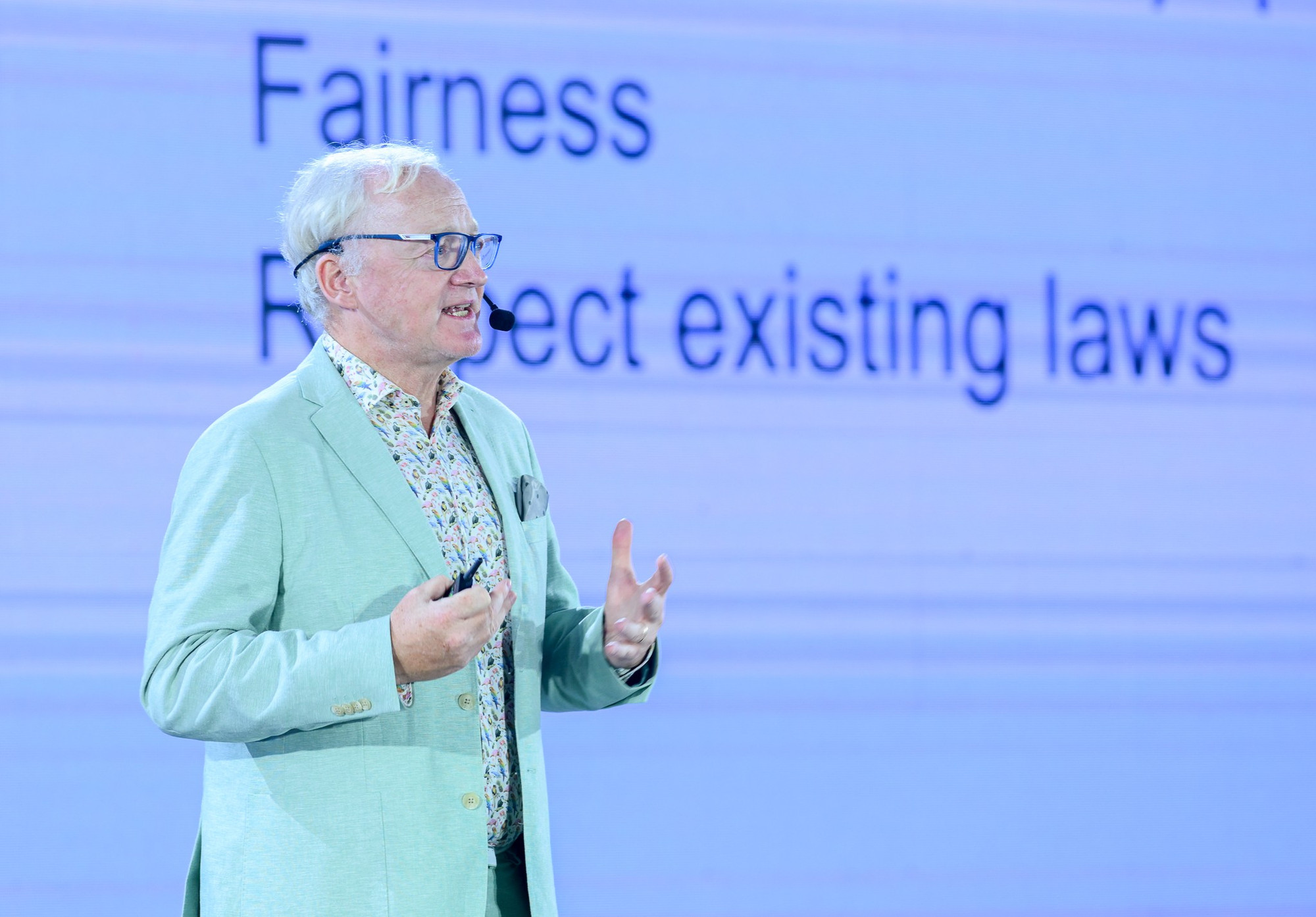
Professor Toby Walsh, University of New South Wales, Australia, Fellow of the American Computer Society.
Therefore, companies that deploy and operate AI systems must be held responsible for the consequences that these “machines” cause.
Professor Geoffrey Hinton - Winner of the VF 2024 main prize, is concerned that AI is gradually becoming better at designing dangerous viruses, cyber attacks, creating fake videos to disrupt elections. In the next 20 years, AI will become smarter than us and we will not know how to prevent it from taking control from humans.
Therefore, this Professor emphasized: "We need to urgently think about how to live with entities smarter than ourselves. This is a situation that humanity has never faced before, it is new and we need to make a lot of research efforts before that happens."
Need to enhance international cooperation to limit AI risks
Sharing this concern, Professor Yoshua Bengio - Winner of the VinFuture 2024 main prize said that AI models, their capabilities and levels of autonomy are still developing at a fast and steady pace. If this trend continues, autonomous AI systems could outperform humans in most cognitive tasks, within just 5-10 years.
This would be a historic turning point that could dramatically improve our quality of life. But if not handled with caution, it could also pose huge risks to democracy, geopolitical stability, and even the future of humanity.
"We must enhance safety for advanced AI instead of just focusing on making it stronger. Safety and trust are not secondary factors but essential in the process of development towards the benefit of humanity. We need to act together at both the policy and scientific level," he said.
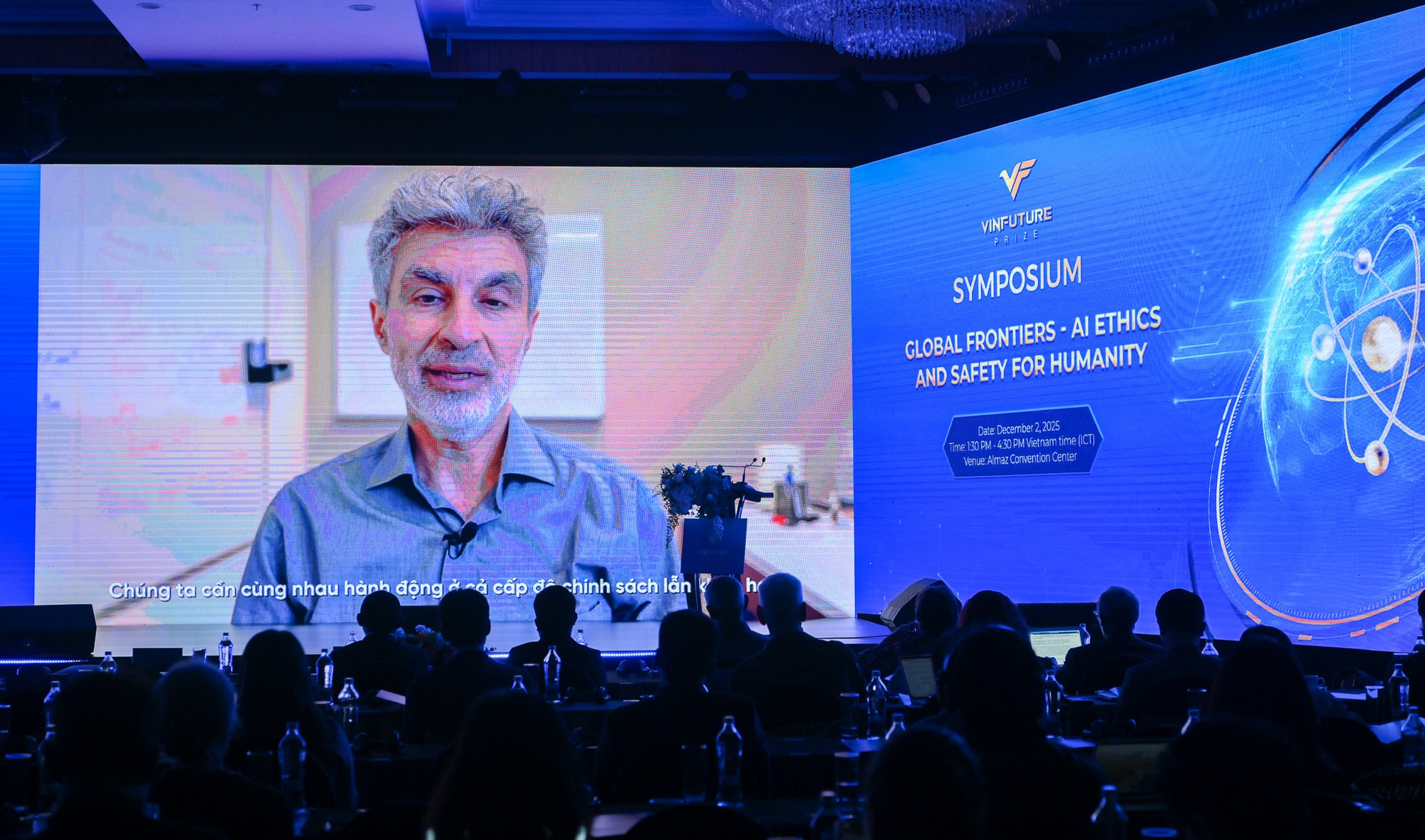
Professor Yoshua Bengio - Winner of the VinFuture 2024 main prize.
This scientist recommends that, in terms of policy, the world needs international cooperation. In terms of science, it is necessary to better understand how to design AI that is both superior in ability and harmless to humans, maintain the ability to control AI so that it behaves safely even when humans ask it to do wrong, and build technical and social barriers to ensure that AI is consistent with human norms, intentions, values, and interests.
Dr. Vinton Grey Cert (Vice President and Director of Internet Evangelism at Google - VF 2022 Grand Prize Winner) agrees: We need to hold AI accountable, establish a chain of custody to know what they do, when, especially when something goes wrong. Many of the principles that apply to humans will also apply to AI agents in the online environment.
“We need to simultaneously establish new norms, where the use of strong identification, cryptography to secure information, applying mechanisms to ensure accountability and protecting identities from being hijacked by others – becomes a regular habit. We should use technology to limit risks from the beginning and be clear that anyone found to be harmful to the community and society must face the consequences of that behavior. This requires international cooperation,” he said.
Vietnam needs to have its own path in building AI data.
Associate Professor Luu Anh Tuan, Nanyang Technological University (Singapore), VinUni University (Vietnam) said that other countries have data sets of about 10 years, but Vietnam is starting from zero. Therefore, we can build sustainable data from the beginning, providing clean, ethical, and culturally appropriate data right from the start.
However, the biggest challenge for Vietnam is the specificity of the Vietnamese language. We have a diverse dialect system, rich regional culture and extremely complex forms of address. Large models such as ChatGPT or Gemini support Vietnamese but the quality is not deep because they do not understand Vietnamese dialect, customs or history.
Vietnam needs to build its own Vietnamese model. In addition, we should develop an open-source model so that small businesses can use and contribute. "If we only rely on foreign models in the form of 'black boxes', we will only be AI users and not AI developers," he said.
Currently, Associate Professor Luu Anh Tuan and his colleagues are building Vietnamese AI data. Factors such as dialect, history and culture must be considered as the focus.
He also said that in foreign countries, students are educated about AI very early. Vietnam is just starting this, but we can accelerate by learning and adjusting accordingly.
"Young Vietnamese people are very dynamic; they just need to be fully educated about digital responsibility. We should have a unified body to confirm and standardize data quality and ethical standards. VinUni is also participating in the council to build an ethical standards system and will continue to contribute to this process," he said.
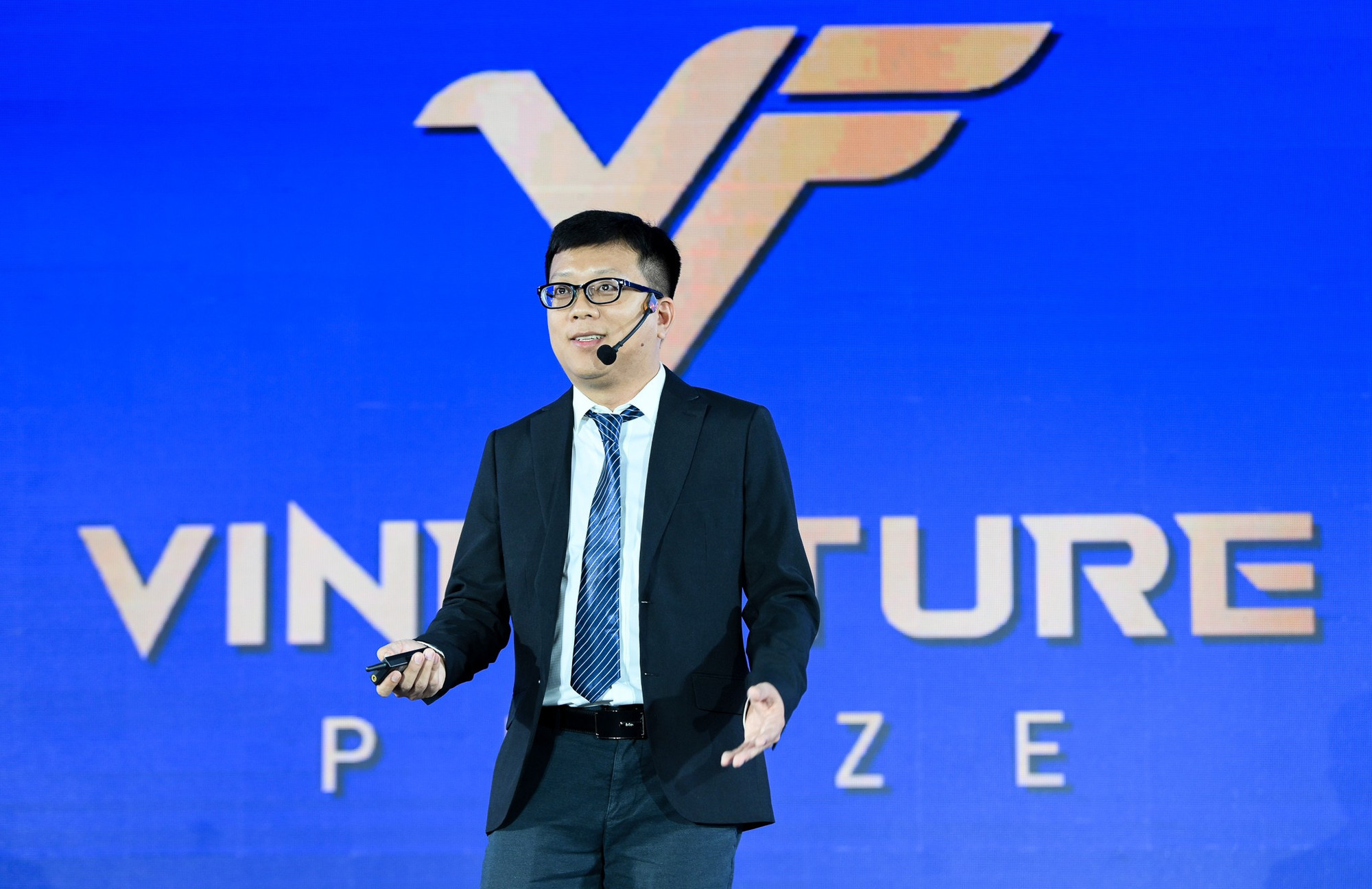
Associate Professor Luu Anh Tuan, Nanyang Technological University (Singapore), VinUni University (Vietnam).
In response to the FDI strategy that aims for Vietnam to lead the region in AI by 2030, Associate Professor Tuan believes that Vietnam has high-quality human resources - demonstrated through international achievements in mathematics, physics, and chemistry. If we know how to gather forces and have strong policies, the 2030 goal can be completely achieved.
Professor Toby Walsh recommends that Vietnam should invest in people and proactively improve people's skills, ensure they understand AI; support AI entrepreneurs, businesses, and universities. Instead of waiting for other countries to transfer technology or guide us, we must be proactive and master the technology.
Besides, Vietnam needs to strongly mobilize social networking platforms to create a safe environment for domestic users, without affecting the country's democracy.
THAO LE-THIEN LAM
![[Photo] Parade to celebrate the 50th anniversary of Laos' National Day](/_next/image?url=https%3A%2F%2Fvphoto.vietnam.vn%2Fthumb%2F1200x675%2Fvietnam%2Fresource%2FIMAGE%2F2025%2F12%2F02%2F1764691918289_ndo_br_0-jpg.webp&w=3840&q=75)

























![[Photo] Worshiping the Tuyet Son statue - a nearly 400-year-old treasure at Keo Pagoda](/_next/image?url=https%3A%2F%2Fvphoto.vietnam.vn%2Fthumb%2F1200x675%2Fvietnam%2Fresource%2FIMAGE%2F2025%2F12%2F02%2F1764679323086_ndo_br_tempimageomw0hi-4884-jpg.webp&w=3840&q=75)


































































Comment (0)