Vietnam's digital technology sector is growing stronger.
In the context of globalization and the Fourth Industrial Revolution , digital technology has been asserting its role as a key driving force for socio -economic development. Estimates from the World Bank in Vietnam show that artificial intelligence (AI), a new technology, is expected to contribute $19.9 trillion to the global economy by 2030. AI can transform new economies with the potential to improve labor efficiency and productivity, enhance public service efficiency, develop workforce skills, and increase economic competitiveness.
Following this trend, Vietnam's digital technology sector has also experienced strong growth, making a positive contribution to the country's economy. The total revenue of Vietnam's digital technology industry is estimated to reach US$152 billion in 2024, a 35.7% increase compared to 2019. The digital technology startup ecosystem is also growing stronger with nearly 74,000 businesses. The ecosystem offers a diverse range of products and services, from hardware and electronics to software and advanced technologies such as AI, big data, and the Internet of Things.
The workforce reached over 1.67 million workers, an increase of more than 50% compared to 2019. By the end of 2023, nearly 1,900 digital technology businesses had expanded into international markets, generating revenue of $11.5 billion, a 53% increase compared to 2022.
The above figures show that digital technology has become one of the important economic sectors, not only helping Vietnam enhance its competitiveness and expand opportunities for international cooperation, but also actively contributing to building a comprehensive digital economy and making a significant contribution to economic growth and sustainable development.
However, alongside these achievements, Vietnam still faces significant weaknesses, such as the generally low technological level of Vietnamese businesses, which participate only modestly in global supply chains. The research and development capabilities of Vietnamese businesses remain heavily dependent on foreign countries, limiting Vietnam's ability to achieve technological self-reliance. Furthermore, the attraction of high-tech talent is not strong enough, leading to a shortage of qualified personnel and directly impacting innovation capabilities.
The uneven development of digital technology and digital infrastructure across regions creates a significant gap in access to technology, impacting national connectivity and the sustainable development of the digital technology industry .

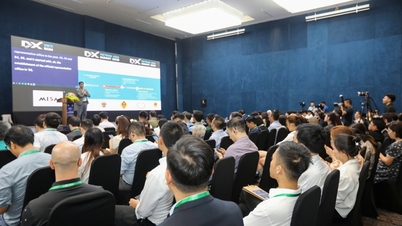
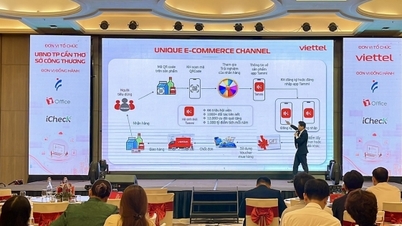
Vietnam's digital technology sector has experienced strong growth in recent years. (Illustrative image)
New policies create momentum for digital technology to break through.
According to Mr. Nguyen Anh Tuan, Head of Quality Management Department (Information Technology Industry Department), in recent years, the Government and ministries, including the Ministry of Science and Technology, have made efforts to build a system of policies and many incentives to promote the development of digital technology.
Based on the priority of developing digital technology, the Ministry of Science and Technology has issued Circular 31/2025/TT-BKHCN promulgating the List of Key Digital Technology Products and Services. The list comprises 10 major groups, including artificial intelligence, cloud computing, quantum computing, big data, blockchain, and especially semiconductor chips such as specialized chips, AI chips, and IoT chips. The list also expands in depth to include materials and equipment with 14 groups of semiconductor raw materials and materials, along with 18 groups of equipment, machinery, and tools serving the entire semiconductor industry chain.
Circular 32/2025/TT-BKHCN specifies the list of semiconductor raw materials, as well as equipment, machinery, and tools that are encouraged for investment and development. Projects in this field are classified as industries with special investment incentives and may receive direct state support for investment costs and priority in customs procedures. According to the document, these incentives facilitate businesses to invest in advanced semiconductor technology – considered the backbone of the digital industry.
Meanwhile, Circular 33/2025/TT-BKHCN focuses on preferential corporate income tax mechanisms for electronic equipment manufacturing projects. Businesses only need to meet one of the following criteria: using semiconductor chips designed, manufactured, packaged, or tested in Vietnam; having an R&D department that meets the requirements for human resources and spending on research and innovation; owning product designs; or participating in a supply chain with at least 30% Vietnamese businesses and transferring technology to at least one domestic organization. A representative from the Ministry of Science and Technology stated that, upon meeting these conditions, businesses will be exempt from corporate income tax for the first four years and receive a 50% reduction for the following nine years; projects exceeding VND 6 trillion may be considered by the Prime Minister for an extension of the preferential period up to 1.5 times this framework.
Another notable policy is Circular 34/2025/TT-BKHCN, which sets out criteria for digital technology products and services to receive preferential treatment in contractor selection when using state budget funds. Hardware products must have designs and trademarks owned by Vietnamese organizations or individuals; software products must be designed, developed, or developed on open-source platforms owned by Vietnamese entities, businesses, or individuals. This mechanism aims to promote the stronger participation of "Make in Vietnam" products in the public procurement system.
Besides new regulations that provide preferential support for businesses, Circular 26/2025/TT-BKHCN has adjusted the import of used technology products that are on the prohibited import list. While tightening management conditions, the Circular also opens up special cases allowing imports, such as when businesses need to move production equipment within their organization, use equipment to control and operate production lines, or directly serve software production and IT-based business process outsourcing. Cases such as specialized products, equipment re-imported for repair, or refurbished components no longer manufactured domestically are also permitted for import.
Meanwhile, Circular 30/2025/TT-BKHCN stipulates the criteria for imported used technology lines, equipment, and machinery permitted for direct use in the production, packaging, and testing of semiconductor chips, as well as training, research, and development of digital technology products and services. According to the regulations, imported technology lines must not be on the list of obsolete, low-quality, or polluting as declared by the exporting country, and must meet safety and energy efficiency standards according to national technical regulations, national standards, or G7 and Korean standards. The remaining capacity or efficiency of the line must be at least 85% of the design; the consumption of raw materials, materials, and energy must not exceed 15%. For equipment, machinery, and tools, the age of the equipment must not exceed 20 years.
"The new policies issued recently have contributed to forming a relatively complete legal framework for the development of the digital technology industry in Vietnam. From priority orientations and lists of key products and services to preferential mechanisms for investment, taxation, and public procurement, policies are gradually becoming more in-depth and closely aligned with the actual needs of businesses ," said a representative from the Department of Information Technology Industry.
According to the Ministry of Science and Technology, policies are creating a more favorable environment for businesses to confidently invest long-term, forming a sustainable digital technology ecosystem, and gradually making digital technology an important driving force for economic growth in the coming period.
Phong Lam
Source: https://congthuong.vn/chinh-sach-moi-mo-duong-cho-cong-nghe-so-but-pha-432932.html


![[Photo] Standing Committee member of the Party Central Committee Tran Cam Tu working with the Central Inspection Committee](https://vphoto.vietnam.vn/thumb/1200x675/vietnam/resource/IMAGE/2026/05/28/1779969579668_ndo_br_bnd-2495-jpg.webp)



































































































Comment (0)