

Positive impacts
The government has just issued Decree No. 179/2026/ND-CP dated May 20, 2026, stipulating scholarship policies for students studying basic sciences , key engineering fields, and strategic technologies. This decree will take effect from July 15, 2026.
According to Mr. Duong Hai Bay Muoi, Principal of Yen Vien High School (Phu Dong, Hanoi ), Government Decree 179/2026/ND-CP is a very important policy signal, clearly demonstrating that the State is prioritizing the development of human resources for science and technology and strategic sectors in the new period.
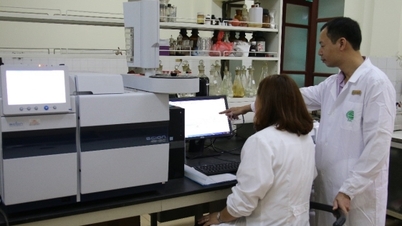
For students, scholarship policies will provide a great incentive to confidently pursue fields such as basic science, engineering, AI, semiconductors, and digital technology . These are challenging fields that require long-term investment but have not been as attractive as many others in the past. With clear support mechanisms in place, students will have more confidence and opportunities for development.
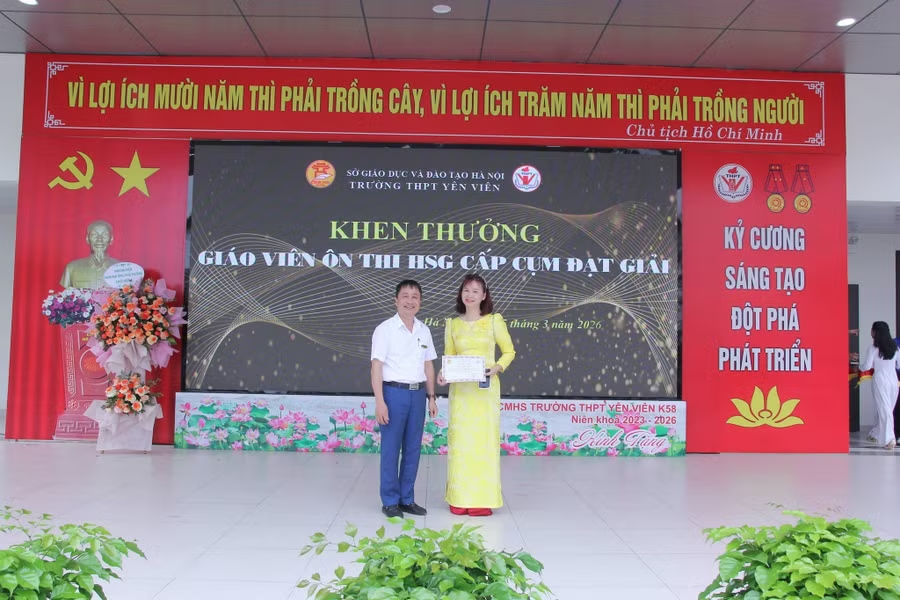
"For parents, this decree also contributes to changing their mindset about choosing majors. Many families previously prioritized 'safe' majors that offered immediate job opportunities. But with the government's strong investment in science and technology, parents will feel more secure when their children pursue engineering, high-tech fields, or scientific research," Mr. Bay Muoi emphasized.
Furthermore, for society, this is a strategically significant step. Developing the country during the digital transformation requires high-quality human resources in core fields such as AI, automation, semiconductor chips, new energy, and big data. The scholarship policy will help attract talented individuals to key sectors, thereby creating a foundation for national competitiveness in the future.
Create new momentum.

Based on her management experience, Ms. Phan Thi Hang Hai, Principal of Kim Ngoc High School (Vinh Yen, Phu Tho), observes that Decree 179/2026/ND-CP shows that the State is strongly shifting from "general encouragement" to "focused investment" in key basic sciences, engineering, and strategic technologies. This policy could create many positive impacts on students, parents, and society as a whole in the future.
Firstly , this will be a great motivation for students to confidently choose STEM fields, basic sciences, and high technology. Previously, many students were hesitant to study engineering fields such as Physics, Mathematics, Semiconductor Technology, etc., because they were difficult, time-consuming, and high-pressure, but the financial and job opportunities were not truly attractive.
"If the new guidelines are followed, with scholarships potentially reaching 3.7 - 5.5 million VND/month for undergraduate students and even higher for master's and doctoral students, many talented students will have more confidence to pursue their passion for research and technology," Ms. Hang Hai further analyzed.
Secondly , this policy will contribute to changing the mindset of many parents when choosing majors, as many families often prioritize "safe" fields that offer easy immediate job placement, such as economics, finance, and management.

According to Ms. Hang Hai, when the State has scholarship policies and strategic human resource development orientations, parents will feel more secure when their children study technology, engineering, AI, semiconductors, automation, etc., because they clearly see these as future national development trends. This is also an important "lever" to promote the development of science and technology.
From a societal perspective, this Decree signifies a step towards "ordering human resources" for the country's new development phase. Vietnam is entering a competitive environment in technology, digital transformation, AI, semiconductor chips, green technology, etc., and therefore urgently needs a high-quality workforce.
If implemented effectively, the policy will contribute to: attracting talented students to science and technology fields; reducing the "mismatch" between professions; and creating a foundation for innovation and national competitiveness.
According to Ms. Hang Hai, for the policy to be truly effective, scholarships are only a necessary condition. More importantly, it is necessary to improve the quality of training; increase job opportunities and research environments; establish good incentive mechanisms for science and technology personnel after training; and strengthen the connection between schools, businesses, and technology centers. In reality, in recent years, the percentage of students choosing natural science subjects for the high school graduation exam has been much lower than that of social science subjects – this is also a cause for concern.
Source: https://giaoducthoidai.vn/don-bay-gop-phan-thuc-day-khoa-hoc-cong-nghe-phat-trien-post778891.html

































































































Comment (0)