WHEN DID THE VIETNAMESE NEW YEAR ORIGINATE?
According to historical records, from the Ly-Tran dynasties, Vietnam had the custom of celebrating the Lunar New Year. Records from the Tran dynasty (1335) by the author Le Tac in his work An Nam Chi Luoc , under the section "Customs of An Nam," describe: "Every year, two days before the New Year, the king would travel in his royal carriage, and the accompanying officials would wear court robes to serve at the temple of Indra. On the 30th day of the lunar month, the king would sit in the middle of the Doan Cung gate, and the ministers would perform the ceremony. After the ceremony, they would watch the children sing and dance in various styles. In the evening, they would go to the Dong Nhan palace to pay homage to the Ancestral Kings. That night, a group of monks would enter the palace to perform the 'Khu Na' ceremony (exorcising evil spirits). The people would open their doors, light bamboo firecrackers, and offer tea and wine to their ancestors."
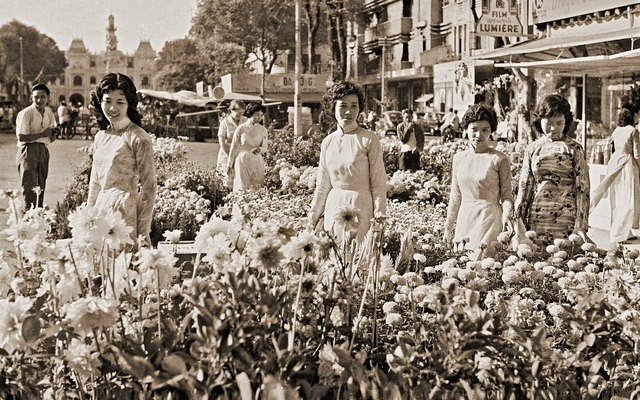
Nguyen Hue Flower Market, before 1975
Photo: Tam Thai
From the influence of Chinese culture, with a common characteristic stemming from an agricultural culture, the seasonal cycle linked to astronomy created the seasons of spring, summer, autumn, and winter, beginning with spring – the season of growth, budding, and sprouting. Therefore, Tet Nguyen Dan (Lunar New Year) is considered the most important festival of the year, gradually becoming a tradition. At least since the Ly Dynasty (1009-1225), Vietnam has had traditional Tet celebrations, and that tradition has been maintained ever since.
In his *Kien Van Tieu Luc* (Records of Observations) , Le Quy Don also recorded information about the Lunar New Year, an event noted to have appeared during the Ly Dynasty with important court rituals such as using an altar to perform the Spring Welcome Ceremony on the first day of spring. During the reign of Le Thanh Tong, in the Hong Duc era (1469-1497), the Lunar New Year was considered the most important festival, and all civil and military officials had to attend the court.
The official history of the Nguyen dynasty and the records of Le Quy Don in Phu Bien Tap Luc , along with other documents, show that under the Nguyen lords, almost all of Vietnam maintained the most important custom of the year: Tet Nguyen Dan (Lunar New Year). According to the Imperial Decree on the Regulations of Dai Nam , from the time of Gia Long (1802-1819), on Tet, the king would preside over the Thai Hoa Palace, hold the Grand Court ceremony, and the officials would perform the Celebration Ceremony. Later, in 1818, nine cannon shots (command cannons) were fired, and officials were rewarded with banquets and gifts according to their rank. These customs continued throughout the time of Tu Duc (1848-1883), except in years with solar eclipses or when the court was in mourning.
From the influence of Chinese culture, with a common characteristic stemming from an agricultural culture, the seasonal cycle linked to astronomy created the seasons of spring, summer, autumn, and winter, beginning with spring – the season of growth, budding, and sprouting. Therefore, Tet Nguyen Dan (Lunar New Year) is considered the most important festival of the year, gradually becoming a tradition. At least since the Ly Dynasty (1009-1225), Vietnam has had traditional Tet celebrations, and that tradition has been maintained ever since.
TET IN NORTHERN VIETNAM
"In spring, swallows fly back and forth / The bright sunlight has passed sixty out of ninety days / Tender green grass stretches to the horizon / White pear branches are dotted with a few blossoms" (Nguyen Du). The spring scenery of Northern Vietnam has entered poetry and literature with many nuances. Phan Ke Binh recorded in " Vietnamese Customs" many tasks to be done during the "three days of Tet": cleaning and decorating the house, worshiping the Kitchen God, wrapping banh chung (traditional rice cakes), erecting the New Year's pole, arranging the five-fruit tray, offering prayers on New Year's Eve, visiting to wish people a happy new year, giving lucky money, and asking for calligraphy... The image of the traditional Tet holiday in Northern Vietnam with its red peach blossoms, white apricot blossoms, red couplets, green banh chung, fatty pork, and pickled onions has long become an indelible cultural feature.
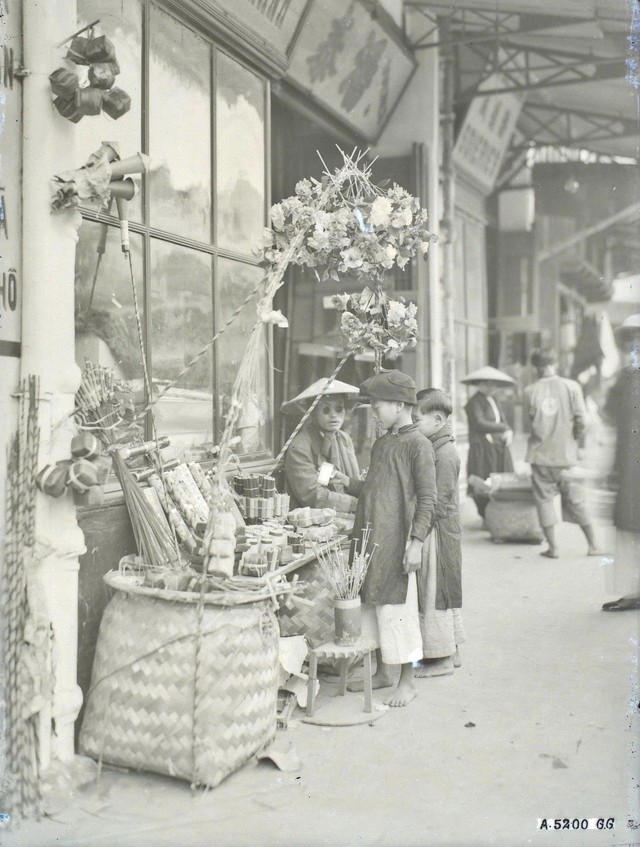
Tet in Hanoi in 1929
Photo: Quai Branly Museum
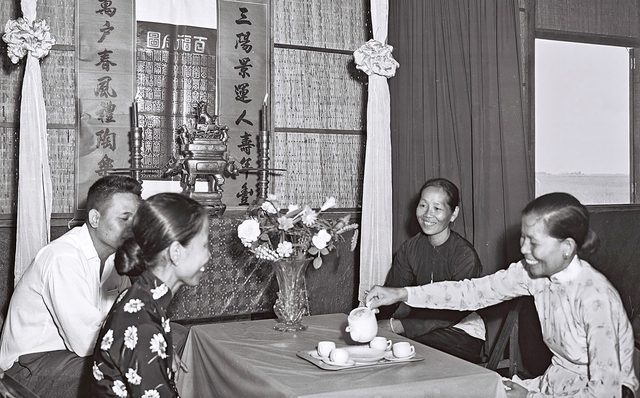
The traditional beauty of Tet in Northern Vietnam in the past was perhaps the image of an ancestral altar with incense wafting through the warm atmosphere. Traditionally, ancestors and deities, although "defined" as being high above and undefined, were very close to the earthly world, always watching over and blessing their descendants, ensuring long-lasting prosperity, abundant harvests, and so on. Therefore, showing respect to ancestors and deities was always emphasized. The ancestral altar always had characteristic items: an incense burner, an incense censer, a pair of candlesticks, a vase on the left, and a plate of five fruits on the right (East vase, West fruit). According to custom, two sugarcane stalks were also placed on either side of the altar, believed to be steps for deities and ancestors to return to celebrate Tet with their descendants.
On New Year's Eve (trừ: transition between the old and the new, tịch: night), everyone gathers around the New Year's Eve dinner, preparing for the New Year's Eve celebration. After the New Year's Eve ceremony at home, everyone goes to the New Year's Eve festival (men go to the village temple to worship the village guardian deity, wish the elders a happy new year, and have fun; women visit pagodas and pick lucky branches).
On the morning of the first day of the Lunar New Year, everyone wakes up, prepares food for the ancestral altar, children and grandchildren wish their grandparents a happy new year, and perform the custom of giving New Year's greetings. Afterwards, they visit relatives to offer New Year's greetings, creating a joyful and warm atmosphere. The New Year celebrations usually last until the seventh day, with the custom of taking down the New Year's pole marking the end of the Lunar New Year festivities, but the main focus is on the three days of "the first day of visiting the father, the second day of visiting the mother, and the third day of visiting the teacher."
" SPRING BRINGS PEACE AND PROSPERITY TO THE CENTRAL REGION"
Due to the harshness of nature and weather, Central Vietnam experiences annual floods, making the New Year a difficult one. Tet in Central Vietnam is not elaborate, but it still deeply reflects the worship of ancestors and strengthens the bonds of affection between generations during this time of family reunion.
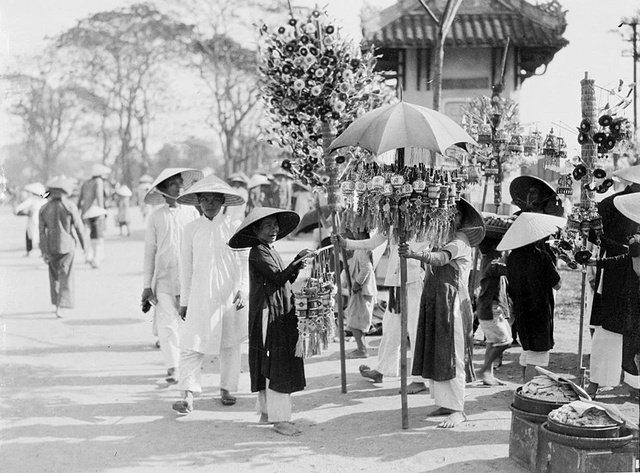
People from Hue going to the Tet market in 1923.
Photo: ManhHaiFlickr
On the 23rd day of the 12th lunar month, people in Central Vietnam also have the custom of offering sacrifices to the Kitchen God and the Stove God, wrapping sticky rice cakes, pickled vegetables, meat, fish, chicken, beef, etc. The vibrant red peach blossoms from the North are replaced by the bright yellow apricot blossoms and the fully bloomed chrysanthemums. The ancestral altar is decorated like in other regions of the country with a characteristic five-fruit platter reflecting the Central Vietnamese style, representing five colors and auspicious wishes: wealth, prosperity, longevity, health, and peace.
In Central Vietnam, people avoid having their ancestral altars used for Tet (Lunar New Year) inside the house. According to custom, the farewell and welcoming ceremonies for the deities who govern the new year must be performed outdoors. People in Central Vietnam believe that if the ceremony is held inside, the deities will not "visit," potentially causing the family to lack luck and miss out on blessings at the beginning of the year. The New Year's Eve dinner is always full of food; the elders recount old stories, and children express gratitude for their academic achievements and successful careers – all these traditions are vividly present during Tet.
In Central Vietnam, besides the family reunion meal, the Lunar New Year is celebrated with festivals deeply rooted in maritime culture and the martial spirit of a region constantly impacted by natural disasters and war: fishing festivals, wrestling, traditional martial arts competitions, boat races… along with many other cultural activities intertwined with the lives of generations of people living in the majestic Truong Son mountain range, facing the vast ocean. Because they always long for peace, the famous song "Spring Comes to Central Vietnam" by composer Minh Nhien includes the line: "Spring is coming here with joyful shouts / A peaceful spring in Central Vietnam, full of warmth and prosperity every day."
" Look , spring is just around the corner …"
In his book *Vietnamese Customs* , Phan Kế Bính recounts Tet in Saigon as representative of Tet in Southern Vietnam: "In Saigon, having been influenced by modernity for a long time, many families celebrate Tet simply as usual. However, this is not actually the case; Southern Vietnam still has a Lunar New Year celebration that contains many traditional cultural values. This is especially true in areas where Vietnamese and Chinese people live in large numbers."
Visiting the springtime area of Cho Dem (formerly Binh Chanh, before 1975)
Photo: Tam Thai
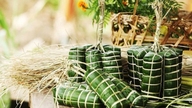
In Southern Vietnam, the Tet holiday also includes the custom of worshipping the Kitchen God and the Stove God on the 23rd day of the 12th lunar month. Besides fruits, incense, and flowers, people in Southern Vietnam also have distinctive cultural features: displaying yellow apricot blossoms, wrapping banh tet (sticky rice cakes), and arranging a tray of five fruits (cucumber, coconut, papaya, mango, and fig) associated with wishes for abundance and prosperity. Their cuisine is diverse, featuring many dishes such as banh tet, braised pork with eggs, and bitter melon soup.
The most distinctive aspect of Tet in Southern Vietnam is perhaps the image of floating markets on the rivers or areas with boats and ships, filled with vibrant fruits and flowers, closely associated with the riverine ecosystem. Southern Vietnamese people also have the custom of erecting a New Year's pole (in the courtyard of their house, temple, or pagoda) and cooking sweet soup. Erecting the pole is to ward off evil spirits from encroaching on people's land, and cooking sweet soup symbolizes the wish for a sweet and warm Tet. A basket (containing betel leaves, areca nuts, salt, and rice) and a Tứ Tung amulet are hung on the pole. The pole is erected on the 30th day of the 12th lunar month at dusk, unlike in the North (at noon) or the Central region (in the afternoon).
The offerings for the New Year's Eve ceremony in Southern Vietnam are slightly different. According to tradition, they include: boiled pig's head, boiled rooster, sticky rice, sweet soup, banh tet (sticky rice cake), five kinds of fruit, ixora or marigold flowers, everlasting flowers, two candles, paper money (gold and silver), a fresh coconut, and especially, Chinese cabbage. Besides these traditional dishes, there are also side dishes such as pickled onions, sausages, rice paper, and dried seafood. In addition, there are candied winter melon, candied coconut, candied sweet potato, etc. At the moment of midnight, the homeowner lights candles and incense and prays for a prosperous new year.
The first day of the Lunar New Year is when people in the South offer sacrifices at home and celebrate the main festival. People in Southern Vietnam also have a custom of offering sacrifices to the garden on the third day of the Lunar New Year. This ritual involves worshipping the guardian spirits of the farm, the garden spirits, and the earth god for their tireless efforts in caring for their gardens throughout the year. It's a way of expressing gratitude and hoping for continued success and prosperity in the coming year. However, this custom seems to be less prevalent among Southern Vietnamese due to various factors.
People in Southern Vietnam highly respect the ancestors of other families. When visiting each other during Tet (Lunar New Year), they first light incense at the ancestral altar in that family's home, then have a meal with them. It's customary in Southern Vietnam for the host to warmly welcome guests with a meal, sharing food and drinks together. Notably, people in the South believe that Tet symbolizes abundance, so every household must always keep their salt and rice jars full. On New Year's Eve, everyone puts on new clothes and puts some money in their pockets to ensure a year of financial prosperity.
In the South, Tet is called "celebrating Tet" or "eating Tet." Due to geographical and climatic characteristics, the weather is stable, and the seasons change little. People in the South celebrate Tet by going out to enjoy the spring festivities. Therefore, there are fewer family activities; instead, they focus on recreation, sightseeing, visiting temples, going to entertainment and resort areas, and enjoying the scenery, creating a Tet celebration with distinct Southern characteristics.
Source: https://thanhnien.vn/don-xuan-nay-nho-tet-xua-18526013019345166.htm



![[Photo] Prime Minister Le Minh Hung presides over the thematic session on promoting science and technology development and innovation.](https://vphoto.vietnam.vn/thumb/1200x675/vietnam/resource/IMAGE/2026/06/23/1782207872934_ndo_br_dsc-1724-jpg.webp)