

I remember seeing ships anchored in rows; because there wasn't enough space, some were forced to anchor a mile and a half away from the naval port, near the Avalanche Canal bridge [Thi Nghe Canal]. Nowadays, except for mail ships that stop twice a month and steamships of the River Transport Company, the port is almost deserted.
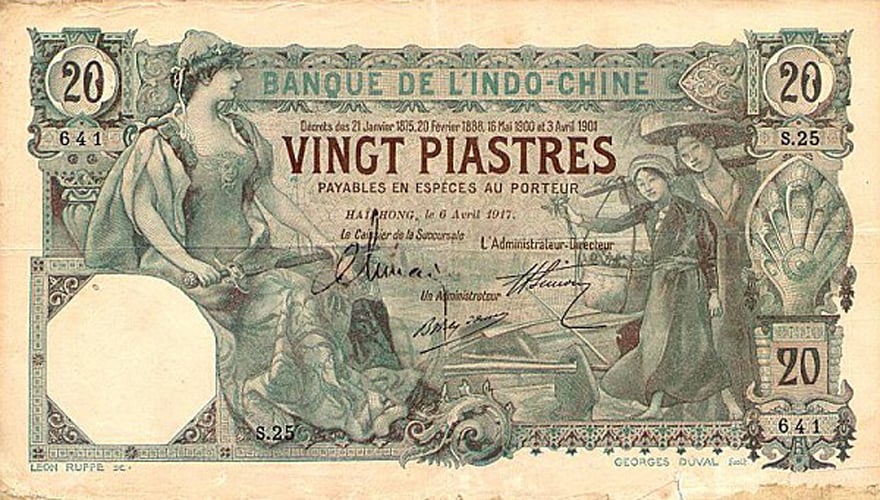
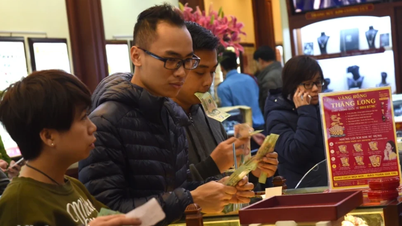
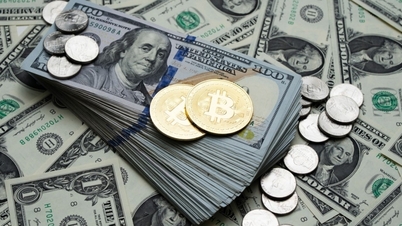
Indochinese silver
The port is only as bustling as it used to be for two or three months each year, during the rice export season. Therefore, European visitors, if not warned, might mistakenly think this is one of the busiest ports in the Far East. But by the end of July, ships become increasingly scarce, and the harbor becomes deserted again.
What caused this change? Everyone I asked told me that the new customs tariffs swept through Vung Tau overnight; followed by exorbitant and exorbitant fees: lighthouse fees, mooring fees, and pilotage fees that continued to increase, even though the dredging of coral reefs blocking the canal had long since rendered the role of pilots extremely insignificant.
The river was unobstructed. All the danger lay at sea, about two miles offshore. There, numerous sandbars stretched out, causing concern for unfamiliar captains. But the true Saigon River navigators did not venture beyond Vung Tau and left the newcomers to fend for themselves. Finally, and as if adding fuel to the fire, the devaluation of the currency and the sudden drop in the value of the Indochinese silver disrupted the country's economic situation.
Oh! The devaluation of the Indochinese silver! Here, nothing else is talked about. It's everywhere, the answer to every question. Are you surprised to see the hotel owner add extra charges? - "The Indochinese silver has depreciated, sir!" Is the waiter insisting on extra service? - Again, it's the Indochinese silver, still the Indochinese silver.
With the currency depreciating and the colonies facing immense financial challenges, the government was forced to resort to drastic measures. A series of decrees followed, increasing existing taxes or imposing new ones: requiring the affixing of seals to documents signed between natives, even though private signatures had previously sufficed; increasing taxes on timber harvesting and export; drafting a new export tax on rice… but these measures were not necessarily aimed at reviving stagnant economic activity.
Finally, the Decree of December 30, 1894, introduced a tax on… postage stamps. From January 1st, stamp prices increased by approximately 60%. A letter sent to France, which cost only 5 cents yesterday, now cost 8 cents today. Most bizarrely, stamps numbered 25 would henceforth sell for 8 cents! Stamps numbered 15 also sold for 8 cents, and this continued throughout the series.
It would be less confusing if France followed England's example and adopted the Indochinese đồng in its colonies in the South China Sea, incorporating a special stamp with prices in fractions of the Indochinese đồng instead of centimes.
Initially, the approach wasn't very good. When the Mexican dollar or the Japanese yen, the currencies in circulation, were at par, the public easily understood that our 5 cents – or commonly called a penny – were equivalent to 1 cent. But now, everything is confusing. It's impossible to distinguish between these contradictory numbers.
Purchasing stamps in Indochina was a lengthy and arduous process. The unfortunate staff struggled with the new stamp codes, while the public grew impatient at the counters. Therefore, in a recent session, the Colonial Council vehemently opposed this decree; to me, a decree—announced by telegram on December 31st to begin implementation on January 1st—seemed to disregard the conventions of the Postal Union and the Berne office.
Worst of all, the devaluation doesn't seem likely to stop anytime soon. Indeed, it has been reported that the British authorities have just approved an agreement between the Chartered Bank of Australia and China, the Hong Kong and Shanghai Corporation, and Monnaie de Bombay, under which Monnaie de Bombay is permitted to emboss 4 million dollars in a special style (British dollars), but denominated in Japanese yen. With this new money, the Indochinese silver will soon fall from its current value of 2 fr. 50 (fr: franc) to 2 fr and possibly even lower.
It is true that the Treasury is maintaining a bizarre and completely illusory exchange rate. For the Treasury, and the Treasury alone, the Indochinese silver coin is still worth 2 fr. 70. This is the rate used to pay civil servants' salaries.
But when someone who had just received their money at the rate of 2 fr. 70 at counter A went to counter B to send it back to France, they demanded, in addition to the postage fee, a 6% fee for the difference between the Treasury's exchange rate and the commercial rate. Logically, army and navy officers and soldiers, whose salaries were calculated in francs, should have received this difference. But no; the unreasonable exchange rate applied by the Treasury caused them a loss of about 5.5% on the amount they would have received in France.
Furthermore, for the native soldiers [Annamite conscripts], the Indochinese silver exchange rate was maintained at 4 francs! Therefore, someone earning 20 francs did not receive the equivalent of 8 Indochinese silver coins at the current exchange rate, but only 5 silver coins. And they would arrogantly reply that the living standards of the natives had increased only slightly.
Indeed, many people have complained about this discrimination. (to be continued)
* (Nguyen Quang Dieu excerpted from the book *Around Asia: Southern, Central, and Northern Vietnam *, translated by Hoang Thi Hang and Bui Thi He, published by AlphaBooks - National Archives Center I and Dan Tri Publishing House in July 2024)
Source: https://thanhnien.vn/du-ky-viet-nam-dong-dong-duong-ha-gia-18524120522554396.htm


![[Photo] General Secretary and President To Lam presides over a working session with the Central Policy and Strategy Committee on the development of the materials industry.](https://vphoto.vietnam.vn/thumb/1200x675/vietnam/resource/IMAGE/2026/05/21/1779359935432_a3-bnd-3129-1412-jpg.webp)


![[Photo] National Assembly Chairman Tran Thanh Man working with the Standing Committee of the Law and Justice Committee](https://vphoto.vietnam.vn/thumb/1200x675/vietnam/resource/IMAGE/2026/05/21/1779378929214_ndo_br_1-4610-jpg.webp)












































































Comment (0)