|
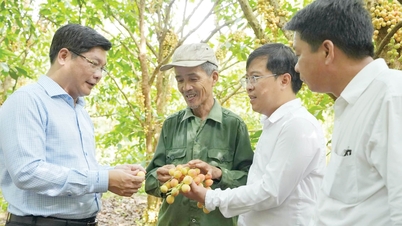
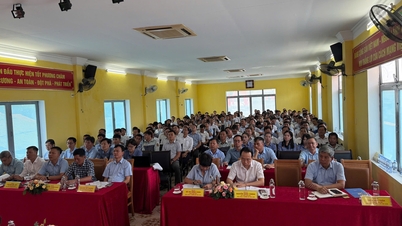
| Update information and digital data during meetings. |
Establishing a digital platform
In recent years, Hue City has focused its resources on building and perfecting shared digital platforms, laying the foundation for digital transformation across all sectors. To date, the city maintains stable operation of four shared digital platforms: the city-level data integration and sharing platform (LGSP); the overall management platform for leadership and administration; the online meeting platform; and the virtual assistant platform serving citizens and businesses.
Alongside this, many specialized digital systems continue to be developed, contributing to improved efficiency in state management and the quality of services provided to citizens. A notable example is the digital data platform with over 980 data tables covering various fields such as tourism, transportation, healthcare, education, culture, infrastructure, and public services. This is considered a crucial digital resource for deploying digital government applications, smart cities, and leveraging data for socio-economic development.
Notably, the digital working platform currently operates more than 20 digital processes in state management, deployed to 100% of wards and communes in the area. The GISHue digital map platform continues to be improved with 76 integrated data layers, gradually developing a 3D digital map model to serve urban management, planning, and investment attraction.
Along with application platforms, the city's digital infrastructure has also received significant investment. However, given the ever-increasing demand for data storage, processing, and exploitation, the current data center capacity is still insufficient to meet the development goals of the new phase.
 |
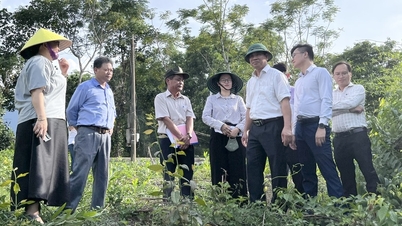
| Through the virtual assistant platform, people can experience convenient tourism and cultural services. |
In implementing the plan to integrate information and digital infrastructure by 2030, Hue City has identified the construction and upgrading of a centralized data center as a strategic task. The data center is not only a place to store information but is also considered the "digital brain," responsible for processing, connecting, and coordinating all data of the digital government system.
Operating a centralized data center contributes to optimizing public investment resources and enhancing data interoperability between departments, agencies, and localities. Simultaneously, it improves the ability to ensure information security in the face of increasingly complex cybersecurity challenges.


Mobilizing technology companies to contribute
Despite achieving many positive results, the process of building a digital city in Hue still faces many challenges, especially the issue of investing in data infrastructure, large-scale data centers, and the application of artificial intelligence (AI).
According to Mr. Bui Hoang Minh, Deputy Director of the Department of Science and Technology, in 2026, the city will continue to invest in upgrading the centralized data center to meet Tier 3 standards or higher, fulfilling the needs of developing digital government, digital economy, heritage economy, and AI infrastructure by 2030.
 |
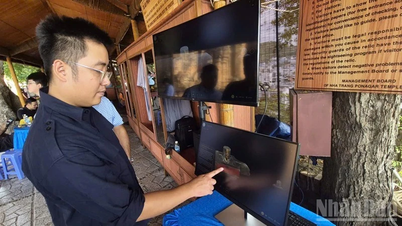
| The city is mobilizing technology companies to invest in developing digital and telecommunications infrastructure. |
According to Mr. Bui Hoang Minh, digital data is the most important foundation of digital transformation. To build a modern data center with a long-term vision, Hue needs the participation of technology companies in supporting infrastructure, equipment, technical solutions, and practical implementation experience.
The partnership of businesses not only helps localities improve their digital infrastructure but also contributes to the development of telecommunications infrastructure, gradually forming a technology ecosystem to serve the people and businesses.
Currently, Hue City has 359 operating digital technology businesses. However, the majority are small-scale enterprises with limited resources. Therefore, attracting large technology corporations to invest and cooperate in developing digital infrastructure is considered a necessary requirement in the coming period.
At a workshop on solutions for building digital cities, Ms. Pham Thi Mai Huong, Director of the Corporate and Public Administration Customer Segment - AMD Vietnam, stated that for businesses to be committed to and partner with localities in the long term, investment projects need to bring tangible results, creating value for both businesses and society.
 |
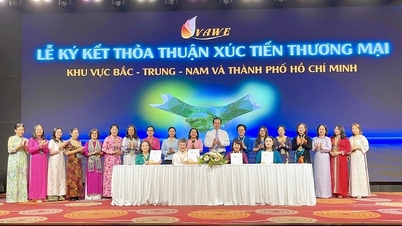
| Building a shared database to support efficient public service delivery. |



According to Ms. Huong, data centers and AI processing capabilities are becoming essential infrastructure for the digital economy. These are also crucial factors that help localities improve their governance capacity, the quality of public services, and their competitiveness in attracting investment.
Mr. Pham Van Ngoc, a product and solutions sales expert at Dell Technologies Vietnam, believes that Hue has great potential for deploying AI applications to serve urban management, smart tourism, online public services, and support officials in handling their work.
The proposed solutions aim to build a unified data ecosystem, connecting data from the smart city operations center, camera systems, tourism, and healthcare to services for citizens. On this foundation, AI can support data analysis, trend forecasting, anomaly detection in traffic, flooding, healthcare, and education, as well as improve the quality of service for tourists and investors.
Source: https://huengaynay.vn/kinh-te/khoa-hoc-cong-nghe/dong-hanh-xay-dung-thanh-pho-so-166609.html



![[Photo] General Secretary and President To Lam receives Palestinian Ambassador Saadi Salama](https://vphoto.vietnam.vn/thumb/1200x675/vietnam/resource/IMAGE/2026/06/25/1782365384740_a1-bnd-9423-8322-jpg.webp)
![[Image] Ho Chi Minh City: Ma Lang area, Chicken-Rice Market about to change its appearance](https://vphoto.vietnam.vn/thumb/1200x675/vietnam/resource/IMAGE/2026/06/25/1782377698627_ndo_br_m1-jpg.webp)
![[Image] Schools organize meetings and introduce teaching models to students admitted to grade 10.](https://vphoto.vietnam.vn/thumb/1200x675/vietnam/resource/IMAGE/2026/06/25/1782368077271_ndo_br_z7970052192242-1ec8daeb77a6eed1a4e9f58c564ddd3e-jpg.webp)