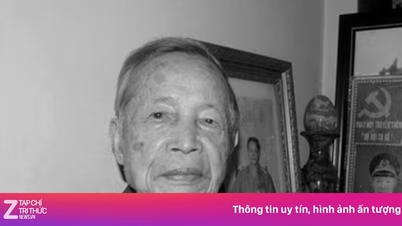
According to Sinchew , Bai Ying's death was confirmed on May 27th. He passed away peacefully in his sleep. The information was kept private by his family and was only revealed recently when veteran journalist Wang Manling posted a farewell message to the veteran actor on social media.
The family decided to hold a simple funeral and perform a water burial according to the artist's wishes. His ashes will be scattered into the sea, and no grave will be erected. The news of Bai Ying's death caused a stir in the Chinese entertainment industry. Many colleagues and fans sent their condolences to the actor's family.
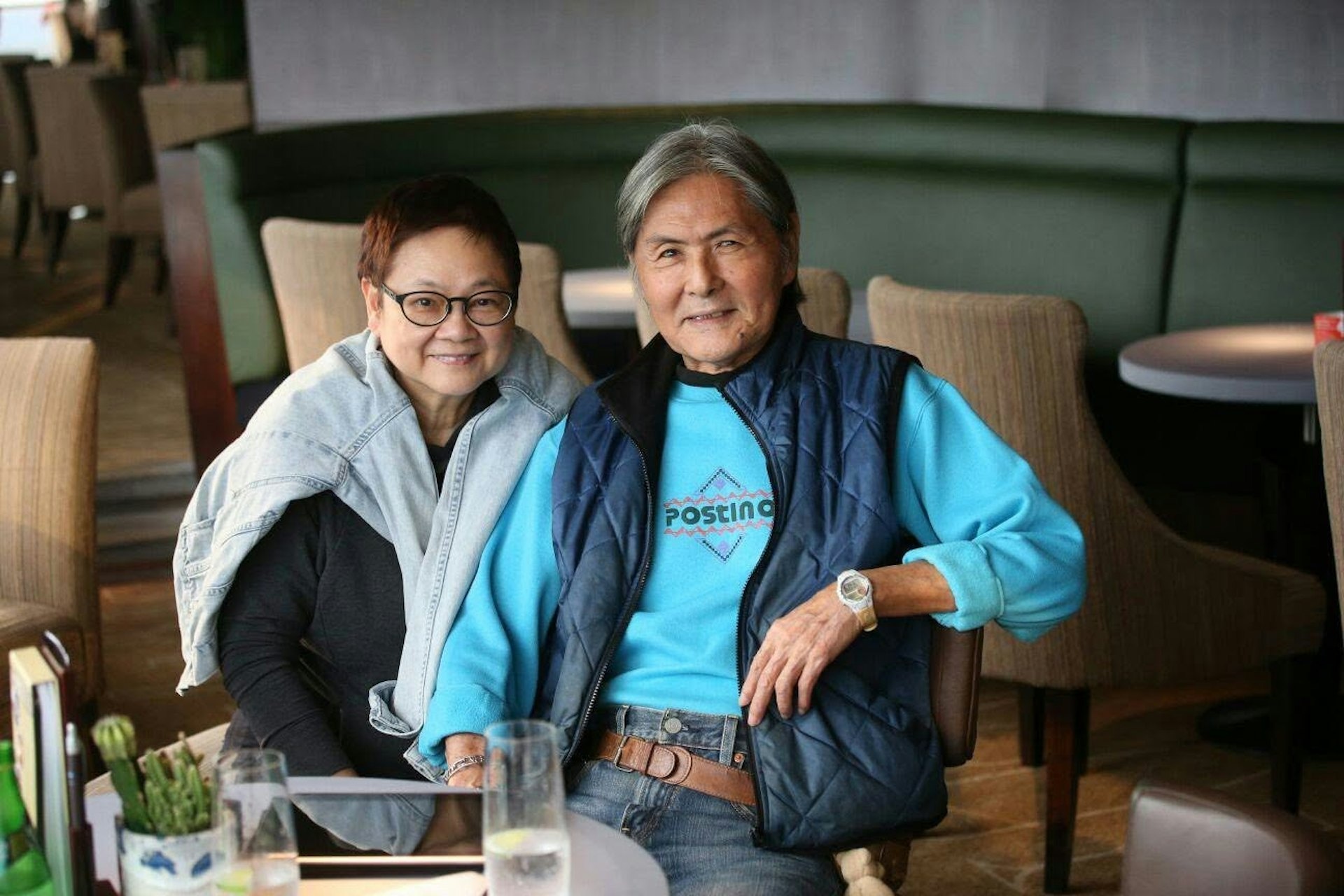 |
Actor Bai Ying (right) and journalist Wang Manling. Photo: Weibo . |
In his later years, Bai Ying lived a rather private life, rarely appearing in the media. Born in 1941, the actor was widely known to audiences as a famous martial arts star of Chinese cinema. His name is associated with classic films such as "Dragon Gate Inn" and "The Thousand-Mile Pursuit of the Sword. "
Not long after entering the film industry, Bai Ying had already achieved remarkable career success. In 1967, he participated in director Hu Jinquan's Longmen Inn , playing the role of Cao Shaoqin, the eunuch of the Eastern Depot – a character described as wielding immense power and possessing superior martial arts skills. With his cold, ruthless gaze and impressive martial arts performances, Bai Ying created one of the most classic and influential villains in the history of Chinese martial arts films.



Following the resounding success of *Dragon Gate Inn* , he continued to collaborate with Xu Feng and Shi Xuan, becoming key figures in director Hu Jinquan's team. Together, they created a series of classic martial arts films, considered exemplary textbooks of this genre, including *Heroine*, *Stormy Spring Pavilion *, and * Loyal Heroes *.
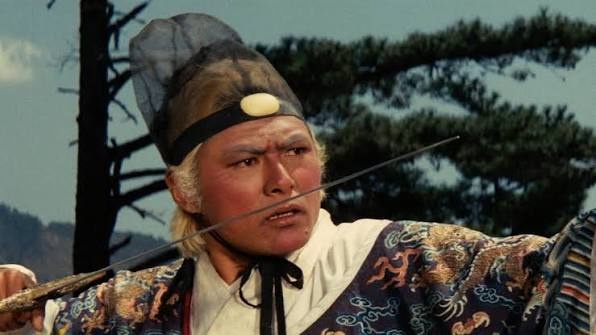 |
Bai Ying's iconic role in Dragon Gate Inn. Photo: Weibo . |
In the 1970s, Bai Ying further solidified his talent with an outstanding performance in the martial arts film *Ten Thousand Miles of Swords*, earning him the Best Supporting Actor award at the Golden Horse Awards. In the latter half of the 1970s, he joined *Golden Harvest*, a major force in Hong Kong cinema at the time. There, he tried his hand at various modern film genres.
Throughout his decades-long artistic career in both Taiwan and Hong Kong, Bai Ying left his mark in various genres, from martial arts and action to drama. His passing is considered a great loss to the Chinese entertainment industry.



Source: https://znews.vn/dong-xuong-bach-ung-qua-doi-post1660754.html
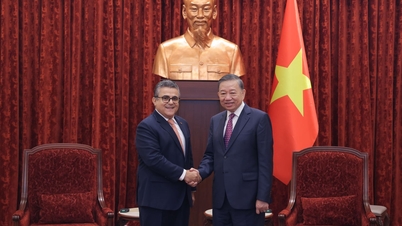
![[Photo] General Secretary and President To Lam receives Palestinian Ambassador Saadi Salama](https://vphoto.vietnam.vn/thumb/1200x675/vietnam/resource/IMAGE/2026/06/25/1782365384740_a1-bnd-9423-8322-jpg.webp)


![[Image] Schools organize meetings and introduce teaching models to students admitted to grade 10.](https://vphoto.vietnam.vn/thumb/1200x675/vietnam/resource/IMAGE/2026/06/25/1782368077271_ndo_br_z7970052192242-1ec8daeb77a6eed1a4e9f58c564ddd3e-jpg.webp)
![[Image] Ho Chi Minh City: Ma Lang area, Chicken-Rice Market about to change its appearance](https://vphoto.vietnam.vn/thumb/1200x675/vietnam/resource/IMAGE/2026/06/25/1782377698627_ndo_br_m1-jpg.webp)















![[GALLERY] Voidling Bound takes Steam by storm with 94% positive reviews.](https://vphoto.vietnam.vn/thumb/402x226/vietnam/resource/IMAGE/2026/06/25/1782396892878_tua-1-png.webp)