


The first three months of the year were bountiful.
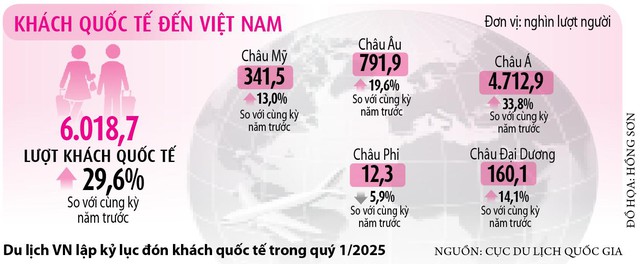
According to the latest statistics from the National Tourism Administration, the number of international visitors to Vietnam in March 2025 reached over 2.05 million, an increase of nearly 29% compared to the same period in 2024. In the first quarter alone, the country welcomed over 6 million visitors, an increase of nearly 30%, marking the highest quarterly visitor count ever recorded in Vietnam. Among the top 10 largest markets for Vietnamese tourism, China leads with 1.58 million visitors, followed by South Korea with 1.26 million. These two markets accounted for 47% of the total number of visitors to Vietnam.
Notably, visitors from Russia, Cambodia, the Philippines, and China were considered the driving force behind the first quarter's growth, with the highest increases of 210%, 205%, 195%, and 178% respectively. China and Russia were two of the leading international tourist markets for Vietnam's tourism industry before the Covid-19 pandemic. For various reasons, both markets experienced a regrettable decline in recent years. However, recently, the number of visitors from these two markets has shown strong growth. Although the absolute numbers have not yet returned to 2019 levels, the impressive recovery of these two major markets is considered extremely important by the Vietnam National Administration of Tourism, creating momentum and confidence for the Vietnamese tourism industry to achieve its major goals in the future.

International tourists arriving in Nha Trang by sea, February 2025.
PHOTO: BA DUY
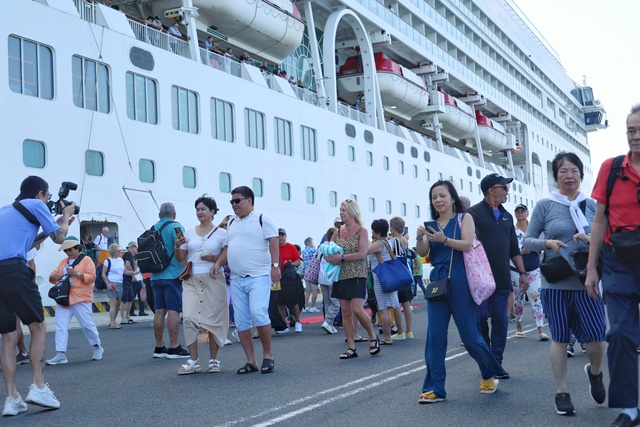
PHOTO: BA DUY
In addition, the Polish and Swiss markets also recorded an increase in visitor numbers, by 52.9% and 14.1% respectively compared to the same period in 2024. This positive result is attributed to the impact of the Government's Resolution 11, which grants short-term visa exemptions to citizens of these countries as part of the 2025 tourism development stimulus program. This policy is expected to create momentum to attract more tourists from these European markets this year.
With record-breaking visitor numbers across the country, each locality is also showcasing a bountiful start to the year's tourism season. Ho Chi Minh City's tourism industry welcomed over 1.63 million foreign visitors in the past three months, an 18.2% increase compared to the same period last year and reaching 19.2% of the 2025 target. This contributed 19,245 billion VND in revenue to the city's budget, a 20.5% increase compared to the same period in 2024. A significant portion of this also came from the spending of nearly 3 million domestic tourists, although the growth rate was not as high, only increasing by 6.3%.
In absolute terms, Hue City's revenue of 2,600 billion VND from tourism activities in the first three months of the year is quite small compared to Ho Chi Minh City, but the growth rate is nearly three times higher, reaching 53% compared to the same period last year. This impressive result is thanks to the many unique cultural festivals organized in Hue since the beginning of the year, especially the successful opening ceremony of the National Tourism Year associated with the Hue Festival, which created a highlight, stimulated demand, and attracted nearly 1.5 million visitors, an increase of 62%. Of these, international visitors to the ancient capital are estimated at over 650,000, an increase of nearly 50%.
The General Statistics Office noted that revenue from accommodation and food services in the first quarter also increased sharply in other localities, such as Quang Ninh (up 20.1%), Da Nang (up 16.7%), Hanoi (up 14.9%), Hai Phong (up 14.6%), Khanh Hoa (up 11.4%), Can Tho (up 11.2%), etc.
Driving force for economic breakthrough
Nationwide, revenue from accommodation and food services in the first quarter increased sharply by 14% compared to the same period last year, estimated at VND 200,100 billion, accounting for 11.7% of total retail sales of goods and consumer services. Along with that, travel and tourism revenue is estimated at VND 21,500 billion, an increase of 18.3%; revenue from other services is estimated at VND 175,000 billion, accounting for 10.2% of the total and increasing by 12.5%. "The high domestic consumer demand during the Lunar New Year holidays and the high number of international visitors to Vietnam are positive factors contributing to the growth of the trade and service sector, contributing to the 6.93% GDP growth of the entire economy in the first three months of the year," the General Statistics Office explained.
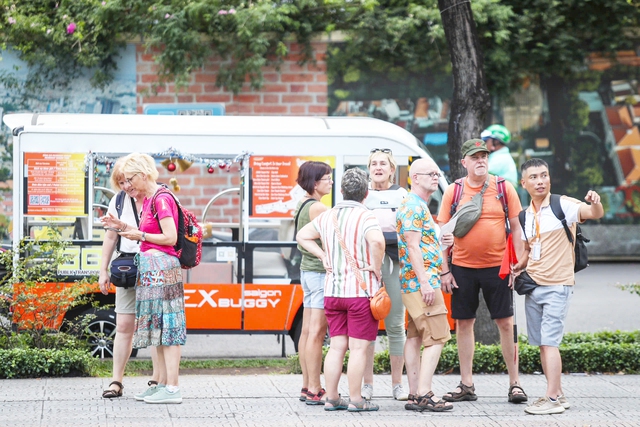
Ho Chi Minh City reaped a bountiful harvest, welcoming over 1.6 million international visitors in the first three months of 2025.
PHOTO: NHAT THINH
In general, Professor Vo Xuan Vinh, Director of the Institute for Business Research at the University of Economics Ho Chi Minh City, assessed that to achieve the target of 8% GDP growth in 2025 and double-digit growth in the following years, the Vietnamese economy must still rely on its main drivers: consumption, investment, government spending, and exports. Consumption currently accounts for a large proportion of Vietnam's GDP. After a period of stagnation due to the Covid-19 pandemic, domestic consumption is showing a significant upward trend, projected to increase by more than 30% in 2024 compared to 2019.
According to Mr. Vinh, encouraging people to spend and stimulating consumption has always been a "weapon" used by major economies around the world to create momentum for economic movement and development. However, about 77% of domestic consumption currently consists of essential goods; while other services and products account for a small proportion, indicating that people are still relatively thrifty. To encourage spending, policies are needed that not only stimulate domestic consumer demand but also a very important group: foreign tourists visiting Vietnam.
"If the tourism industry achieves its target of welcoming 22-23 million international visitors this year, and simultaneously offers products and services that encourage visitors to spend generously, this will be one of the key factors driving domestic consumption and becoming a breakthrough economic driver," Professor Vo Xuan Vinh emphasized.
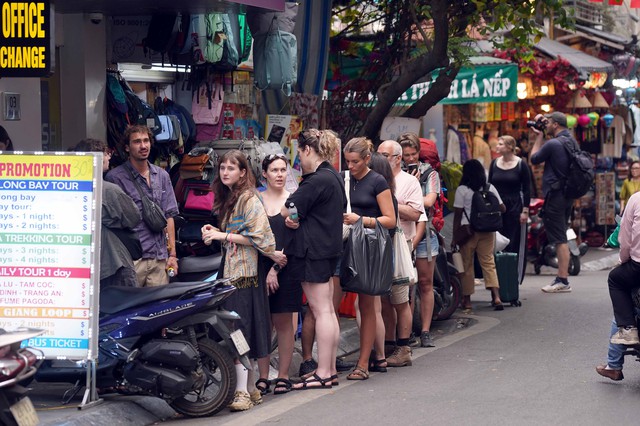
Foreign tourists visiting Hanoi
PHOTO: NGOC THANG
Sharing the same viewpoint, Chairman of Vietravel Corporation Nguyen Quoc Ky analyzed: Tourism is a comprehensive economic sector, so if tourism is promoted, it will have a ripple effect on many other economic sectors. Not only consumption and services, but also real estate and infrastructure can flourish immediately if there are vibrant tourism activities. This is because, in the local economic structure, the construction and industrial sectors are given great attention and focus. When tourism develops, the tourism real estate and resort real estate sectors will also revive, thereby increasing the proportion of the industrial and construction sectors. Along with that, tourism also makes an important contribution to the knowledge economy through digital transformation from online sales networks, connecting and operating OTA channels, etc.
"It is clear that tourism plays a crucial role in activating all the sectors considered key drivers for Vietnam's high economic growth of 8% this year, namely investment, consumption, services, and the digital economy. Most importantly, its ripple effect is very rapid. To achieve major economic goals in a relatively short time, nothing is more effective than strongly promoting the development of tourism and services," Mr. Nguyen Quoc Ky affirmed.
Many opportunities are converging to usher in a new era.
Despite numerous positive achievements reflected in optimistic figures, in a document recently sent to Prime Minister Pham Minh Chinh, experts from the Tourism Advisory Board (TAB) expressed concern that Vietnam's tourism sector is at risk of falling behind its main competitors in the region, especially Thailand and Malaysia. Specifically, in the context of 2024, Vietnam's tourism sector has recovered to almost pre-pandemic levels with 17.6 million international visitors, while Thailand is only 12% away from reaching its pre-pandemic level of 40 million visitors, and Malaysia is only 4% away from returning to its 25 million international visitors.
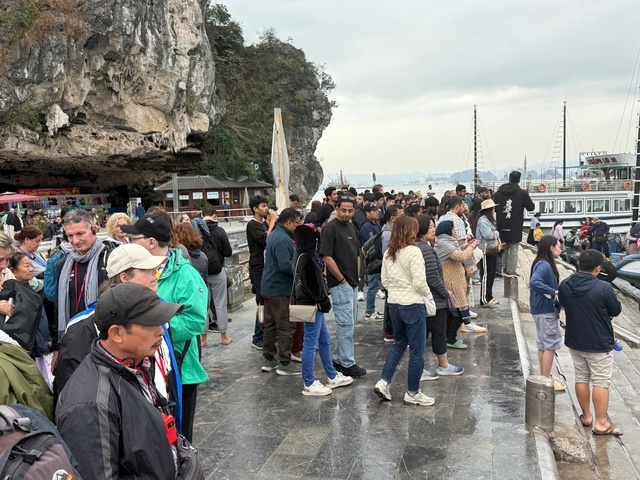
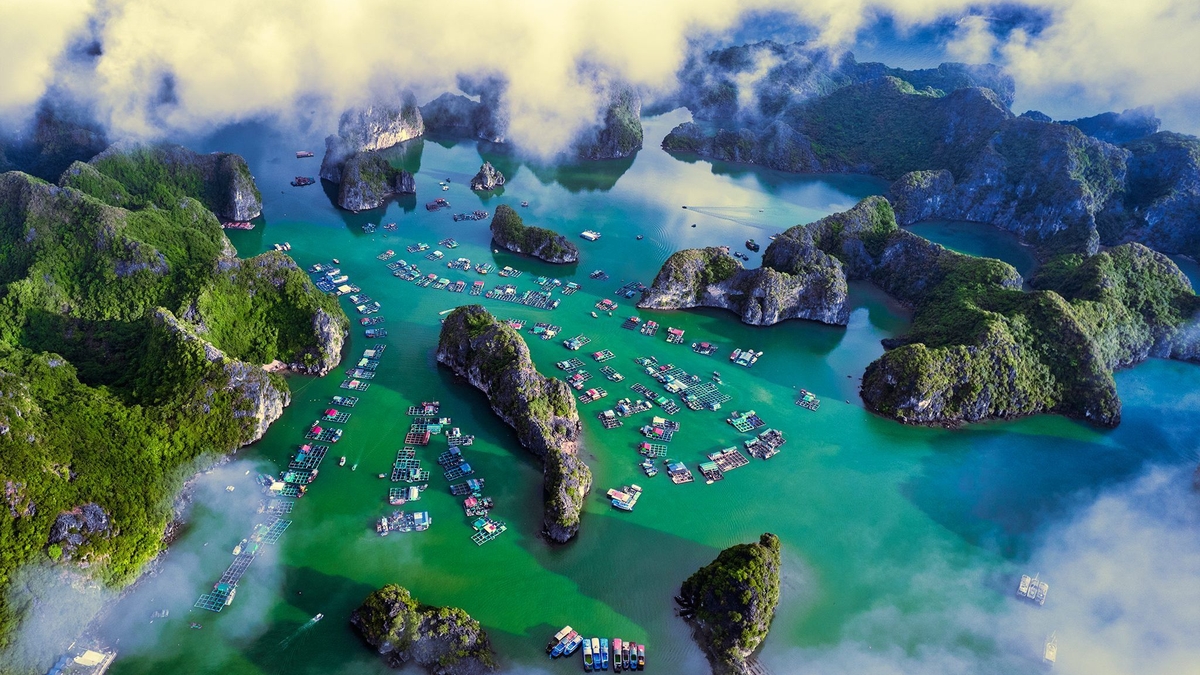
Foreign tourists crowded the pier on Ti Top Island in Ha Long Bay (Quang Ninh province), March 2025.
PHOTO: LA NGHIA HIEU
TAB assesses that, to achieve these results, our competitors are making significant changes in their visa policies. For example, Thailand has expanded the number of visa-free countries from 57 to 93 and increased the number of countries where visas are issued on arrival from 19 to 31. Malaysia also grants visa exemptions to 158 countries; both countries have also introduced new visa types. Meanwhile, Vietnam currently only grants visa exemptions to 30 countries.
In addition, many countries have implemented numerous specific and specialized visa programs for various groups to attract a diverse range of foreigners for tourism, investment, work, and economic contribution. Therefore, to achieve the very high growth target in the coming period, TAB believes that visa expansion policies are not just a standalone solution but an indispensable part of the overall strategy, a crucial tool to promote growth.
TAB proposes that the Government consider special visa types such as: the Vietnam Golden Visa, valid for 5-10 years and renewable, longer than the current 1-2 years; the Investor Visa, valid for 10 years, with a pathway to permanent residency after 5 years if the investment level is maintained; and the Talent Visa, valid for 5 years, with a simplified renewal process. These programs could be piloted in suitable locations such as Phu Quoc, Ho Chi Minh City, Hanoi, and Da Nang...
Completely supporting the above proposals, Mr. Dang Minh Truong, Chairman of the Board of Directors of Sun Group, believes that billionaires are a high-spending, demanding, and high-end customer segment; if Vietnam can successfully access and exploit this market, it will bring enormous revenue value to tourism.
Looking back at the recovery of Vietnamese tourism after the pandemic, Mr. Dang Minh Truong believes that the country's tourism sector is currently converging on many opportunities to enter a new era. In recent years, Vietnam's tourism development policies have undergone significant changes, clearly demonstrating the Party and State's determination to make tourism a key economic sector. This transformation is not just at the level of awareness but has been concretized into decisive and practical actions closely aligned with reality. Most impressive is the increasingly flexible and relaxed visa policy, creating favorable conditions for international tourists to visit Vietnam, and the effectiveness of this visa policy has been confirmed through the growth figures of international visitors. However, to create a breakthrough, it is not yet possible, especially when compared to "competitors" like Thailand, Malaysia, and Singapore… This is both a disadvantage and shows that Vietnamese tourism still has much room to exploit and develop explosively.
Therefore, Sun Group's leadership proposed that the Government and relevant ministries and agencies continue to remove obstacles and expand the list of visa-exempt countries, especially prioritizing target markets with high potential such as New Zealand, Australia, China, and India; groups of tourists from emerging and high-potential markets such as the UAE, Saudi Arabia, Qatar, Kuwait, and Central Asian countries; and tourists from Europe and North America…
Propose mechanisms and policies to facilitate tourism.
From the perspective of the management agency, the Director of the National Tourism Administration, Nguyen Trung Khanh, affirmed that Vietnam has great potential for tourism development, especially in terms of natural resources, scenic spots, historical relics, cultural heritage, particularly those recognized by UNESCO… The growth rate of tourism in recent years, along with international recognition and strong internal developments, gives tourism leaders complete confidence in the future dynamism of Vietnamese tourism.
"With a focus on depth, quality, professionalism, sustainability, and branding, Vietnamese tourism in the coming period will prioritize improving service quality; concentrating on building increasingly high-class products to bring truly unique and impressive experiences to tourists. At the same time, it will implement a comprehensive set of tasks and solutions to promote the development of the industry, adapting to the conditions of the new development phase. This will focus on innovating methods of tourism promotion and advertising, as well as proposing mechanisms and policies to facilitate tourism activities…," Mr. Nguyen Trung Khanh informed.
Source: https://thanhnien.vn/du-lich-lap-ky-luc-don-khach-quoc-te-185250407221907561.htm












































![[Image] National Conference on studying, understanding, and implementing Resolutions No. 79 and No. 80 of the Politburo](https://vphoto.vietnam.vn/thumb/402x226/vietnam/resource/IMAGE/2026/02/25/1771990845625_anh-man-hinh-2026-02-25-luc-10-40-34.png)


















Comment (0)