

Global warming has caused glaciers to begin melting. Experts estimate that even in the best-case scenario with climate change mitigation actions, half of the world's glaciers could disappear by 2100. Melting ice makes access easier, but also poses greater risks. Glaciers are becoming increasingly unstable, with cracks appearing more quickly and more rocks and sediment more easily falling.
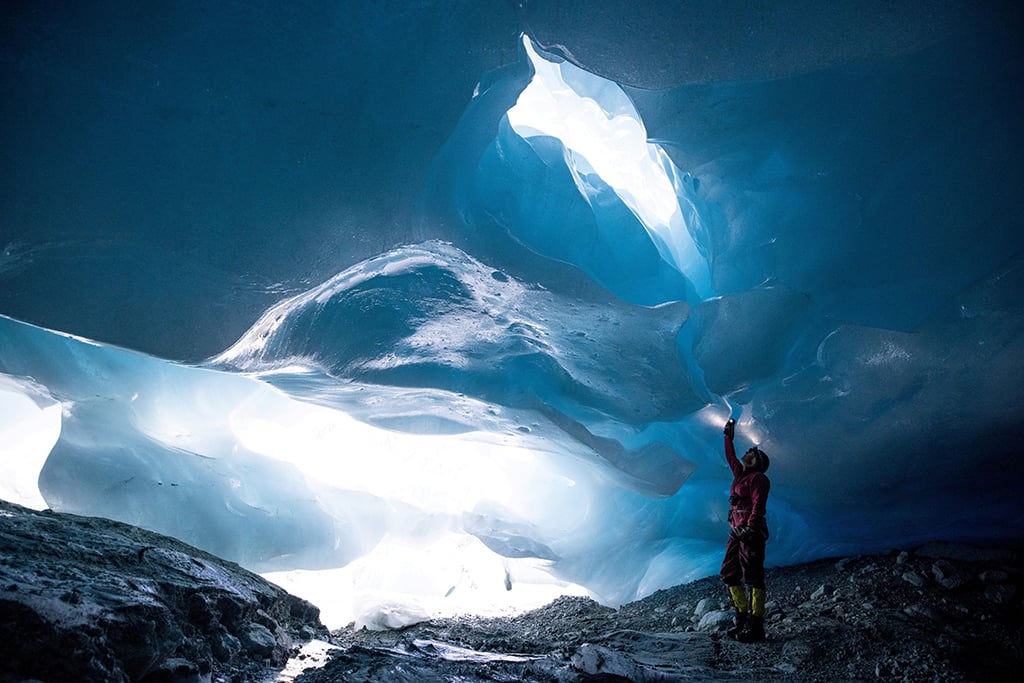
Inside a glacier in Austria in 2021.
Accidents involving glaciers have occurred recently. Last month, a tourist died when an ice cave collapsed in Iceland. In July 2022, approximately 64,000 tons of water, rock, and ice broke off from the Marmolada glacier in Italy, causing an avalanche that killed 11 people. In the summer of 2018, two people died in one day when ice and rocks fell on them while hiking on a glacier in Alaska (USA).
'Doomsday Glacier' could melt in 3 years
CNN quoted Dr. Matthias Huss, an ice researcher at ETH Zurich University (Switzerland), as saying that the unusually hot spring and summer have caused the glaciers to melt. This creates large, deep cracks that allow water to seep in, increasing pressure on the ice masses until they collapse. This situation poses a challenge for glacier tourism , as tour companies and local authorities struggle to provide absolutely safe solutions. Dr. Huss said that while ice hazard assessment technology and early warning systems are improving, identifying areas at risk remains a difficult task.
Source: https://thanhnien.vn/du-lich-song-bang-truoc-thach-thuc-lon-185240922214145001.htm



![[Photo] National Assembly Chairman Tran Thanh Man successfully concludes his participation in IPU-152](https://vphoto.vietnam.vn/thumb/1200x675/vietnam/resource/IMAGE/2026/04/18/1776502638199_vna-potal-chu-tich-quoc-hoi-ket-thuc-tot-dep-chuong-trinh-tham-du-ipu-152-8709975-jpg.webp)























































































Comment (0)