

Quang Tri province has over 248,189 hectares of forest area, of which over 121,495 hectares are planted forests. The entire province has more than 26,136 hectares of forest certified under the FSC sustainable forest management standard. This creates ideal conditions for expanding the market for processed wood products and aiming for export, thereby developing a sustainable forestry economy .
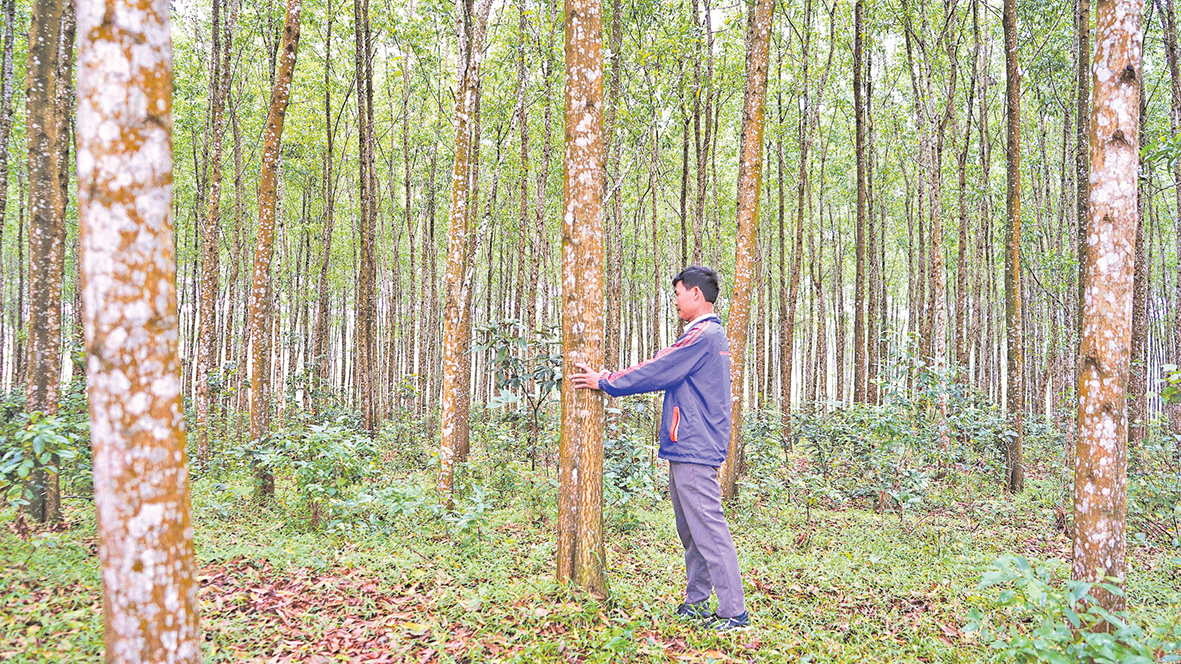
The model of planting large timber forests in Cam Thuy commune, Cam Lo district, yields outstanding economic efficiency compared to planting small timber forests - Photo: LA
Potential areas
As a leading manufacturer of indoor and outdoor furniture, the atmosphere at Tien Phong Wood Processing Factory, a subsidiary of Tien Phong Cam Lo Co., Ltd., is extremely busy these days to ensure timely delivery of signed orders. The factory primarily produces indoor and outdoor furniture such as beds, wardrobes, indoor and outdoor tables and chairs, and wooden household goods.
On average, the company processes about 15,000 m3 of raw wood materials annually, exporting approximately 400 40-foot containers. The company's main markets are European and North American countries such as France, Germany, Poland, Spain, the United States, and Canada; and furniture supermarket chains like IKEA and Metro. The company's annual revenue ranges from 160 to 170 billion VND, providing stable employment for over 400 workers with an average salary of 7 million VND per person per month.
According to Nguyen Thi Minh Thu, Deputy Director in charge of import and export at Tien Phong Cam Lo Co., Ltd., in order to export wooden furniture to the European and US markets, products must meet standards regarding raw materials and production environment. They must also strictly adhere to the specifications and designs of each order from their partners.
Specifically, to ensure a stable supply of raw materials for the production of tables, chairs, and indoor and outdoor furniture, the company has signed contracts with large FSC-certified timber plantations in the province, such as Duong 9 Forestry Company Limited and Ben Hai Forestry Company Limited, for acacia wood; and imported FSC-certified teak wood from South American countries such as Brazil, Panama, and Africa, as the quantity and quality of this type of wood in Vietnam are insufficient.
Investing in the construction of a modern factory that meets European and American standards, such as conformity certification (CoC), the Business Social Responsibility Standard (BSCI), and the amfori Quality Management Initiative (QMI).
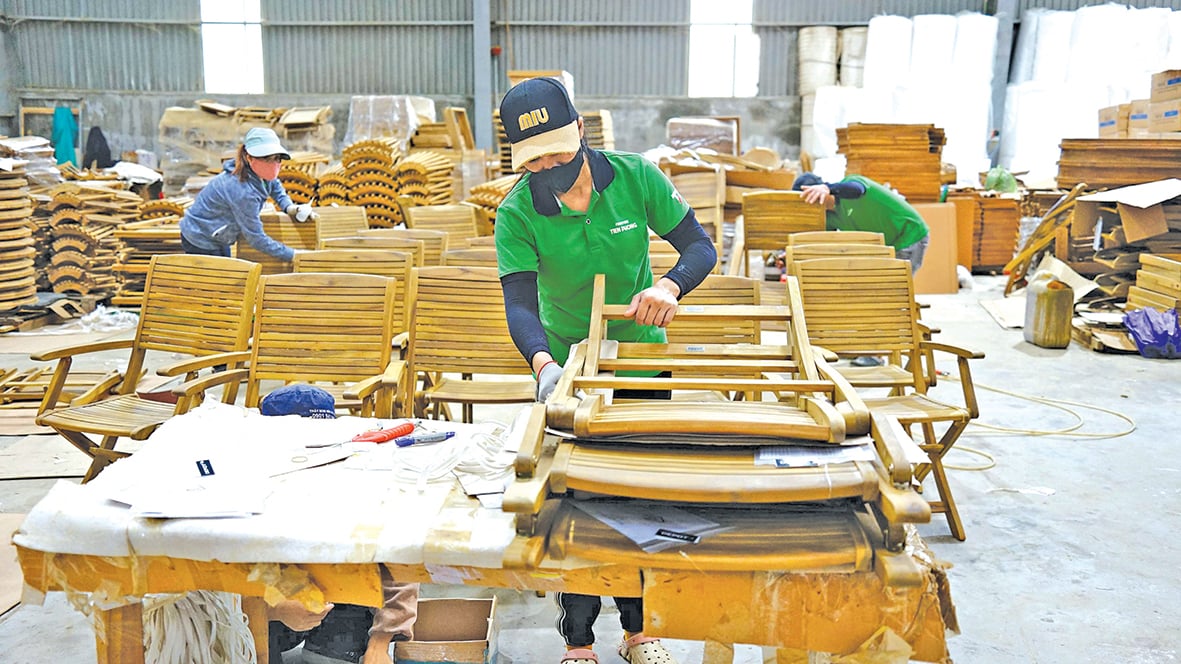
Wood furniture production for export at Tien Phong Cam Lo Co., Ltd. - Photo: LA
According to Ms. Thu, for products made from Vietnamese plantation timber to be accepted by the European market, the company must obtain BSCI certification. This certification demonstrates the company's responsibility towards the environment, its concern for occupational health and safety, and its commitment to producing high-quality products for consumers both domestically and internationally. Furthermore, the company strictly adheres to the designs and specifications provided by its partners. For products designed and created by the company itself, the designs must be submitted to the partners for review and approval, and then evaluated by a third party before mass production.
“In the context of intense annual competition in the global market for wood products, to stand firm in the market and attract customers, businesses proactively invest capital to modernize production technology and invest in modern equipment and machinery. They prioritize training high-quality human resources to best utilize new equipment and technology, thereby rapidly increasing the competitiveness of export products,” Ms. Thu affirmed.
According to statistics from the Department of Agriculture and Rural Development, there are currently 53 licensed timber processing and trading factories in the province, of which 41 are operational, including: 19 wood chip factories, 10 laminated wood panel factories, 3 laminated wood panel and wood chip factories, 2 veneer factories, 2 wood pellet factories, 2 MDF factories, 2 sawn timber production factories, and 1 laminated wood panel and wood pellet factory. In addition, there are 151 other timber processing businesses in the province. The total designed capacity is over 2.5 million tons/year; the currently operating capacity is approximately 1.5 million tons/year.
Over the years, the province's wood processing and forestry product trade sector has made remarkable progress in capturing the domestic market. To date, the consumption rate in the provincial market is 46.55%, while the market outside the province is 53.45%.
In particular, about 52% of products consumed outside the province are exported to ASEAN countries, in addition to China, the US, the EU, and India. Besides wood chips, the wood processing industry has initially produced and exported a number of high value-added products such as MDF, laminated wood panels, energy pellets, and export furniture...
However, according to general assessments, wood processing factories in the province lack self-sufficiency in raw materials, have not formed a production chain, and lack stability and product diversification. In particular, the majority of facilities producing wood chips or those with wood chip components (chips from processed wood by-products) have negatively impacted the sustainability of wood processing activities in the area.
The cooperation and linkages between businesses, processing facilities, and forest growers are not yet strong and integrated into the value chain. Processed wood products are mainly semi-finished or crudely processed products with low added value. Few wood processing facilities in the province directly export their products abroad...
The key to sustainable timber exports.
With the aim of developing the wood processing industry into one of the key industries, the agricultural sector has recently implemented measures to support joint ventures and linkages between wood processing facilities and forest growers to obtain sustainable forest management certification according to FSC standards. The agricultural sector has also intensified propaganda, recommendations, and campaigns to encourage forest growers not to harvest planted forests before they reach maturity. Furthermore, it has promoted intensive cultivation of large-timber plantations to enhance forest value.
To date, six units in the province have participated in implementing sustainable forest management and have been granted FSC certification, covering a total area of 26,136.56 hectares. This result makes Quang Tri one of the leading provinces nationwide in granting FSC sustainable forest management certification to organizations and household group models.
In the development of large-timber forest plantations, the area of planted forests producing large timber and converted from small timber to large timber in the province has reached approximately 18,050 hectares. Quang Tri is also the first province in the country to be granted FSC certification for its natural forests.
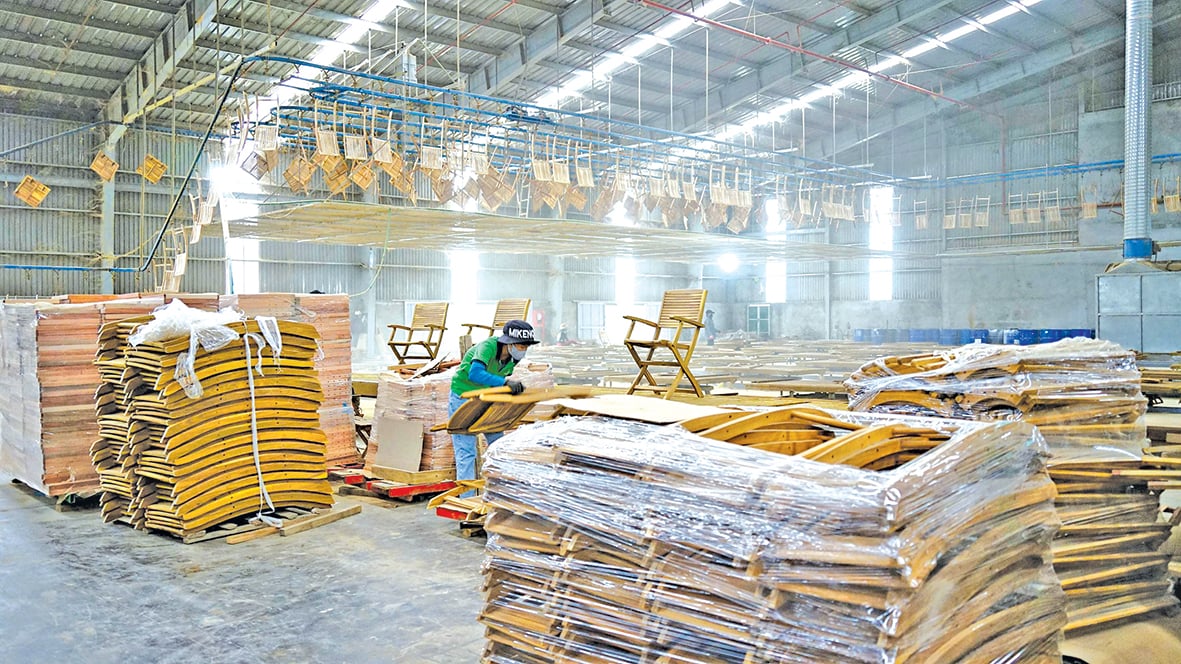
Wood furniture production for export at Tien Phong Cam Lo Co., Ltd. - Photo: LA
Accordingly, in October 2022, 2,145 hectares of natural forest in 5 villages in Huong Phung, Huong Son, Huong Viet, and Huong Linh communes, Huong Hoa district, were granted FSC certification for ecosystem services related to carbon storage and absorption, with a storage capacity of approximately 350,000 tons of CO2 and an annual absorption capacity of approximately 7,000 tons of CO2.
In addition, the province has established a supply chain for FSC-certified plantation timber between forest owners and CoC-certified businesses such as Thu Hang Wood Processing Company, Nguyen Phong Company, Quang Tri Trading Corporation, and Scansia Pacific Company (Ho Chi Minh City). These companies have signed commitments to purchase the entire output of FSC-certified timber from the Quang Tri FSC Association in general and cooperatives in particular at a price 10%-12% higher than that of uncertified timber.
Currently, within the province, there are several models of production linkages for plantation timber, led by cooperatives with output linkage contracts with processing enterprises. A typical example is the linkage model between Keo Son Sustainable Forestry Cooperative and Nguyen Phong Wood Co., Ltd., implemented in 2023 with an agreed-upon linkage area of 423.5 hectares. Accordingly, in 2023, 89 hectares of hybrid acacia trees were newly planted using tissue culture methods, with the goal of expanding the linked raw material area to 2,000 hectares by 2026.
The results of cooperation between wood processing businesses and forest owners (households and groups of households) through the role of cooperatives have led to the formation of planted forests that supply forest products, helping businesses proactively secure raw materials. At the same time, it creates conditions for forest growers to feel secure about product output, ensuring stable wood prices, and gradually stabilizing and improving their livelihoods.
According to Phan Van Phuoc, Deputy Director of the Department of Agriculture and Rural Development, to sustainably develop the wood processing industry, the agricultural sector will continue to advise the Provincial People's Committee to issue policies supporting the development of large-scale timber plantations and sustainable forest management certification. Support will be provided to forestry companies and small-scale forest owners in the province to maintain the area of forests already certified under sustainable forest management, and to shift their mindset and business plans from planting forests for wood chips to planting large-scale timber with longer business cycles, thereby increasing the added value of planted timber and contributing to environmental protection.
Invest in infrastructure development; strengthen the application of advanced science and technology in forestry production to meet development needs. Call for and support investment in the construction of new and upgraded wood processing plants, focusing on increasing refined processing and reducing wood chipping and raw material processing plants.
“In addition, the agricultural sector will build supply chains that include purchasing and processing units, raw processing plants, refined processing plants, marketing, and product design. We will support cooperatives with sufficient capacity and need to participate in services related to harvesting, thinning, transporting, and processing timber from planted forests with resources, machinery, and equipment. In this system, cooperatives will be the central hub of the timber supply chain, from seedling production, planting, harvesting, processing, and timber trade,” Mr. Phuoc informed.
Le An
Source: https://baoquangtri.vn/dua-go-quang-tri-di-xa-190794.htm

![[Photo] Admire the coral "masterpiece" amidst the million-year-old heritage of Dak Lak province.](https://vphoto.vietnam.vn/thumb/1200x675/vietnam/resource/IMAGE/2026/05/31/1780221235105_anh-man-hinh-2026-05-31-luc-16-53-27.png)

![[Photo] Solemn bathing ceremony and Buddha procession in Hue](https://vphoto.vietnam.vn/thumb/1200x675/vietnam/resource/IMAGE/2026/05/31/1780228263543_1-jpg.webp)
![[Photo] The General Secretary, President and his wife begin their state visit to the Philippines.](https://vphoto.vietnam.vn/thumb/1200x675/vietnam/resource/IMAGE/2026/05/31/1780230559452_anh-man-hinh-2026-05-31-luc-19-28-11.png)
















![[Video] Sunset at Lap An Lagoon – Where the sun sets over the fishing nets](https://vphoto.vietnam.vn/thumb/340x192/vietnam/resource/IMAGE/2026/05/31/1780192137701_beach-landscape-sea-water-nature-grass-745871-pxhere-com.jpeg)






































![[Photo] Admire the coral "masterpiece" amidst the million-year-old heritage of Dak Lak province.](https://vphoto.vietnam.vn/thumb/402x226/vietnam/resource/IMAGE/2026/05/31/1780221235105_anh-man-hinh-2026-05-31-luc-16-53-27.png)
































Comment (0)