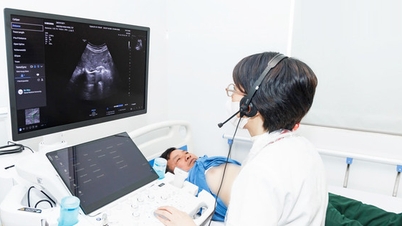
Doctors advise that when experiencing any health abnormalities, patients should seek medical attention. (Illustrative image)
According to musculoskeletal specialists, elderly people with swollen feet will typically exhibit symptoms such as abnormal swelling of the feet, ankles, or lower legs, making shoes feel suddenly tighter than usual. The skin in the swollen area is often taut or discolored; especially when pressed firmly with a finger, it creates a deep indentation that takes several seconds to return to its normal state. This condition also causes the joints in the feet to feel stiff, difficult to move, and accompanied by a heavy, aching sensation when standing or walking. Depending on the cause, the swelling may be transient or persistent.


Leg swelling in the elderly largely stems from serious chronic diseases. First and foremost are cardiovascular, liver, and kidney diseases; when these organs decline in function, blood circulation and fluid elimination become impaired, leading to water accumulation in the tissues of the lower extremities. In addition, varicose veins or venous thrombosis hinder blood flow back to the heart, causing circulatory stagnation. Complications of diabetes also damage blood vessels and peripheral nerves. Furthermore, sedentary lifestyles, prolonged standing or sitting, a high-salt diet causing water retention, or side effects of certain long-term medications can also cause leg swelling.
Doctors advise that patients should not self-treat but should immediately go to a medical facility for an accurate diagnosis of the cause. Besides following the doctor's instructions, elderly people can apply supportive measures at home to stimulate blood circulation and reduce fluid retention in the lower limbs. Increasing gentle exercise, such as walking, practicing Tai Chi, or performing leg stretching exercises, will help activate the vascular system to push blood back to the heart more effectively. Gently massaging the legs from bottom to top also supports effective blood circulation. The elderly should avoid sitting or standing in one place for too long, should change positions frequently, and proactively stand up and move around for short periods every 1-2 hours to reduce pressure on the venous system and minimize circulatory stagnation.
THU SUONG



Source: https://baocantho.com.vn/dung-chu-quan-voi-phu-chan-a206459.html

![[Photo] "Hanoi Lotus Festival" honors the lotus flower that has been associated with Vietnam for thousands of years.](https://vphoto.vietnam.vn/thumb/1200x675/vietnam/resource/IMAGE/2026/06/27/1782516943048_sen-ha-noi-2026-minh-duy-1-jpg.webp)