

 |
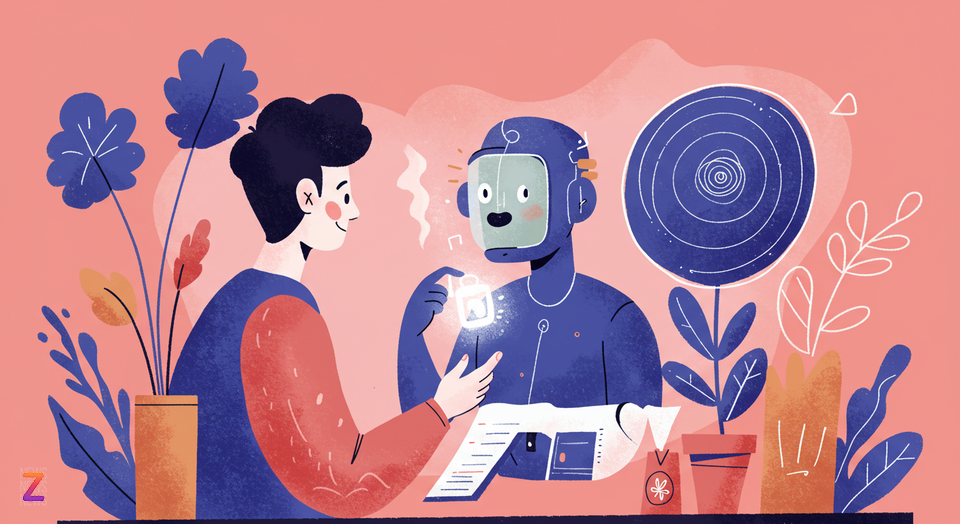
AI is being used for fortune telling in China. (Illustrative image: Created by AI.) |
According to the China Association for Science and Technology, after gaining popularity earlier this year, DeepSeek's application has been expanding rapidly in the country of over a billion people. However, the top search term is the aforementioned AI-powered fortune-telling solution. Beyond being just a joke, the application has garnered a huge number of users and generated significant discussion.
DeepSeek also has a particular fondness for feng shui bracelets. It frequently recommends them to customers as "tools to change destiny," leading to a craze earlier this year. However, experts advise users not to be superstitious or believe in AI fortune-telling.
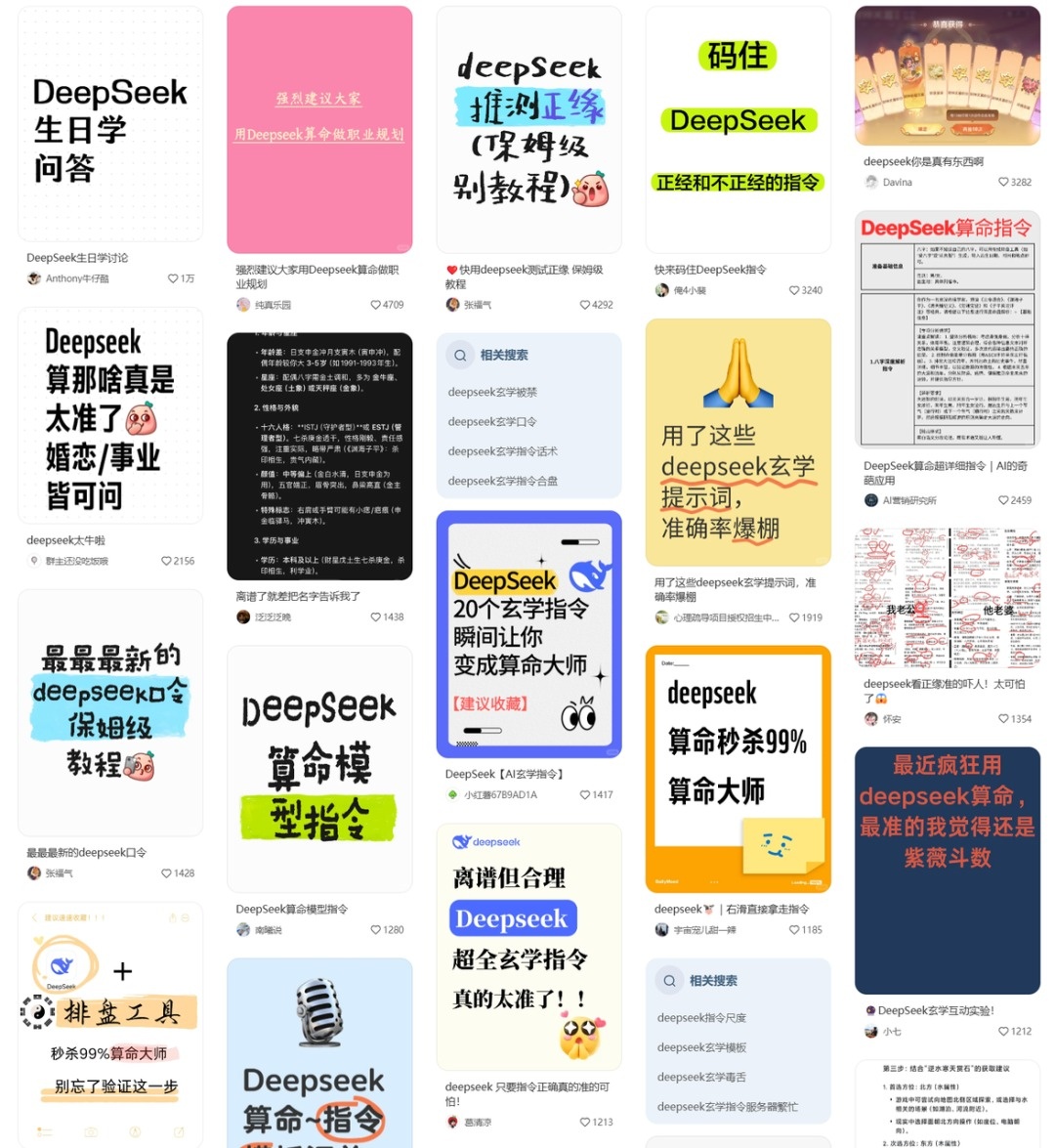 |
The posts advertise how to use DeepSeek for fortune telling. Photo: QQ. |
When a user provides their birth date, DeepSeek begins analyzing their "eight characters" (Bazi), based on their birth date and time. The information initially seems reasonable. However, at the end of the results, it recommends the customer purchase a feng shui bracelet. This is similar to what some service providers do in real life.
Many Chinese people trust DeepSeek more because it was trained on the massive dataset of the country with the world's largest population. The chatbot's responses seem insightful and relevant to customers in this country.
Before DeepSeek, horoscope prediction tools using ChatGPT were already available in China. But all software faced a fundamental paradox. Large-scale programming language (LLM) models are merely predictive calculations based on statistical probability, and cannot be considered "truths" to be followed.
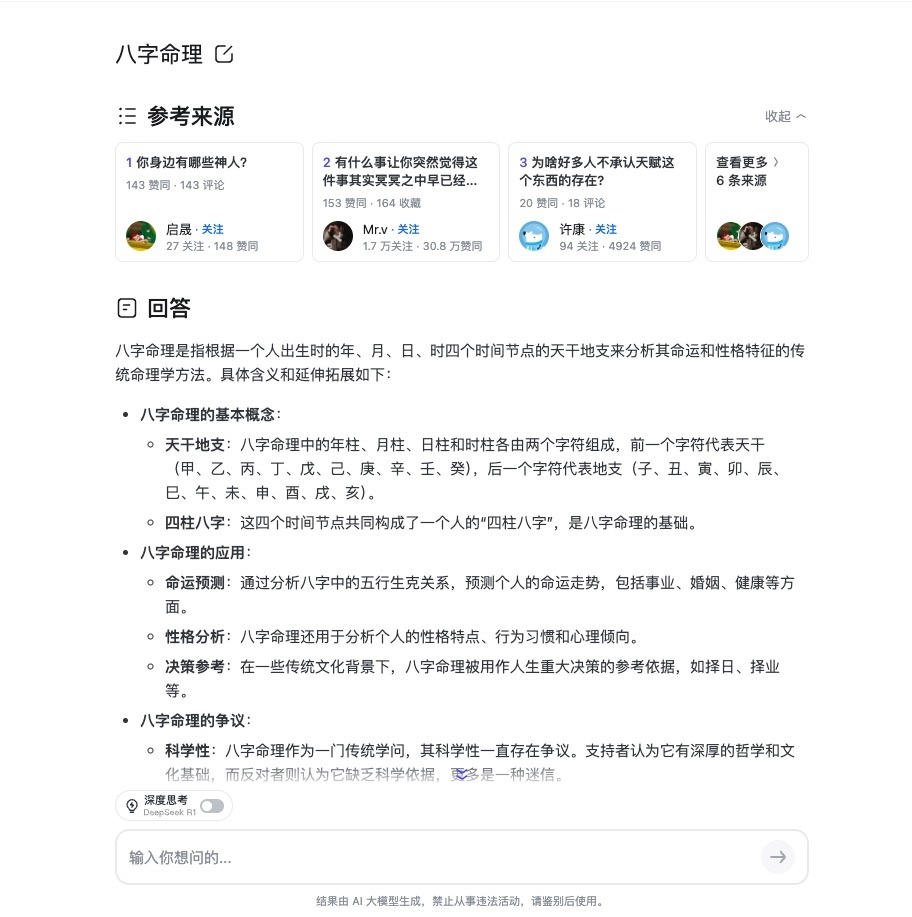 |
This is the interface of an AI-powered birth chart analysis tool in China, running on the DeepSeek R1 API. |
Clearly, AI is unreliable. When DeepSeek is given a problem to solve multiple times, the results sometimes differ. This is a hallucination stemming from the artificial intelligence, leading to fabrication.
On the other hand, DeepSeek also seems believable because of its vague answers like, "You might encounter bad luck at work, but doing well will lead to opportunities for promotion and important assignments." This is a form of Barnum's psychological effect. It describes the cognitive error where people believe a general description accurately reflects their personal characteristics.
LLMs are designed to perform this behavior proficiently. They must provide answers that appear personalized, yet are applicable to all users.
The worrying thing is that AI tends to be far more accommodating than real fortune tellers. Many chatbots are designed to meet every user's needs. As a result, they can make irresponsible or completely fabricated predictions.
"There's nothing wrong with using AI fortune-telling for daily entertainment. But don't take those predictions for granted. You could make wrong decisions, like buying feng shui bracelets or changing your life plans, based on AI," the China Association for Science and Technology warned.
Furthermore, from a technical standpoint, all AI-generated content is based on the most probable predictions, not necessarily the absolute truth.
Source: https://znews.vn/dung-deepseek-xem-boi-post1540583.html

![[Image] Nearly 125,000 Hanoi students completed the Literature exam for the 10th grade entrance exam.](https://vphoto.vietnam.vn/thumb/1200x675/vietnam/resource/IMAGE/2026/05/30/1780117233041_ndo_br_thiet-ke-chua-co-ten-2-png.webp)

















![[Photo] Admire the coral "masterpiece" amidst the million-year-old heritage of Dak Lak province.](https://vphoto.vietnam.vn/thumb/1200x675/vietnam/resource/IMAGE/2026/05/30/1780107638639_y25-jpg.webp)




































































Comment (0)