From ancient times, the Vietnamese have never viewed a tree as just a tree.
The banyan tree at the entrance of the village is considered sacred. Incense is often burned under the shade of ancient trees in temples, pagodas, and shrines during festivals and holidays. Many places still maintain the custom of asking permission from the tree spirit before disturbing an ancient tree. This is not simply a folk belief; it is a way of showing respect to nature, to time, and to everything that belongs to our origins.
In Quang Nam province, too, I've had the opportunity to see many ancient banyan, fig, and kapok trees, where people often build shrines. And I always remember my mother's advice: whenever I replace the incense burner or lime pot, I should place it at the base of an old tree near the shrine of the local guardian deity. This is a way of showing reverence to the witnesses of the land and the ancestors, and to seek their protection.
From source to sea
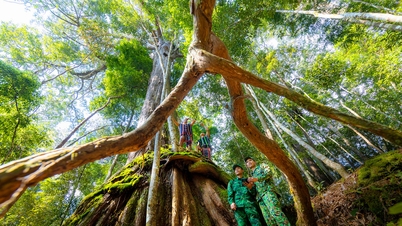
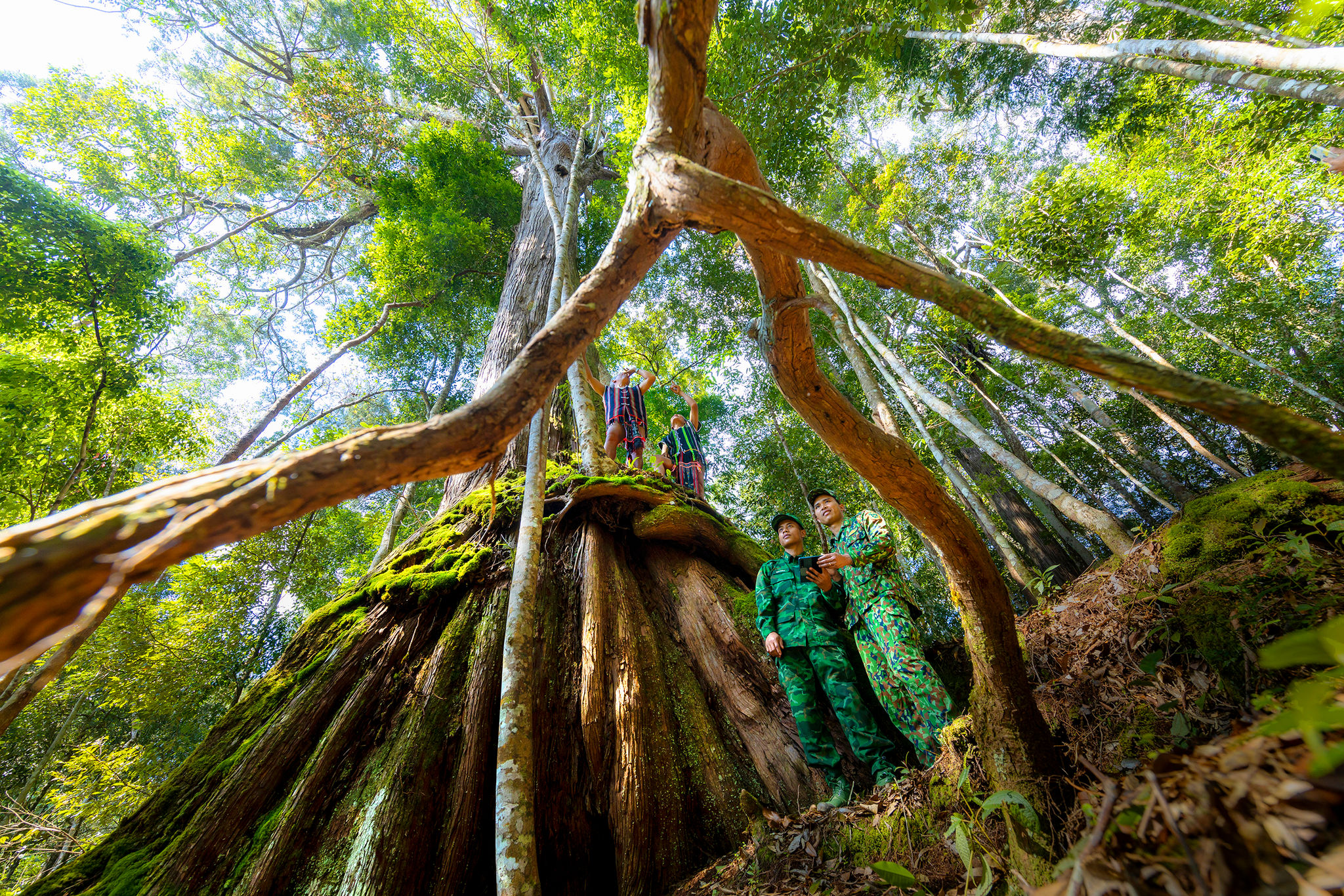
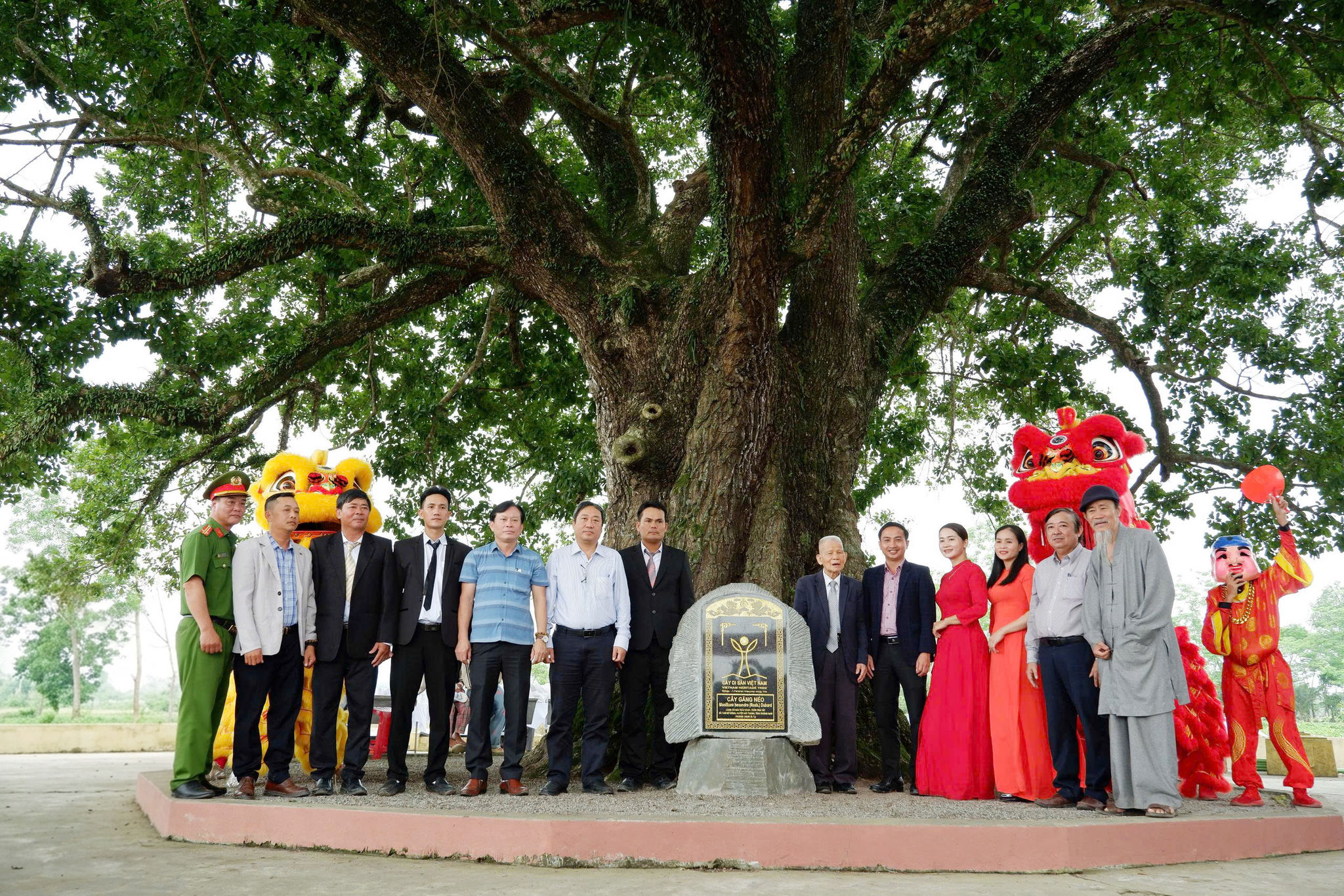
From the vast forests of Tay Giang down to the Thu Bon River delta, from Tam Ky to Son Tra and Ngu Hanh Son, Quang Nam province possesses a treasure trove of exceptional heritage trees. Tay Giang alone boasts a cluster of 725 cypress trees recognized as Vietnamese Heritage Trees, along with hundreds of ancient green lim trees several hundred years old. In Tam My, there is a 700-year-old găng néo tree. In Tam Ky, there are ancient sưa trees. On Cu Lao Cham island, there are red paulownia trees and banyan trees that have withstood more than two centuries of storms, still facing the sea...
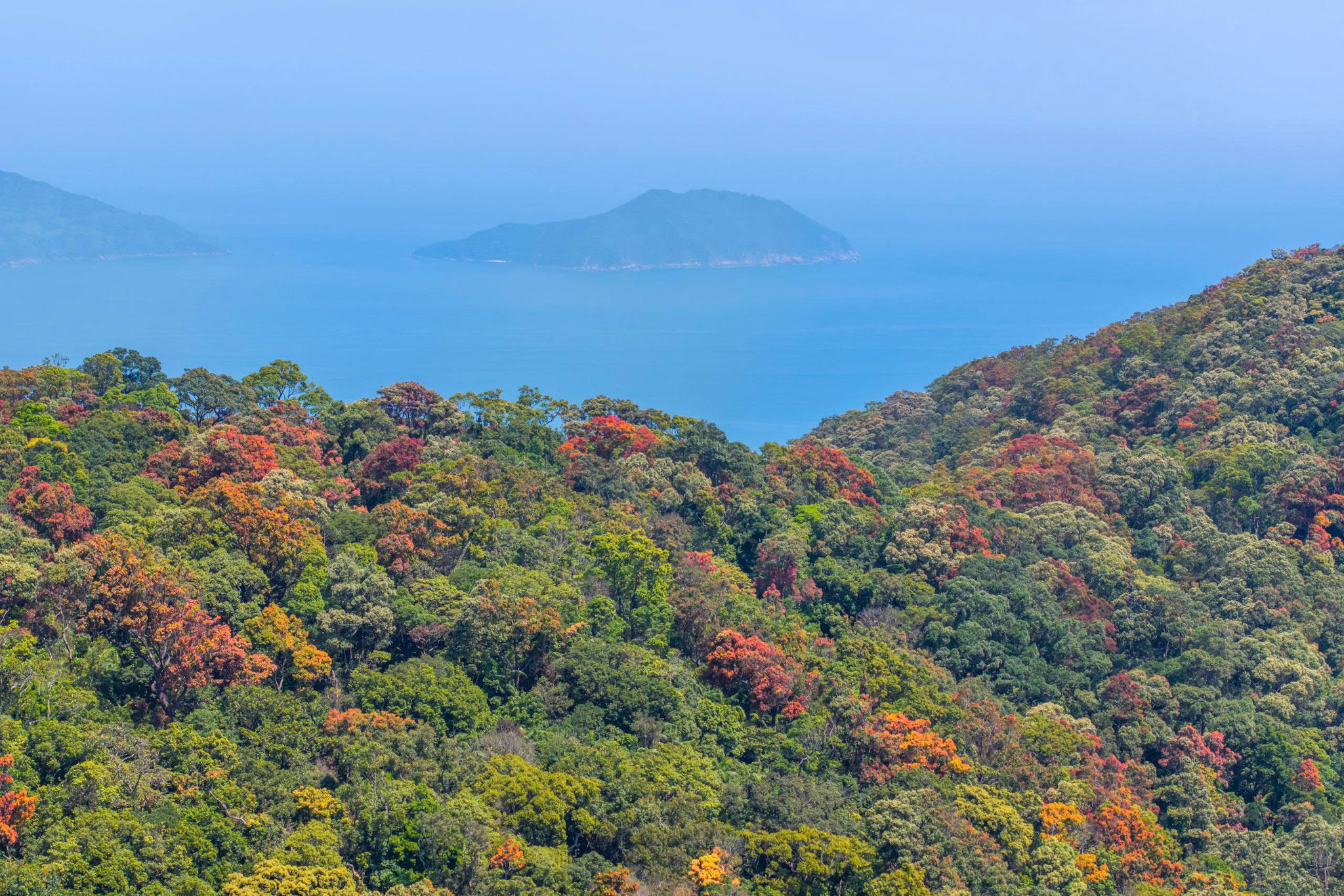
Looking towards the northernmost point of Quang Nam province, where the Son Tra peninsula juts out into the sea, one will encounter an even more magnificent "ancient tree." This is the Son Tra banyan tree, over 800 years old, approximately 22 meters tall, with a main trunk and secondary trunks totaling about 85 meters in circumference. This "ancient tree" has been recognized as a Vietnamese Heritage Tree, becoming one of the most famous ancient banyan trees in the country.
Standing beneath that banyan tree, one feels as if they are just a tiny dot in the flow of time.
For eight centuries have cast their shadow over generations.
This means that when the tree first took root, this land was still inhabited by the first generations of people during the Tran Dynasty. When the first trading ships arrived in Hoi An , the tree had already grown. When Da Nang became an important seaport in Central Vietnam, and then the colonialists opened fire and invaded the Han River estuary, the tree still stood there. And even today, amidst modern development, the tree continues to provide shade for Son Tra.



Not far from Son Tra Mountain is Ngu Hanh Son (Marble Mountains). There, you'll find a cluster of seven ancient trees – banyan, persimmon, Terminalia catappa, and Gleditsia – that have been recognized as Vietnamese Heritage Trees. There's a banyan tree over 600 years old embracing the rocky slope behind Linh Ung Pagoda; a persimmon tree over 200 years old beside Tam Thai Pagoda; and Terminalia catappa trees that have silently provided shade for pilgrims for three or four centuries.
But what makes these trees valuable is not just their age, but their place in cultural life and consciousness. Ngu Hanh Son is a scenic spot. It's a Buddhist space. It's a place where the beliefs and spirituality of the coastal inhabitants converge. The ancient trees there are like pillars supporting memories. Their roots cling to the mountain rocks, just as culture clings to the land to endure through the years.
Witnesses of history
Last year, I was fortunate enough to attend the ceremony recognizing the Găng Néo tree in Tam Mỹ as a Vietnamese Heritage Tree. Looking up at its canopy that covered a vast expanse of sky, I suddenly felt as if I were standing before a witness to time.
Seven hundred years is a long time; many dynasties have passed, countless wars have faded into the past, many villages have changed, and many lives have been born and died. Yet the tree remains. Silent. Serene. Like an elder of the earth and sky sitting among humankind, listening to all the joys and sorrows of a rural area.
Beneath its shade, there were once village festivals, rural markets, New Year's ceremonies, farewells for those going far away, and welcomings for those returning. Secret meetings of revolutionary cadres also took place under its shade. The tree preserves history not through written words, but through its very presence.
It is living history.
A house can be rebuilt. A monument can be restored. But if, for some reason, a six or seven-hundred-year-old tree is lost, nothing can replace it. Because the greatest value of these old trees is their lullaby for human life, their witness to time. My thoughts wander to my hometown of Gò Nổi, still filled with pride from the folk song: "No banyan tree is as tall as the banyan tree of Bàn Lãnh / No scenery is as beautiful as the scenery of Bảo An."
In the story of building a new Da Nang today, as development expands on the foundation of Quang Nam's shared culture, heritage trees become even more precious. Ancient trees always remind us that development is not just about opening more roads or building more structures, but also about preserving what constitutes the identity of the land.



Because the soul of a land often resides beneath the canopy of ancient trees.
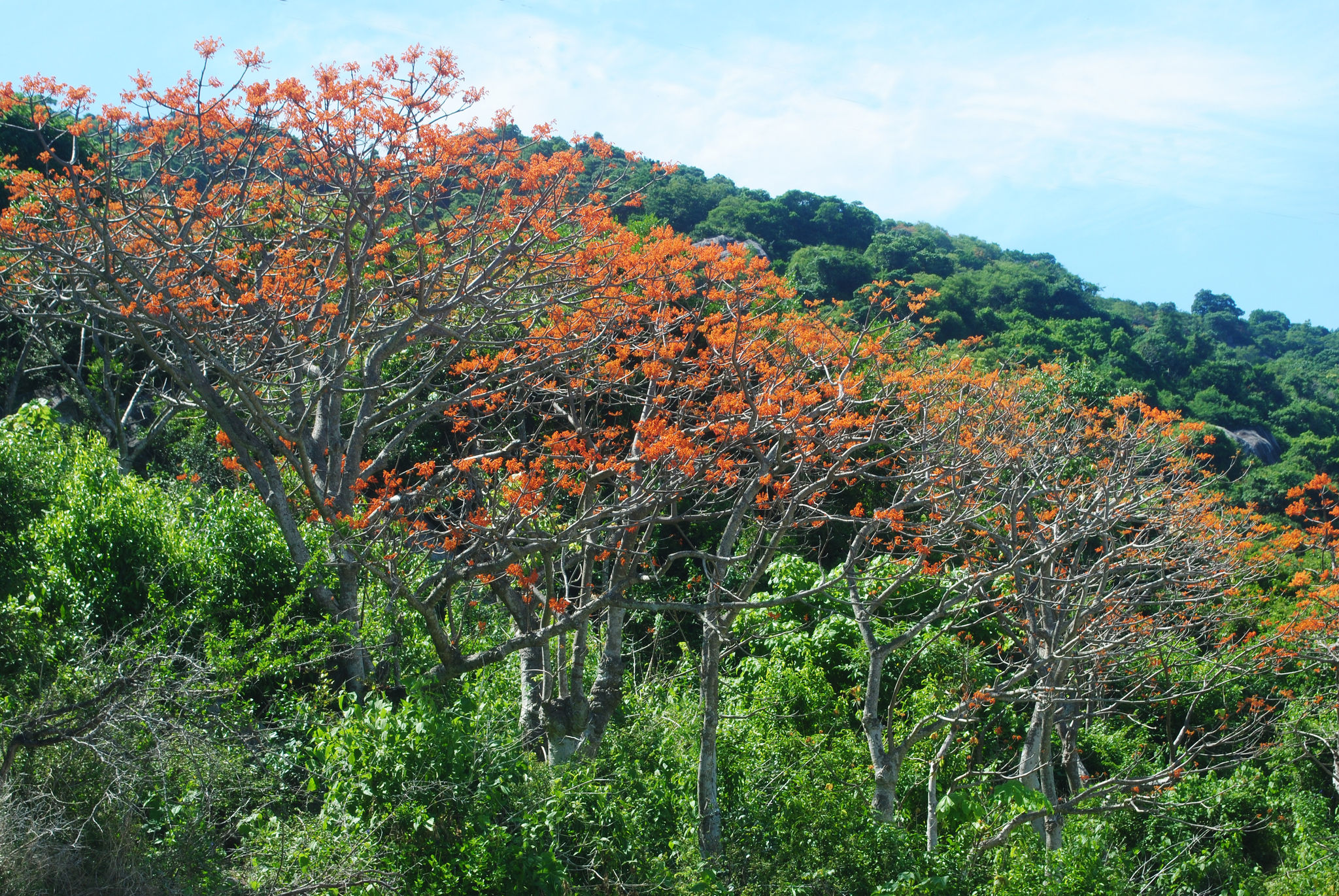
And whenever people mention Quang Nam province, they also remember the banyan trees of Son Tra, the banyan trees of Phong Nhi, the paulownia trees of Cu Lao Cham, the cypress trees of Tay Giang, the găng néo trees of Tam My, the sưa trees of Vuon Cua, the cốc trees of Ha Lam, Tien Phuoc, the cinnamon trees of Tra My...
They are the oldest "citizens" of the land.
These are the witnesses who are silently preserving the soul of their homeland under the shadow of time.
Source: https://baodanang.vn/duoi-bong-cay-thay-que-huong-3342874.html