

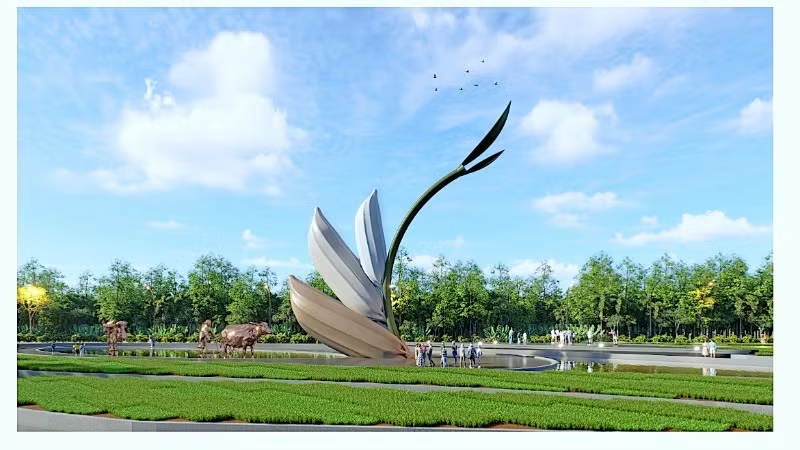
These architectural works carry the mission of preserving memories, honoring the history of labor, and positioning the local brand on the international stage.
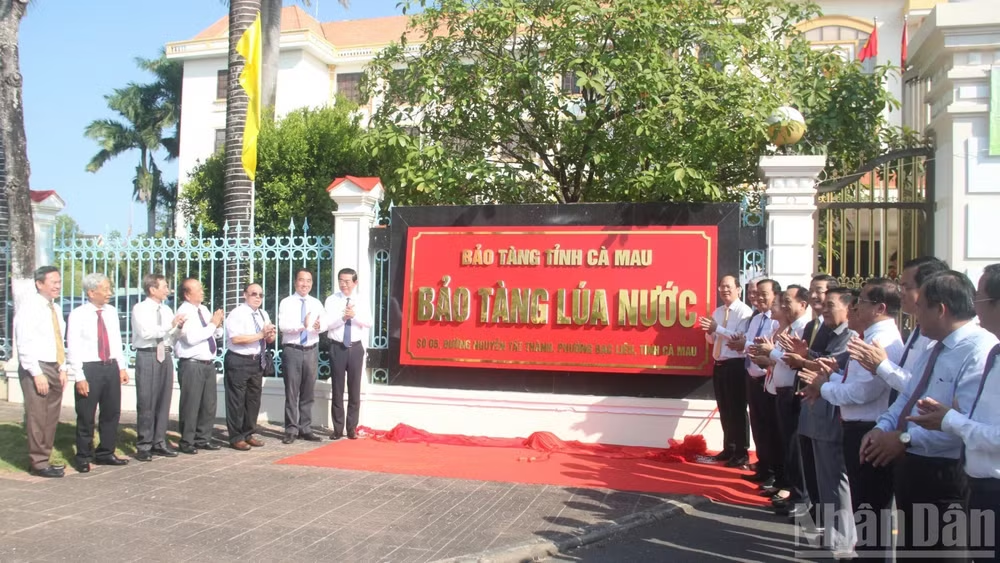
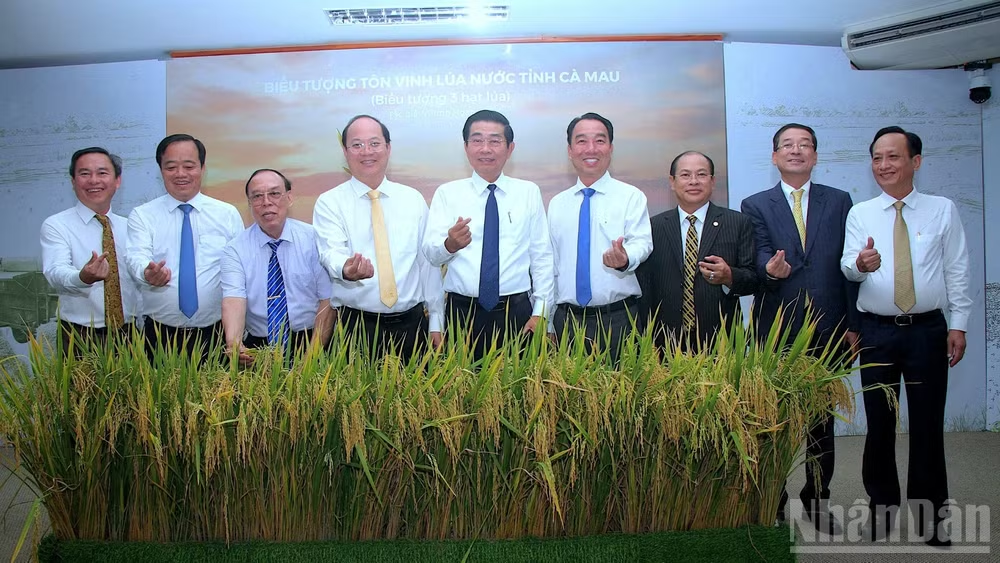
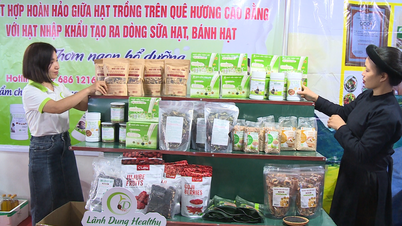
At the end of April 2026, amidst the vibrant atmosphere of the Science -Technology, Culture-Tourism Week, associated with the first Mekong Delta Delicious Rice Competition, Ca Mau province officially launched its Rice Museum and began constructing a "rice stalk symbol". This is a pivotal event with profound significance in promoting the image of the homeland.
However, contrary to public consensus, the website adopted a distorted tone. Using the tactic of manipulating information, the site published fabricated articles, employing vulgar language to distort reality. The information on the website brazenly accused the Ca Mau government of wasting over 40 billion VND of public funds on "reinforced concrete structures."
Materializing the spiritual values of a century
First, to dispel these short-sighted arguments, we need to take a step back to understand the fundamental issue: Why does the southernmost tip of our country need a rice museum and a symbol of the rice stalk?
Ca Mau is not only a place where fertile alluvial soil converges, but also a land steeped in the sweat, tears, and even blood of countless generations of ancestors who pioneered this land. No miracle could have naturally transformed a swamp into a rice granary or a seafood producing area.
Through hard work, intelligence, and extraordinary resilience, farmers in Ca Mau have transformed barren, saline- and acidic fields into vast shrimp farming areas covering more than 430,000 hectares.
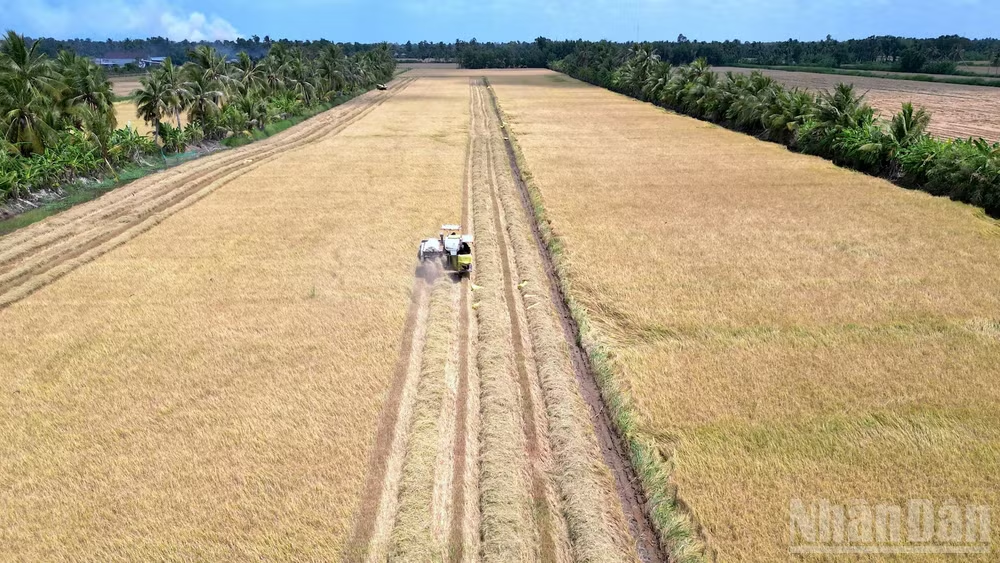
These efforts have transformed Ca Mau into the "shrimp granary" of the country, bringing in export revenue of approximately 2.6 billion USD annually. Alongside this are 185,000 hectares of fertile rice paddies, producing about 1.8 million tons of food per year. These telling figures not only help Ca Mau fulfill its mission of ensuring food security but also serve exports, helping to stabilize the lives of tens of thousands of farmers for generations.
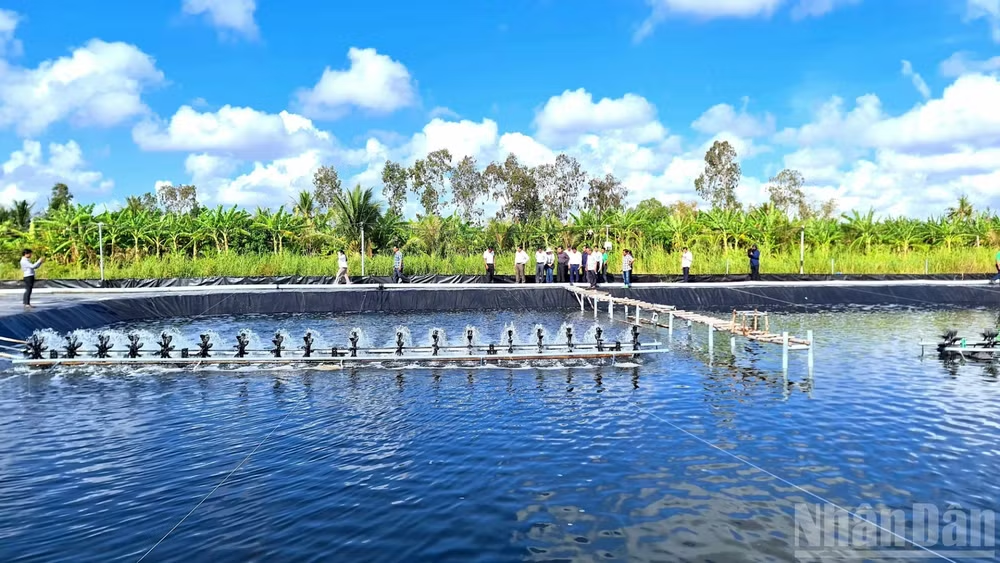
More specifically, with their intelligence and modern thinking, farmers in Ca Mau have created an ecological rice-shrimp farming model. This model is perfectly adapted to climate change, bringing prosperity to families while also embodying the local culture and serving as a source of pride in the international community.
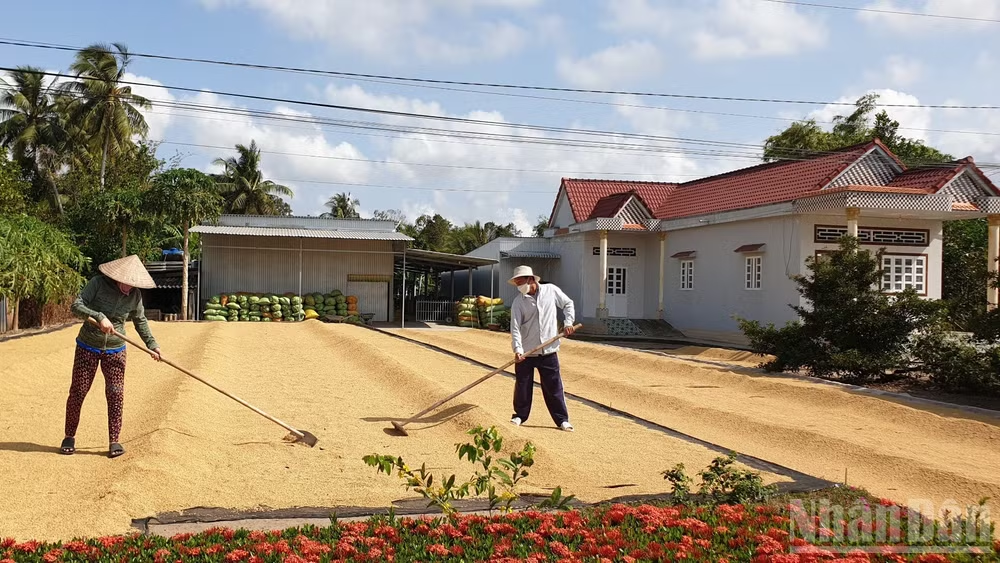
Therefore, investing over 40 billion VND to build these two cultural landmarks is not simply about erecting soulless concrete structures. It is about materializing invaluable spiritual values. These structures will preserve memories for generations to come, honor the rice-farming civilization, celebrate local products, and serve as a significant historical and cultural site for the younger generation…
A vision for livelihoods from cultural symbols.
The short-sightedness of those who distort the truth also lies in their separation of cultural works from the economic value chain. In modern management thinking, a regional iconic structure not only creates a scenic highlight but also strongly promotes the economy and services. This is essentially a long-term strategic investment that generates profit for the livelihoods of farmers.
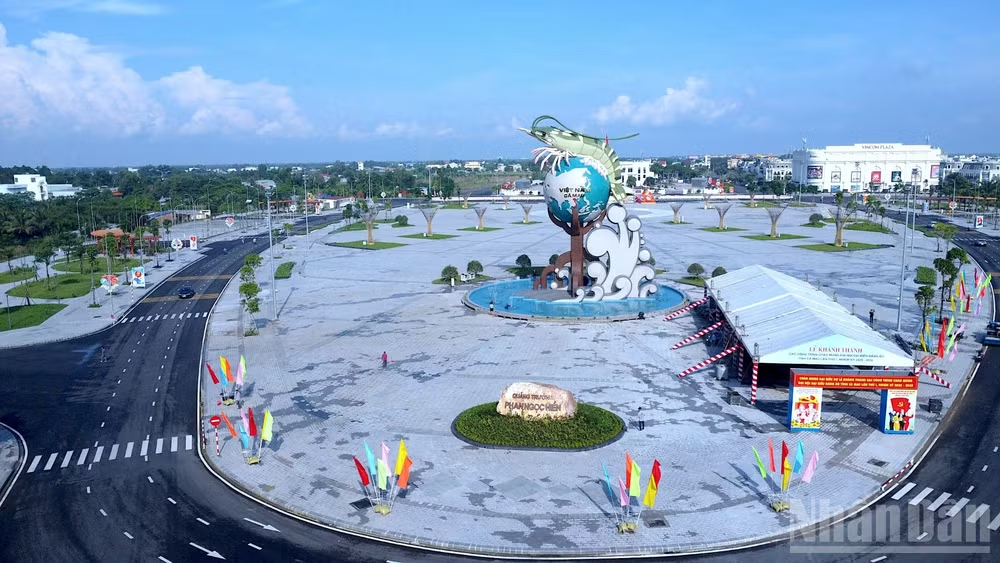
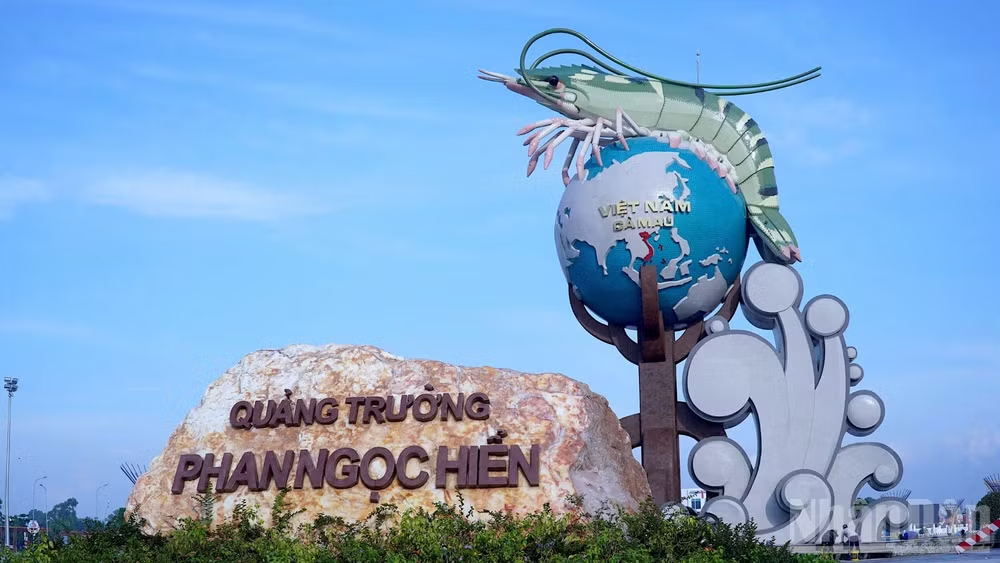
Let's look at the success story of the giant tiger prawn statue embracing a globe, 24 meters high, at Phan Ngoc Hien Square. Since its completion, it has become the "heart" of cultural activities, firmly establishing the city's position as the "shrimp capital." It acts like a magnet, attracting millions of visitors to check in every year. The booming tourism immediately led to the development of accommodation, transportation, and restaurant services; and a surge in sales of distinctive OCOP (One Commune One Product) products. This represents a real flow of money directly benefiting the local people.
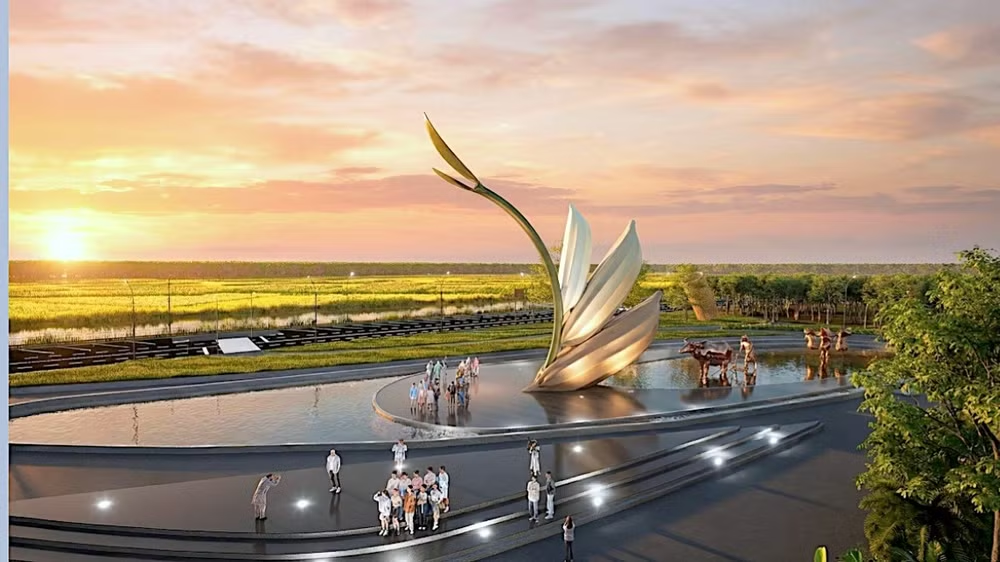
Similarly, the "three grains of rice" symbol at the Rice Museum is a love song imbued with love for the land and its people. The launch of this project, coinciding with the first Mekong Delta Delicious Rice Competition in 2026, is a masterful marketing move. The milky, ripening golden grains of rice convey a powerful message to the international market about Ca Mau's organic rice brand.
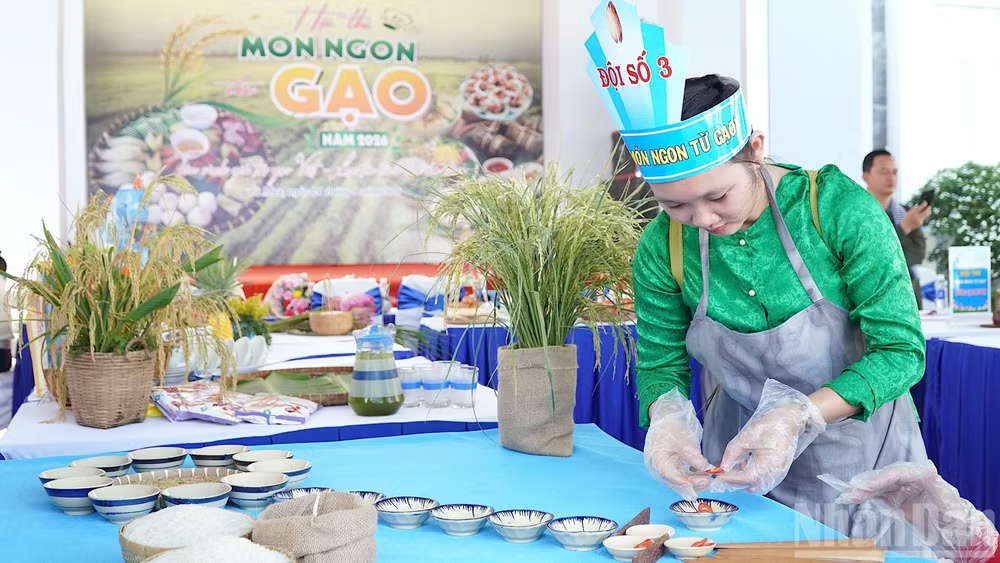
The added value from this brand enhancement will help rice and shrimp be exported at higher prices, bringing sustainable prosperity. Equating a cultural landmark of historical significance with "waste" is an attitude that tramples on the pride of the working people.
Transparency in funding sources, shattering all preconceived notions.
To fabricate a lie, the "speak frankly and truthfully" website used investment figures to paint a bleak picture of "budget embezzlement." However, the truth was suppressed and was completely the opposite.
In an official response regarding funding, Mr. Nguyen Van Den, Deputy Director of the Department of Culture, Sports and Tourism of Ca Mau province, affirmed: The majority of the construction costs were mobilized from social contributions. This was the voluntary joint effort of businesses, philanthropists, and those who deeply care about their homeland.
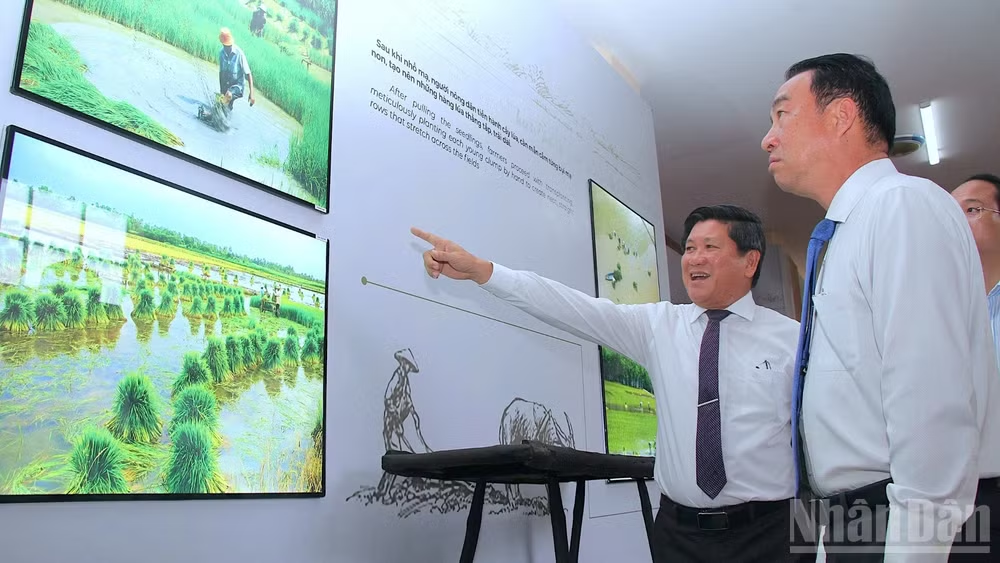
"Mobilizing social resources for cultural projects is a major policy, both reducing the burden on the budget and promoting the strength of national unity," Mr. Den informed. When money is voluntarily contributed from the pockets of investors and citizens to beautify their homeland, it is the clearest evidence of public consensus.
On the other hand, any project using counterpart funds from the state budget must strictly comply with the Law on Public Investment and the Law on State Budget. From the proposal stage, obtaining opinions from the People's Council, project approval, to bidding, construction supervision, and auditing and final settlement... Everything is a closed, transparent process, with cross-checking by agencies, departments, and the public. There is absolutely no way that any individual could "create" a project to profit tens of billions of dong, as falsely accused.
Equip yourself with "digital antibodies" to clean up "cyber spam".
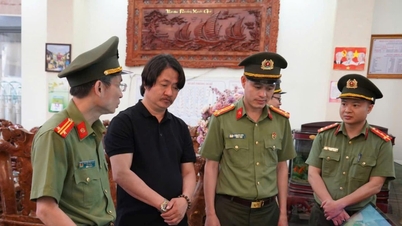
In response to this, the Party Committee and the government of Ca Mau province are demonstrating an extremely resolute stance. The Department of Culture, Sports and Tourism, along with the Cyber Security force of the Ca Mau Police, are urgently tracing the origin of the aforementioned Facebook page to take strict legal action. At the same time, efforts to ensure transparency of all information related to public investment projects are being intensified, proactively providing official information to guide public opinion and prevent the spread of fake news.
Truth will always prevail. The iconic structures of Ca Mau have stood, are standing, and will continue to stand firm, demonstrating a vision of harmonious development between economy and culture. Ultimately, distorted narratives are merely bubbles that burst before the powerful current of truth.
Source: https://nhandan.vn/gia-tri-van-hoa-tu-bieu-tuong-bong-lua-o-ca-mau-post959492.html
![[Photo] General Secretary and President To Lam presides over a working session with the Central Policy and Strategy Committee on the development of the materials industry.](https://vphoto.vietnam.vn/thumb/1200x675/vietnam/resource/IMAGE/2026/05/21/1779359935432_a3-bnd-3129-1412-jpg.webp)
![[Photo] National Assembly Chairman Tran Thanh Man working with the Standing Committee of the Law and Justice Committee](https://vphoto.vietnam.vn/thumb/1200x675/vietnam/resource/IMAGE/2026/05/21/1779378929214_ndo_br_1-4610-jpg.webp)












![[Video] Some solutions for saving electricity during hot weather](https://vphoto.vietnam.vn/thumb/402x226/vietnam/resource/IMAGE/2026/05/22/1779408223092_dung00-00-12-14still001-png.webp)











































Comment (0)