Implementing a revolution to streamline the organizational structure of the political system, the newly established Tay Ninh province was formed by merging Long An and Tay Ninh provinces. After the merger, the number of commune-level administrative units was drastically reduced from 184 to 96, a decrease of 65.71%, and notably, 24 old district-level administrative units were completely abolished.
The organizational model at the commune level is established synchronously along four main axes: the Party bloc, the People's Council bloc, the People's Committee bloc, and the Fatherland Front bloc along with other mass organizations. The internal administrative structure of the People's Committee at the commune level is also standardized, including: the People's Council and People's Committee Office, the Economic Department (for communes), the Economic - Infrastructure and Urban Planning Department (for wards), the Culture - Social Affairs Department, and notably, the presence of 96 commune-level Public Administrative Service Centers.
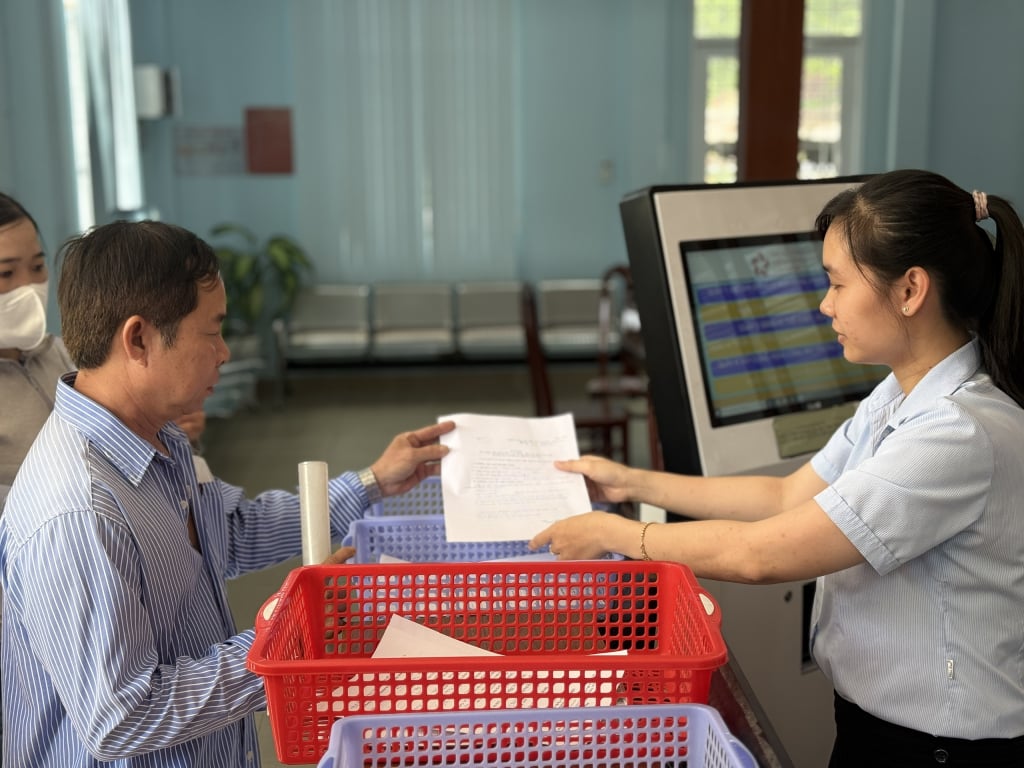
This revolutionary change has brought fundamental advantages. Reducing the number of intermediate levels (district level) has significantly shortened the work process, overcome overlapping responsibilities and buck-passing, and markedly improved the effectiveness and efficiency of state management at the local level.
However, it must be frankly acknowledged that the workload at the commune level is currently very large and stressful. According to statistics from specialized agencies, when the district level is abolished, approximately 85% of district-level tasks are transferred to the commune level, and 15% of district-level tasks are transferred to the provincial level.
Therefore, while previously the commune level had just over 160 tasks, this has now increased to over 1,000. Another reason for the increased workload and pressure at the commune level is that when the number of commune-level administrative units was reduced from 184 to 96, some communes were merged, resulting in larger areas, populations, and hamlets, thus increasing the workload.
Huynh Van Sang, Deputy Head of the Party Building Committee of Phuoc Vinh Tay Commune Party Committee, shared: “The Party Building Committee is responsible for propaganda, mass mobilization, Party building organization work, and advising the Commune Party Committee on implementing political tasks in the locality. Currently, the Committee has 6/11 staff members, lacking 5 positions. Furthermore, after the merger, many tasks are unprecedented, so the workload is heavy and stressful.”


Thanh Loi commune was recently established by merging three communes: Thanh Hoa, Thanh Loi, and Luong Binh. It has a total natural area of 96.52 km² , comprising 15 hamlets with a population of over 24,200 people. Despite receiving attention from various levels and sectors, one of the local challenges is the insufficient number of personnel to fill job positions. Specifically, the commune currently has 273 cadres, civil servants, and public employees, with 68 vacancies, including those in the Party, the People's Committee, and public service units.
According to Le Anh Kiet, Head of the Economic Department of Thanh Loi Commune: “The Economic Department is assigned to carry out many tasks previously handled by specialized departments at the district level, such as Finance - Planning, Economy - Infrastructure, Agriculture and Rural Development, Natural Resources - Environment, the District Statistics Office, and the handling of complaints and petitions by the District Inspectorate. After nearly a year of operating the two-tiered local government system, the Department is concerned about the staff responsible for construction and land matters.”
Recently, the Department received over 300 applications related to land matters, having to both print paper copies of land use conversion documents for citizens and submit them through the Ministry of Agriculture and Environment's public service portal. In addition, the Department is concerned about land clearance for projects passing through the commune; this is a major issue affecting many people, and poor handling could create negative public opinion, while the Department is still understaffed.”
Another difficulty faced by local authorities is that central and provincial levels frequently request urgent reports, while commune-level officials need time to research and compile data. Ms. Ho Thi My Dung (land administration officer of Phuoc Vinh Tay commune) stated: “After the merger, the central and provincial levels have implemented many changes in policies and programs, so officials need time to understand and research them before advising the commune leaders. However, on average, I receive dozens of documents daily in my area of responsibility, always requesting urgent reports, some even past the deadline. Currently, I spend a lot of time dealing with documents and administrative procedures, leaving me little time to visit the grassroots level and understand the local situation.”
Currently, 11 ministries and agencies each have their own system for receiving applications and delivering results for administrative procedures centrally from the central to local levels. This also puts pressure on the grassroots level, as users are accustomed to the old provincial systems, many systems have complex and unfriendly interfaces, are slow, prone to errors when loading documents, and the compilation of statistical reports takes a lot of time.
Mr. Le Quoc Khanh (a civil servant in Khanh Hau ward) said: "We process administrative procedures by the hour to keep up with the deadlines and requirements of all levels and sectors. If the system malfunctions, we have to call everywhere to avoid delays in processing applications."

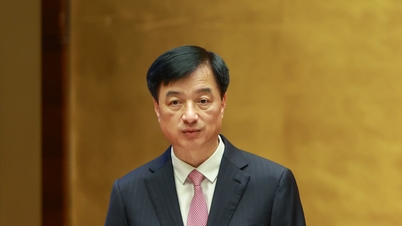
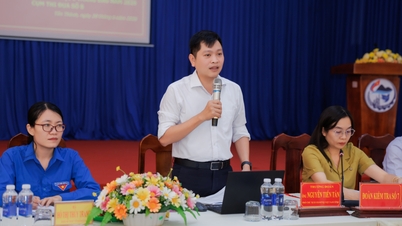
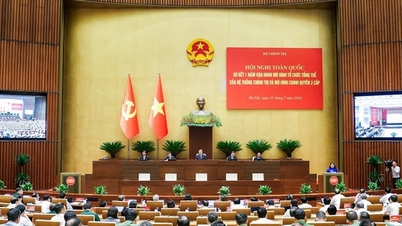
Commune and ward officials are the forces that are close to the people. Recently, speaking at the conference summarizing one year of operation of the political system and local government at two levels in the province, Member of the Central Committee of the Party, Secretary of the Provincial Party Committee Nguyen Van Quyet shared the difficulties faced at the grassroots level.



Looking ahead, Provincial Party Secretary Nguyen Van Quyet requested continued review, recruitment, and placement of cadres, especially ensuring that placement adheres to the principle of assigning the right person to the right job in the right location, overcoming the situation of placements that do not match abilities and strengths. In addition, relevant departments should continue to advise on policies regarding incentives and attracting human resources, especially doctors, nurses, teachers, science and technology personnel, and state management staff; strengthen professional training and development, digital management skills, tighten administrative discipline, and emphasize the exemplary role of leaders.
The quality of human resources at the commune level directly affects social trust. Therefore, at the grassroots level, it's not simply about having enough personnel to run the work, but about maintaining quality, which is crucial and needs attention. This will contribute to promoting the sustainable development of the locality.
Source: https://baotayninh.vn/giai-bai-toan-nhan-luc-cap-xa-149158.html

![[Image] National conference summarizing one year of operation of the overall organizational model of the political system, the three-tiered government model.](https://vphoto.vietnam.vn/thumb/1200x675/vietnam/resource/IMAGE/2026/07/01/1782882811691_ndo_br_1-jpg.webp)