

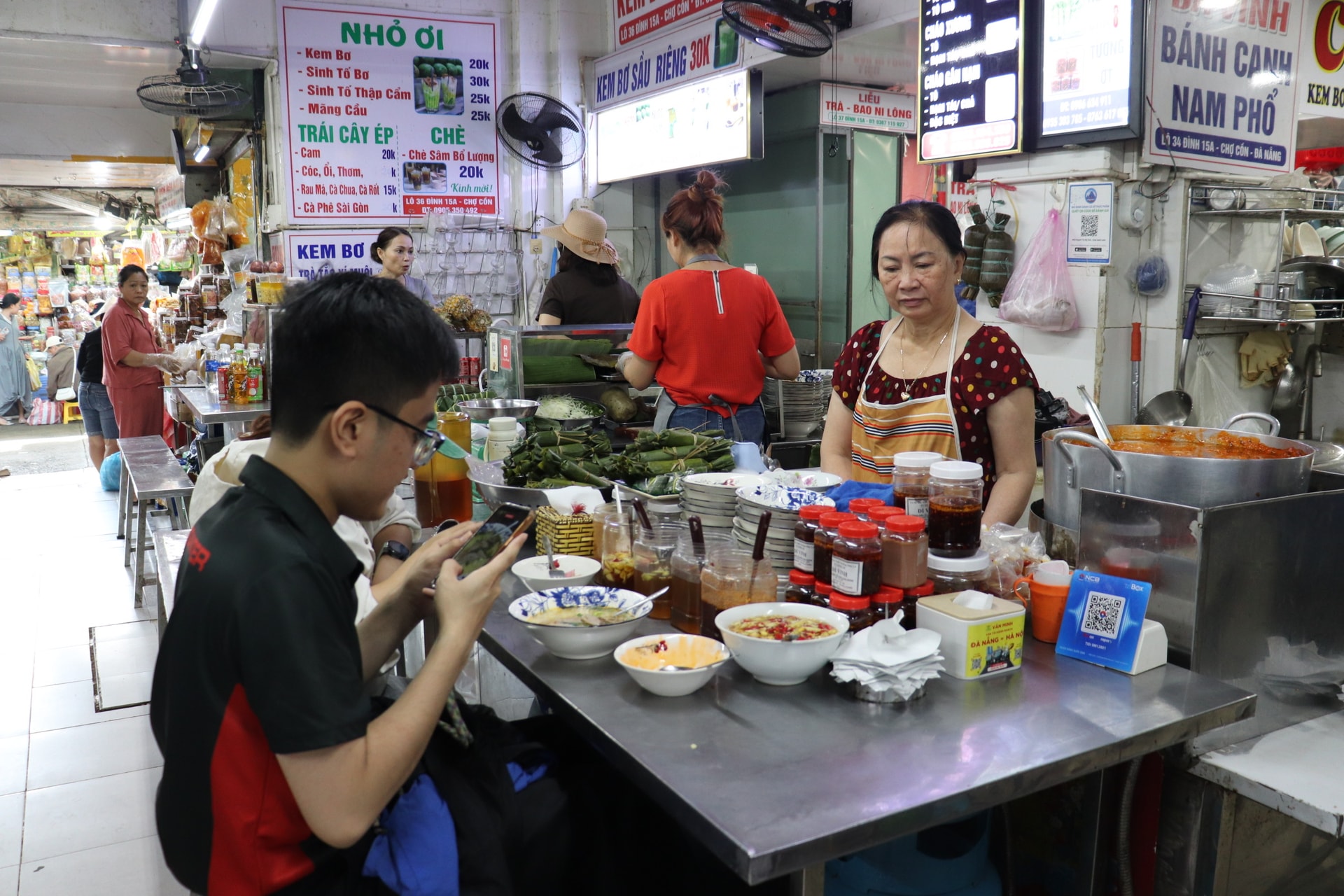
Create a clean dining environment.
Over the past few days, the number of visitors to Con Market (Hai Chau Ward) has increased by 40-50% compared to normal days. This bustling business activity places high demands on food safety assurance.
While visiting Da Nang , Ms. Nguyen Thao Huong (40 years old, from Nghe An province) shared: “At Con Market, the food stalls are neatly arranged. At the food stalls, unused food is carefully covered and preserved by the vendors, so I feel quite safe eating here.”
Currently, Con Market has 54 fixed food stalls and 30 households selling goods along the internal routes. The market management board has intensified inspections of price listings and food traceability for items such as seafood, meat, fish, and dried goods, while also strengthening overall supervision in the business area.
From the end of April, the market management board coordinated the organization of food safety training for business owners, aiming to raise awareness and responsibility among traders.
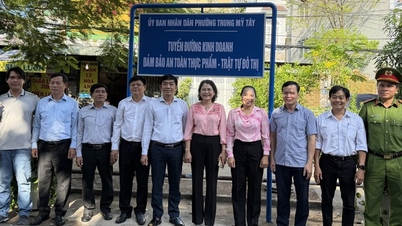
In addition, a five-member Food Safety and Hygiene Monitoring Team was established to regularly inspect and remind people to comply with legal regulations.
In addition to prioritizing safety, the Con Market Management Board aims to build an image of a civilized and friendly tourist destination, creating a clean and safe dining environment for visitors. This contributes to promoting the image of Da Nang as a dynamic, safe, and hospitable city.
Mr. Pham Van Binh, Deputy Head of the Con Market Management Board, said that the unit has intensified its efforts in promoting food safety. Periodically, every hour, the market's loudspeaker system reminds traders to cover their goods, maintain hygiene in their business areas, dispose of waste properly, and comply with food safety regulations. The management board also conducts regular surprise inspections and promptly corrects violations to maintain a safe and civilized business environment.
Strengthening quality control
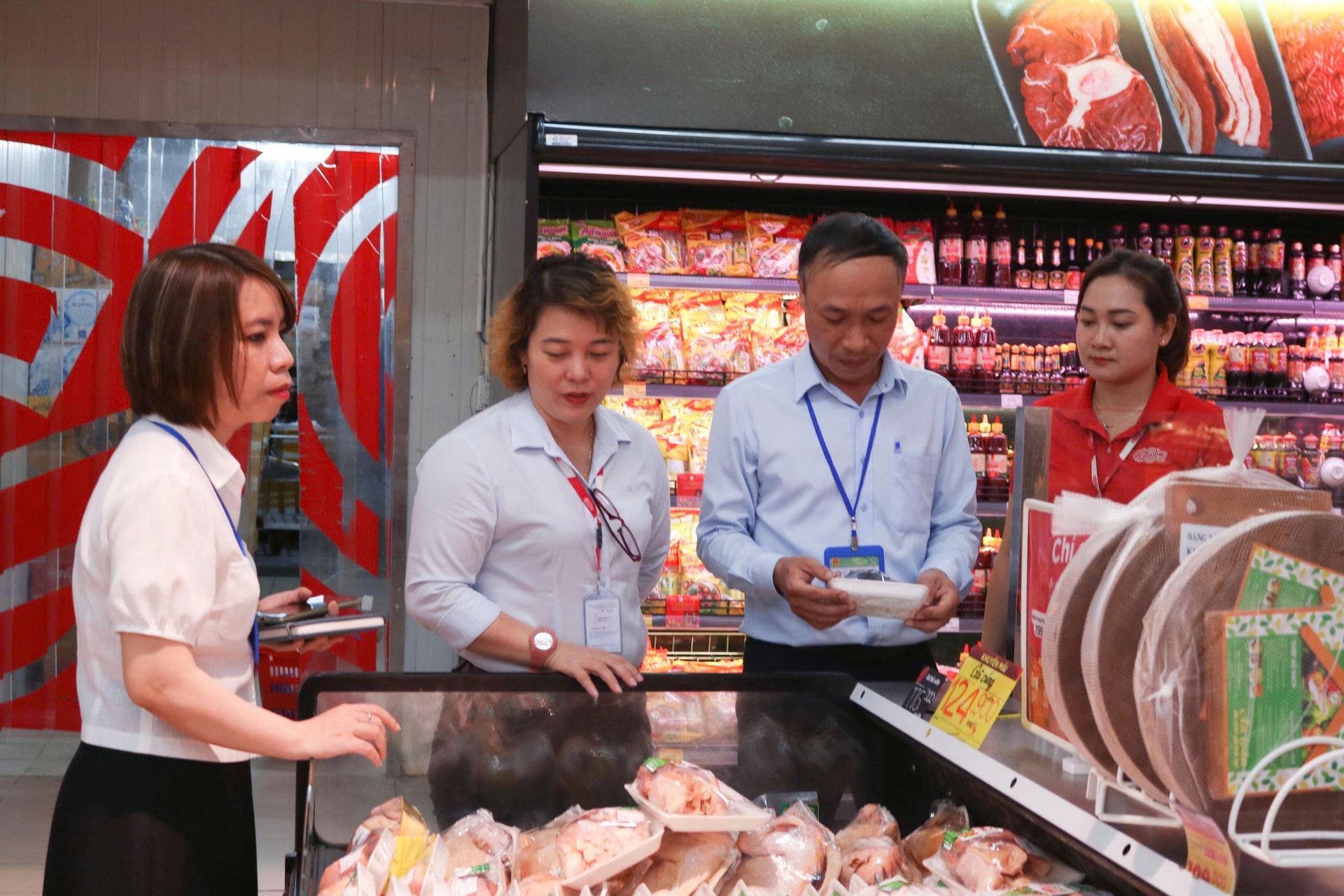
During the peak period of the Food Safety Action Month (April 15th to May 15th), the City Food Safety Sub-Department (under the Department of Health) established 3 inter-agency working groups and conducted inspections of 140 establishments, focusing on collective kitchens in industrial zones and schools; and establishments processing ready-made meals and supplying food.
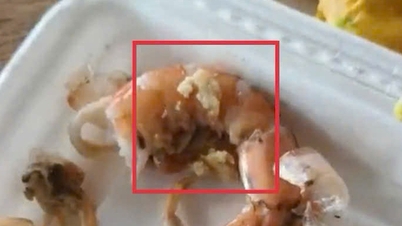
During inspections, several establishments were found to be in violation, including: food processors not wearing hats or masks; not using gloves when handling cooked food; inadequate hygiene conditions; using expired ingredients; and not following the three-step food inspection process. Authorities fined 16 establishments a total of 102 million VND and ordered them to rectify the issues.
Reportedly, since the beginning of the year, authorities have inspected 751 establishments, including 396 food service businesses, 180 collective kitchens and ready-made meal processing facilities, 145 businesses, and 30 food production facilities.
Mr. Dinh Van Tuan, Head of the City's Food Safety Department, said that in the coming time, the unit will tighten inspection work focusing on key areas. Accordingly, it will concentrate on inspecting high-risk establishments and food groups that are prone to causing food poisoning during the hot season, such as street food, bottled water, and ready-to-use ice.
During inspections, emphasis will be placed on compliance with regulations regarding facility hygiene, raw material origin, and food storage under high temperatures; violations will be strictly dealt with to minimize the risk of food poisoning.
One of the key solutions to ensure food safety and hygiene is to strengthen and diversify information and communication efforts. Units and localities should promote various forms of communication to raise awareness and encourage compliance with the law among food production and business establishments and consumers. This includes disseminating information and guiding people on how to select, prepare, and preserve food safely during hot weather; proactively warning about the risk of food poisoning and outlining preventive measures.
“During the festive season and periods of high tourist numbers, ensuring food safety is identified as a top priority. Strictly controlling food quality not only contributes to protecting people's health but also creates a safe and civilized tourism environment, helping to build an image of a friendly and safe destination for tourists,” Mr. Tuan emphasized.
Small business owners raise awareness.
Con Market is a familiar destination for many domestic and international tourists exploring Da Nang. Ms. Khuat Thi Hien Quyen, a vendor selling Vietnamese sausage at Con Market, said that the market welcomes many visitors every day who come to enjoy the local cuisine and buy local specialties as gifts, especially during holidays, weekends, and peak tourist seasons. Therefore, food vendors here are always clearly aware of their responsibility to ensure consumer safety.
Ms. Quyen shared that before products are put on display, the market management board requires vendors to complete all necessary food safety certificates, ensuring proper labeling, origin, expiration date, and clear price listing. The market management board also regularly conducts inspections and reminds vendors about food preservation and processing procedures, as well as hygiene at each stall. This helps traders improve their awareness of complying with food business regulations, contributing to maintaining the image of a safe and high-quality shopping and culinary experience for tourists visiting Con Market in particular and Da Nang in general.
VAN HOANG
Source: https://baodanang.vn/giam-sat-dam-bao-an-toan-thuc-pham-3335691.html












![[INFOGRAPHICS] 25 targets and groups of targets that Can Tho City strives for by 2030](https://vphoto.vietnam.vn/thumb/402x226/vietnam/resource/IMAGE/2026/05/25/1779688983034_1779688951.webp)














































































Comment (0)