

In 2012, the "Hung King worshiping belief in Phu Tho " was inscribed by UNESCO as a representative intangible cultural heritage of humanity, a source of immense pride for the Vietnamese people. According to the initial inventory published in 2005 by the Department of Grassroots Culture (Ministry of Culture, Sports and Tourism), there are 1,417 sites nationwide dedicated to the worship of Hung Kings and other historical figures from the Hung King era; of which Phu Tho province has over 300 sites.
During the feudal era, the annual Hung Kings Commemoration Day was organized directly or indirectly by the State government at Hung Temple.
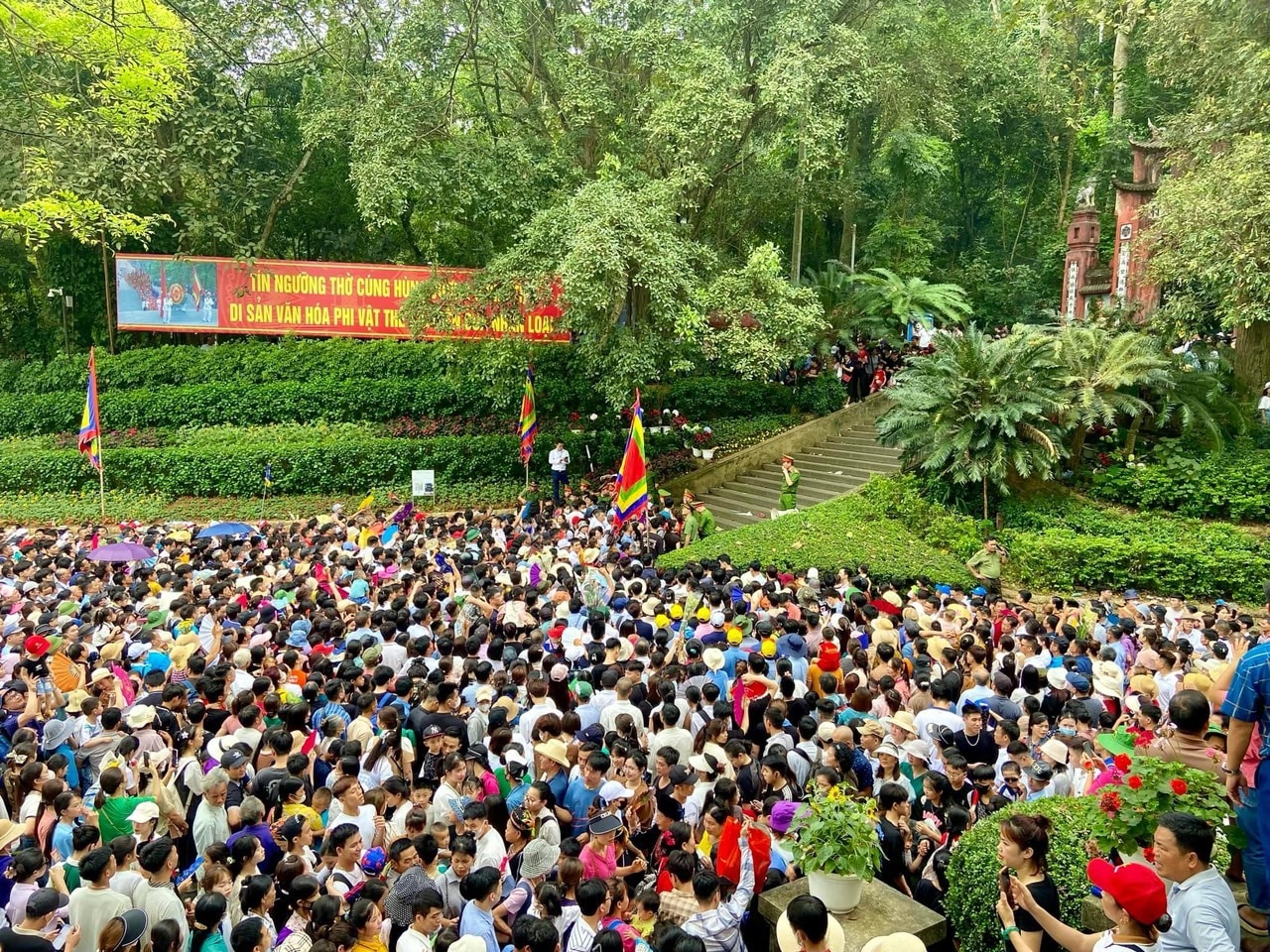
Visitors from all over the country make pilgrimages to commemorate the Ancestor's Day. (Photo: Tra My)
According to historical records, the "Hung King worship belief," even in its most rudimentary form, dates back over 2000 years (258 BC). An Duong Vuong, "...out of gratitude for Hung Due Vuong's yielding of the country, whose merits were as great as heaven and earth, sent his entourage to Nghia Linh mountain to build a temple as a place of worship for the nation; erecting two stone pillars in the middle of the mountain, pointing to the sky and praying: May the vast heavens never fail to judge, the country of Nam will endure forever, the temple of Hung Vuong will remain forever. If later kings who succeed to the throne break this promise, may the axe and the wind punish them so as not to betray the oath of their predecessors" (according to the ancient genealogy of the 18 branches of the Hung Dynasty - translated by the Institute of Han Nom Studies on February 15, 2002).
During the Hong Duc era of the Later Le Dynasty, when King Le Thanh Tong established Confucianism as the cornerstone ideology of the Dai Viet nation, the "Hung King worshiping belief" was officially legalized. In 1470, the King commissioned the Han Lam Academy scholar Nguyen Co to compile the "Ancient Genealogy of the 18 Branches of the Hung Kings" (Hung Dynasty's Eighteen Branches of the Hung Kings). From then on, the Hung Kings became the eternal emperors of Vietnam, with a lineage known to the world, heaven, and earth. However, the worship of the Hung Kings was still entrusted to the local people. The genealogy records: "From Trieu Vu (Trieu Da) to the Dinh, Le, Ly, and Tran dynasties, up to our imperial dynasty, all approved the temples and shrines, and the people of Trung Nghia village, the people of Tao Le Dong Tra... all followed the old custom of worshiping to ensure the longevity of the nation, preserving its good name for generations to come, and prosperity!" (According to the ancient genealogical record of the 18 branches of the Hung Dynasty - Translation by the Institute of Han Nom Studies, February 15, 2002).

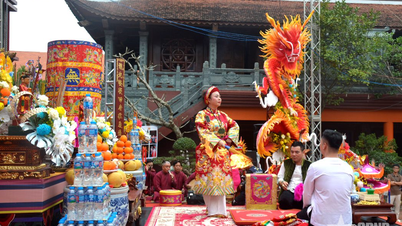
The procession of palanquins to Hung Temple by localities surrounding the historical site.
In 1479, in the "Complete Chronicle of Dai Viet," historian Ngo Sy Lien included the Hong Bang dynasty in official history. This was a significant development in the ideological development of Vietnamese culture. From then on, King Hung was revered as the Holy Ancestor; people throughout the country built temples to worship King Hung and other historical figures from the Hung Dynasty era. The Hung Temple preserves the Hung Dynasty's genealogical record, and the people of Hy Cuong commune were granted the title of "Leader of the Nation."
At the beginning of the 20th century, the Nguyen Dynasty entrusted the Ministry of Rites with officially establishing the annual National Commemoration Day for Hung Kings. This document also specified the composition of the Commemoration Council, comprising high-ranking officials from the province and officials from the prefectures and districts of the province; the attire, rituals, offerings, and the amount of money provided by the State... for organizing the annual Hung Kings Commemoration Day. Thus, from 1917, the Hung Kings Commemoration Day, originally a folk belief, became a "National Ceremony".
Since the August 1945 Revolution, the Party and State of Vietnam have always paid attention to preserving and promoting the value of the "Hung King worshiping belief"; restoring and renovating Hung Temple and organizing the Hung King Ancestor Commemoration Day.
In 1946, the Hung Kings Commemoration Day on the 10th day of the 3rd lunar month became an official national holiday, allowing government officials to take a paid day off.
In 1962, Hung Temple was classified as a National Monument (first phase).
In 2001, the Government issued Decree No. 82/2001/ND-CP (dated November 6, 2001) on State ceremonies, which includes detailed regulations on the ceremonies for commemorating the Hung Kings' Ancestral Anniversary.
In 2007, the National Assembly of the Socialist Republic of Vietnam passed a law amending and supplementing Article 73 of the Labor Code, allowing employees to take a paid day off on Hung Kings' Commemoration Day every year.
In 2009, the Prime Minister issued Decision No. 1272/QD-TTg designating Hung Temple as a Special National Monument.
In 2012, UNESCO inscribed "The Hung Kings Worship Belief in Phu Tho, Vietnam" as a Representative Intangible Cultural Heritage of Humanity.
In 2012, the Minister of Culture, Sports and Tourism signed a Decision announcing the List of Intangible Cultural Heritage (Phase 1). Accordingly, the intangible cultural heritage "The Hung Kings Worship Belief in Phu Tho" was included in the National List of Intangible Cultural Heritage.
From the late 20th century to the present, the architectural structures of the Lower Temple, Middle Temple, Upper Temple, Hung Vuong Mausoleum, Well Temple, and Thien Quang Pagoda have undergone major restoration. Religious structures, embodying spiritual and cultural values related to the origins of the nation, have been built: the Temple of Ancestral Mother Au Co on Van Mountain (2004), the Temple of National Ancestor Lac Long Quan on Sim Mountain (2007); the bas-relief depicting President Ho Chi Minh speaking with officers and soldiers of the Vanguard Army at the intersection of the five-way intersection near the Well Temple (2001; 2022)... Thus, it can be seen that Hung Temple is the earliest, largest-scale, and most enduring practice of the "Hung Vuong worship belief" throughout the long history of our nation's founding and defense. Over thousands of years, with the State's consensus and the people's unity, the cultural values of Hung Vuong have been effectively protected, preserved, and promoted in the cause of building and protecting a beautiful and powerful Vietnam.
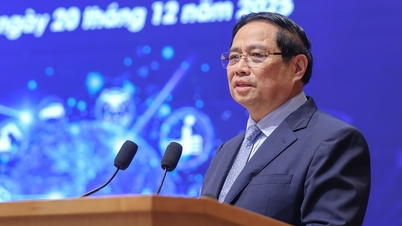
![[Photo] Prime Minister Pham Minh Chinh presides over a meeting on private sector economic development.](/_next/image?url=https%3A%2F%2Fvphoto.vietnam.vn%2Fthumb%2F1200x675%2Fvietnam%2Fresource%2FIMAGE%2F2025%2F12%2F20%2F1766237501876_thiet-ke-chua-co-ten-40-png.webp&w=3840&q=75)





















































Comment (0)