

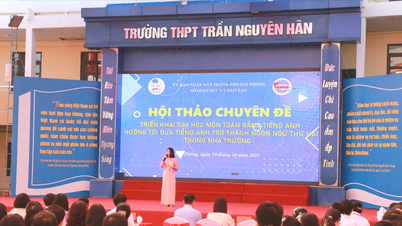
In recent days, many people have been hotly debating issues surrounding language, such as incorrect lyrics in Vietnamese songs and English as a second language in schools.
Apparently, this issue isn't new, but because language is likened to "daily food and drink," significantly impacting everyone's spiritual life, it easily creates multifaceted reactions. The positive aspect is that despite the lively, sometimes heated and conflicting debates, most opinions agree that the purity of the Vietnamese language, our mother tongue, must be protected before even considering learning English well.
A renowned translator has dedicated his entire Facebook page to protecting and preserving the purity of the Vietnamese language by regularly providing clear explanations and definitions of word usage. He once expressed: "The Vietnamese language is beautiful and rich. Idioms and proverbs contain such beautiful language." The beauty of the Vietnamese language has captivated him, inspiring him to diligently preserve and protect it throughout his 30 years as a translator.
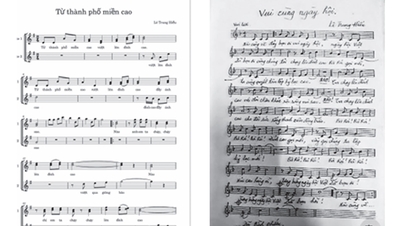
On this occasion, artists, especially songwriters, should "self-examine" their work, scrutinizing and correcting any inaccuracies. Some involved have shared their thoughts and feelings about the profession, the current state of the country's music industry, and specific suggestions and proposals. This demonstrates their professionalism and serious attitude towards their work, which deserves the respect, agreement, and support of society.
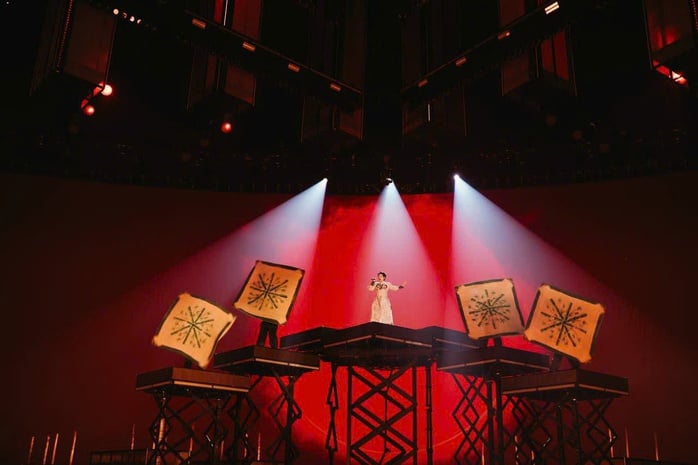
Singer Duc Phuc was crowned champion of Intervision 2025 in Russia with his performance of the song "Phu Dong Thien Vuong". This song, composed by musician Ho Hoai Anh and inspired by the poem "Vietnamese Bamboo" by poet Nguyen Duy, received high praise for its lyrics. (Photo: Phuong Anh)
In music, the terms "instrumental music" and "music and lyrics" are often used to differentiate between genres, allowing audiences to choose according to their taste. Vietnamese music of the 20th century and the first decade of the 21st century bears the strong imprint of history and the times. Many works beloved by the public are musical settings of poems. Beautiful poems, elegant lyrics, and clear, soaring, romantic language make the work both poetic and musical. The harmonious meeting of composer, poet, and singer easily gives us a perfect musical work.
Besides melody, rhythm, and musical material, lyrics in each song hold an equally important place for the listener. A song can express emotions and resonate with the listener's thoughts. If the lyrics are poetic or rhyming, and the language is close to everyday life, listeners are more likely to empathize, memorize, and remember them. In reality, while many people are able to "speak like they sing," in the performing arts, not a few singers sing like they're speaking or reading, to the point of stumbling over their words. With such songs, listeners find it difficult to memorize the lyrics to sing along. More importantly, many songs have vulgar, offensive, and inappropriate lyrics – as in the case of Jack and some other singers currently being criticized by the public.
The musical performances of some artists today are also very dynamic, often combining singing and dancing, physical performance, and fashion . Perhaps that's why people often say they go to "watch a concert" - enjoying it more visually than listening and feeling the lyrics and melodies.
While it's true that art needs innovation and creativity, whether contemporary music blends seamlessly with revolutionary and traditional national music is a matter of concern. Vietnamese composers and performers must love the Vietnamese language, be proficient in it, love their homeland, and possess sufficient knowledge and life experience to create works that are well-received by the public and endure through time.
According to Nguoi Lao Dong Newspaper
Source: https://baoangiang.com.vn/giu-gin-su-trong-sang-cua-tieng-viet-a465968.html
![[Photo] Prime Minister Pham Minh Chinh attends the Conference on the Implementation of Tasks for 2026 of the Industry and Trade Sector](/_next/image?url=https%3A%2F%2Fvphoto.vietnam.vn%2Fthumb%2F1200x675%2Fvietnam%2Fresource%2FIMAGE%2F2025%2F12%2F19%2F1766159500458_ndo_br_shared31-jpg.webp&w=3840&q=75)
























































Comment (0)