

2 symbols of natural and cultural heritage
Quang Ninh possesses two inter-provincial World Heritage sites: the Ha Long Bay - Cat Ba Archipelago Natural Heritage Site and the Yen Tu - Vinh Nghiem - Con Son - Kiet Bac Complex of Historical Sites and Scenic Spots Cultural Heritage Site. This is both an advantage and a driving force for Quang Ninh to develop tourism and promote the heritage economy .
Located less than 60km apart, Ha Long Bay and Yen Tu represent two distinct yet perfectly complementary types of heritage. One is a natural wonder, a culmination of millions of years of geological activity; the other is the center of Truc Lam Buddhism, a unique purely Vietnamese Zen school with a history spanning over seven centuries.
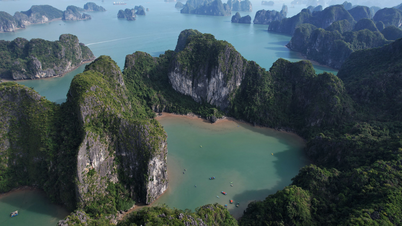
Ha Long Bay has been twice recognized by UNESCO for its aesthetic and geological/geomorphological value, possessing a rare system of limestone islands and caves in the world . Simultaneously, the scope of the World Heritage site has been expanded to include the Cat Ba archipelago, becoming Vietnam's first inter-provincial World Heritage site. Each year, Ha Long Bay welcomes millions of tourists, making it a global brand for Vietnamese tourism.
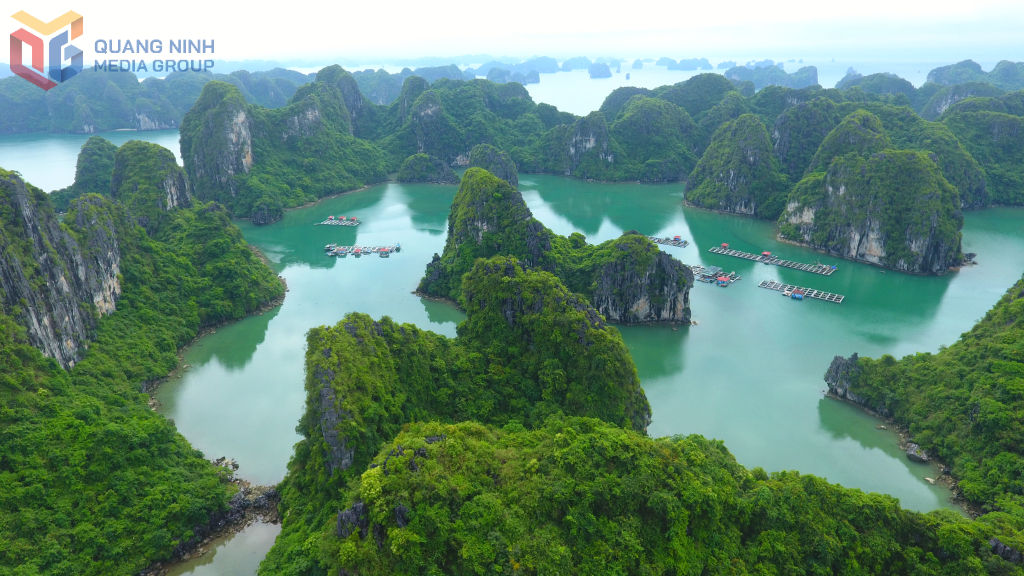
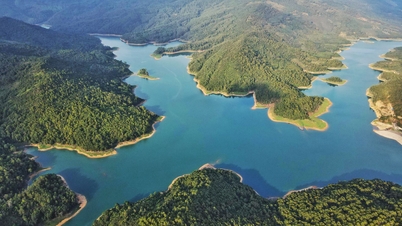
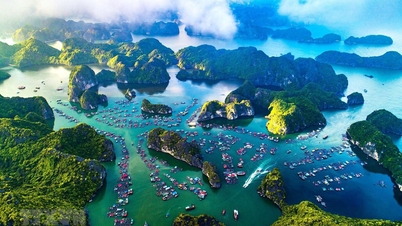
Ha Long Bay has been recognized by UNESCO as a World Heritage Site for its outstanding global aesthetic and geological/geomorphological value.
The beauty of Ha Long Bay lies not only in the majestic shapes of its rocky islands but also in its rich marine ecosystem, mangrove forests, and coral reefs, creating a vibrant natural landscape. It is estimated that from 1996 to the present, Ha Long Bay has welcomed over 60 million domestic and international tourists, generating over 9,500 billion VND in entrance fees.
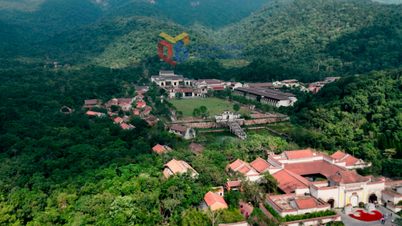
While Ha Long Bay attracts tourists with its breathtaking natural beauty of the sea and islands, Yen Tu offers the serene energy of a meditative sanctuary on a sacred mountain. The Yen Tu - Vinh Nghiem - Con Son - Kiet Bac World Heritage complex spans three provinces: Quang Ninh, Hai Phong, and Bac Ninh , with Yen Tu being the birthplace of Truc Lam Buddhism. Ancient temples and pagodas, pilgrimage routes bearing the marks of millions of visitors converging on Yen Tu each year, along with the worldly philosophy of Emperor Tran Nhan Tong, have created a unique cultural and spiritual space with enduring vitality.
These two seemingly separate World Heritage sites are intertwined within the rich historical and cultural depth of the Northeast region. This is a "treasure" that allows Quang Ninh to establish its brand, develop tourism, and affirm to the world its unique values, from natural landscapes to distinctive cultural features, enhancing the province's image and position on the international tourism map.
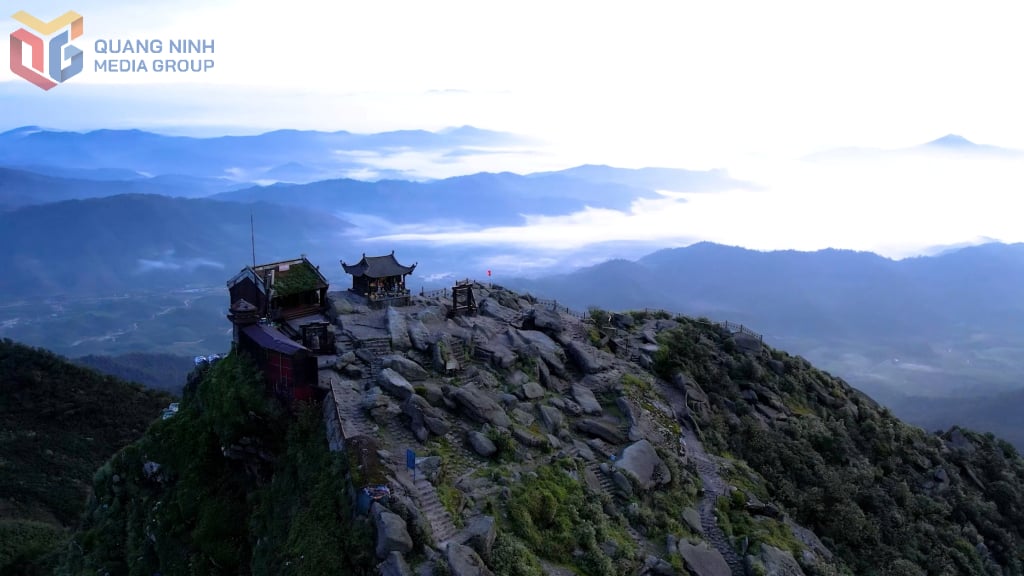
The majestic beauty of the sacred Yen Tu mountain.
One journey - many experiences
The year 2025 marks a significant shift in the thinking behind the conservation and promotion of heritage values in Quang Ninh. With the establishment of the Ha Long Bay - Yen Tu World Heritage Management Board in November 2025, for the first time, two world heritage sites in Quang Ninh will be placed under a single comprehensive management and development strategy, aiming to create a regional heritage space that harmonizes nature, culture, and history. This initiative reflects the province's innovative thinking in managing, connecting, and promoting heritage values. The unified management of these heritage sites also helps to guide the development of inter-regional product chains and enhance the visitor experience.
The Heritage Management Board is collaborating with the UNESCO Hanoi Office and international organizations to develop a comprehensive management strategy and plan; simultaneously connecting not only Ha Long Bay - Yen Tu but also extending to Cat Ba, Con Son - Kiet Bac (Hai Phong), and Vinh Nghiem (Bac Ninh), creating an inter-provincial heritage network. This is not just about connecting famous locations, but also about creating a new identity for Quang Ninh tourism in the sustainable development phase. This collaboration lays the foundation for a new development model: not only exploiting tourism but also building a heritage ecosystem, transforming heritage into a driving force for sustainable economic development.
To capitalize on Quang Ninh province's unique advantage of possessing two World Heritage sites simultaneously, local businesses and tourism service providers have come up with ideas to connect the natural and cultural World Heritage sites in a single itinerary. Last September, in Yen Tu ward, the Department of Culture, Sports and Tourism, in coordination with Tung Lam Development Joint Stock Company, organized a tourism development seminar titled "One Journey - Two Heritages," with the participation of nearly 30 domestic travel businesses.
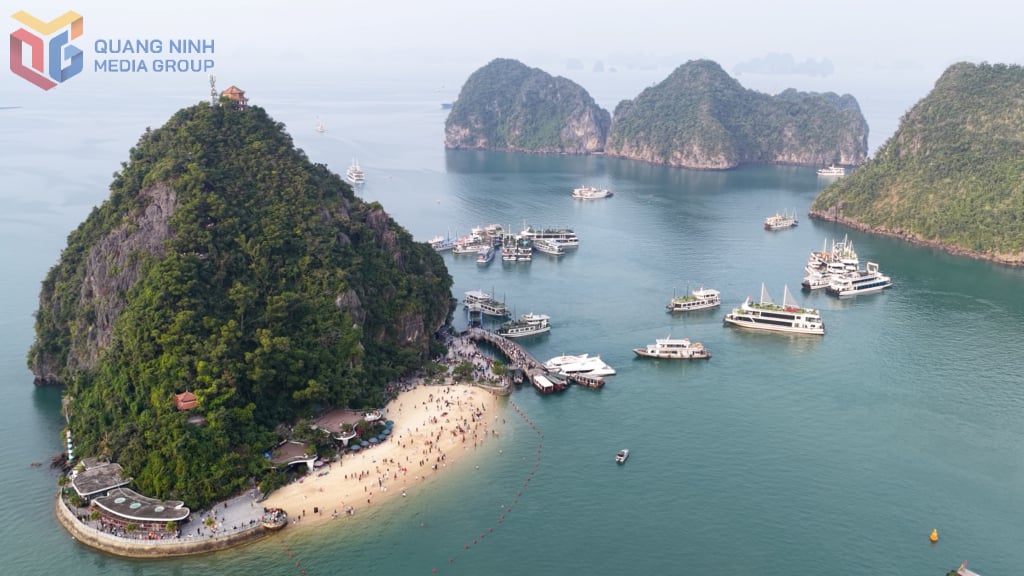
TiTop Island – a destination in Ha Long Bay that always attracts a large number of tourists.
The program initially positions Ha Long Bay and Yen Tu as two pillars of Quang Ninh's tourism in a connected journey, while also offering suggestions and products to connect the chain of heritage sites into a seamless itinerary, rather than isolated destinations. It develops short-day tours, spiritual and wellness tours, and heritage research and experience tours to connect nature, culture, spirituality, and relaxation. For example, a 3-day, 2-night resort itinerary combining destinations like Legacy Yen Tu and Paradise Vietnam cruises… When implemented synchronously, these products will create a deep and coherent journey with a consistent narrative, satisfying both mainstream tourists and attracting international visitors who appreciate culture and spirituality.
Mr. Pham Dinh Huynh, Deputy Head of the Management Board of the Yen Tu - Vinh Nghiem - Con Son - Kiet Bac World Heritage Site, said: "We have researched and developed routes suitable for each target group: a continuous route for international tourists who want to explore multiple heritage sites in one trip; a thematic route for heritage education for students; an experiential route about the Bach Dang stake field, Yen Tu, and the values of the Tran Dynasty historical site... In addition, there are spiritual tourism tours, experiential tourism, and tours exploring the Yen Tu special-use forest. For each type of tourism, the Management Board strives to harmoniously combine natural and cultural values, conservation and tourism development, so that visitors to Quang Ninh have the most complete and profound journey."
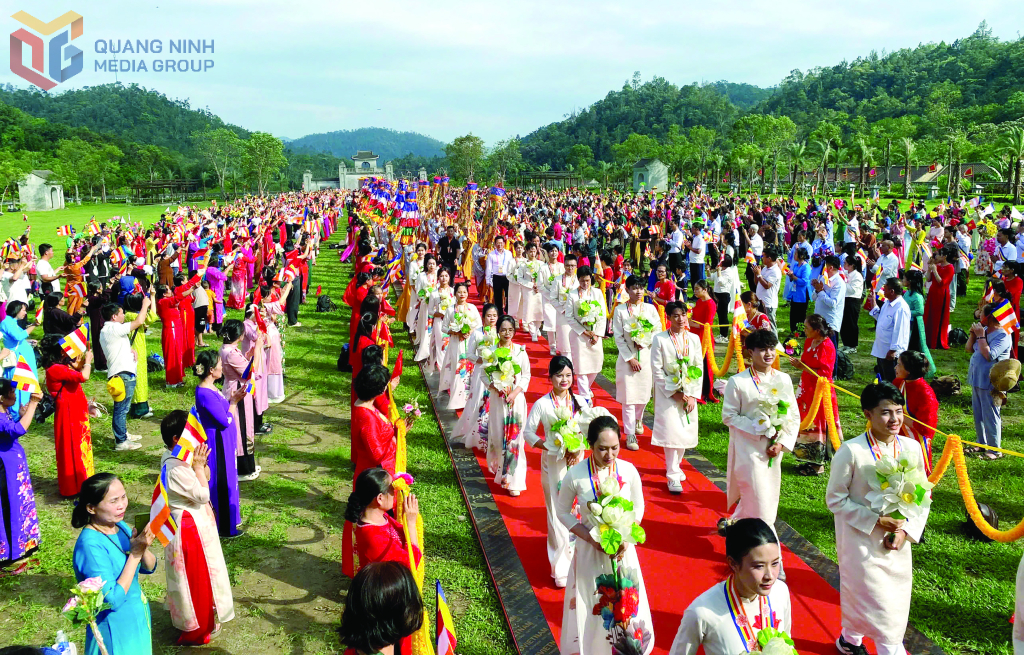
Every year, Yen Tu attracts millions of pilgrims and tourists.
The future of an interregional heritage space
With the UNESCO recognition of Yen Tu, Quang Ninh has become a shining example of potential heritage linkages. The connection between Ha Long Bay and Yen Tu not only creates a unique tourism route for Quang Ninh but also serves as a nucleus for forming a heritage corridor in the Northeast region, spanning a vast area and linking with Hai Phong and Bac Ninh provinces. This will allow visitors to fully experience the cultural imprint of the Tran Dynasty, Truc Lam Buddhism, and the rich natural and historical values of this region.
The Ha Long Bay - Yen Tu tourist route is capable of meeting diverse needs: scenic bay views from cruise ships, cave exploration, kayaking; cultural and spiritual tourism: visiting the system of temples and pagodas, learning about the Truc Lam Zen sect, participating in meditation courses; historical tourism: connecting with the Battle of Bach Dang and the Tran Dynasty relics; experiential and educational tourism: practical learning programs for students on geology and history. The goal is to build a compelling heritage narrative to create a unique identity, not just a combination of two destinations.
The two heritage sites have distinct characteristics – one natural, one cultural – so establishing common standards requires in-depth research, interdisciplinary coordination, and long-term resources. These challenges are inevitable in the process of building a regional heritage space. Importantly, the province has identified the right direction and is gradually realizing it through specific policies.
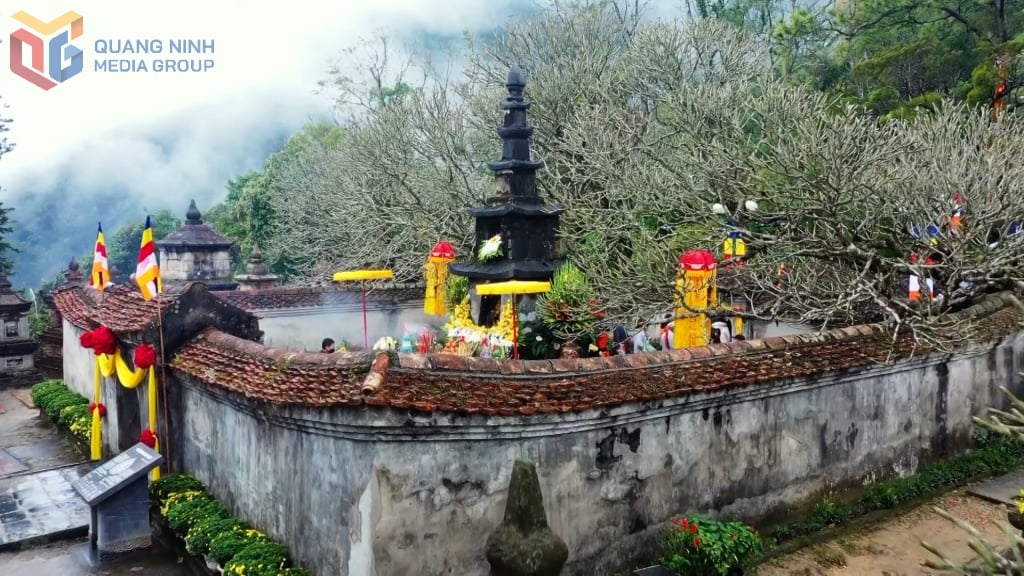
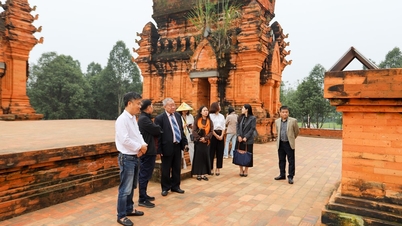
The Huệ Quang Ancestral Tower features architectural elements from the Trần Dynasty, dating back to the 13th century.
Jonathan Baker, Head of the UNESCO Office in Vietnam, commented: "Having a heritage site under the management of multiple provinces always presents both opportunities and challenges. I think a clear and effective coordination mechanism between localities is needed to ensure uniformity in management and conservation. This is especially important for both the Ha Long Bay - Cat Ba Archipelago World Heritage Site (belonging to Quang Ninh province and Hai Phong city) and the Yen Tu - Vinh Nghiem - Con Son - Kiet Bac complex of historical sites and scenic spots (spanning three provinces: Quang Ninh, Hai Phong, and Bac Ninh). Previously, Quang Ninh province has taken some important steps to manage the heritage well, such as assessing the carrying capacity of Ha Long Bay. I think the same needs to be done with Yen Tu. The biggest challenge is always balancing conservation and economic development. This was a problem at Ha Long Bay and will certainly be a problem at Yen Tu. However, we will support you and work together to find the most sustainable solution."
Quang Ninh is entering a new phase of development, where the demand is not just for growth, but for civilized, sustainable growth with a distinct identity. The two World Heritage sites are not only the pride of Quang Ninh, but also the "national brand" of Vietnam. Connecting Ha Long Bay and Yen Tu is a way for Quang Ninh to define its unique tourism identity as a region where nature and culture converge, where heritage preservation is the driving force for economic development. It is also a way for Quang Ninh to tell its story to the world: the story of a land that knows how to preserve the past, cherish the present, and build the future from its priceless heritage values.
Xuan Hoa
Source: https://baoquangninh.vn/hanh-trinh-ket-noi-2-di-san-the-gioi-3388743.html


![[Image] Central Party Office summarizes work in 2025](/_next/image?url=https%3A%2F%2Fvphoto.vietnam.vn%2Fthumb%2F1200x675%2Fvietnam%2Fresource%2FIMAGE%2F2025%2F12%2F18%2F1766065572073_vptw-hoi-nghi-tong-ket-89-1204-jpg.webp&w=3840&q=75)






























































Comment (0)