

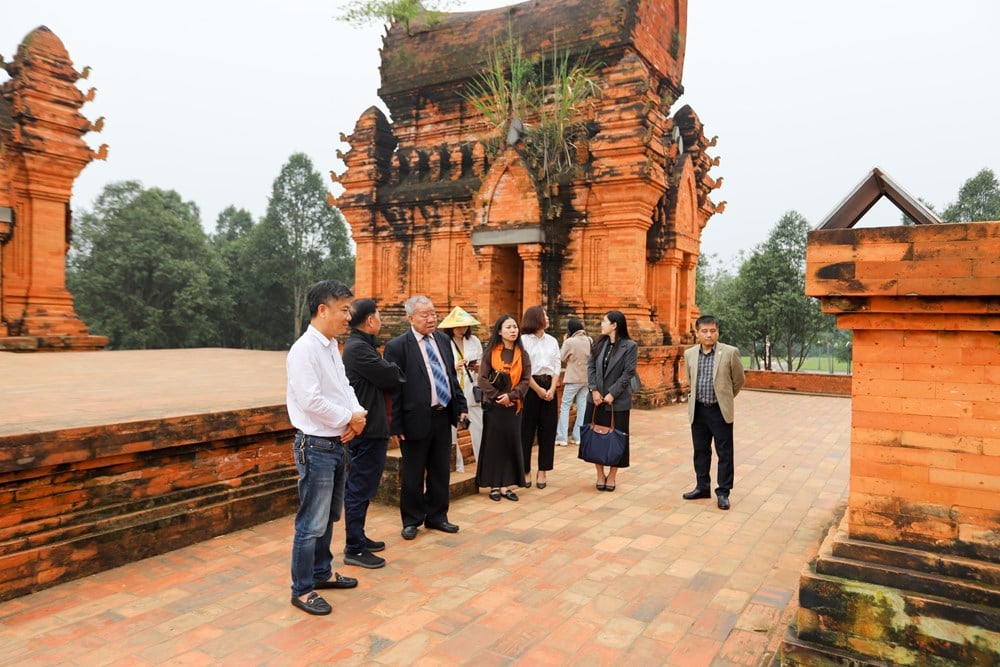
Field research experts
Given this situation, the approach of "preserving as much as possible, restoring as little as possible" is considered a key direction for the sustainable preservation of Cham architectural values.
Challenges in conservation
Cham temples and towers are distinctive religious structures, distributed along the central coastal strip from Quang Tri to Binh Thuan (now Lam Dong ) and extending into the Central Highlands.
Dating from the 7th to the 17th centuries, the Cham temple and tower system is not only a physical relic of a brilliant civilization, but also a vivid testament to the level of construction techniques, architectural thinking, art, and religious life of the Cham people throughout history.
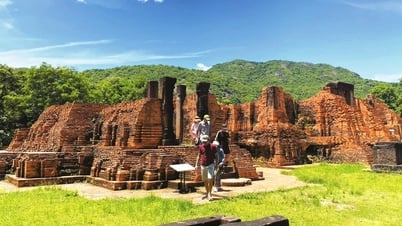
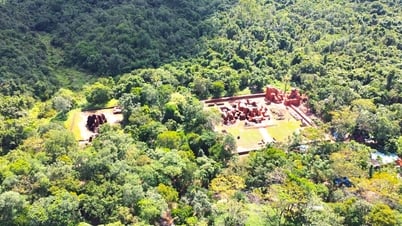
According to research documents, at the beginning of the 20th century, there were over 120 Cham temples and towers in Vietnam that could be studied, concentrated in more than 20 clusters of relics, the most prominent being the My Son Sanctuary heritage site.
Through the vicissitudes of history, wars, and time, most of these relics are now classified as national or special national monuments; My Son, in particular, has been recognized by UNESCO as a World Cultural Heritage site, affirming the outstanding global value of Cham architectural heritage. Over hundreds of years of existence, many temple and tower relics exist in various forms: from archaeological sites and ruins to relatively intact architectural structures.
However, the general reality shows that most temples and towers are no longer intact and are suffering serious degradation due to the harsh natural environment of Central Vietnam, the aging of materials, the impact of physical, chemical, and biological factors, the consequences of war, as well as human encroachment and prolonged lack of maintenance.
Damage manifests itself at various levels: collapse of the masonry, structural fractures, crumbling bricks, weathering, and cracking of stone components. In this context, for nearly half a century, many Cham tower relics have undergone restoration and reinforcement to prevent collapse and contribute to the preservation of their remaining architectural values.
However, practice also shows that the state of damage to the relics is very diverse and complex, with each structure existing in different conditions and conservation contexts, while the restoration of Cham towers to date still lacks a unified method suitable for the specific characteristics of this type of heritage.
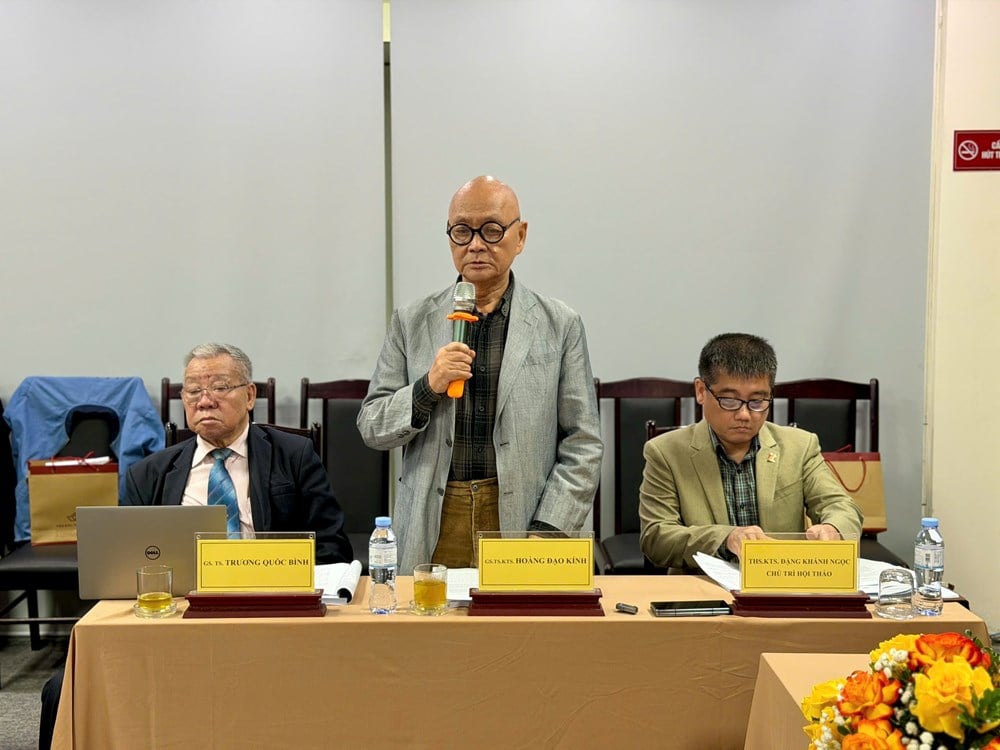
Professor, Doctor, Architect Hoang Dao Kinh contributed his opinions on the preservation of historical relics.
Restoration with a focus on preservation.
According to Professor, Doctor, and Architect Hoang Dao Kinh, Cham architectural relics date from the 8th to the 15th centuries, much earlier than the remaining wooden architecture in Vietnam today. A prominent characteristic of Cham towers is their brick structure, in which the construction techniques and binding materials still hold many mysteries that have not been fully deciphered, despite numerous laboratory analyses.
In terms of preservation, most Cham relics are in a state of ruin or semi-ruin; the most intact are the Po Klong Garai tower complex (formerly Ninh Thuan province ). These relics largely retain the architectural and decorative features of their original construction period, possessing a very high degree of authenticity. However, technically, many structures are in critical condition, such as being buried, collapsed, tilted, weathered, eroded by vegetation, flooded, or having their decorative elements dismantled or stolen.
Based on this situation, Professor, Doctor, Architect Hoang Dao Kinh emphasized that Cham relics should be viewed as architectural and archaeological sites with poor preservation conditions and still at risk of destruction. Therefore, restoration must be based on preservation, with basic requirements such as prioritizing timely rescue under limited financial conditions; ensuring the long-term survival of the relics; preserving as many original elements as possible; and absolutely avoiding irreparable distortions.
“All architectural and engineering solutions are primarily and mainly aimed at addressing the deterioration and eliminating factors that are damaging the monument. Absolutely no attempt is made to restore the monument to its original form. Only partial restoration, based on solid scientific evidence and on-site, should be undertaken when absolutely necessary,” Professor Hoang Dao Kinh emphasized.
According to him, the only appropriate approach is restoration with a conservation and maintenance orientation, in which the primary goal is to preserve the original elements for the long term. Completely restoring the monument to its original form is not considered; partial restoration is only necessary when absolutely essential, based on solid scientific evidence. Also according to Professor Hoang Dao Kinh, in the restoration of Cham towers, conservation includes two basic solutions: reinforcement and repositioning. Reinforcement aims to interrupt the degradation process and increase the load-bearing capacity of the structure, including both temporary and long-term reinforcement.
Long-term reinforcement solutions typically utilize modern materials and structures, placed underground within the monument, with the goal of preserving it rather than altering or modernizing it.
Repositioning involves rearranging displaced original parts back to their original locations. This method helped reshape the tower complexes at My Son from ruins, but it was always done according to the principle of minimal intervention, clearly distinguishing between the original and the added parts. According to many experts, even with a complete understanding of the Cham people's construction techniques, comprehensive restoration of the monument should not be undertaken, as it risks losing the original heritage in exchange for a "complete" but inaccurate image.
Based on the practical experience of the restoration projects of tower groups G and E7 at My Son, Professor Dr. Truong Quoc Binh affirmed the scientific technical methods, from material research to implementation, especially the production of similar restoration bricks and the limited use of cement. These results contribute to preserving the original value and open up a sustainable approach to the restoration of Cham towers.
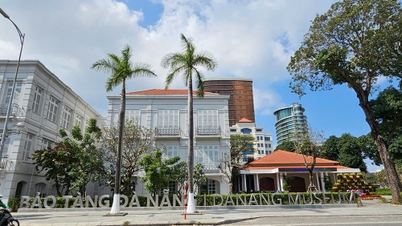
Many Cham relics have been reinforced, restored, and developed for tourism, becoming important cultural and tourism resources. In addition, Cham museums and sculpture collections, especially the Da Nang Cham Sculpture Museum, have made significant contributions to the preservation and promotion of heritage values. Alongside tangible heritage, many intangible heritages of the Cham community, such as weaving, pottery, and the Katê festival, have also been revived, linked to community tourism models, creating livelihoods and raising social awareness.
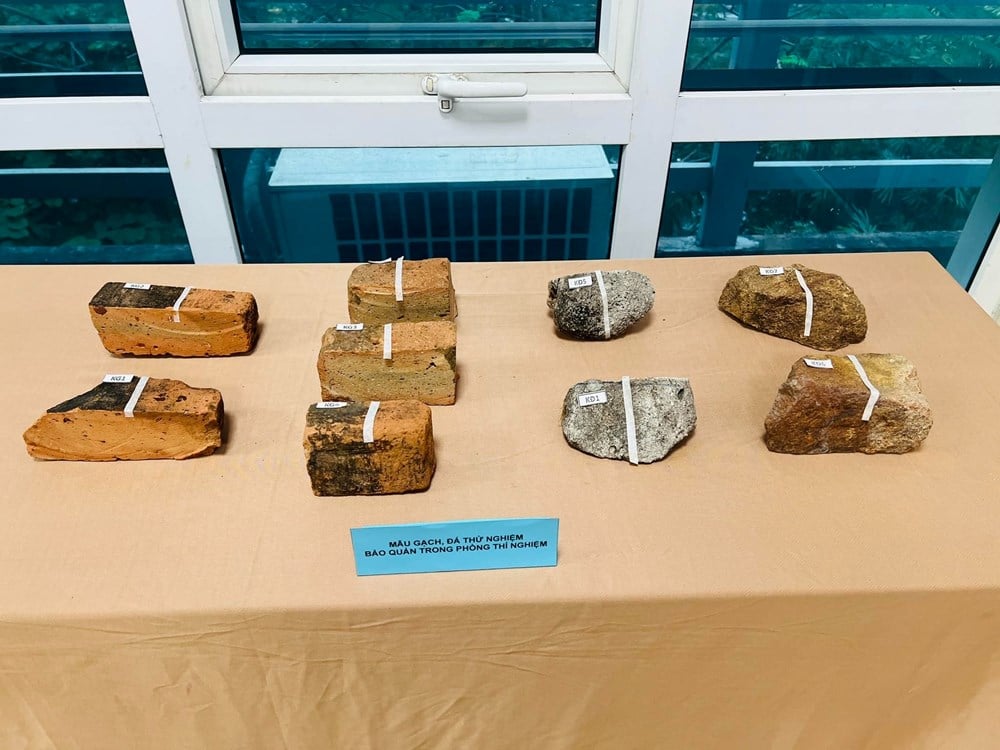
Samples of bricks and stones are being tested for the preservation of Cham relics.
The vital element of conservation
According to architect Le Thanh Vinh, former Director of the Institute of Conservation of Monuments, modern conservation considers the existing environment as an organic part of the monument. International documents such as the Venice Charter, the Burra Charter, and the Nara Documents all affirm that altering the original environment without controlling the microclimate goes against the principles of conservation.
Architect Le Thanh Vinh cited the case of covering the Phu Dien Cham Tower with a glass dome (Hue) as a clear example of choosing the wrong principle, causing the monument to deteriorate faster by disrupting the natural temperature and humidity balance. "The lesson learned is that preservation is not about isolating the monument from its environment, but about maintaining the natural conditions suitable for the original materials," Architect Le Thanh Vinh affirmed.
According to Mr. Vinh, along with physical preservation, supplementary exhibitions and on-site interpretation of heritage are considered the "second layer of preservation," helping the public understand the true and complete value of the relics. At My Son, the exhibition of artifacts, scientific records, and the construction of the My Son Exhibition House have created an effective model for preservation and promotion. Another crucial issue is regular maintenance and care, or preventive preservation. The cost of this work is much lower than major restoration, but it has not received adequate attention.
In reality, many Cham tower relics quickly deteriorate after restoration due to a lack of regular maintenance. Based on two decades of research and conservation of Champa relics, experts recommend strengthening multidisciplinary research; perfecting national standards for Champa tower restoration; maximizing the preservation of original structures; prioritizing traditional techniques; enhancing post-restoration supervision and training specialized personnel; and mobilizing resources and international cooperation.
"Preserve as much as possible - restore as little as possible" is not just a slogan, but a scientific and sustainable path for Cham towers - the silent witnesses of history - to continue to exist in the flow of time.
Source: https://baovanhoa.vn/van-hoa/giu-lai-toi-da-va-tu-bo-toi-thieu-189293.html


![[Photo] General Secretary and President To Lam meets with National Assembly delegates from ethnic minorities.](https://vphoto.vietnam.vn/thumb/1200x675/vietnam/resource/IMAGE/2026/04/20/1776696701056_a1-bnd-8331-3342-jpg.webp)
![[Image] National Assembly discusses the implementation of the socio-economic development plan.](https://vphoto.vietnam.vn/thumb/1200x675/vietnam/resource/IMAGE/2026/04/20/1776696707422_ndo_br_img-20260420-185419-jpg.webp)

































































Comment (0)