

Reviving heritage values in urban life.
In recent years, along with the rapid pace of urbanization, the suburban wards of Hanoi have not only changed in terms of infrastructure but also faced the urgent need to preserve the "essence" of traditional culture. In this context, Resolution 80-NQ/TW on the development of Vietnamese culture has become a guiding principle, directing localities to promote heritage values in conjunction with sustainable development.
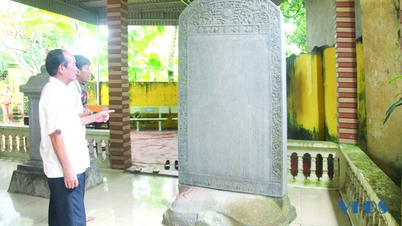
In Dong Ngac ward, a famous ancient land of Thang Long (Hanoi), the preservation and promotion of cultural values are implemented systematically and in depth. After the administrative reorganization, the ward covers an area of 8.85 km², with a population of approximately 83,544 people and 54 residential groups, becoming one of the most densely populated and large-scale areas of the capital. However, amidst the modern pace of life, Dong Ngac ward still maintains a system of 28 cultural relics dating back hundreds of years, such as communal houses, temples, pagodas, shrines, churches, etc., along with many valuable artifacts such as royal decrees, stone steles, bronze bells, and family genealogies.
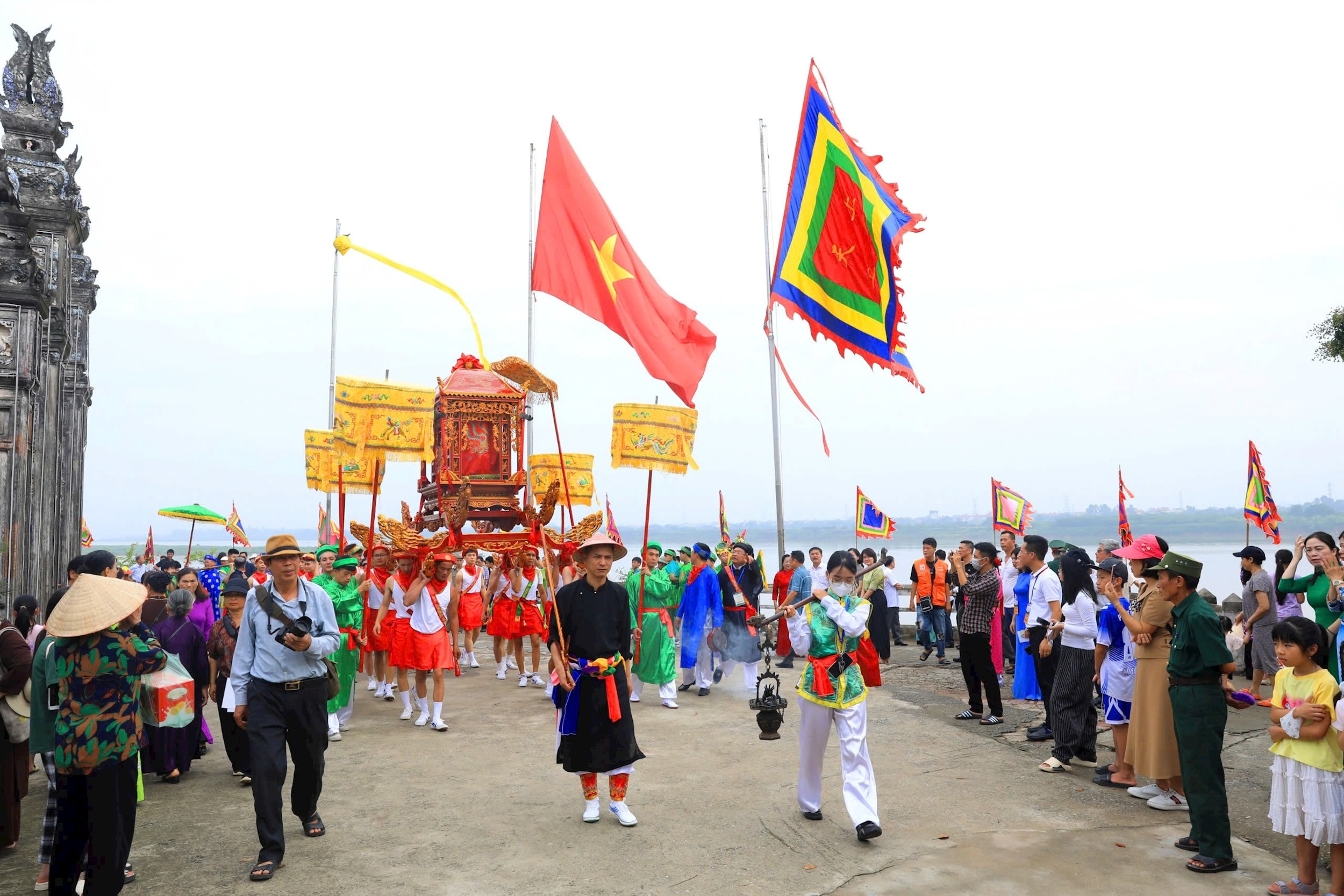
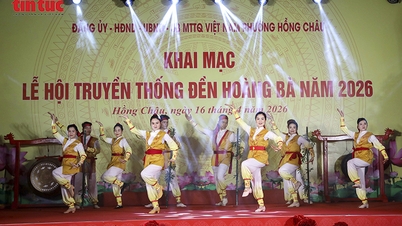
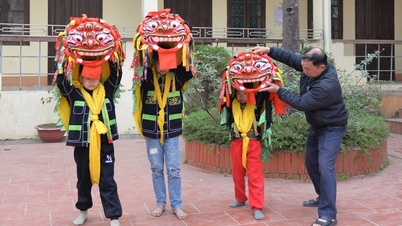
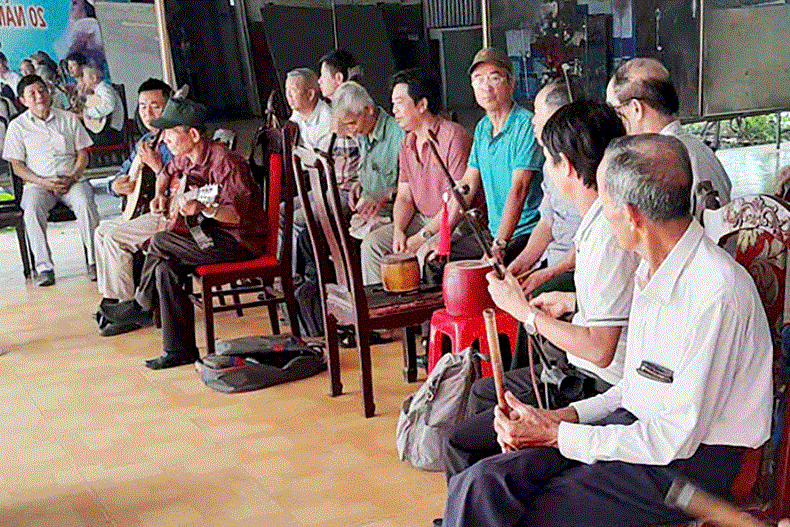
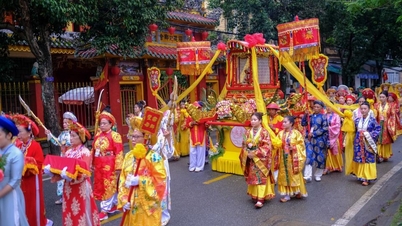
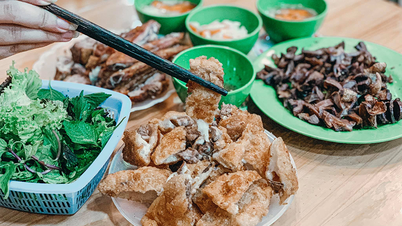
Traditional festivals such as the Dong Ngac Temple Festival, Nhat Tao Temple Festival, Lien Ngac Temple Festival, and especially the Chem Temple Festival - a national intangible cultural heritage - not only hold spiritual value but also create a unique community cultural space. Along with this are the distinctive features of folk cuisine , such as "Chem pork sausage and Ve spring rolls," and traditional crafts, creating an unmistakable identity.
According to Ngo Van Nam, Secretary of the Dong Ngac Ward Party Committee, the operation of the two-tiered local government model after the reorganization has opened up many opportunities for the locality to effectively exploit its cultural potential. "Dong Ngac has favorable conditions for comprehensive development, becoming one of the typical traditional cultural centers of the northern region of Hanoi," he emphasized.
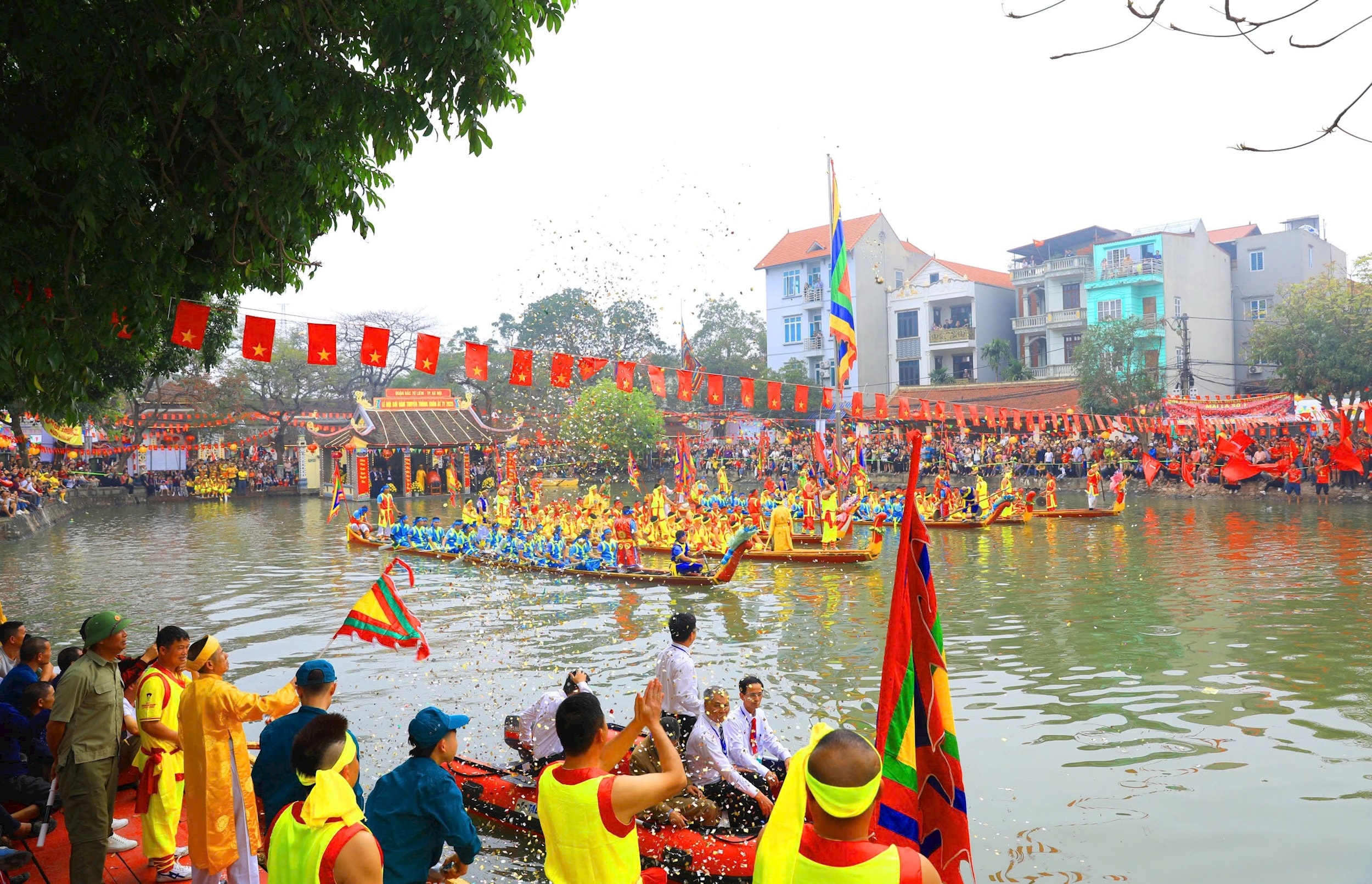
Not only Dong Ngac, but Tay Tuu ward is also a shining example in putting Resolution 80 into practice. With 16 relics, including 9 national-level relics and 5 city-level relics, Tay Tuu possesses a rich heritage. A prime example is the Dam communal house complex associated with the Pheo River, a place that embodies many cultural, spiritual, and scenic values.
Amidst the hustle and bustle of urban life, Dam communal house and the Dam swimming festival are still preserved as an indispensable part of the people's lives. The vitality of this heritage lies not only in its historical value but also in the commitment and preservation of the community through many generations.
To make culture a driving force for development.
Previously, heritage preservation focused primarily on safeguarding it, but now, under the spirit of Resolution 80-NQ/TW, localities have shifted towards promoting its value and turning culture into a resource for development.
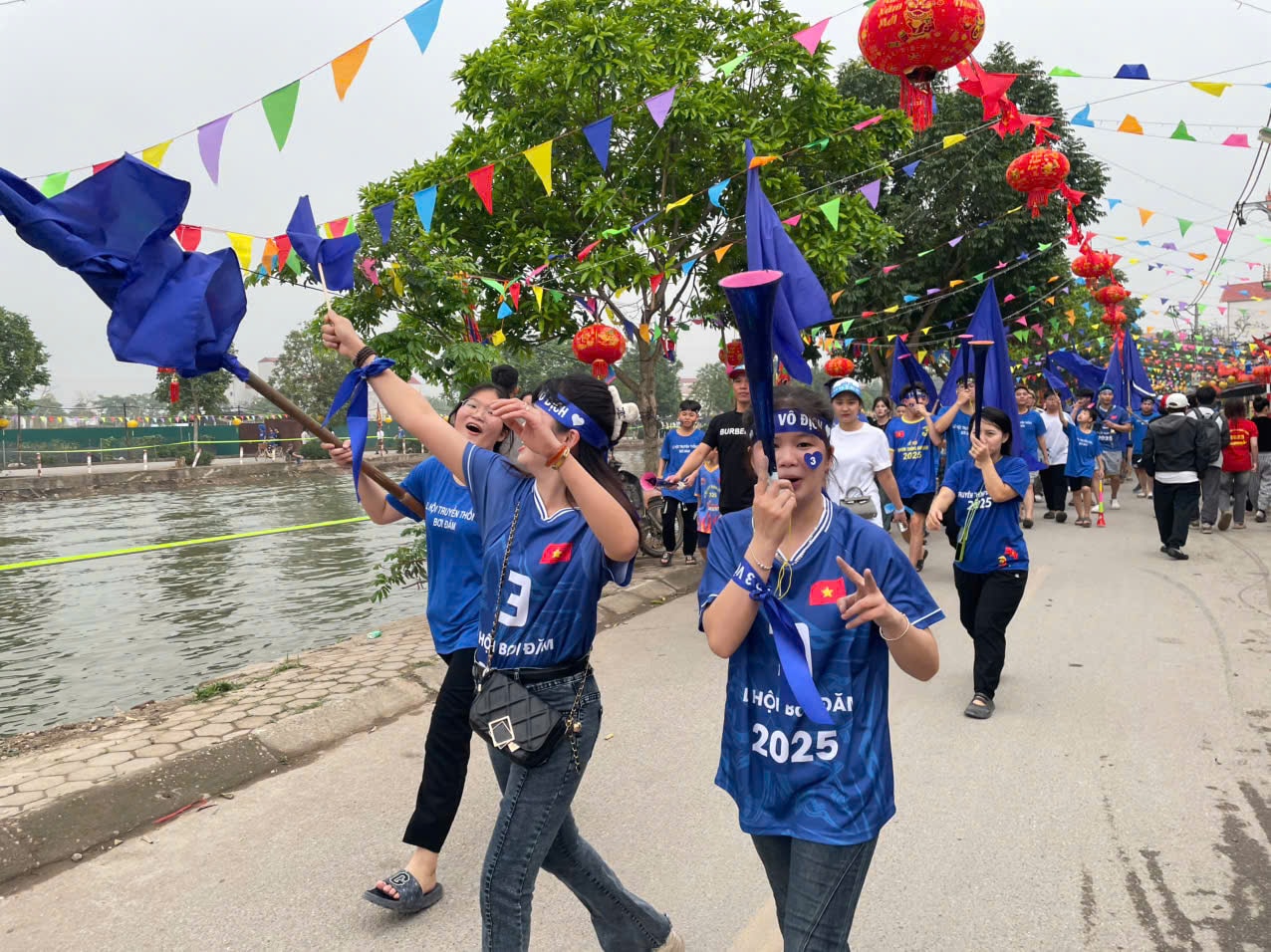
In Tay Tuu, this orientation is concretized through many practical activities. In 2026, the ward will organize the Tay Tuu Temple and Shrine Festival on a ward-wide scale over 4 days, expected to attract 20,000 to 25,000 participants. Besides the traditional ceremonies, many cultural and artistic activities, sports events , and artistic flower displays will be organized, contributing to promoting the local image.
Notably, the competition "Continuing the Story of National Identity and Cultural Heritage in the Digital Age" has opened up a new approach. Through video submissions, people, especially the younger generation, are encouraged to participate creatively and retell the story of their heritage in modern language. In doing so, traditional values are not only preserved but also spread more widely in daily life.
According to Nguyen Sy Thang, Vice Chairman of the Tay Tuu Ward People's Committee, the locality has great potential for cultural development, but still faces many difficulties. Infrastructure such as transportation, the environment, and water supply and drainage systems around historical sites are not yet synchronized; the application of technology in promotion is limited; and the budget allocation mechanism is not truly flexible… are some of the “bottlenecks” that need to be addressed.
From practical implementation, a positive shift is clearly visible: culture is no longer outside the development process but has directly participated in shaping urban lifestyles, improving quality of life, and strengthening community cohesion. Citizens are not only beneficiaries but also become agents in preserving and disseminating cultural values.
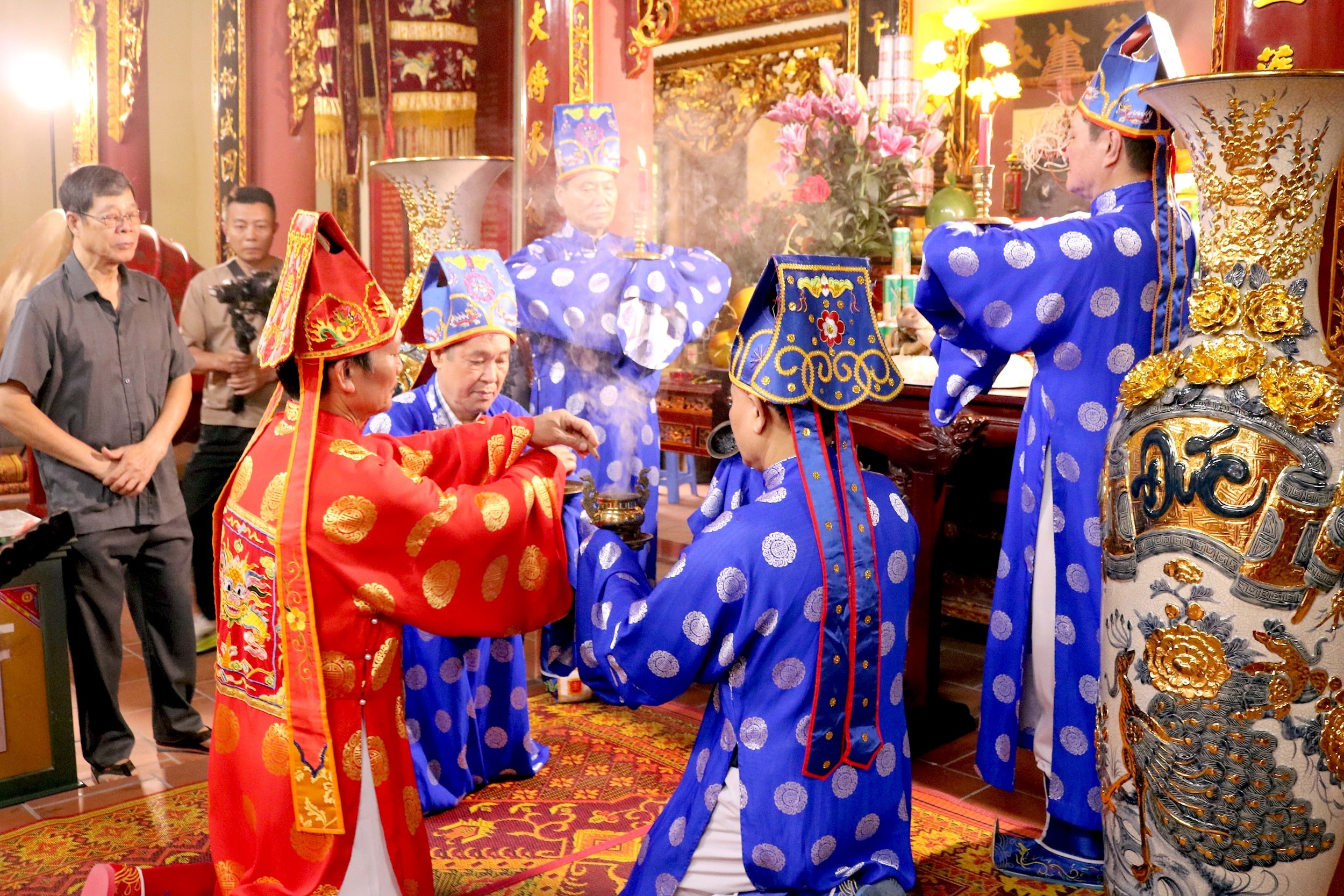
In Nghia Do ward, the implementation of Resolution 80-NQ/TW has also been carried out comprehensively. Currently, there are 15 historical sites in the city's inventory, of which 9 have been classified (2 at the national level and 7 at the city level). Restoration and preservation work is prioritized, notably the restoration project of Tang Phuc Pagoda, which is being implemented according to schedule.
According to Mr. Do Viet Hung, Chairman of the Nghia Do Ward People's Committee, Resolution 80-NQ/TW is of particular importance in the current context, where urbanization is taking place rapidly. Implementing the resolution will not only help preserve heritage but also contribute to building a healthy cultural environment, creating a foundation for socio-economic development, including cultural tourism.
"Culture is the thread that connects the past with the present, and it is the element that creates the unique identity of each locality. When exploited in the right way, cultural values will become an important resource, contributing to economic development, attracting tourists, and improving the lives of the people," shared the leader of Nghia Do ward.
The reality in various localities shows that the shift from "preserving" to "promoting" is not only a change in approach, but also a step forward in development thinking. Culture is no longer a supporting factor but has become a pillar, accompanying the economy and society.
In the heart of the modern city, ancient village communal houses, traditional festivals, and folk cultural values are quietly preserved and spread. These are not only memories of the past but also the foundation for the future, where cultural identity is preserved, promoted, and becomes a driving force for sustainable development in Hanoi.
Source: https://hanoimoi.vn/giu-hon-cot-van-hoa-truyen-thong-giua-long-do-thi-745309.html


![[Photo] National Assembly Chairman Tran Thanh Man attends the policy seminar to promote Vietnam-Türkiye cooperation.](https://vphoto.vietnam.vn/thumb/1200x675/vietnam/resource/IMAGE/2026/04/16/1776351415367_vna-potal-chu-tich-quoc-hoi-tran-thanh-man-du-toa-dam-chinh-sach-thuc-day-hop-tac-viet-nam-tho-nhi-ky-8705791-jpg.webp)















































Comment (0)