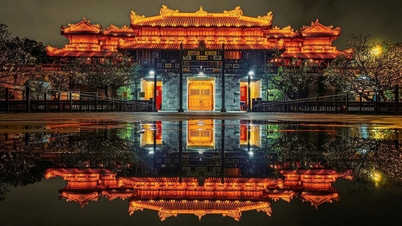
Having worked at the Bac De Temple many times, I clearly felt the solemn and ancient atmosphere of a structure that has stood for over a hundred years in the heart of Long Xuyen city. The resonant sound of the bronze bells, harmonizing with the gentle spread of incense smoke, made the space here tranquil and serene.
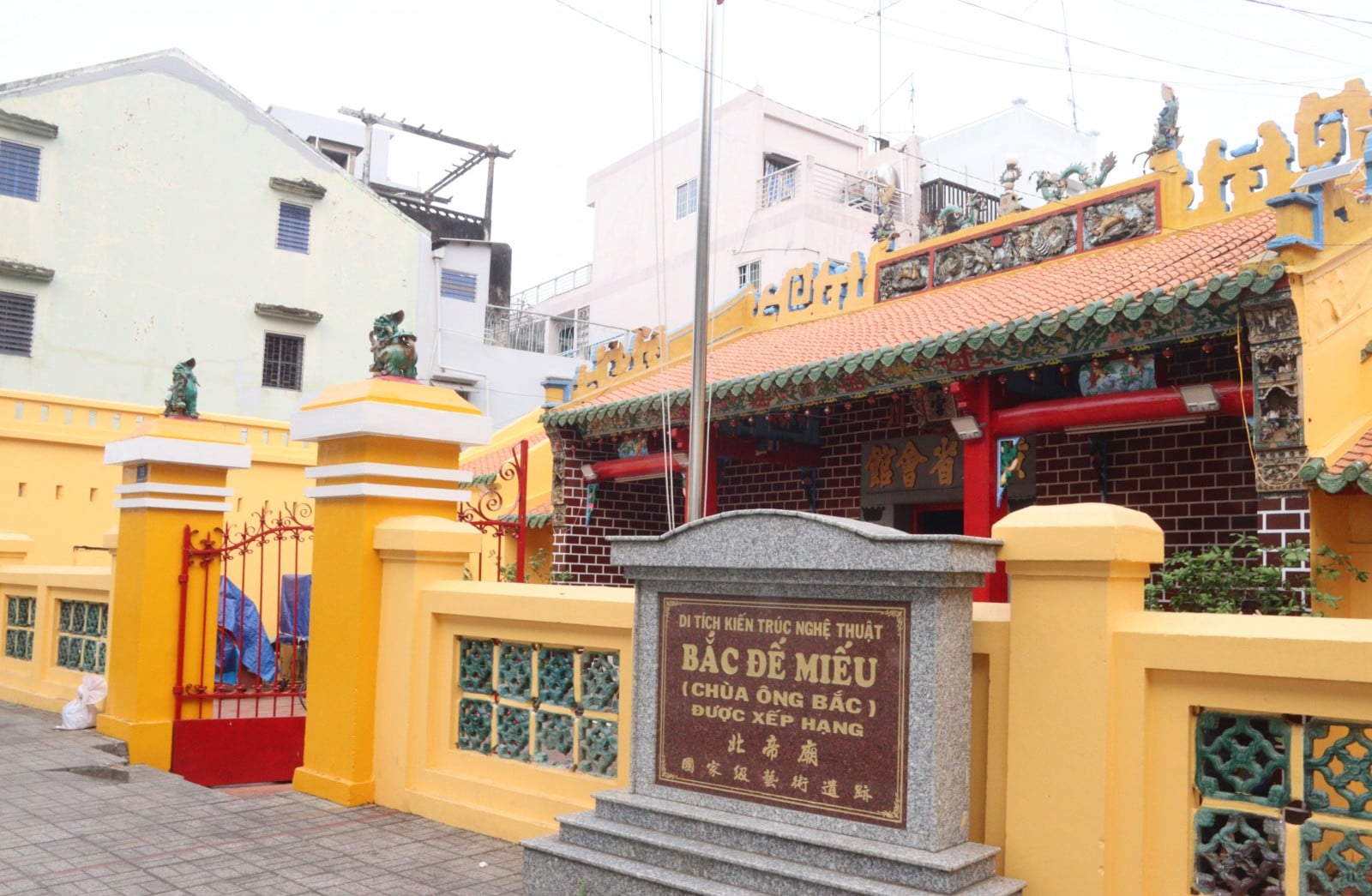
Bac De Temple is located on Pham Hong Thai Street, Long Xuyen Ward.
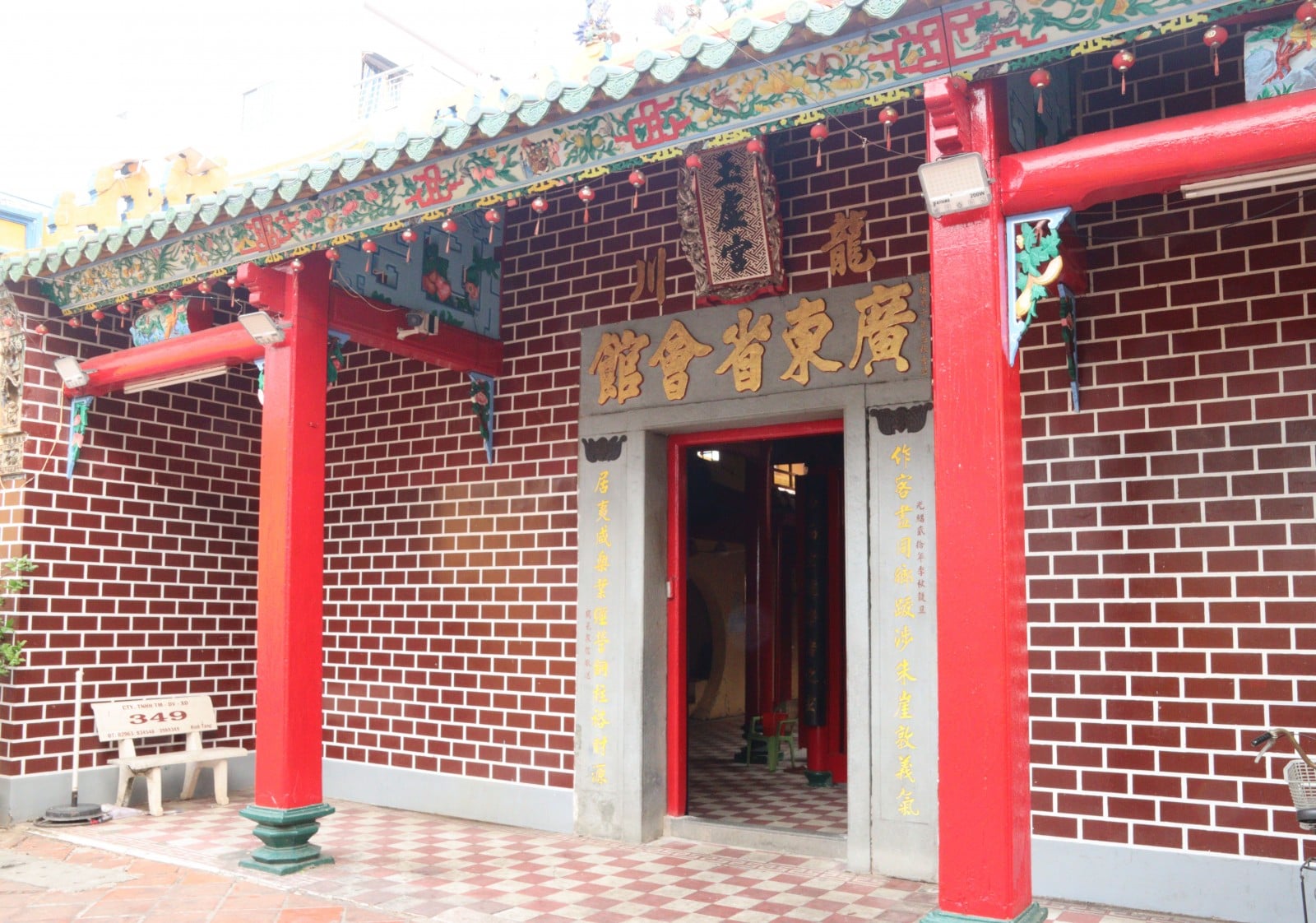
In front of the main gate is a pair of meaningful couplets.
The structure is located on the banks of the Long Xuyen River, just a few steps from the Duy Tan Bridge. Built in 1891, the temple follows the traditional "Quoc" (國) shape of the Chinese character for "country" (國). The system of round columns made of Cam Xe wood creates a solid structure for the entire building. The temple's entrance is constructed from three large granite blocks, attached to a thick wall, with the Chinese characters "Tinh Hoi Quan" (Provincial Meeting Hall) carved in relief above.
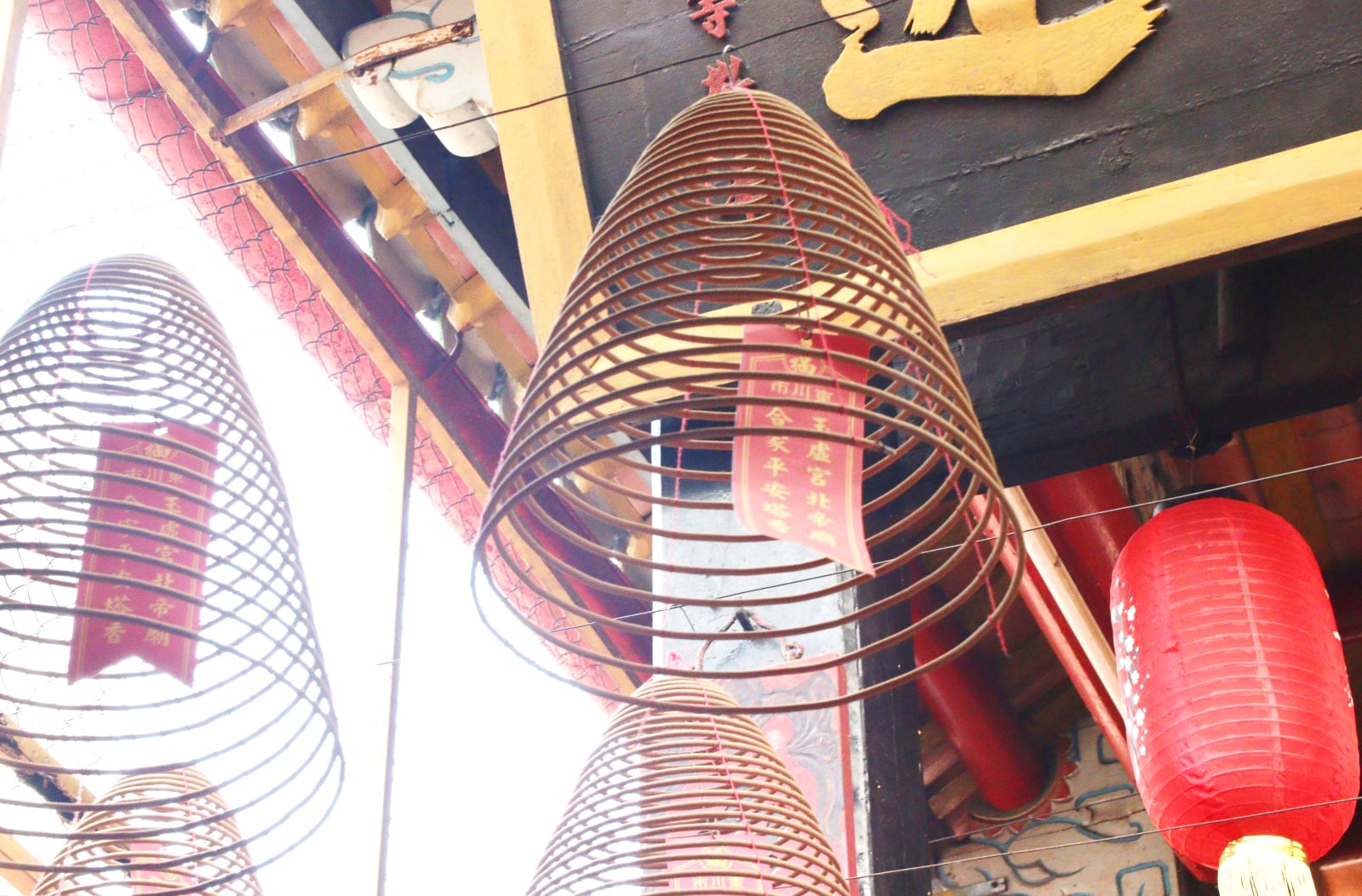
The interior of the temple reflects the strong religious beliefs of the Chinese people.
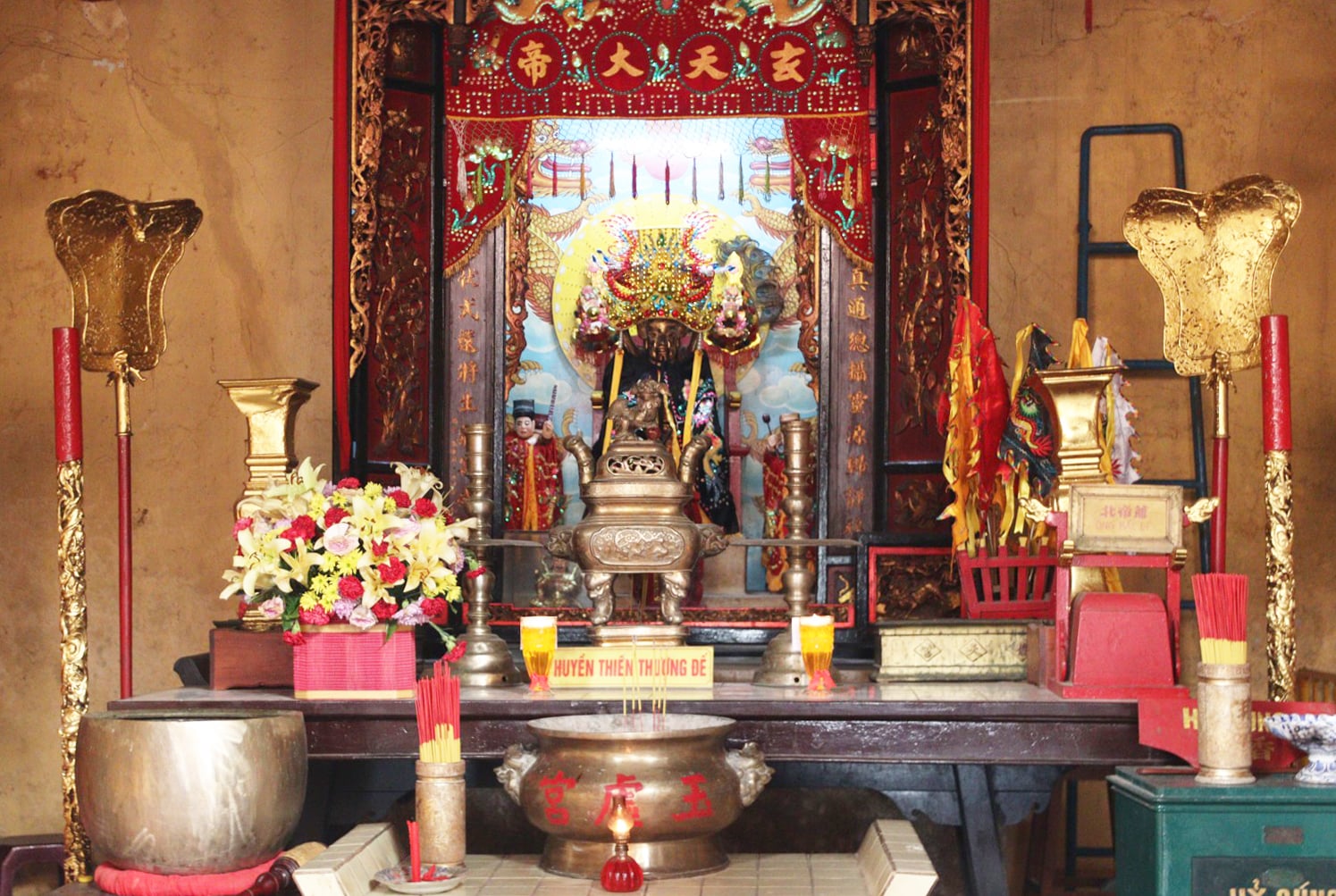
The main hall is dedicated to the worship of Huyền Thiên Thượng Đế (the Supreme God of Heaven).
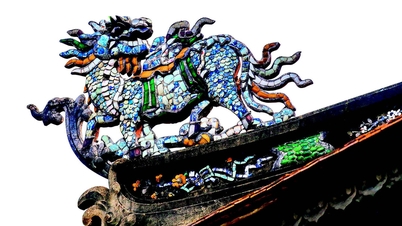
The temple roof is covered with yin-yang tiles in the distinctive blue and red colors. The overall architecture is strongly influenced by the Cantonese style, highlighted by a dark yellow color scheme combined with red and brown. On the roof, decorative details such as statues of two dragons fighting over a pearl, mythical creatures like the Pixiu, and the four sacred animals are elaborately carved, contributing to the solemn and ancient appearance of the temple.

At the main gate, a pair of couplets serves as a meaningful greeting: “As guests in a foreign land, we share the same homeland, venturing to the vast red mountain slopes, further strengthening our sense of camaraderie. Settling in this land, we all have homes, jobs, abundant resources, and prosperous livelihoods.” Because this is a gathering place for Cantonese-origin Chinese who have settled in Southern Vietnam, the meaning of the couplets reflects the unity and solidarity of the Chinese community here, wishing for a comfortable, prosperous, and peaceful life.
Having existed for over a century and undergone numerous renovations, the Bac De Temple still preserves many valuable artifacts. These include a large bronze bell, an iron incense burner, a stele commemorating the merits of those who contributed to the construction of the temple, along with three altars and carved panels related to the three realms. Particularly noteworthy is the ancient bronze bell, still used daily, its resonant sound evoking memories of the temple's rich history.
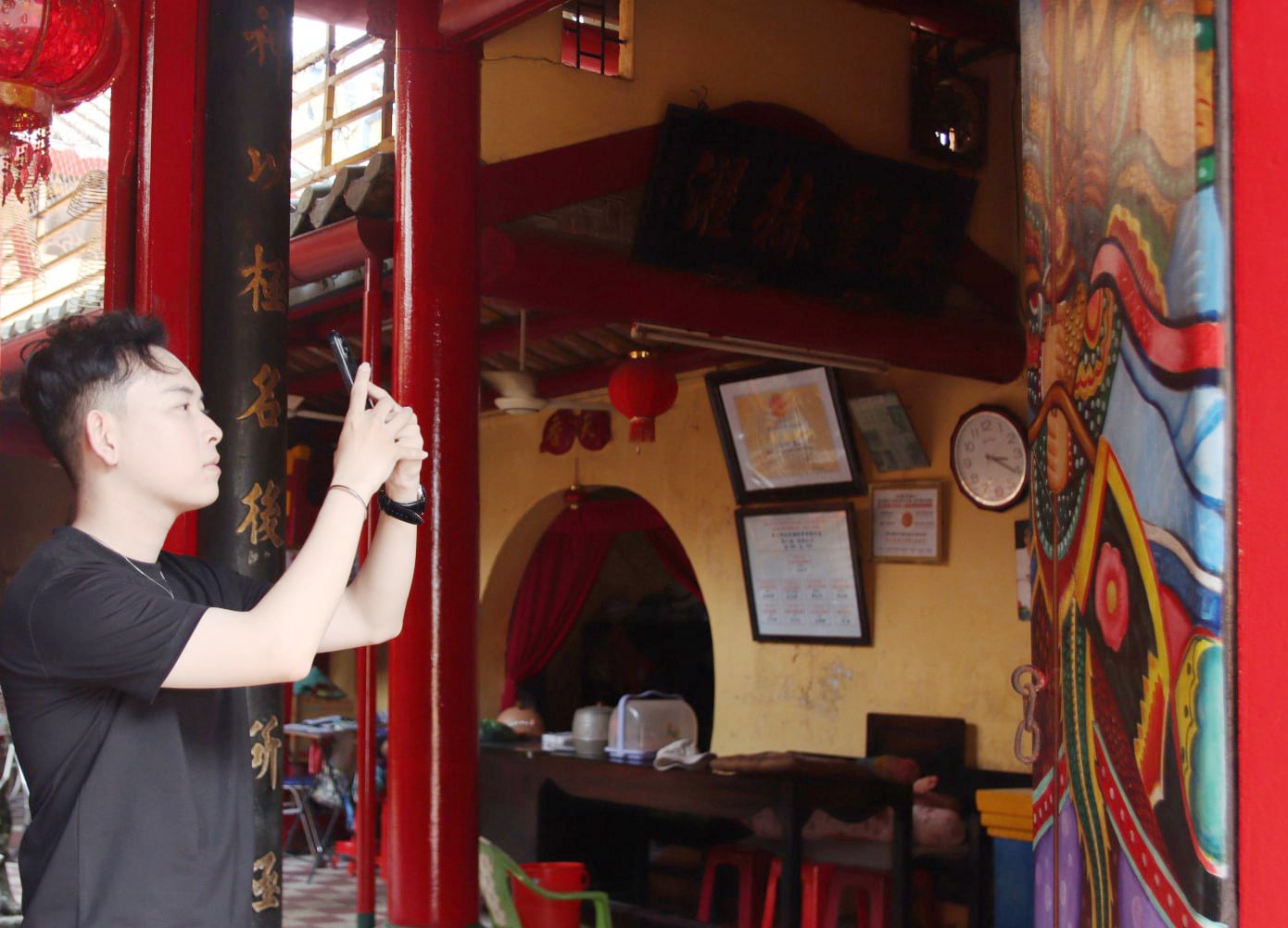
Tourists visit and take photos at the Northern Emperor Temple.
With its exceptional historical and architectural value, in 1987, Bac De Temple was recognized as a national historical and cultural relic by the Ministry of Culture, Sports and Tourism. This is a source of pride for the local people as well as the Chinese community living in An Giang.
Mr. Lei Jinzhang, Chairman of the Longxian Chinese Mutual Aid Association and Head of the Management Board of the Northern Emperor Temple, said that the entire architecture of the Northern Emperor Temple bears the strong imprint of traditional Chinese culture. Therefore, the community always focuses on preserving every detail intact, from the wooden columns and couplets to the ancient bronze incense burners.
“However, it is inevitable that the monument will deteriorate over time. We regularly repaint and carry out minor repairs on the exterior. The most worrying thing is that after Pham Hong Thai road was upgraded, Bac De Mieu is nearly 1 meter lower than the road surface. When it rains, water overflows, causing localized flooding throughout the monument. We have reported this situation to the Provincial Museum and proposed that appropriate action be taken soon,” Mr. Loi Cam Chuong shared.
Beyond its role as a spiritual center, Bac De Temple is also associated with many community-oriented activities. During holidays and festivals, especially the Vu Lan season, the Bac De Temple Management Board often mobilizes benefactors to contribute rice to support disadvantaged families. Mr. Loi Cam Chuong recounted: “Every year we manage to raise several tons of rice to share with people in many localities throughout the province. Bac De Temple is where people entrust their hopes for success and prosperity. When their lives improve, people allocate funds to contribute to social and charitable work.”
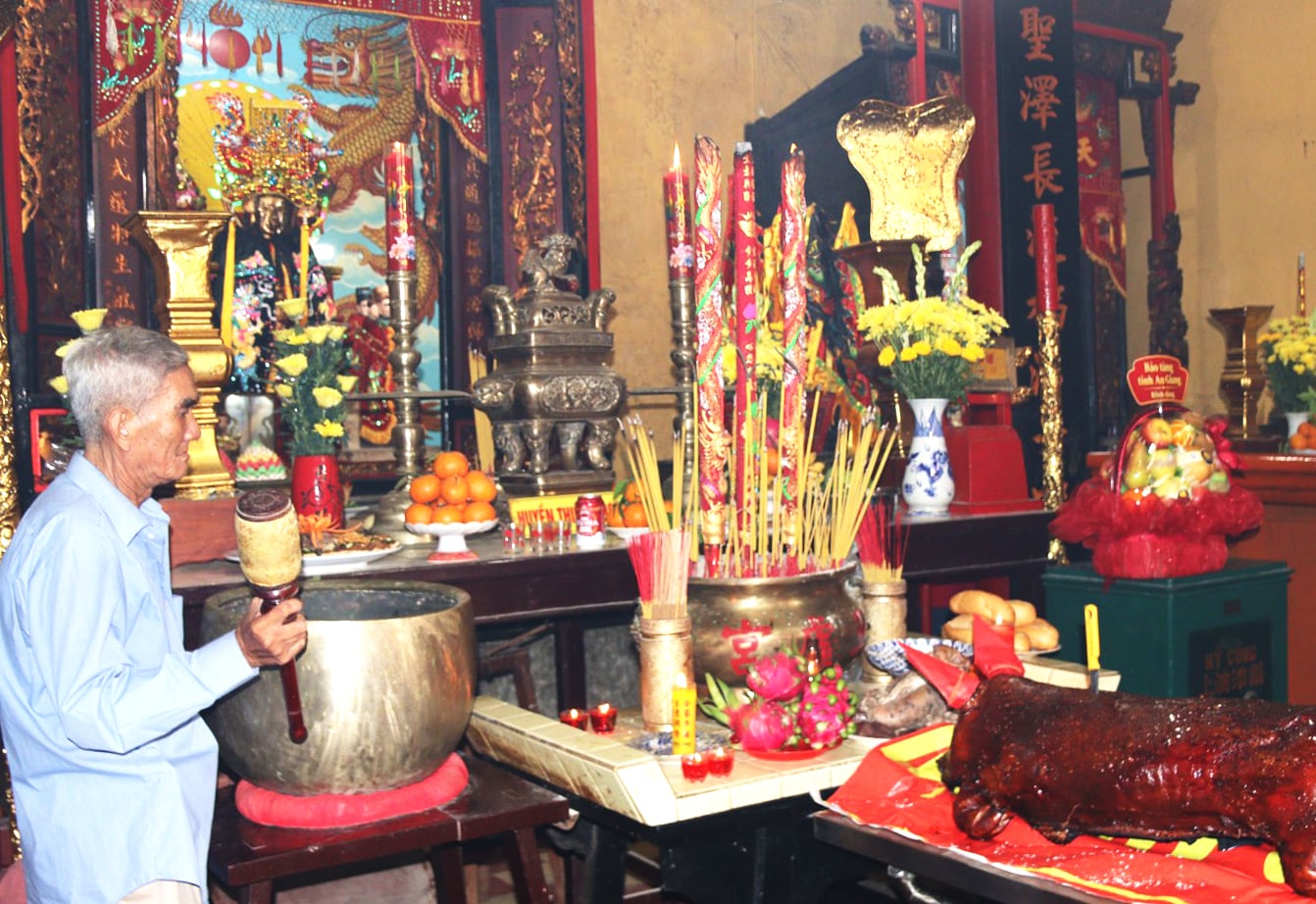
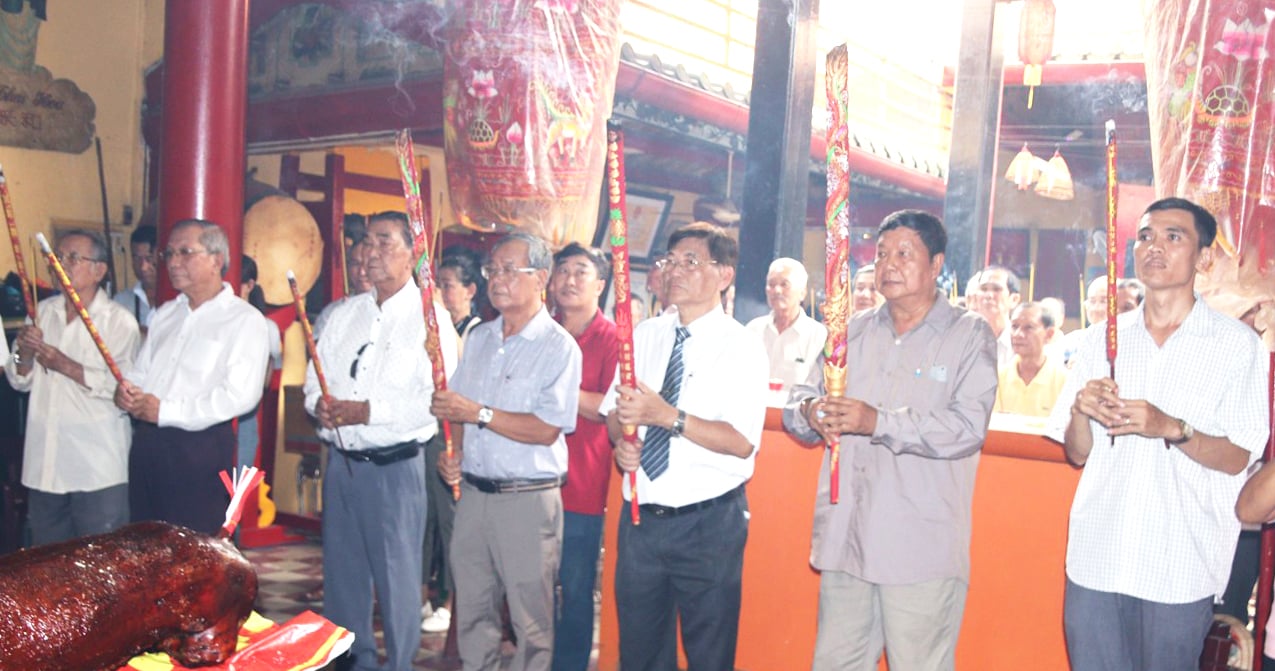
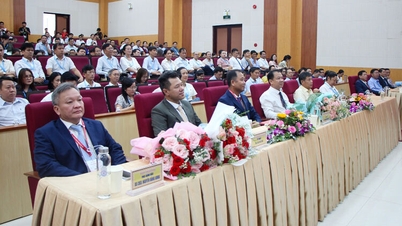
The Management Board will organize the Ông Bắc festival on the 3rd day of the 3rd lunar month in 2026.



The third day of the third lunar month each year is the festival honoring the Northern Emperor. This is the biggest religious event of the year, attracting a large number of locals and tourists who come to offer incense, pray for peace, and learn about the beautiful traditional culture of the local Chinese community. This year, the festival took place on April 19, 2026. Amidst the swirling incense smoke and the lively drumming, we felt a vibrant picture of the religious life in this riverside region.
Ms. Huynh Hue Lan (76 years old, residing in Hamlet 7, Long Xuyen Ward) has been associated with Bac De Temple since she was young. She attends almost every year during the festivals. “Even now, at my advanced age, I always come to the temple on festival days; I rarely miss one. I even bring my grandchildren to participate. The solemn and warm atmosphere here makes me feel very close, like a part of my spiritual life,” Ms. Lan shared. According to her, preserving and maintaining the activities at the temple demonstrates respect for our ancestors and helps future generations better understand the cultural traditions of the Chinese community.
Amidst the relentless development of the city, the temple quietly stands as a spiritual anchor, a place where people entrust their faith and hopes for a peaceful life. This profound witness to time has been and continues to help people preserve the beauty of traditional beliefs in the midst of modernity.
GIA KHANH
Source: https://baoangiang.com.vn/giu-hon-di-san-tai-bac-de-mieu-a483285.html