

Cheo singing art is gradually returning to community cultural life in Hai Phong through various innovative forms.
Keeping the "flame" of traditional rowing in the Eastern region alive.
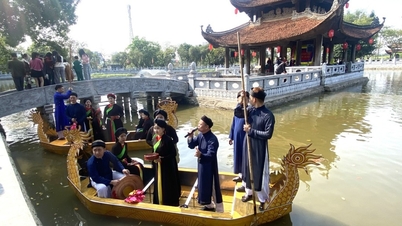
Hai Phong is known as one of the "cradles" of traditional Vietnamese opera (cheo), having produced many famous artists and performers. The spread of cheo art in the context of rapid urbanization is no longer limited to preserving the form but is gradually shifting towards creating an environment for practice.
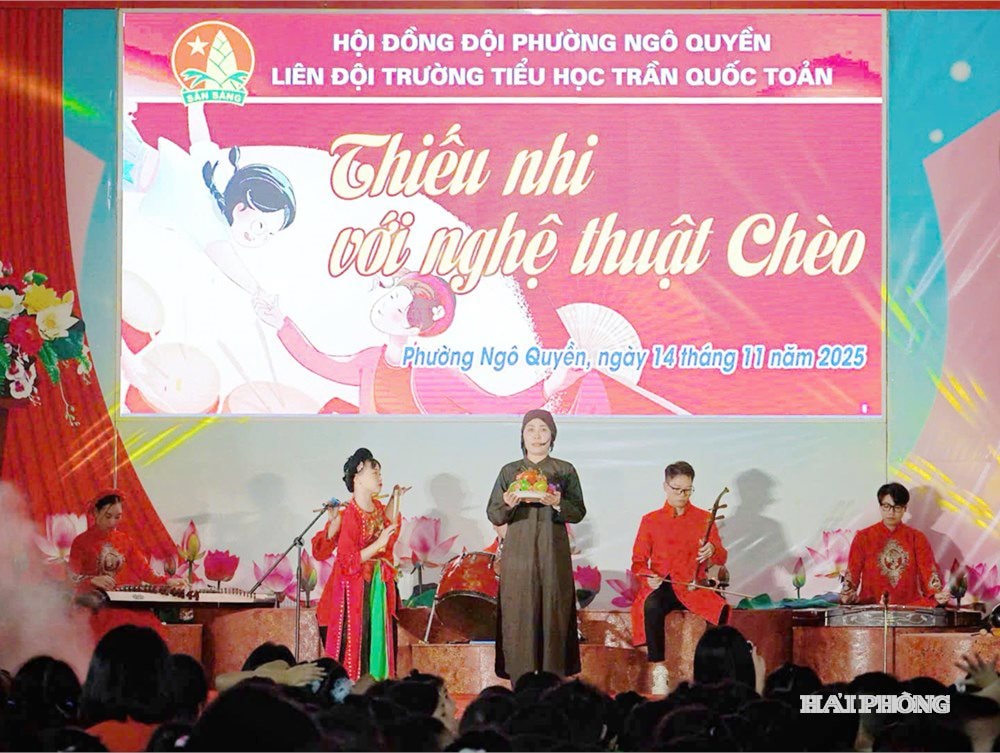
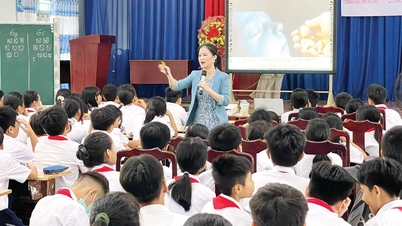
A new approach showing clear effectiveness is the introduction of traditional Vietnamese opera (cheo) into schools. In November 2025, Tran Quoc Toan Primary School (Ngo Quyen Ward) organized a thematic event titled "Children and Cheo Art." Here, students not only watched performances but also viewed documents, learned about the history and characteristics of cheo art, interacted with artists, experienced the dance movements and drum rhythms of cheo, and directly participated in classic excerpts. This approach transformed cheo from an unfamiliar art form into a vibrant and engaging experience.
Significantly, when traditional Vietnamese opera (chèo) enters the school system, the role of teaching belongs not only to professional artists but also to music teachers, local cultural officials, and even parents themselves. This model of socialized teaching helps to expand reach, reduce pressure on professional art organizations, and connect chèo with character education, aesthetics, and understanding of national culture.
One notable milestone is the establishment of the Thanh Dong Cheo Singing Club with 46 members. The club functions as a soft cultural institution, creating a space for regular activities, practice, exchange, and skill enhancement for amateur artists. The club was founded to provide a healthy platform for those who love traditional arts, especially Cheo singing and folk songs; and to contribute to the preservation and promotion of heritage values within the community.
Beyond the club model, traditional Vietnamese opera (chèo) is gradually reappearing in mass cultural programs, local festivals, and community cultural events. A notable point is the streamlined staging, increased interaction, and selection of distinctive and accessible excerpts such as "The Clown Disperses the Funeral," "The Village Headman and Mother Đốp," and "Thị Mầu Goes to the Pagoda"... As a result, younger audiences are beginning to show interest and actively seek out the art form.
Ms. Dinh Thi Bich Lien, Director of the City's Culture, Film and Exhibition Center, believes that restoring the traditional Cheo (Vietnamese folk opera) club models is significant not only in terms of the movement but also in terms of the depth of the heritage.
Furthermore, traditional Vietnamese opera performances on street stages, pedestrian areas, and cultural and tourism events in Hai Phong are creating new "touch points" with the public. When traditional opera moves beyond the theater space and reaches viewers in an open, spontaneous context, this art form has the opportunity to attract audiences who have never actively purchased tickets to see it before.
Creating an ecosystem for amateur rowing.
.png)
While professional art organizations play a core role in terms of expertise, amateur groups and grassroots movements are the "living ground" for Cheo (traditional Vietnamese opera) to maintain its spread within the community. In reality, Hai Phong shows that many Cheo clubs and traditional performing arts groups are quite active, but still lack long-term support mechanisms, stable venues, and systematic training programs.
According to Ms. Dinh Thi Bich Lien, Director of the City's Center for Culture, Cinema and Exhibitions, the continued nurturing of traditional Cheo opera needs to be given even more attention. The clubs are not only places for activities, but also points of connection, inspiring the younger generation...
The most important thing for amateur chèo (Vietnamese traditional opera) is not staging large-scale productions, but maintaining regular activities and having opportunities to perform in front of the public. “Amateur chèo singers are mainly driven by passion. If they only practice together without a stage or opportunities for interaction, it's easy to stagnate. Therefore, it's necessary to create regular platforms so that those who love chèo have more motivation to pursue it long-term,” shared Ms. Nguyen Thi Hong Loan, a member of the chèo club.
A promising approach is integrating traditional Vietnamese opera (cheo) with tourism and community life. Instead of just appearing in festivals and celebrations, many localities are experimenting with incorporating short cheo excerpts into weekend cultural programs, festivals, and activities for tourists. This approach helps bridge the gap between traditional theater and contemporary life.
According to Mr. Nguyen Hoang Tung, Director of Hoang Tung Event Company (Hai Phong), young audiences haven't turned their backs on traditional Vietnamese opera (cheo); the issue lies in the approach. If outstanding excerpts are selected, the duration is concise, and more interactive elements are included, along with introductions to the plot before the performance, viewers will find it easier to accept. Once they understand the story and characters, they will stay to watch until the end.
Along with the physical stage, the digital space is also considered an important channel for expanding the audience for Cheo (traditional Vietnamese opera). Recording excerpts of excellent performances and building channels to introduce melodies, characters, and representative artists can help Cheo reach new audiences at a low cost but with high reach.
In particular, when systematically integrated into the local arts education ecosystem, not only Cheo (traditional Vietnamese opera) but many other traditional art forms will gain more admirers. Beyond extracurricular activities, local learning materials on Cheo can be developed, student Cheo clubs can be organized, and competitions can be held to explore Cheo stories and characters. When young people are exposed to it early, Cheo will no longer be seen as "the art of the previous generation." "Through thematic activities, the school also discovers the talents of students, fostering a love for traditional arts, especially a love for Cheo," said Ms. Le Thi Hoa, Principal of Tran Quoc Toan Primary School.
From grassroots movements to schools, from village courtyards to pedestrian streets, the creation of a multi-layered ecosystem for amateur Cheo (traditional Vietnamese opera) is opening up a practical direction. With sufficient space for practice, training, and performance, Cheo art in Hai Phong will not only be preserved but also have the opportunity for a strong resurgence in modern cultural life.
LINH HUYSource: https://baohaiphong.vn/giu-lua-chieng-cheo-xu-dong-536492.html

















![[Photo] Reception to welcome General Secretary and President To Lam and his wife on their State visit to the Philippines](https://vphoto.vietnam.vn/thumb/1200x675/vietnam/resource/IMAGE/2026/06/01/1780295488620_vna-potal-chieu-dai-chao-mung-tong-bi-thu-chu-tich-nuoc-to-lam-va-phu-nhan-tham-cap-nha-nuoc-toi-philippines-8798060-7855-jpg.webp)












































Comment (0)