

(CLO) Located about 30km south of Hanoi , Dong Cuu village in Thuong Tin district is famous for its traditional embroidery craft passed down through generations. It is not only the place with the most unique embroidered imperial robes in Hanoi, but also a renowned embroidery village for the costumes worn during spirit medium rituals in the Mother Goddess worship tradition.
The embroidery village is hundreds of years old.
According to the information recorded in the royal decree, Dong Cuu embroidery village worships Mr. Le Cong Hanh, a Doctor of Philosophy during the reign of King Le Than Tong (1637), as the founder of the embroidery craft. Legend has it that after a trip to the North, he learned embroidery techniques there and brought them back to pass on to the people, including the people of Dong Cuu village.
Unlike neighboring villages in the district that specialize in embroidery, such as lace embroidery, painting embroidery, flag embroidery, and ao dai embroidery, Dong Cuu village is the only embroidery village in Northern Vietnam that specializes in embroidering imperial robes for kings and emperors. However, to maintain the craft, in addition to embroidering and restoring imperial robes, the people of Dong Cuu village also produce embroidered products for festivals, especially costumes for spirit medium rituals.
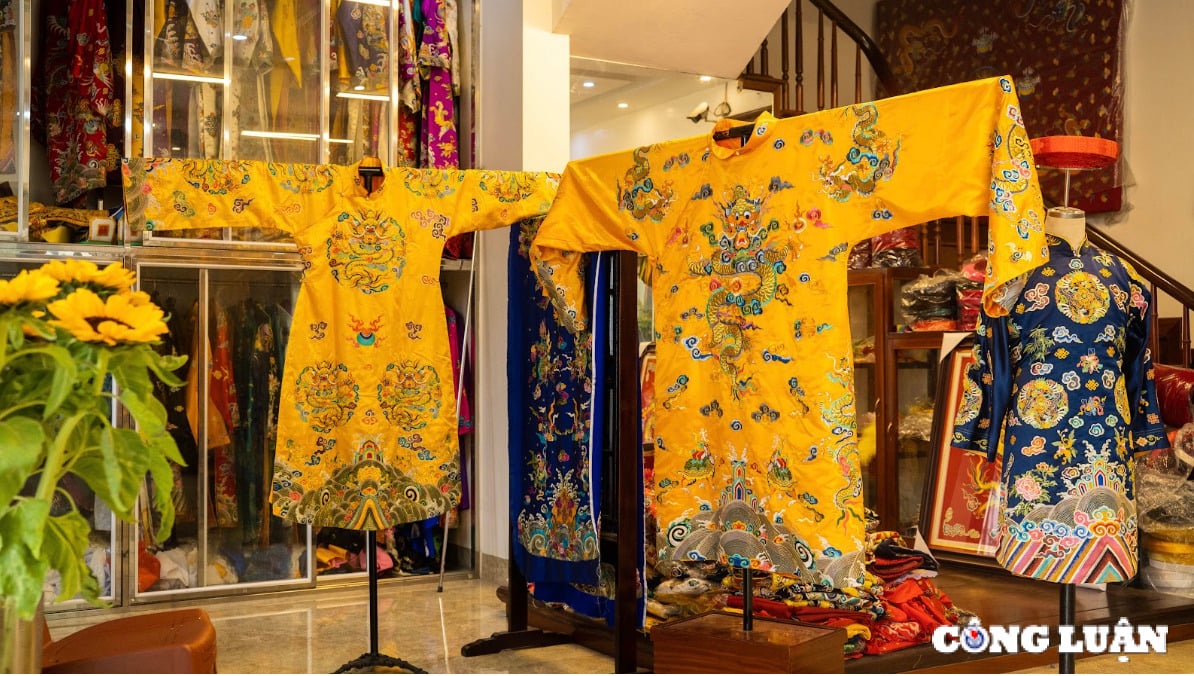
Thanks to the skillful and meticulous hands of the artisans, products from Dong Cuu village have become famous throughout the country.
It is known that decades ago, the people of Dong Cuu village mainly engaged in forestry, but due to low yields, their lives remained difficult and impoverished. Gradually, they shifted to focusing on traditional embroidery. Currently, up to 80% of households in Dong Cuu village are engaged in embroidery, and thanks to this, the people's lives have improved and the economy has developed.
Concerns about succession
The embroidery craft of Dong Cuu village has a long history, spanning hundreds of years, originating from the feudal period when embroidered products were commonly used in the royal court and temples. The craft has been passed down from generation to generation, maintained and developed over time. However, alongside efforts to preserve and promote the value of the craft, the artisans in the village remain concerned about the continuation of this traditional craft as its values are gradually fading away.
Facing concerns about the gradual disappearance of traditional values, Ms. Dam Thi Pha, owner of the Doc Pha sewing workshop in Dong Cuu village, shared: “In Dong Cuu, embroidery workers are usually experienced artisans. Although I've been in the profession for 20 years, I see that not many people still pursue it, partly because of cheap labor and the high demands of the craft. Embroidering a single imperial robe takes about half a year, and the profit isn't much. Many reasons, from income issues to the demanding nature of the craft, mean that fewer meticulous artisans are left to explore and learn, and the embroidery craft is fading away, gradually losing its value.”
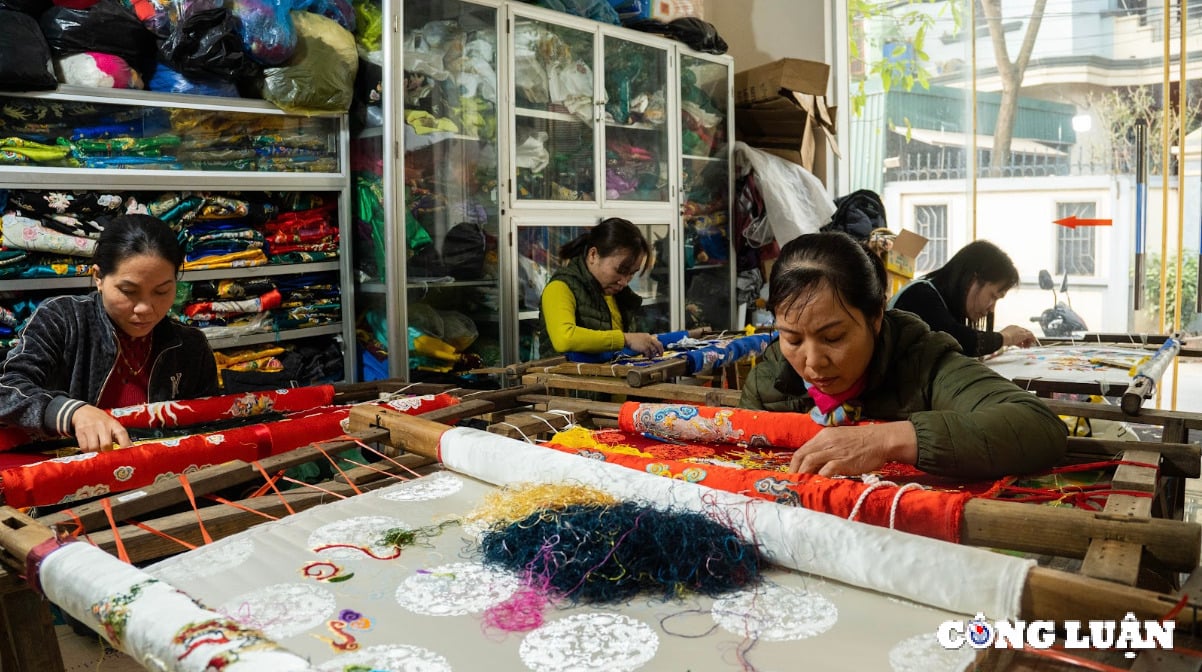
Embroidery workers at the Doc Pha workshop.
It is known that the artisans in Dong Cuu village are all experienced, skilled craftsmen who have been involved in the profession for a long time. The time required to embroider a dragon robe depends on the needs of the client; for smaller robes, the restoration time is 5-6 months, while for larger, hand-embroidered robes, it can take up to a year to complete.
Embroidery may seem simple and easy, but in reality, it is very laborious, requiring meticulousness, patience, and intense concentration. To this day, although there are many workshops in neighboring communes that also embroider imperial robes, they are mostly reproductions made by machines or produced in cheap subcontracting workshops.
The Dong Cuu craft village not only restores eye-catching imperial robes but also embroiders "ceremonial scarves and robes." The culture of spirit mediumship is not unfamiliar to traditional cultural values; however, in Dong Cuu village, the craft of spirit mediumship scarves and robes faces many challenges. Currently, numerous workshops have sprung up, leading to intense competition and negatively impacting the craft.
Sharing with the reporter, Ms. Pha said: "Nowadays, having our products copied or having customers stolen is very common. Whenever we release a design, people copy it, but market goods are still market goods. Customers can immediately tell the difference between our products and others. Besides, business is difficult now because we have to compete with other craft villages. People are imitating our products and undercutting the market prices, unlike in the past. Coupled with technological advancements, young people import goods and resell them, buying goods from other places."
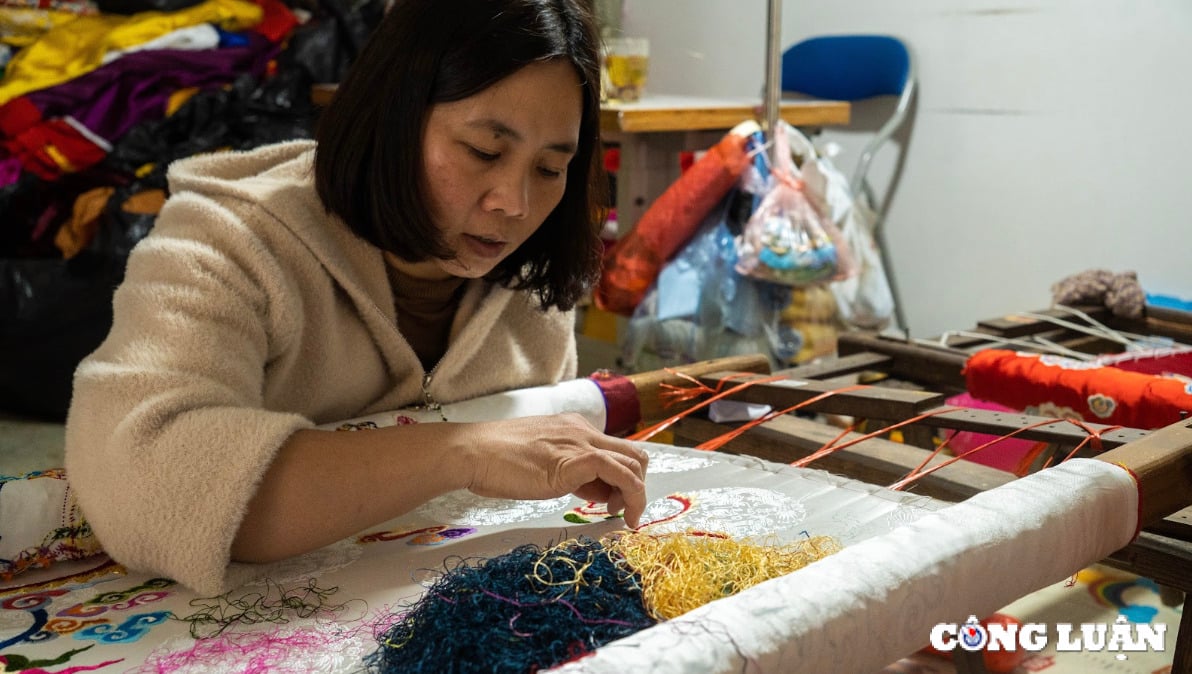
Ms. Dam Thi Pha owns the Doc Pha sewing workshop in Dong Cuu village.
Sharing more about the difficulties faced by Doc Pha sewing workshop in particular and sewing workshops in Dong Cuu village in general, Ms. Pha also said that the craft is gradually dying out. Partly because the younger generation lacks understanding and research into the art of embroidering imperial robes, lacking the necessary knowledge to restore them or embroider ceremonial scarves and robes without the soul and essence. Partly because the development of machinery has led to dependence on machines, hindering the improvement of skills.
Mr. Nguyen The Du, owner of the Du Bien embroidery workshop and also the Chairman of the Dong Cuu Traditional Embroidery Association, shared more about the difficulties: "Unlike the old generation, the younger generation now focuses on quantity and profit, so the quality of products is poor, and the practice of selling at undercutting prices significantly affects the value of the craft."
Keeping the passion for the craft alive amidst the challenges of time.
To become a renowned traditional embroidery village as it is today, Dong Cuu village has undergone a long process of persistent effort in building its brand and fostering creativity, inheriting traditions from many generations. Currently, Dong Cuu embroidery village is home to talented and dedicated artisans who are ready to teach their craft to everyone, preserving and developing the traditional embroidery art. The core artisans of the village always maintain the ancient embroidery techniques, preserving the traditional essence in every stitch, rather than chasing trends or profit, and prioritizing quality over quantity.
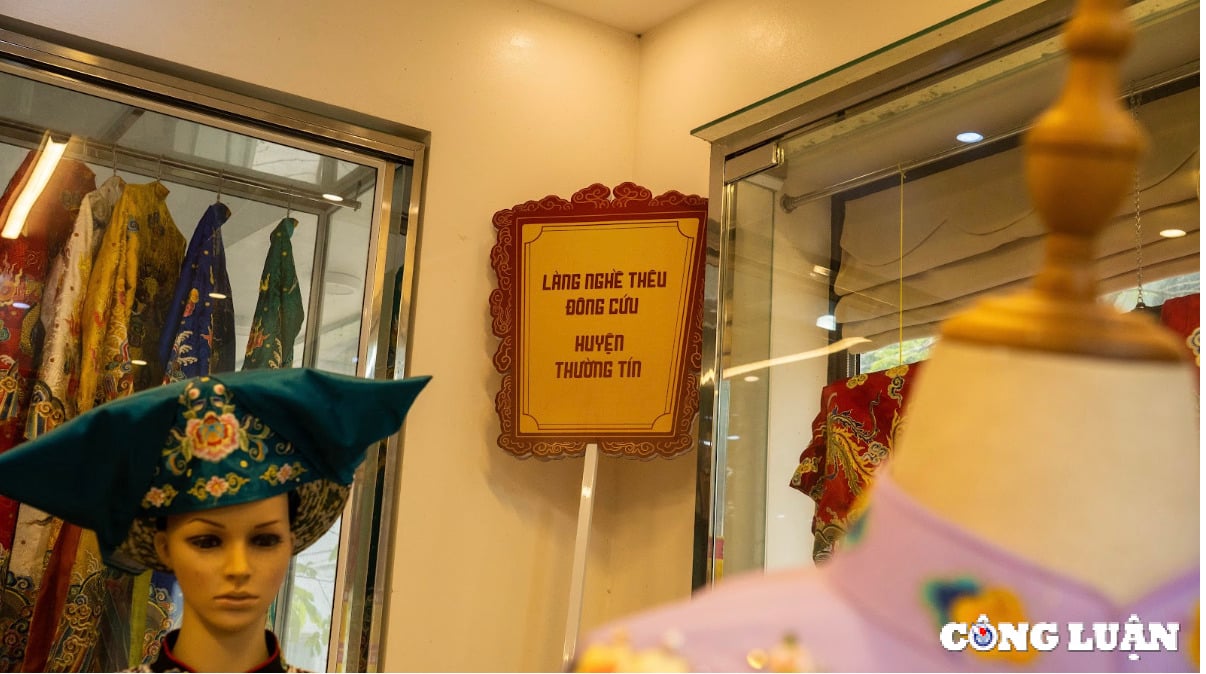
Dong Cuu embroidery village, Thuong Tin district.
As the Chairman of the Dong Cuu Traditional Embroidery Association, Mr. Du stated: “Currently, Dong Cuu embroidery village is striving to combine tradition with modernity to keep pace with the developing technology and society. A large number of workshops in the village have invested in computerized embroidery machines, which provides more support for artisans in hand embroidery. The application of computerized embroidery technology also helps to make the prices of products more suitable for the market and the needs of buyers, because hand embroidery is usually more expensive and customers may find it difficult to accept.”
Determined to preserve traditional values and prevent the craft from fading away, Dong Cuu embroidery village has proactively established the Dong Cuu Traditional Embroidery Association. With the support and attention of the district and commune authorities, they also organize training courses to improve the skills of young embroiderers. Elderly artisans and experienced craftspeople also organize classes to teach the younger generation, aiming to preserve and promote the ancestral craft. Furthermore, they maintain the tradition of commemorating the founder of the craft on the 12th day of the 6th lunar month every year.
Text and photos: Thu Huyen, Thuy Linh
Source: https://www.congluan.vn/lang-theu-dong-cuu-giu-lua-truyen-thong-giua-thach-thuc-thoi-gian-post327150.html

![[Photo] Ba Lang An Lighthouse - the "eye of the sea" amidst the "rock museum" of Quang Ngai province.](https://vphoto.vietnam.vn/thumb/1200x675/vietnam/resource/IMAGE/2026/05/29/1780038698840_anh-man-hinh-2026-05-29-luc-14-10-42.png)






















![[Image] Pleasant weather helps students enter the 10th grade entrance exam with confidence.](https://vphoto.vietnam.vn/thumb/1200x675/vietnam/resource/IMAGE/2026/05/29/1780034401612_ngay-1-thi-lop-10-minh-duy-8-5009-jpg.webp)















































Comment (0)