Resolution No. 80-NQ/TW of the Politburo on the development of Vietnamese culture has created an important political foundation for journalistic activities in the digital age. On the occasion of the 101st anniversary of the Vietnamese Revolutionary Press Day, provinces, cities, ministries, sectors, and socio-political organizations have implemented many meaningful activities. The demands for building a healthy cultural environment, promoting national soft power, accelerating digital transformation, and developing the cultural industry are posing new tasks for the press, especially foreign press, in promoting the image of Vietnam to the world.
Journalism must be a cornerstone of truth in the digital age.
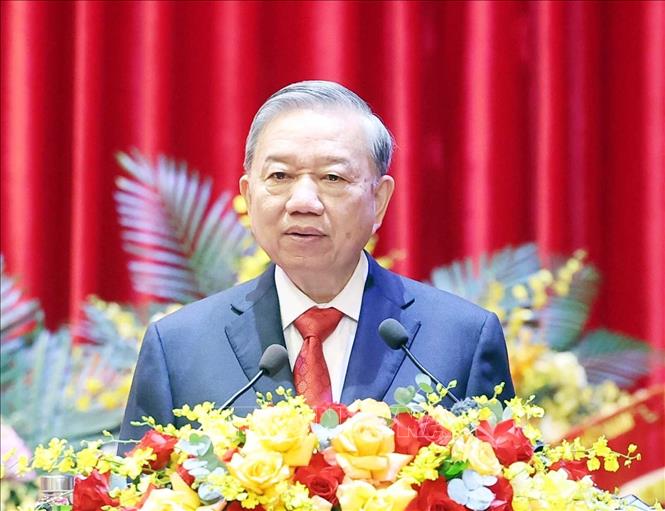
In the article "Vietnamese Revolutionary Journalism in the Digital Age," commemorating the 101st anniversary of Vietnamese Revolutionary Journalism Day, General Secretary and President To Lam affirmed that the core issue for journalism today is maintaining its role as a source of accurate and reliable information in the context of the rapidly developing digital space.
According to the General Secretary, the development of the internet, social media, big data, and artificial intelligence has profoundly changed the media environment. While anyone can spread information, fake news, misinformation, and AI-generated products are becoming increasingly sophisticated, society increasingly needs professional journalism to verify facts, guide public opinion, and strengthen people's trust.
The General Secretary emphasized that the digital transformation of journalism is not just about applying technology or expanding presence on digital platforms, but also a comprehensive process of innovation in thinking, newsroom models, data management, and methods of content production and distribution. Under all circumstances, journalism must prioritize "being more accurate, more insightful, and more useful" over speed.
Furthermore, the press needs to master data, protect copyrights, build a sustainable digital journalism economic model, and uphold national information sovereignty. The General Secretary affirmed that the decisive factor remains the human element; journalists in the digital age must possess strong political convictions, be proficient in technology, rigorously verify information, and absolutely not compromise their reputation for viewership. Only in this way can revolutionary journalism continue to fulfill its mission of serving the Fatherland and the people in the digital age.
The meeting point for the press festival and the 20th National Journalism Awards Ceremony - 2025

The 2026 National Press Conference, held from June 19-21 at the Hai Phong City Convention and Performance Center, themed "Vietnamese Journalism - Loyal, Creative, and Responsible in the New Era," brought together 66 media organizations and Journalists' Associations at all levels nationwide. The event included many prominent activities, creating a space for exchange, sharing experiences, and promoting innovation and digital transformation in journalism.
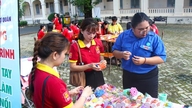

This year's National Press Conference acknowledges the strong progress of the country's press in the process of digital transformation, technology application, and innovation in journalistic methods. Central and local press agencies showcased many modern media products, while also sharing experiences in building digital newsrooms, improving content quality, and enhancing public accessibility.
At the National Press Forum, experts agreed that technology and AI are merely supporting tools; the core values of journalism remain accuracy, reliability, and humanistic values. In the context of the rapid development of social media, mainstream journalism needs to continue to maintain its role in guiding public opinion, providing accurate information, and producing insightful commentary. In particular, the issue of protecting journalistic copyright in the AI era was of great concern to many delegates. Experts warned that the unauthorized exploitation and use of journalistic content could seriously affect the resources and sustainable development of media organizations.
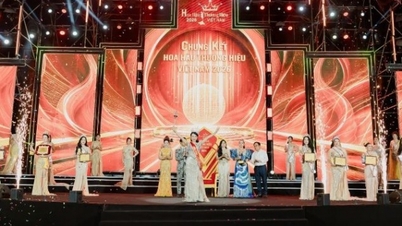
Also in Hai Phong city, the 20th National Journalism Awards Ceremony - 2025 was solemnly held on the evening of June 21st, in the atmosphere of the whole country looking forward to the 101st anniversary of the Vietnamese Revolutionary Journalism Day (June 21, 1925 - June 21, 2026). This is not only the most important professional event for the press nationwide but also a special milestone in the 20-year journey of the formation and development of the National Journalism Awards - a prestigious award honoring outstanding works of the Vietnamese Revolutionary Journalism.

According to Mr. Le Quoc Minh, Member of the Central Committee of the Party, Editor-in-Chief of Nhan Dan Newspaper, Deputy Head of the Central Propaganda and Mass Mobilization Department, President of the Vietnam Journalists Association, and Chairman of the Final Judging Council of the 20th National Journalism Award, since the Prime Minister signed Decision No. 369/QD-TTg on March 29, 2007, approving the National Journalism Award Project, the award has entered its 20th season.
The Organizing Committee announced that it had received 1,752 entries from 34 provincial and city Journalists' Associations; 20 affiliated associations and 33 branches. Of these, 1,692 entries met the eligibility criteria. From this number, the Preliminary Judging Panel selected 177 entries for the final round. The National Journalism Award Council then selected 123 outstanding entries to award prizes, including 11 A prizes, 26 B prizes, 50 C prizes, and 36 Encouragement prizes. The honored works not only demonstrate the professional skills, political integrity, and social responsibility of journalists but also vividly reflect major national issues, contributing to building social consensus.
A highlight of this year's competition is the emergence of many insightful journalistic, investigative, and multimedia works that closely reflect real-life situations. Through each work, one can clearly sense the dedication, tireless efforts, and significant investment of journalists in addressing pressing current events.
Promoting cultural development in conjunction with tourism.
Besides activities commemorating Vietnam Revolutionary Press Day (June 21), many localities across the country are promoting the development of cultural industries linked to tourism, gradually transforming cultural values into resources for sustainable economic development.
In Ho Chi Minh City, the opening of the Phu Tho Circus and Multi-Purpose Performance Hall and the "Dream Show" art performance is seen as a new step in building high-quality cultural products to serve tourists. Combining circus, puppetry, traditional art, and modern technology, "Dream Show" aims to become a unique cultural tourism product of the city.



Meanwhile, Hanoi is finalizing a set of statistical indicators for cultural industries, identifying 11 key areas, including cultural tourism and cuisine. The city hopes to make cuisine a cultural strength, contributing to building the image of the capital as an attractive destination for tourists and investors.
At the My Son Sanctuary in Da Nang City, heritage conservation efforts are being intensified in conjunction with digital transformation. Many applications such as multilingual guided tours, e-tickets, 3D digitization, virtual reality, and artificial intelligence have been implemented, enhancing the visitor experience while protecting the original value of the heritage site.
These models demonstrate that localities are gradually and effectively exploiting cultural resources, creating distinctive tourism products, contributing to economic growth, and promoting the image of Vietnam during the period of cultural industry development.
Source: https://baotintuc.vn/thoi-su/giu-ngon-lua-gia-tri-lan-toa-suc-manh-mem-dan-toc-20260621191340129.htm