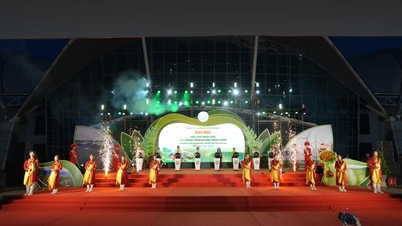
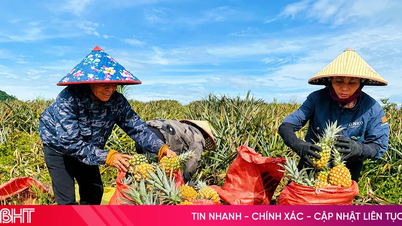
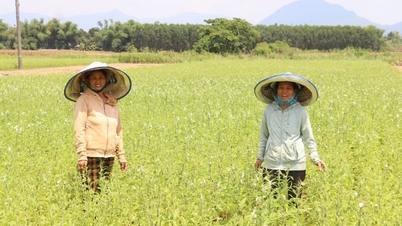
Of that total, export turnover reached $305.96 billion, an increase of 14.8% compared to the same period last year, despite facing many difficulties and challenges in the early months of the year.
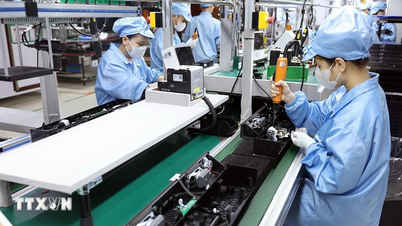
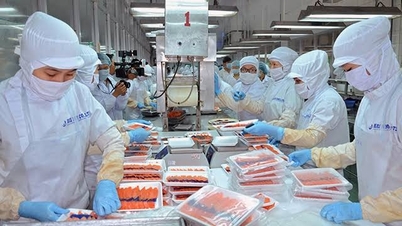
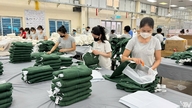
Notably, the trade balance continued to show a surplus, reaching nearly $14 billion. The processing industry accounted for 88.6% of total export turnover, at $271.06 billion. Electronics, computers, and components alone reached $66.9 billion, a 43.1% increase, demonstrating strong growth. Other traditional sectors also experienced stable growth, with textiles reaching $26.5 billion, footwear $16.1 billion, and seafood $7.15 billion.
In terms of markets, the US remains the leader with approximately $99 billion, accounting for over 32% of total export turnover. The European Union (EU) and China continue to be important markets, while the Comprehensive and Progressive Trans-Pacific Partnership (CPTPP) and other free trade agreements open up further opportunities in the markets of Canada, Mexico, Australia, the Middle East, etc. This provides a foundation for Vietnam to confidently expand into new regions.
Despite positive results, experts assess that exports still face numerous obstacles and disadvantages, especially in terms of tariffs and rules of origin. Of particular concern are unpredictable international developments that could strongly impact markets or supply chains, leading to disadvantages for Vietnamese exports.


Exports are one of the most important pillars of the economy , creating jobs, attracting resources, and ensuring growth. In the context of a volatile global economy, Prime Minister's Directive No. 29/CT-TTg dated September 23, 2025, which calls for boosting exports, developing overseas markets, and striving for growth exceeding 12% this year, is a strategic direction, affirming the determination to act to maintain high growth momentum and strengthen the resilience of the economy.
Therefore, market diversification is a vital task. Vietnam must not only consolidate traditional markets but also proactively explore markets in the Middle East, Africa, Latin America, Central Asia, Eastern Europe, India, Pakistan, and Brazil.
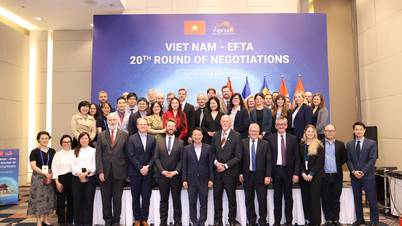
The government also urgently requested the acceleration of negotiations and the early signing of new free trade agreements in the fourth quarter of 2025, creating more "safety zones" for Vietnamese goods. This is the responsibility of ministries, sectors, and local authorities, and it means that ministries, sectors, and localities are not allowed to delay in carrying out their tasks. Forecasting and early warning systems regarding changes in trade policies must be improved. Trade promotion activities need to be innovated, combining direct and online approaches, and maximizing the use of cross-border e-commerce. Logistics infrastructure must be invested in to reduce costs and shorten delivery times. Businesses are required to raise their standards of green, clean, and sustainable production to meet the stringent requirements of high-end markets.
For Hanoi – the country's major economic center – the responsibility is even clearer. The capital city has advantages in processing industries, high technology, services, and a strong force of innovative startups. Building the "Made in Hanoi" brand, associated with quality and prestige, will be a practical contribution, affirming the capital's pioneering position in the integration process.



Exports are the lifeblood of the economy. Market diversification is not just a slogan, but concrete action. The direction is clear; the remaining issue is consensus: the government acts as a facilitator, industry associations as a bridge, and businesses as pioneers in innovation. When these three pillars move together, exports will continue to maintain sustainable growth and will be a pillar sustaining economic growth, contributing to achieving the target of over 8% this year and double-digit growth in the coming years.
Source: https://hanoimoi.vn/giu-nhip-tang-truong-kinh-te-717787.html