

"Make the forest open the way, make the mountains bow their heads."
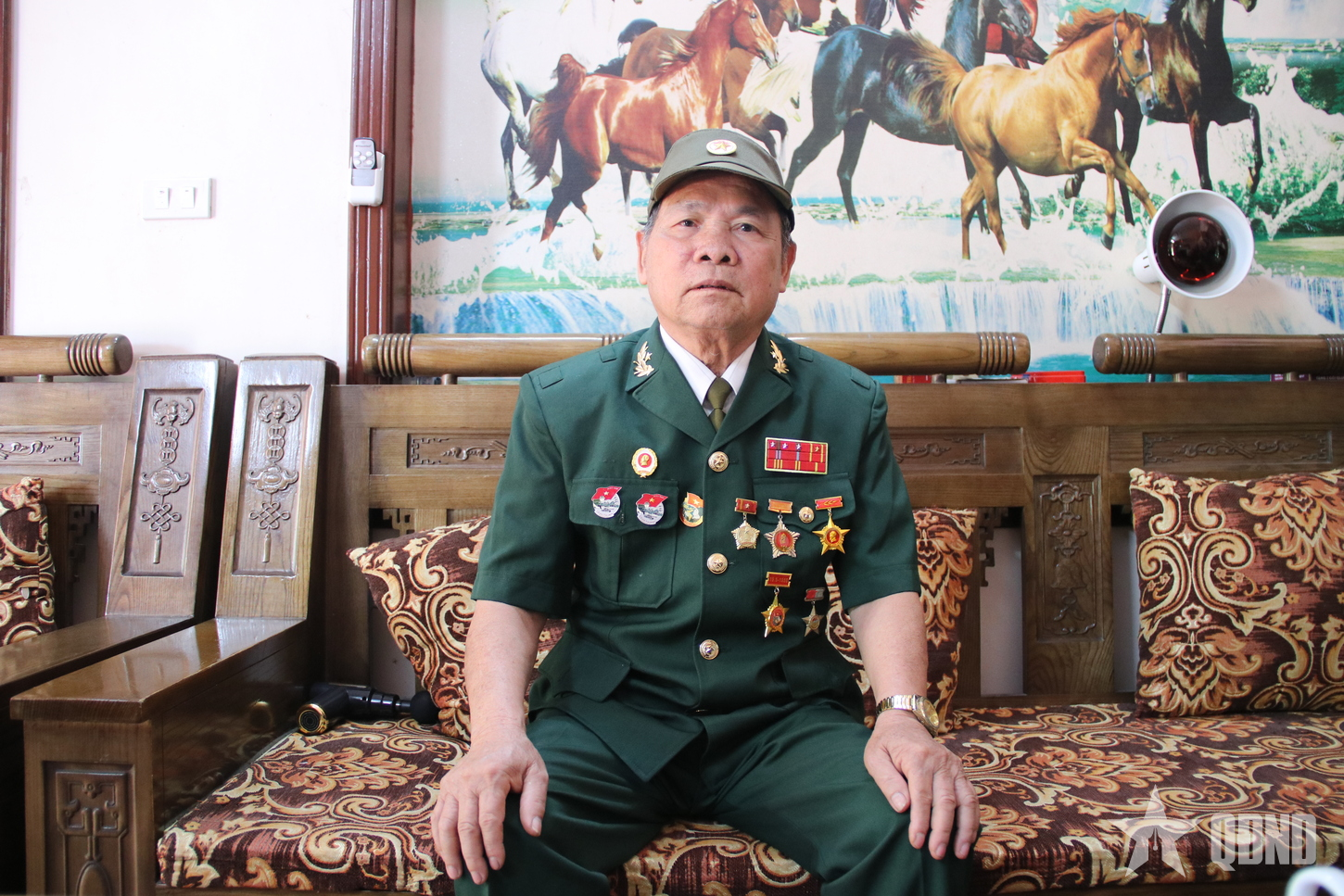
For veteran Nguyen Van Ty (born in 1953 in Co Dong commune, Son Tay town, Hanoi ), memories of the Central Highlands Campaign are not only of fierce battles, but also of the familiar "click-click" sound of signals from the walkie-talkie he carried on his shoulder. Enlisting in January 1972, after three months of training, young Nguyen Van Ty went to Laos to perform his duties before returning to participate in the Central Highlands Campaign. In January 1975, the young soldier marched into the Central Highlands battlefield and was assigned to Squad 1, Platoon 1, Company 18, under Regiment 149 (now Regiment 98, Division 316, Military Region 2). His nhiệm vụ at that time was to ensure uninterrupted communication, serving the command and coordination of the unit throughout the campaign.
“I was assigned to accompany Major To Linh, Deputy Commander of the 149th Regiment, to receive, encode, transmit, and receive all combat signals from the regiment’s attacking units,” Mr. Ty recalled.
 |
During the Central Highlands Campaign in March 1975, Regiment 149 (now Regiment 98, Division 316, Military Region 2) was honored with the task of launching the attack on Buon Ma Thuot town and destroying the elite 23rd Division of the puppet army. On March 5, 1975, Division 316 received orders to begin deploying its forces, and Mr. Ty's Regiment 149 was assigned the task of attacking Buon Ma Thuot town from the south. That same night, Regiment 149 secretly moved along Highway 14 towards the south of Buon Ma Thuot town. Mr. Ty and his comrades sneaked through security checkpoints and militia, crossing the Serepok River to reach their target. As a communications soldier, he not only carried bulky equipment but also had to ensure that communication signals remained uninterrupted between the moving units.
“For signalmen, the task was not only to closely monitor the unit but also to ensure uninterrupted communication in all situations. Carrying equipment through dense forests and treacherous terrain, signal wires easily got tangled in trees, and even a small mistake could disrupt communication. Therefore, it required us to be determined to ‘clear the forest and level the mountains’ to maintain the flow of communication between the front lines,” Mr. Ty recalled.
After eliminating the enemy at two high points, 491 and Chu Lom, on the night of March 9th, Nguyen Van Ty and his comrades arrived at the starting point for the attack on the town, preparing everything and ready for battle.
At exactly 1:55 AM on March 10, 1975, the offensive on Buon Ma Thuot began. Units of the 316th Division simultaneously captured key strongholds such as Chu Due, Chu Bua, and Hill 149, opening the "gateway" to the enemy's outer defenses.
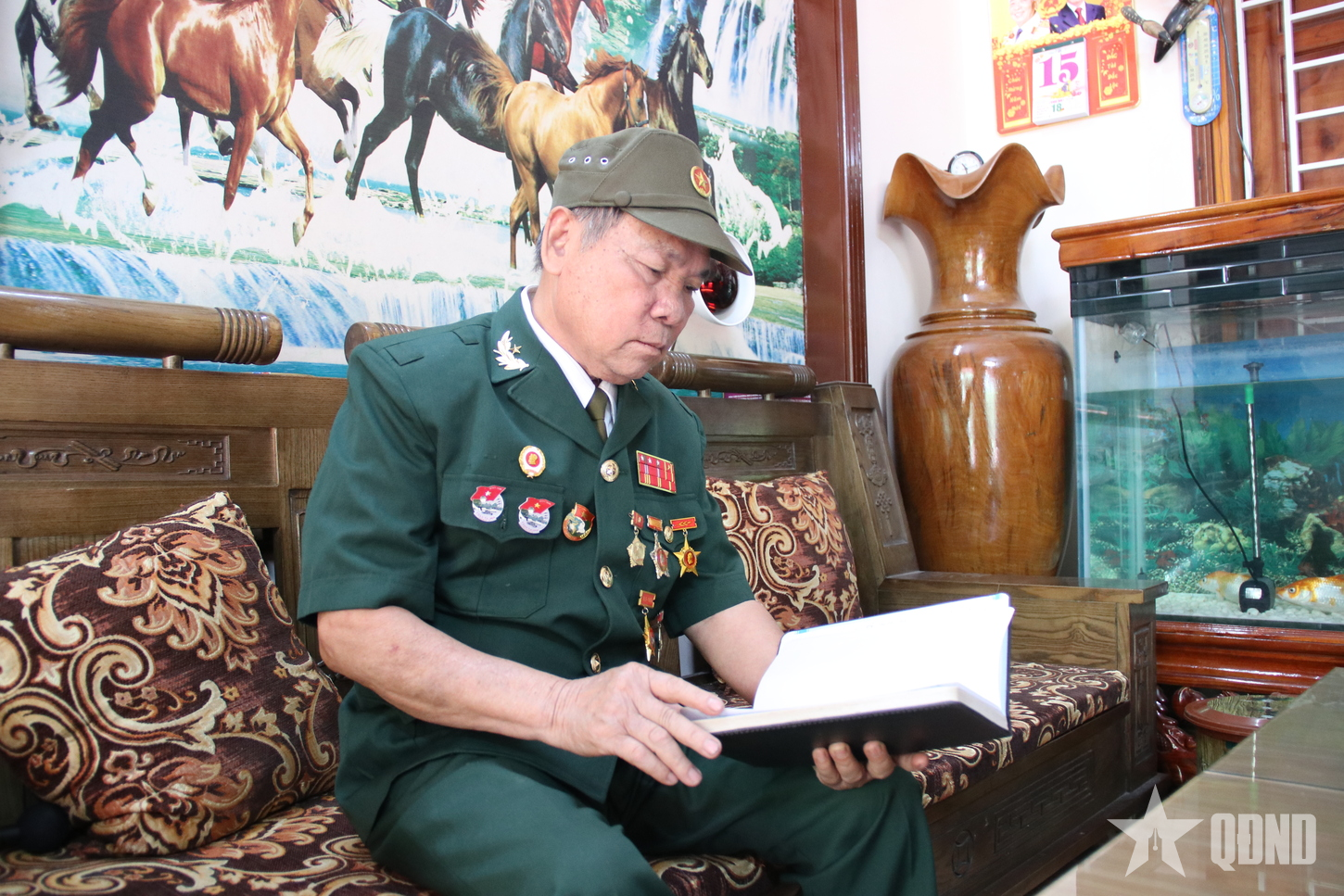 |
From the south, the 149th Regiment advanced deep into the center, quickly seizing control of most key targets in Buon Ma Thuot town on the first day. “At that time, I always stayed close to Major To Linh, the Regiment's Deputy Commander, maintaining communication with each attacking force. We received flight path signals and orders from superiors via radio, then encoded them into numbers and letters. Therefore, I always had to concentrate intensely, ensuring that every signal was transmitted accurately, without any errors, especially during crucial moments,” Mr. Ty recalled.
At noon on March 11, 1975, the main objectives of the offensive on Buon Ma Thuot town were completed, and units of the 316th Division completely controlled the town. However, some enemy units of the puppet regime's 53rd Regiment still tried to hold their last defensive position at Hoa Binh airport. The area around the 53rd Regiment's rear base and Hoa Binh airport became the garrison for most of the puppet army's forces that had poured in.
On March 14th, his 149th Regiment was ordered to coordinate with the 198th Regiment in attacking Hoa Binh airfield. As a communications soldier, he remained at the command post, straining his ears to maintain communication. The enemy constantly jammed the signals and disrupted the frequency, making every transmitted and received communication signal precious.
Amidst the tense situation, Comrade Nguyen Trong May, a communications soldier of Battalion 7 (Regiment 149), was captured by the enemy while trying to maintain contact. They forced him to destroy the communication equipment, but May resolutely refused. Finally, the enemy poured gasoline and burned down the house where he was held, and he perished.
“The night before, my friend and I were sitting and chatting, showing off our new clothes, excitedly anticipating the day of victory. The next morning, he was killed. Although heartbroken, we had to put our grief aside to continue fighting. Those who fell before must be replaced,” Mr. Ty said, his voice choked with emotion.
 |
From the Central Highlands, we continue writing the epic of reunification.
On March 15, 1975, Regiment 149, along with Regiment 66 (10th Division), continued its attack on the rear base of the puppet regime's Regiment 53. That same night, Mr. Ty's unit, along with other units, simultaneously captured the enemy base and rapidly advanced into the central area.
On the morning of March 17th, the attacking forces closed in on the headquarters of the puppet 53rd Regiment. Vehicle depots, warehouses, officers' clubs, and command bunkers were successively captured. By 8 a.m., this entire important base had fallen into the hands of the liberation army. From this crucial position, our forces pressed forward, capturing the armored base, artillery base, and other remaining targets in the town and surrounding areas. “That victory not only opened the gates of Buon Ma Thuot, but also wrote the opening chapter of the epic of the liberation of South Vietnam,” Mr. Ty said emotionally.
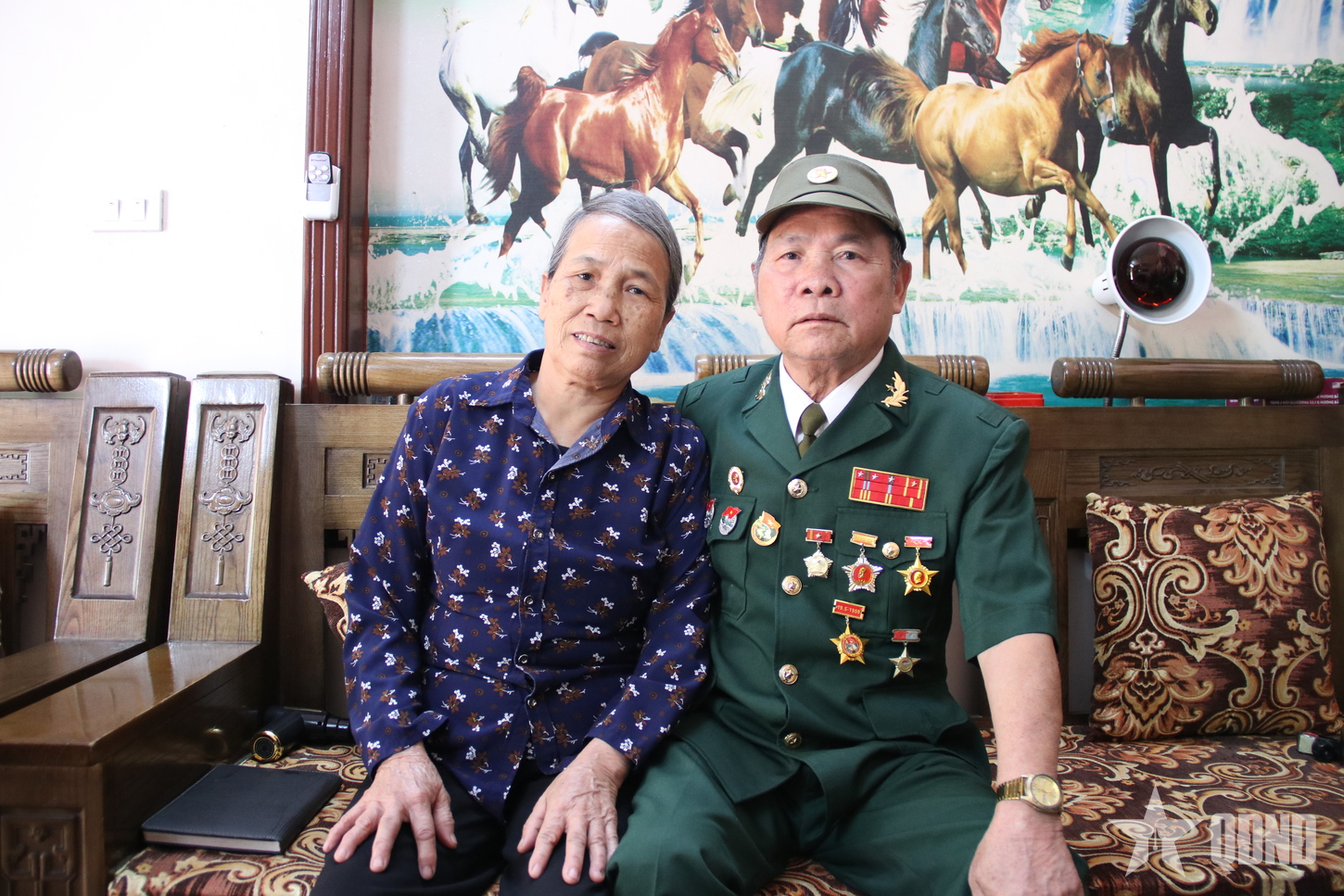 |
| Veteran Nguyen Van Ty and his wife. |
Following the victory in the Central Highlands, on April 15, 1975, Nguyen Van Ty's unit received orders for a rapid march through Ben Cat District (now Ben Cat City, Binh Duong Province), Trang Bang District (now Trang Bang Town, Tay Ninh Province), Dong Du Base (Cu Chi)... By April 29, 1975, his unit had approached Ben Thanh Market, ready to advance into the inner city of Saigon. “At noon on April 30, 1975, when the national flag flew atop the Independence Palace, my comrades and I were overwhelmed with emotion. Happy because the country had been completely liberated, and even more moved that I was still alive to witness that historic moment after so many fierce battles,” Mr. Ty said emotionally.
The war is over, the country is at peace and developing, but we can never forget the contributions and sacrifices of our ancestors, including the brave and resourceful communications soldiers who maintained the vital communication lines. Silently amidst bombs and bullets, they kept communication uninterrupted, promptly transmitting orders between attack fronts, helping commanders grasp the situation and make accurate decisions. During the march towards Saigon that spring, every electrical current, every radio signal transmitted across the battlefield was a vital part of the epic victory of Spring 1975.
Text and photos: TRAN HAI LY
Source: https://www.qdnd.vn/50-nam-dai-thang-mua-xuan-1975/giu-vung-mach-mau-thong-tin-giua-tay-nguyen-ruc-lua-824823


![[Photo] Prime Minister Pham Minh Chinh presides over a meeting on private sector economic development.](/_next/image?url=https%3A%2F%2Fvphoto.vietnam.vn%2Fthumb%2F1200x675%2Fvietnam%2Fresource%2FIMAGE%2F2025%2F12%2F20%2F1766237501876_thiet-ke-chua-co-ten-40-png.webp&w=3840&q=75)












































































Comment (0)