

Glaucoma is the leading cause of irreversible blindness due to its dangerous nature and complex progression.
Glaucoma, also known as open-angle glaucoma or watery cataract, is a group of diseases in which intraocular pressure rises beyond a tolerable level, causing optic nerve disc cupping and atrophy, and irreversible damage to the visual field (the eye's field of vision). Many patients are blind in one eye due to glaucoma without knowing it, which is why the disease is called the "silent thief of vision".
According to statistics from the World Health Organization (WHO), glaucoma is the second leading cause of blindness, after cataracts. It is estimated that currently around 80 million people worldwide suffer from glaucoma, a number projected to increase to 112 million by 2040.
In developed countries, about 50% of people with glaucoma are unaware of their condition and do not seek medical attention. In developing countries, this figure can reach 90%. For example, a 67-year-old woman from Thai Binh province came to the Hanoi High-Tech Eye Hospital (Hitec) for examination after being diagnosed with glaucoma without knowing it.
A year ago, the patient experienced slight pain in her left eye, radiating to her head and around the eye. She went to the district hospital for examination and was treated for sinusitis with antibiotics and painkillers. The pain subsided for a few days, but the discomfort returned, and she bought antibiotics again. Recently, she experienced pain, redness, and blurred vision. Upon examination, she was diagnosed with conjunctivitis (pink eye), but the treatment did not alleviate the symptoms.
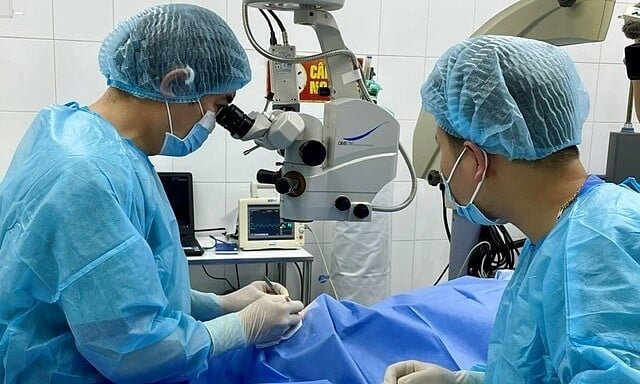
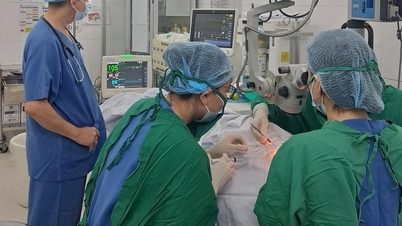
Doctor Sanh (left) performs eye surgery on a patient. Photo: Provided by the hospital .
Upon receiving the patient, Dr. Nguyen Van Sanh, Director of Hitec Hospital, examined and diagnosed both eyes with chronic closed-angle glaucoma. Although visual acuity was not significantly reduced, the optic nerve and visual field had been severely damaged.
"Many people with glaucoma experience severe eye pain, pain radiating to half of the head, and a sudden decrease in vision, prompting them to seek medical attention and receive early diagnosis. However, this patient only experienced mild pain radiating around the eyes, and her vision did not decrease significantly, so she was not diagnosed and the disease progressed to a chronic condition," said Dr. Sanh, assessing this as a special case.
In this case, the patient needs immediate intervention. Specifically, the left eye, which is more severely affected, requires surgery, while the right eye also needs preventative laser treatment to preserve remaining visual function.
Primary glaucoma has two forms: closed-angle and open-angle. Closed-angle glaucoma is more common in Asians aged 35 and older, due to their smaller eyeball structure compared to Europeans. The risk of developing glaucoma increases with age; women are more affected than men, especially after menopause, with the incidence in women being four times higher than in men.
Individuals with small eyeballs, severe hyperopia, small corneas, shallow anterior chambers, and those who are easily emotional or anxious are at a higher risk of developing acute glaucoma attacks. If there is a family history of acute glaucoma attacks, other family members are at increased risk. Raising awareness and conducting regular eye examinations for family members of patients contributes to early diagnosis and effective prevention.
Open-angle glaucoma is more common in white people, those over 40, and those with myopia; the risk increases with age. Relatives of patients have a 5-6 times higher risk of developing the disease.
Primary closed-angle glaucoma often has a sudden onset in the late afternoon or evening, or when the patient is working in a bent-over position, or after psychological trauma. Patients experience intense, intermittent eye pain radiating to the same side of the head, and see halos of blue and red like a rainbow when looking at lights. Patients may also experience nausea or vomiting, redness of the eye, and blurred vision: this may be mild, like looking through a fog, but it can also lead to severe vision loss, reducing vision to the point of being able to count fingers or see hand shadows.
In contrast, primary open-angle glaucoma often develops silently and progresses slowly over a long period. Most patients experience no eye pain; some may experience mild, transient eye strain or blurred vision, which resolves spontaneously. These symptoms are often subtle and therefore go unnoticed.
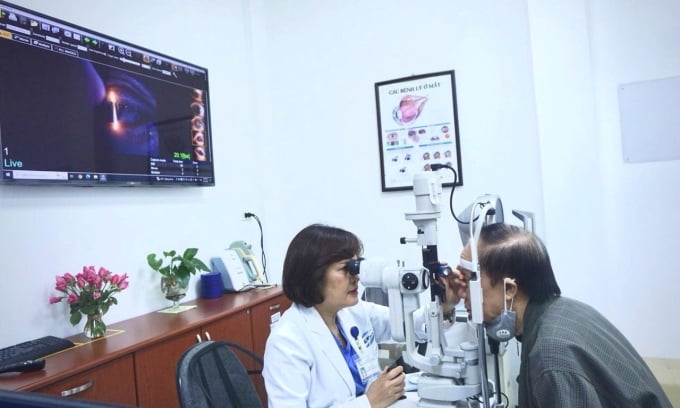
A doctor examines a glaucoma patient. Photo: Provided by the hospital.
Dr. Sanh advises that even without unusual symptoms, everyone should have regular eye checkups to detect and treat glaucoma early, avoiding the risk of blindness. Specifically: before age 40: every 2-4 years; from age 40-60: every 2-3 years; after age 60: every 1-2 years.
With closed-angle glaucoma, even after diagnosis and surgery, patients still need to strictly adhere to a regular follow-up regimen: eye exams and intraocular pressure measurements every 3 months for the first year, then every 6 months to 1 year thereafter.
For patients with open-angle glaucoma treated with eye drops, even if intraocular pressure is controlled, regular check-ups and examinations are still necessary: every 2 months, and visual field tests and fundus examinations every 3-6 months so that doctors can adjust medication to maintain safe intraocular pressure levels.
In observance of World Glaucoma Week, from March 12-17, the hospital is offering free eye examinations for patients and their family members with a history of glaucoma.
Le Nga
Source link




































































































Comment (0)