

Each year, nearly 200,000 people in Ho Chi Minh City graduate from vocational education and training programs and enter the labor market. However, vocational education and training institutions face numerous difficulties and obstacles during their operation. With the 2024 enrollment season underway, many vocational schools in the city are hoping for the resolution of these difficulties and obstacles.
There are still many difficulties.
According to the Ho Chi Minh City Department of Labor, Invalids and Social Affairs, the city currently has strong potential in training and supplying human resources to the labor market with 376 vocational training institutions (accounting for 12.51% of the national total). On average, over 195,000 people graduate annually from various vocational training programs and enter the labor market. The quality of the workforce after training basically meets recruitment needs, contributing to solving employment problems for workers in the city and other provinces and cities in the Southern region.
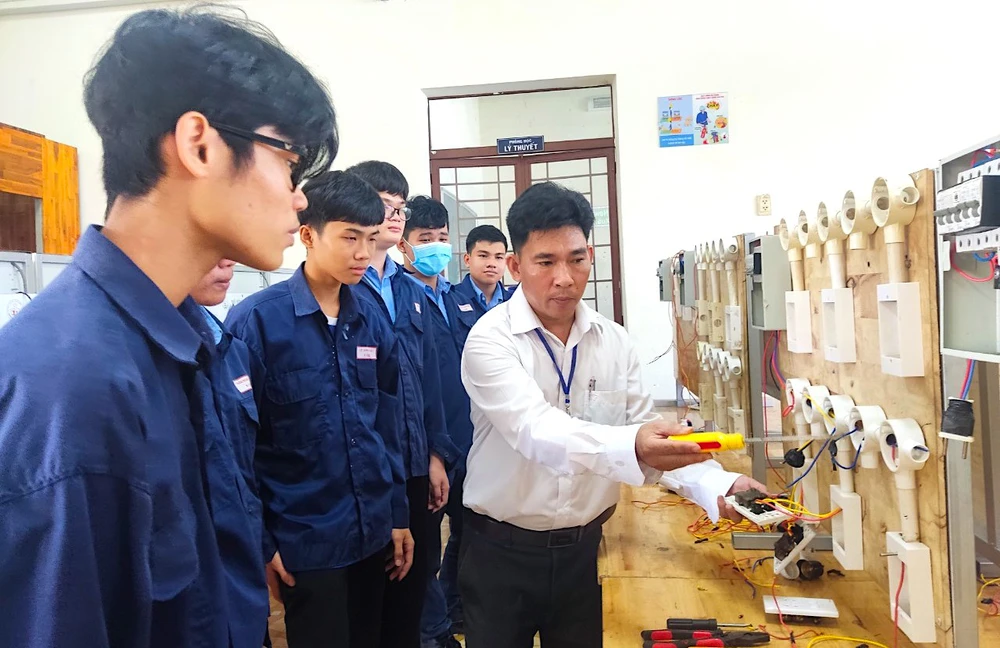
However, during operation, many vocational education and training (VET) institutions still face numerous difficulties and obstacles. VET institutions and management agencies are confused and face challenges in implementing policies and guidelines on vocational training. Prominent among these are the lack of attractive incentives and policies for businesses participating in the socialization of VET; the ineffective allocation and leasing of land to VET institutions; and the implementation of tuition fee exemptions and reductions for vocational trainees. Specifically, since the Government issued Decree No. 81/2021/ND-CP, this policy has undergone many changes in expenditure levels and implementation methods, causing confusion among schools and localities and hindering effective implementation. Furthermore, collaborative training between VET institutions and coordination between schools and businesses still face many obstacles.
Dr. Dang Van Sang, Principal of Ho Chi Minh City Polytechnic College, shared that building the school's facilities was very difficult, with complicated procedures. When obstacles arose, the school approached various departments, agencies, and localities, but they kept passing the buck without resolving the issues. Similarly, Dr. Tong Van Danh, Vice Principal of Cao Thang Technical College, said the school faced many difficulties in implementing the construction of its second campus (10 hectares in the University Village area, Nha Be district). This project has been underway since 2014 but is still unfinished due to land compensation and clearance issues. Meanwhile, Associate Professor Dr. Bui Van Hung, Principal of College of Engineering 2, said that implementing high school-level general education in vocational schools is also facing difficulties. At the same time, he pointed out that some of Ho Chi Minh City's policies supporting development and commissioning training have not been fairly allocated to schools under central government agencies located in the city, including College of Engineering No. 2.
Resolutely remove the obstacles.
According to the Director of the Ho Chi Minh City Department of Labor, Invalids and Social Affairs, Le Van Thinh, the difficulties faced by vocational training institutions are a reality that the department has identified and is actively reviewing and amending to shorten administrative procedures under its jurisdiction. For procedures handled by other units, the department will send written requests to those units for guidance and support to quickly resolve issues for vocational training institutions in the city. The Director of the Ho Chi Minh City Department of Labor, Invalids and Social Affairs affirmed that to improve the quality of vocational training and job creation, the city has been strengthening policies and creating the best conditions for people to access and benefit from services. Businesses and investors are ready and actively participating in the vocational training process through a dual business-school model; relevant units are also strengthening the quality of forecasting human resource needs and labor market information, especially forecasting labor in the formal and informal sectors; and building a system connecting labor supply and demand across provinces, regions, and internationally.
Mr. Nguyen Hoang Hieu, Deputy Director of the Planning and Finance Department, General Department of Vocational Education and Training (Ministry of Labour, Invalids and Social Affairs), noted that the difficulties and obstacles faced by vocational education and training institutions in Ho Chi Minh City are also common difficulties for many other vocational education and training institutions. The immediate issue is that the city and other provinces and cities must resolutely address the shortcomings in attracting socialized vocational education and training, as currently only nearly 37% of the 1,888 vocational education and training institutions nationwide have attracted socialized investment. Meanwhile, the target set for 2030 is to have 50% of vocational education and training institutions implementing socialized investment.
Ho Chi Minh City aims to attract 45-50% of junior and senior high school graduates into the vocational education and training (VET) system by 2030; approximately 70% of VET institutions and 100% of training programs in key industries and professions will meet quality accreditation standards; and around 10 high-quality schools will be established. To achieve this goal, the city has implemented a comprehensive set of tasks and solutions, including closely linking VET institutions with businesses and the labor market. It has also created favorable mechanisms and policies to promote the socialization of VET.
Ho Chi Minh City and other provinces and cities need to continue developing and issuing specific plans to attract social resources for the development of vocational education and training (VET) in their localities; prioritizing the integration of social mobilization and the development of non-public VET facilities into development programs and plans that are appropriate to the socio -economic development conditions and the affordability of local people. At the same time, there must be a specific roadmap to encourage social mobilization in the field of VET, including allocating cleared land and building infrastructure to attract investors in socio-economic development plans as stipulated by the Planning Law, and promoting public-private partnerships in investing in the development of VET facilities.
QUANG HUY
Source






































































































Comment (0)