

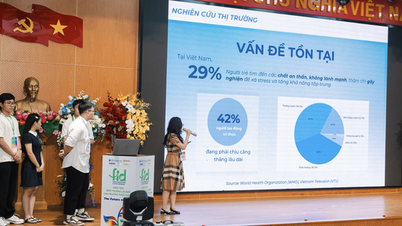
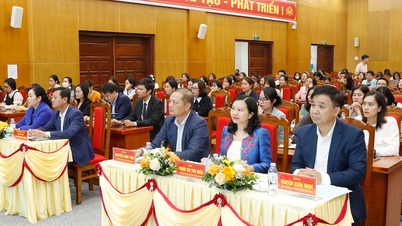
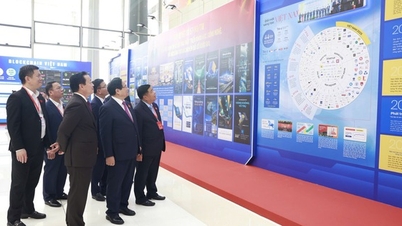
On the afternoon of December 13th, the 2nd KOSEN Japan-Vietnam Conference took place at Cao Thang Technical College (Ho Chi Minh City), with the participation of leaders from colleges and businesses in Vietnam and Japan.
The conference serves as a forum for sharing the results of the implementation of the KOSEN Vietnam model program, through cooperation between Vietnam and Japan, aiming to develop advanced technical human resources and connect schools, businesses, and management agencies.
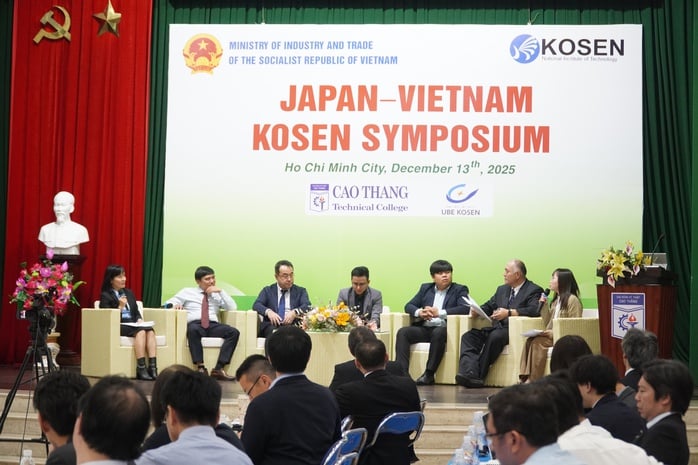
Experts discussed the effectiveness of the KOSEN model over the past period and its future development direction.
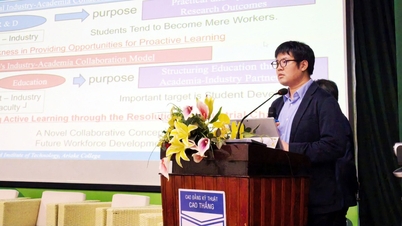
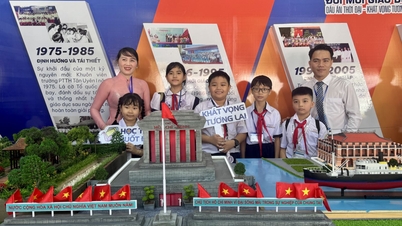
In his opening remarks at the conference, Dr. Le Dinh Kha, Principal of Cao Thang Technical College, said that the school is very proud to be one of the three schools directly involved in the KOSEN training model from the beginning. The most important "fruit" of the model is the organization of many exchange activities between students and lecturers from both countries. Lecturers and students have the opportunity to experience an international academic environment, broaden their understanding of modern technology, work ethics, and industrial culture," Dr. Le Dinh Kha shared.
Professor Manabu Hatamura, Vice Principal of Ube Kosen College, said that in September 2019, Hue Industrial College commenced its first course. A year later, Cao Thang Technical College and Hue Industrial and Commercial College also commenced their courses.
The program aims to foster ethics, practical experience, teamwork skills for problem-solving, and career guidance . In addition, collaborations with businesses, especially Japanese companies, are also a key component of the program.
Mr. Nguyen Quang Hong, Deputy Director of the Personnel and Organization Department, Ministry of Industry and Trade , said that the Ministry is currently managing 9 universities and 19 colleges.
Thanks to close cooperation in Phase I, the three colleges achieved positive results (574 students trained at Cao Thang Technical College, 239 students at Hue Industrial College, and 128 students at the College of Industry and Commerce).
Representatives from the Ministry of Industry and Trade expressed hope that Japan would continue its support in Phase II to further develop the KOSEN model at the remaining universities, particularly expanding it to key sectors such as mechatronics, automation, robotics, design, manufacturing, and new materials.
Source: https://nld.com.vn/day-manh-dao-tao-mo-hinh-kosen-o-nhung-nganh-mui-nhon-cua-viet-nam-196251213161344843.htm
















































































Comment (0)