

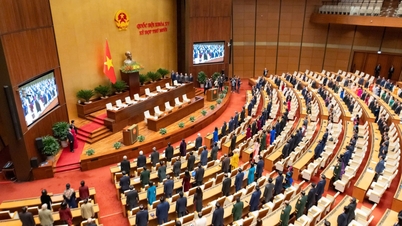
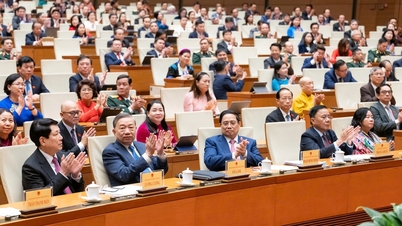
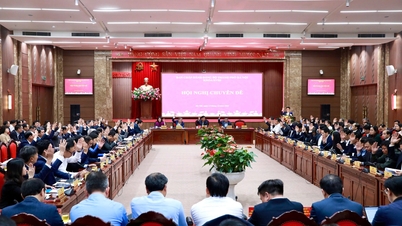
After 40 days of continuous, urgent, and serious work, with a scientific spirit, innovation, and high responsibility, the 10th Session of the 15th National Assembly completed all the planned content and programs on the afternoon of December 11th.
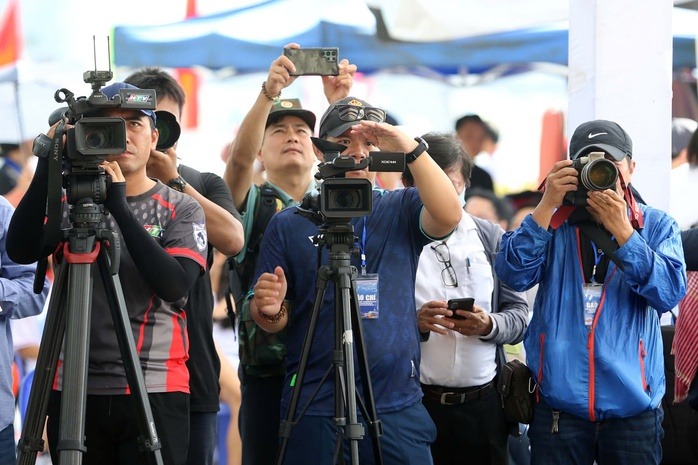
The amended Press Law has defined the concept of a leading multi-media press agency. Photo: HOANG TRIEU
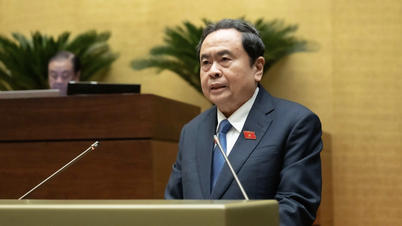
According to National Assembly Chairman Tran Thanh Man , at the 10th session, the National Assembly considered, discussed, and voted to pass 51 laws and 39 resolutions, including 8 normative legal resolutions. This is a very large volume of legislation, accounting for nearly 30% of the total number of laws and normative resolutions issued during the entire term. The laws and resolutions passed both promptly met practical requirements and created a legal framework for the new period.
The amended Press Law: This law comprises 4 chapters and 51 articles and will take effect on July 1, 2026. Compared to the current law, the amended Press Law has a notable new feature: clearly defining four types of media: print media, electronic media, radio, and television. Furthermore, the law stipulates that the leading multi-media press agency has various types of media and affiliated press agencies; a specific financial mechanism; and is established in accordance with the Strategy for the Development and Management of the Press System approved by the Prime Minister . Press and radio/television agencies under provincial and city Party committees also have various types of media and media products.
The law stipulates that for the first-time issuance of a journalist's card, the applicant must have worked continuously at the requesting media agency for at least two years up to the time of application and have completed a training course on journalism and professional ethics. Regarding eligibility for a journalist's card, the law excludes those working at scientific journals.
The Personal Income Tax Law (amended): Consists of 4 Chapters and 30 Articles, effective from July 1, 2026.
The tax-exempt revenue threshold for household and individual businesses is adjusted from VND 200 million/year to VND 500 million/year, and this amount is deducted before calculating tax based on a percentage of revenue. Simultaneously, the corresponding value-added tax-exempt revenue threshold is also adjusted to VND 500 million.
The tax calculation method for household and individual businesses with annual revenue exceeding 500 million VND up to 3 billion VND has been added. A tax rate of 15%, similar to the corporate income tax rate, will be applied to businesses with annual revenue below 3 billion VND.
At the same time, the regulations allow these individuals to choose whether to calculate their tax based on a percentage of revenue or on their income.
Regarding personal deductions: The deduction for the taxpayer themselves is VND 15.5 million/month; for each dependent, it is VND 6.2 million/month.
Regarding taxes on gold transfers: a tax is levied on gold bars at a rate of 0.1% on the transfer price for each transaction.
Law amending and supplementing certain articles of the Law on Education:
The Law amending and supplementing a number of articles of the Law on Education will take effect from January 1, 2026. One of the notable new points is that from 2026 onwards, junior high school diplomas will no longer be issued, and there will be a unified set of textbooks nationwide.
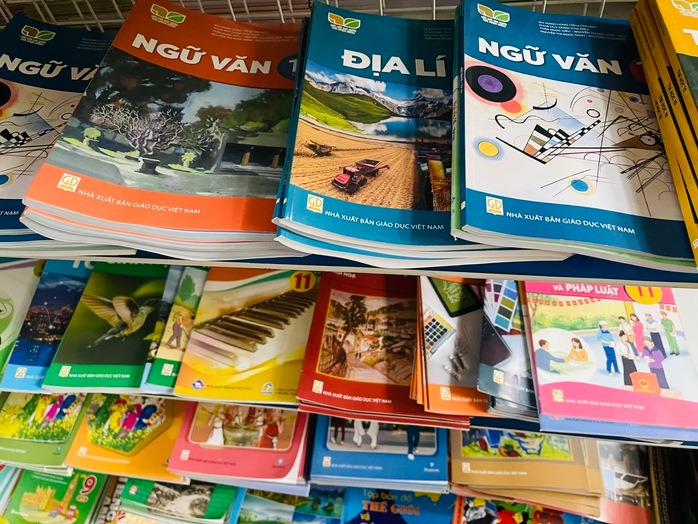
One of the notable new features is that from 2026 onwards, there will be a unified national set of textbooks.
Resolution on certain special mechanisms and policies to create breakthroughs in the protection, care, and improvement of people's health. The resolution takes effect from January 1, 2026, except for the provision on hospital fee exemption, which takes effect from January 1, 2030.
Notably, the resolution stipulates the expansion of healthcare benefits and the reduction of medical costs for citizens. Specifically, those participating in health insurance who are members of near-poor households and elderly people aged 75 and above receiving social retirement benefits will be entitled to 100% coverage of medical examination and treatment costs within the scope of their health insurance coverage.
Implement a policy of waiving basic hospital fees within the scope of coverage for health insurance participants, following a roadmap consistent with the country's socio-economic development, the health insurance fund's balancing capacity, and the increase in health insurance contributions. Along with this, the Government will specify the scope and roadmap for implementing the hospital fee waiver starting from 2030.
Amendments and additions to certain articles of Resolution No. 98/2023/QH15:
The National Assembly Resolution amending and supplementing a number of articles of Resolution No. 98/2023/QH15 dated June 24, 2023 of the National Assembly on piloting a number of specific mechanisms and policies for the development of Ho Chi Minh City will take effect from December 12, 2025.
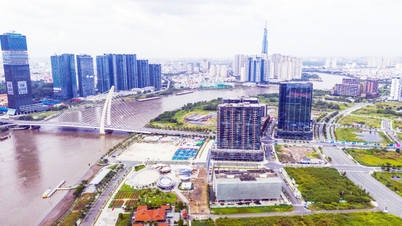
According to the Resolution, the National Assembly authorizes the establishment and operation of the Ho Chi Minh City Free Trade Zone. A key element of the resolution is the list of priority projects and policies to attract strategic investors. Specifically, the resolution adds 11 priority project groups to attract strategic investors.
Allow the city to retain 100% of the revenue generated from land development in TOD (Transit-Oriented Development) areas, and use this entire budget for TOD development projects, including urban rail projects and other transportation projects.
The National Assembly Resolution stipulates a number of mechanisms and policies to address difficulties and obstacles in the implementation of the Land Law. The Resolution takes effect from January 1, 2026.
The resolution adds three cases in which the State can reclaim land for socio-economic development in the national and public interest, including:
Implement projects in free trade zones, projects in international financial centers.
In cases where land is used for a project through an agreement on land use rights that has expired or been extended, but more than 75% of the land area and more than 75% of the land users have been agreed upon, the Provincial People's Council shall consider and approve the revocation of the remaining land area to allocate or lease the land to the investor.
Creating land funds to pay for projects under build-transfer (BT) contracts, and to lease land for continued production and business activities in cases where organizations are using land that the State reclaims as stipulated in Articles 78 and 79 of the Land Law.
The resolution also officially reduces land use fees for people converting agricultural land and garden land to residential land. Specifically, Article 10 of the resolution stipulates: in cases where garden land, pond land, or agricultural land within the same land parcel, as determined when recognizing land use rights, is converted to residential land; or where land originally designated as garden or pond land attached to residential land is separated by the land user for transfer of land use rights; or where the surveying unit, when surveying cadastral maps before July 1, 2014, has independently separated the land into individual parcels for residential land, the land use fee shall be calculated as follows: 30% of the difference between the land use fee calculated according to the price of residential land and the land use fee calculated according to the price of agricultural land for the area of land converted within the local residential land allocation limit; 50% of the difference for the area of land exceeding the limit but not exceeding one time the local residential land allocation limit. 100% of the difference for land area exceeding the limit that is more than one time the local land allocation limit for residential purposes. The above land use fee is calculated only once for each household or individual (per plot of land).
Therefore, if the conversion is within the land allocation limit for residential land as stipulated in each locality, the land use fee that people have to pay is 30% of the difference between the land use fee calculated based on residential land prices and the land use fee calculated based on agricultural land prices, instead of 100% as in the past.
The above regulation is expected to resolve difficulties in collecting land use fees when converting land use to residential land, reduce the financial burden, and create favorable conditions for households and individuals.
Previously, when people converted agricultural land to residential land, they usually only paid a portion of the land use fee, calculated as a percentage of the difference between the price of residential land and agricultural land. For areas within the permitted limit, the fee was 30%, and 50% when exceeding the limit.
However, since the Land Law of 2024 came into effect, this regulation has been abolished. People must now pay 100% of the difference between the price of agricultural land and residential land. In addition, the new land price list in many localities has increased significantly, causing land use fees that people have to pay to skyrocket, in some cases many times higher than before. This has resulted in some households having to pay billions of dong in difference.
Eight categories of construction projects are exempt from building permits.
On the afternoon of December 10th, with 437 out of 439 delegates voting in favor, the National Assembly passed the amended Construction Law. The law will take effect from July 1st, 2026. One of the important new points of the law is the expansion of 8 groups of construction projects that are exempt from construction permits, including projects under special public investment projects and individual houses under 7 stories.
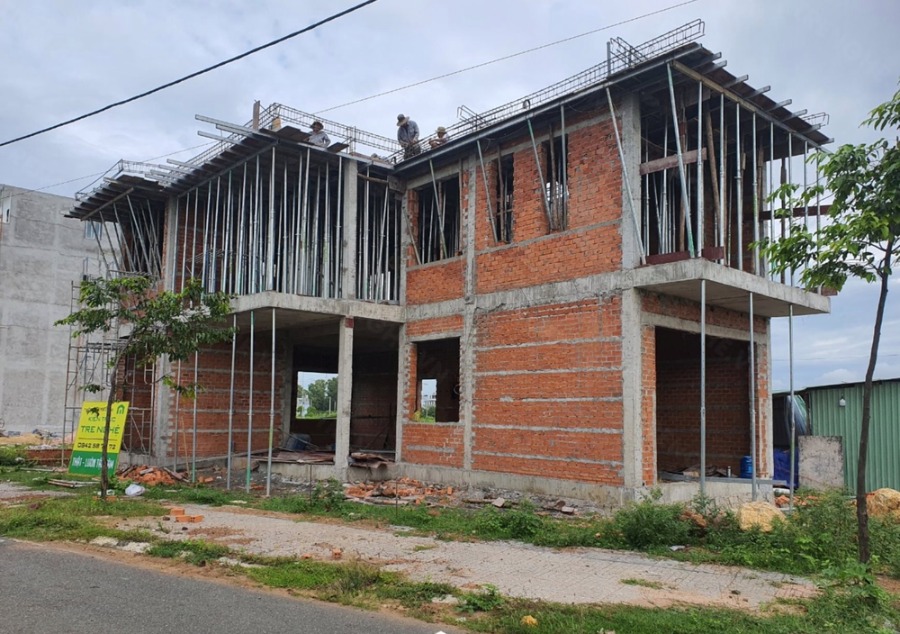
One of the key new features of the law is the expansion of the eight categories of construction projects exempt from building permits, including projects under special public investment projects and individual houses under seven stories.
The first group of construction projects exempt from building permits includes state secret projects; urgent and emergency construction projects; projects under special public investment projects or investment projects under special procedures; temporary structures; and structures in national defense and security land areas.
The second group includes projects under public investment, whose investment decisions are made by competent authorities at various levels, such as: the Prime Minister, heads of central agencies, heads of supreme judicial bodies, the State Audit Office, the Office of the President, the Office of the National Assembly, ministries, sectors, socio-political organizations, and chairpersons of People's Committees at all levels.
The third category includes linear construction projects spanning two or more provinces; and linear projects outside of areas designated for urban development according to approved plans or approved route options.
The fourth group consists of offshore structures under offshore construction investment projects for which competent authorities have allocated sea areas for project implementation; airports, airport facilities, and facilities ensuring flight operations outside the airport.
Fifth, advertising structures do not require permits under the Advertising Law; passive telecommunications infrastructure.
Sixth, the project's construction work must have its feasibility study report or adjustments assessed and approved by the relevant professional agency in accordance with regulations.
Seventh, construction projects of level 4; detached houses under 7 floors, with a total floor area of less than 500 m2, are exempt from permits if they are not located in areas with architectural management regulations such as functional zones, urban areas, rural residential areas, urban development areas according to provincial/city planning, general planning of economic zones, national tourist areas, general planning of communes, or areas with existing architectural management regulations.
The eighth category exempt from construction permits includes repair and renovation of interior or exterior structures not adjacent to urban roads that require architectural management. The repairs must not alter the purpose or function, affect the load-bearing structure, and ensure fire safety, environmental protection, and technical infrastructure.
Source: https://nld.com.vn/nhung-diem-moi-noi-bat-cua-nhieu-luat-nghi-quyet-vua-duoc-quoc-hoi-thong-qua-196251213140907729.htm
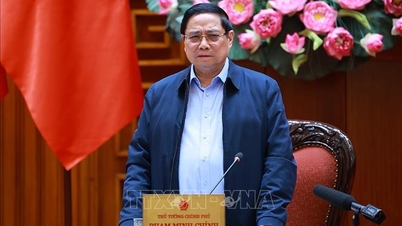
![[Photo] Prime Minister Pham Minh Chinh attends the Conference summarizing and implementing tasks of the judicial sector.](/_next/image?url=https%3A%2F%2Fvphoto.vietnam.vn%2Fthumb%2F1200x675%2Fvietnam%2Fresource%2FIMAGE%2F2025%2F12%2F13%2F1765616082148_dsc-5565-jpg.webp&w=3840&q=75)












































































Comment (0)