

In a large metropolis like Ho Chi Minh City, with its dense population, ensuring food supply is always a top priority for authorities. However, despite continuous strong measures implemented by regulatory agencies, unsafe food still reaches consumers through market loopholes. Many suppliers who violate quality standards easily switch to other distribution channels.
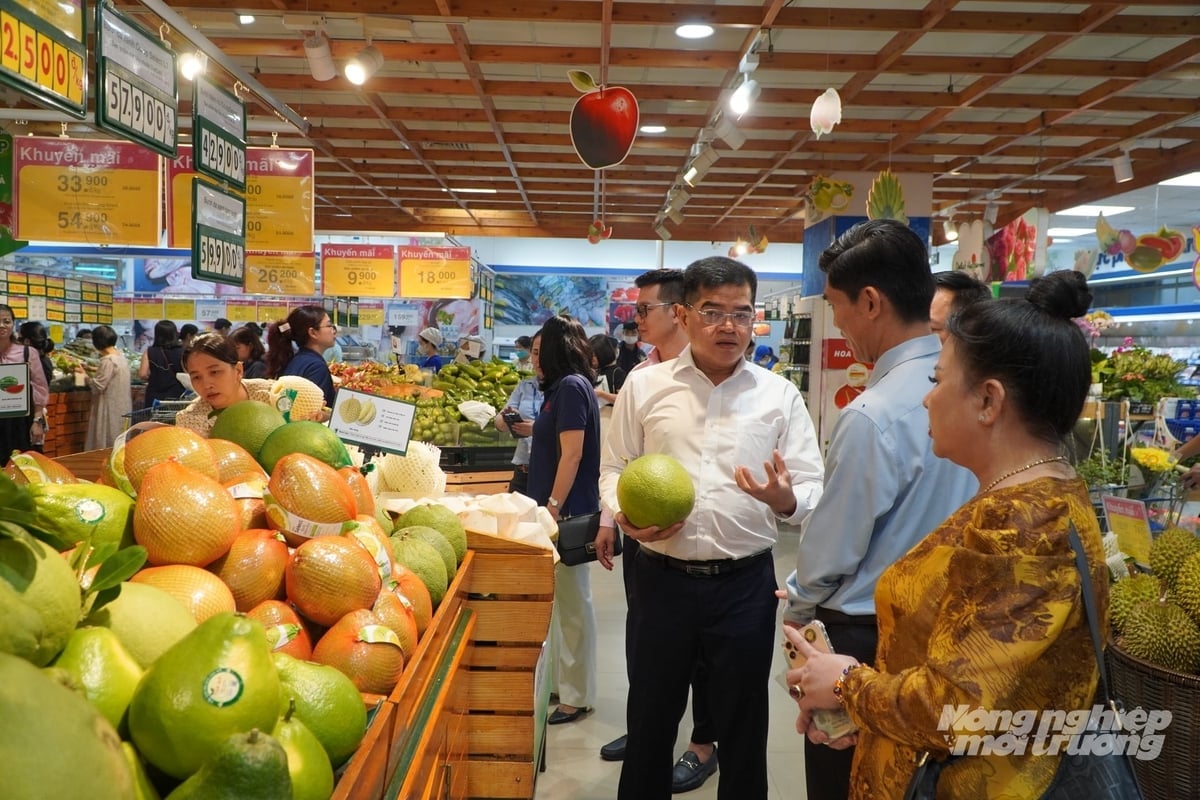
With the participation of modern supermarket chains, as well as pioneering manufacturing businesses joining the "Green Tick for Responsibility" program, consumers feel more secure about agricultural products and food. Photo: Nguyen Thuy.
The lack of a clear classification mechanism means that safe products are placed alongside substandard ones, while consumers lack reliable tools for identification, forcing them to make choices primarily based on price and emotion.
After numerous trials of new management models, but with supply chain bottlenecks still not being addressed at their root, Ho Chi Minh City launched a cooperation program to control product quality – the “Responsibility Green Tick” program, initiated by the Ho Chi Minh City Department of Industry and Trade and the Steering Committee of the “Vietnamese People Prioritize Using Vietnamese Goods” campaign.
The program operates on a voluntary basis but sets clear responsibilities. Suppliers proactively accept monitoring, ensure transparency in their production processes, and commit to preventing defective products from reaching the market. As a result, businesses awarded the "Responsibility Blue Tick" not only gain consumer trust but are also recognized by retailers as compliant with quality standards.
Furthermore, participating retailers have signed agreements on cross-monitoring mechanisms, coordinating efforts to prevent substandard goods and establishing a comprehensive control system. Simultaneously, various specific support policies are applied to suppliers that meet standards, encouraging the maintenance of consistent quality. This is not only a commitment to social responsibility but also a step forward in modern market governance.
For suppliers, the most important requirements are strict adherence to food safety regulations, transparency in control data, proactive recall of defective products, and full information sharing with all parties involved. Violations by one retailer are considered violations by the entire system and are reported to regulatory authorities and consumers. This mechanism creates a strong deterrent, protects legitimate businesses, and enhances market discipline.
The core of the "Responsible Green Tick" lies in a market-based screening mechanism. Through the filtering of the retail system and the increasingly high demands of consumers, the program forms a safe and sustainable supply chain based on a commitment to responsibility throughout the entire process, from cultivation and processing to circulation and distribution. Consumers have a tool to identify safe products, compliant businesses have the opportunity to grow, while those that prioritize profit over quality will gradually be eliminated from the market.

Sales of products with a green tick at Saigon Co.op are projected to grow by 30-40% in the first 10 months of 2025.
To date, the program has attracted 12 major retail systems, 389 suppliers, and nearly 5,000 certified products. Sales of Tick-labeled products have increased by over 20%, gradually becoming the preferred choice for consumers. These figures reflect a significant shift: safety and transparency are no longer a "compliance burden" but have become essential conditions for businesses to survive in the new competitive environment.
After more than a year and a half of implementation, the program has achieved its goal of enhancing the self-awareness and responsibility of manufacturers and suppliers, becoming an effective binding tool in maintaining quality commitments.
Currently, major supermarket chains in Ho Chi Minh City consider the "Responsible Verification" sticker as the new quality standard. All participating products are tagged with QR codes that publicly display information ranging from certification and production logs to storage and distribution, helping consumers quickly and reliably trace the origin of their products.
Despite being voluntary, the program has proven effective and strengthened market confidence. As of November 7, 2025, 481 suppliers had registered with 3,925 confirmed products. Many leading retail systems in terms of product quantity include Bach Hoa Xanh (1,558), Co.opmart (1,179), Central Retail (393), Satra (105) and GS25 (38)...
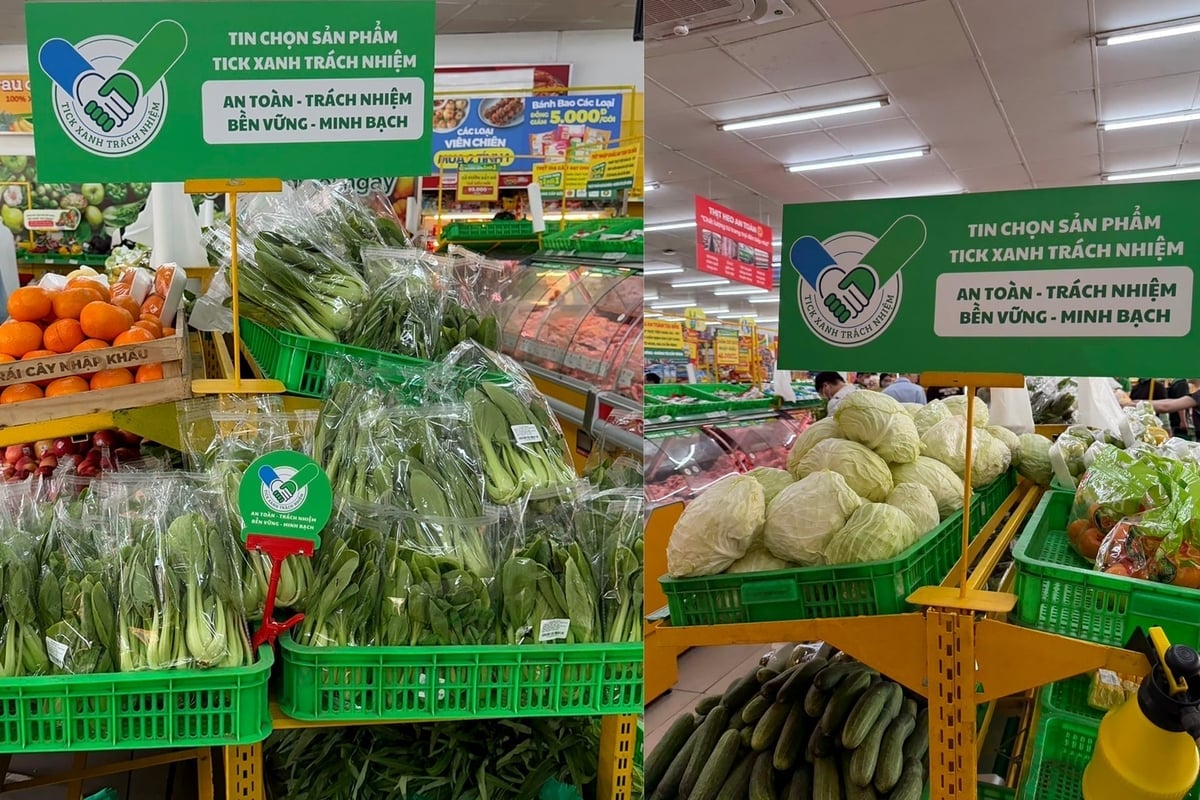
100% of all vegetable, root, and fruit suppliers of Bach Hoa Xanh participate in the "Responsible Green Tick" program.
Surveys show that sales of Tick-marked products at many retail systems have increased by an average of over 20%. At Bach Hoa Xanh, the increase has been maintained at 6-7% per month, reflecting the appeal of safe and transparent product categories. Retailers believe the program is becoming an important criterion in purchasing decisions and has shifted from promotion to monitoring and positioning the "premium" status of goods.
In 2025, the program will be a highlight in Ho Chi Minh City's demand stimulation strategy, especially for food products during the Tet holiday. QR codes for traceability, transparent disclosure mechanisms, and quality commitments from businesses have contributed to transforming market management into a direct demand stimulation tool.
December 2025 has been designated as the "Responsible Green Tick Month," with coordinated communication activities across retail systems, the establishment of dedicated display areas, and efforts to encourage supplier participation, especially in the fresh food and Tet holiday consumer goods sectors. Simultaneously, inspections will be intensified, results will be announced, and compliance will be honored; the program will be integrated with trade fairs, Vietnamese product weeks, concentrated promotions, and the model will be expanded for Tet gift baskets in 2026.
The "blue tick of responsibility" is currently an effective quality control tool thanks to an updated data system using blockchain technology, ensuring transparency throughout the supply chain. The issuance of Decision 1546/QD-UBND by the Ho Chi Minh City People's Committee on the traceability system for the period 2026-2030 also creates a legal foundation to encourage businesses to adopt technology and build transparent data.
Saigon Co.op is a pioneer in expanding its scale, attracting nearly 100 suppliers with over 1,200 Green Check items. At Co.opmart, Co.opFood, and Co.opXtra stores, products are clearly identified and undergo three layers of inspection: at the production site, at the distribution center, and quick testing before being placed on shelves. Thanks to consistent quality and strong promotions, sales of these product groups increased by 30-40% in the first 10 months of 2025. Saigon Co.op also brings Green Check products to CoopOnline and mobile sales routes, expanding reach to export processing zones, industrial parks, and remote areas.
To date, the "Responsible Checkmark" is gradually becoming a "common language" between regulators, retailers, and consumers. In this process, Vietnamese products are asserting their position not only because of their good prices but also because of their transparency, safety, and responsibility.
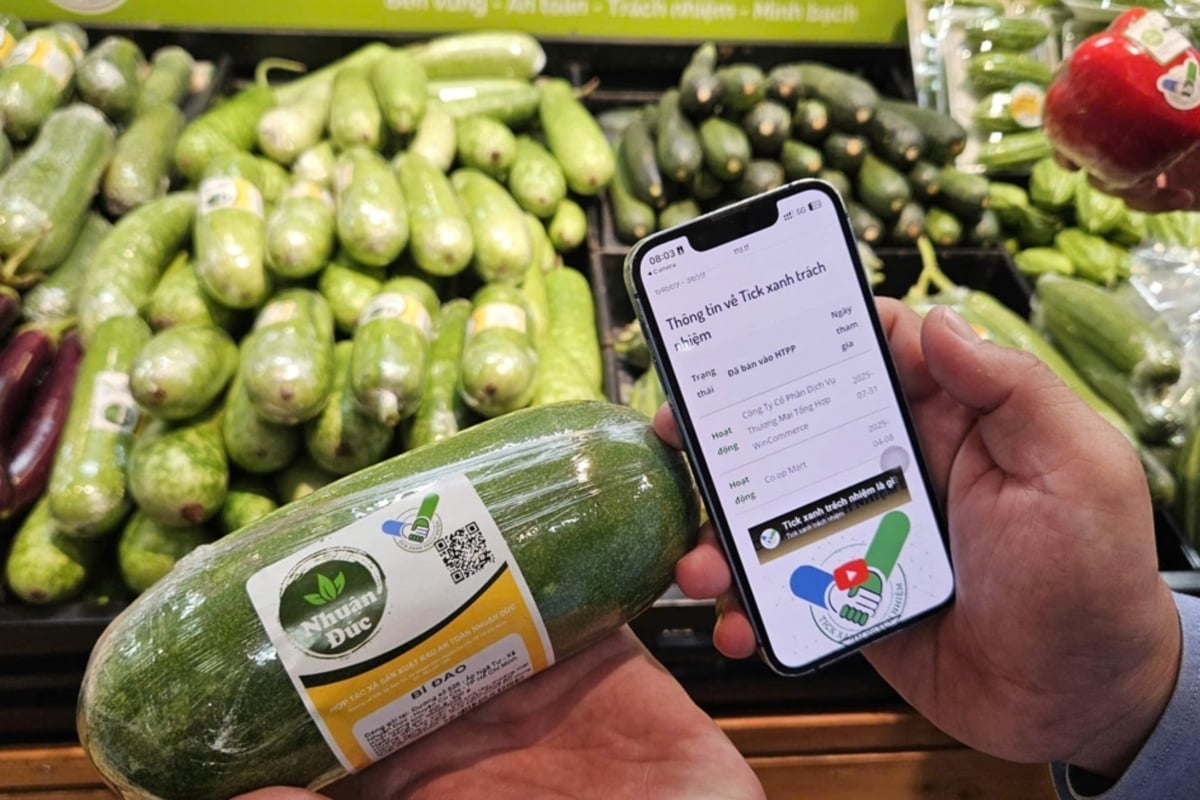
The participation of all parties in the "Responsible Green Tick" program will help consumers easily choose reputable, standard-compliant food products.
Ho Chi Minh City's shift from campaigning to monitoring, from pilot programs to standardization, shows that the Green Tick is not just a technical tool but is becoming a modern market management platform. To ensure the program's effectiveness, the city needs to expand it to non-food items such as children's products, cosmetics, and household goods; while also perfecting the national data traceability system and strengthening the application of digital technology .
In the next phase, the "Responsible Green Tick" could become an important criterion in local technical standards, contributing to the formation of a synchronized quality management ecosystem from production, distribution, and consumption, shaping a culture of responsible consumption and creating a foundation for a transparent and sustainable market.
From a broader perspective, the program demonstrates that Ho Chi Minh City is proactively experimenting with a new management model, befitting its status as a megacity and the largest economic center in the country. The bold move towards market transparency, supply chain standardization, and the application of traceability technology affirms the city's role as a "policy laboratory," where new ideas are tested and refined before being scaled up.
By expanding the scope of applications and connecting data with the national system, Ho Chi Minh City will continue to shape a civilized, safe, and responsible market model, in line with the expectations of a special urban area that always leads the trend of sustainable development.
Source: https://nongnghiepmoitruong.vn/tick-xanh-trach-nhiem-dinh-hinh-chuan-kiem-soat-chat-luong-thuc-pham-hien-dai-d789093.html




















































































Comment (0)